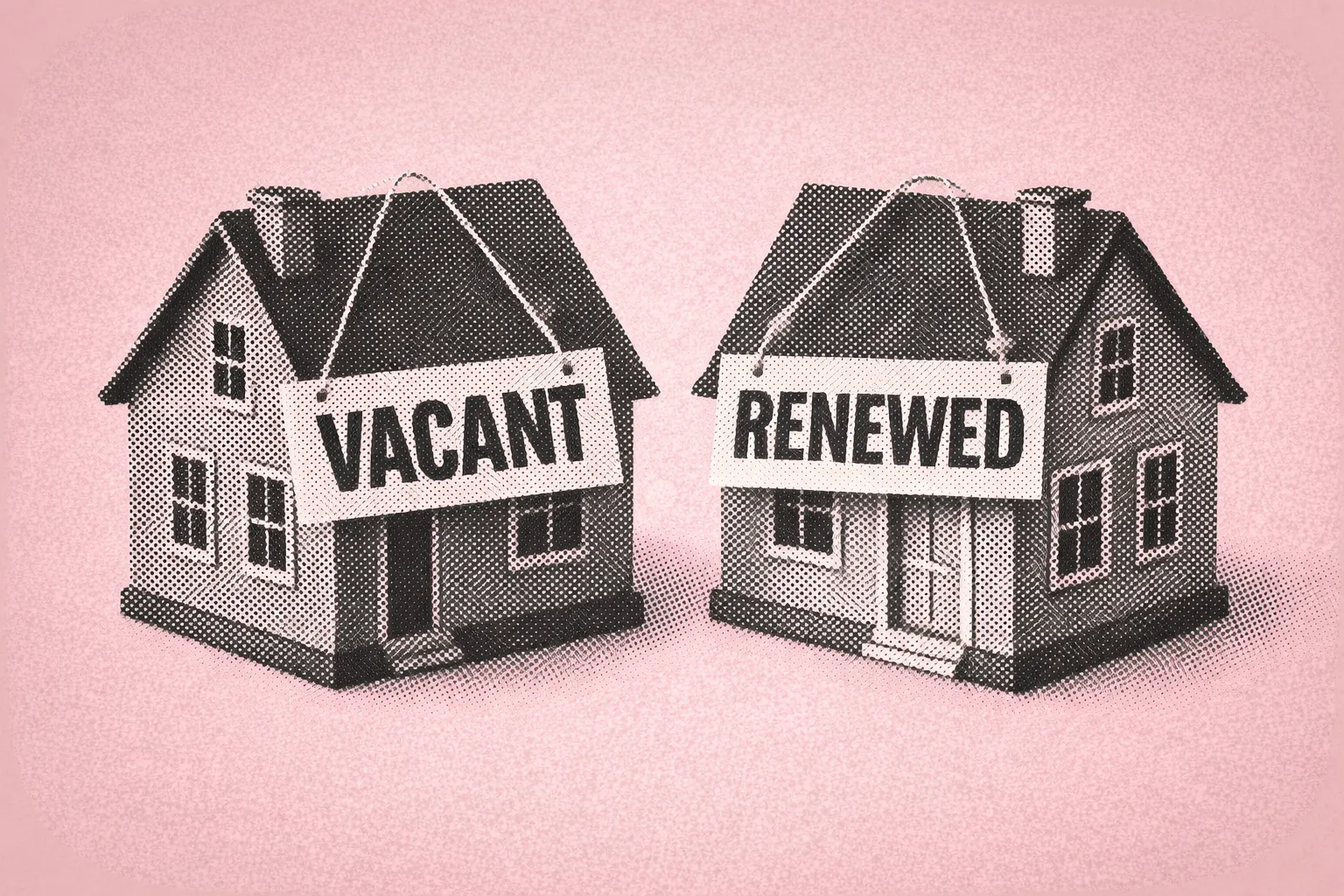

House hacking means buying a home, living in part of it, and renting out the rest. The rent from the other space helps cover your mortgage. For many first-time investors, it is the most practical way to buy a first rental with a small down payment and learn the job of being a landlord while living on site.
Note: This article is general education, not financial, legal, or tax advice. Loan programs, fair housing rules, and tax treatment change and vary by lender, state, and city. Confirm the details with a qualified lender, attorney, and tax professional before you buy.
What house hacking looks like in practice
There are three common versions.
- A small multifamily building. You buy a duplex, triplex, or fourplex, live in one unit, and rent the others. This is the classic house hack.
- Renting rooms. You buy a single-family home and rent spare bedrooms to housemates. You share a kitchen and common areas.
- An accessory dwelling unit (ADU). You live in the main house and rent a basement apartment, garage unit, or backyard cottage, or the reverse.
A two- to four-unit building gives each household its own door, kitchen, and lease. Renting rooms offers the least privacy. Local zoning decides whether an ADU is allowed.
Financing a house hack with owner-occupied loans
The main advantage of house hacking is financing. Because you live in the property, you can often use a primary residence mortgage instead of an investment property loan. Primary residence loans usually allow smaller down payments than investor loans. For a broader view of loan types, see a practical comparison of loan types for landlords buying rental property.
FHA loans
FHA-insured loans can be used on one- to four-unit properties. According to HUD Handbook 4000.1, the borrower must make a minimum required investment of at least 3.5 percent of the adjusted value of the property. The handbook also requires at least one borrower to move in within 60 days of signing the mortgage and intend to live there for at least one year.
Three- and four-unit buildings face an extra hurdle called the self-sufficiency test. Per HUD, the lender takes the appraiser's fair market rent for all units, including yours, and subtracts the greater of the appraiser's vacancy and maintenance estimate or 25 percent. The monthly mortgage payment, including taxes and insurance, cannot exceed that net figure.
Here is a simple illustration. A triplex appraises at $1,500 per month of rent for each unit, or $4,500 in total. After a 25 percent reduction, net rent is $3,375. Under the test, the full monthly payment must be $3,375 or less. Duplexes do not face this test.
Conventional loans through Fannie Mae
In November 2023, Fannie Mae raised the maximum loan-to-value ratio for two- to four-unit principal residence purchases to 95 percent. That means a down payment as low as 5 percent for eligible borrowers. Fannie Mae's current eligibility matrix still lists 95 percent for these properties. The higher limit does not apply to high-balance loans or manually underwritten loans.
VA loans
Eligible veterans and service members have another option. According to the VA, a VA-backed purchase loan can be used to buy a home with up to four units. It often requires no down payment, as long as the price does not exceed the appraised value. You must plan to live in the home you buy with the loan.
Using rental income to qualify
Lenders can count rent from the other units toward your income, within limits. HUD allows rental income from a two- to four-unit property or a one-unit home with an ADU, documented by an appraisal showing fair market rent. Fannie Mae generally counts 75 percent of gross rent. Borrowers with less than 12 months of landlord experience may only use it to offset the property's own housing payment.
Every owner-occupied program assumes you will actually live there. Claiming you will move in when you do not intend to is mortgage fraud.
Running the numbers on a house hack
A house hack is a housing decision first and an investment second. The question is not only "does it cash flow?" but also "what does it cost me to live here compared with renting?" Here is an illustrative duplex with round numbers. Your figures will differ.
| Item | Monthly amount |
|---|---|
| Mortgage payment, taxes, insurance, and mortgage insurance | $3,000 |
| Rent from the other unit | $1,800 |
| Vacancy reserve (10 percent of rent) | $180 |
| Repairs and capital reserve (10 percent of rent) | $180 |
| Your net monthly housing cost | $1,560 |
The formula is simple: Net Housing Cost = Total Housing Payment - Rent Collected + Reserves. If a comparable apartment would cost you $1,800 a month, the house hack saves you about $240 a month. You also build equity and landlord experience.
Now run the second scenario. What happens when you move out and rent both units? At $1,800 each, you collect $3,600. Subtract the $3,000 payment and $720 in reserves, and you are about $120 short each month. A low down payment means a large loan, and a large loan can mean thin or negative cash flow once you leave.
Know both numbers before you buy. Our guide to the exact systems you need before you scale covers how to build reserves and processes that survive that transition.
Being a live-in landlord
Living next to your renters changes the relationship. Clear boundaries protect both sides.
- Put everything in a written lease. Cover rent due dates, quiet hours, parking, shared spaces, guests, and who handles snow, trash, and lawn care.
- Set a communication channel. Ask renters to send requests in writing rather than stopping you in the driveway. Written requests create a record and keep your evenings yours.
- Respect entry rules. Living on site does not give you the right to enter a rented unit at will. State notice laws still apply.
The fair housing exemption and its limit
The federal Fair Housing Act includes a narrow exemption, often called the Mrs. Murphy exemption. Under 42 U.S.C. 3603(b)(2), it can apply to rooms or units in a building with living quarters for no more than four families, when the owner actually lives in one of them.
The exemption has an important limit. The same statute keeps section 3604(c) in force, which bars discriminatory notices, statements, and advertisements. Even an owner-occupant who qualifies cannot publish an ad that states a preference based on a protected class. State and local fair housing laws can also be stricter than the federal law.
The safest path is to screen every applicant with the same written criteria. For more on that, read our fair housing compliance guide on how landlords reduce discrimination risk.
Taxes when you live in part of the property
A house hack is part home and part rental. The IRS treats it that way. According to IRS Publication 527, if you rent part of your property, you must divide certain expenses between the rental part and the personal part, as though you had two separate properties.
- Shared expenses get split. Mortgage interest, property taxes, insurance, and utilities for the whole building are divided. Publication 527 says you can use any reasonable method, and the two most common are number of rooms and square footage.
- Rental-only expenses are fully deductible. Painting the rented unit or buying liability insurance tied to the rental is a rental expense in full.
- The rental share goes on Schedule E. The personal share of mortgage interest and taxes generally counts only if you itemize on Schedule A.
- Depreciation applies only to the rental part. You can depreciate the rental portion of the building, plus furniture and equipment used for the rental.
For example, if the rented unit in a duplex covers half the square footage, half of the shared expenses are generally rental expenses. Keep receipts and tag each expense as shared or rental-only from day one. Our guide to a practical, IRS-compliant guide to maximizing Schedule E covers the categories in more detail.
Insurance for an owner-occupied rental
Tell your insurance agent exactly how you will use the property. A policy written for a home you occupy alone may not fit a building where you collect rent. Ask how the policy treats the rented units, your liability to renters and their guests, and loss of rental income after a covered event.
For a fuller walkthrough of coverage types, see the coverages landlords actually need and how to choose the right limits.
Check local rules before you buy
Local rules can make or break a house hack. Before you make an offer, check these items with your city or county:
- Zoning. Confirm the legal number of units. An "in-law apartment" that was never permitted is not a legal rental unit.
- ADU rules. Many places allow ADUs but set limits on size, parking, and owner occupancy.
- Rental registration or licensing. Some cities require a license or inspection before you rent, even in an owner-occupied building.
- Room rental rules. Some cities cap the number of unrelated occupants in a single-family home.
Planning your exit: move out and keep the rental
After meeting the occupancy requirement in your loan, you may be able to move out and keep the property as a full rental. Many investors then repeat the process with a new owner-occupied purchase.
Before you move, rerun the numbers with market rent for your unit. Budget for turnover costs, such as paint and cleaning. Check whether your insurance policy needs to change. Remember that the tax treatment shifts too, since the whole building becomes rental property.
Moving out is also when systems matter most. If you are new to the role, our article on your essential 90-day roadmap for getting started as a landlord walks through the setup. For more on buying your first property, browse the Property Acquisition hub for first-time and growing rental investors.
Frequently asked questions
How much do you need to put down to house hack a duplex?
It depends on the loan. Per HUD, FHA requires a minimum investment of 3.5 percent. Fannie Mae allows up to 95 percent loan-to-value on eligible two- to four-unit principal residences, or 5 percent down. Eligible veterans may qualify for a VA loan with no down payment.
How long do you have to live in a house hack?
FHA requires at least one borrower to move in within 60 days of signing the mortgage and intend to live there for at least one year. Other loan programs set their own terms, so read your loan documents and ask your lender.
Does the Mrs. Murphy exemption let owner-occupants advertise however they want?
No. The federal exemption for owner-occupied buildings of four or fewer units does not cover discriminatory notices, statements, or advertisements. State and local laws may also be stricter.
How do you split expenses between your unit and the rental unit for taxes?
IRS Publication 527 says you can use any reasonable method, most commonly square footage or number of rooms. Expenses that apply only to the rental unit are fully rental expenses. Confirm your approach with a tax professional.
What to do next
A house hack works when you treat the rented part like a real rental business from the first day. That means consistent screening, a signed lease, rent that arrives on time, repairs that are tracked, and expenses that are split cleanly at tax time. Those habits also make it far easier to move out and keep the property later.
Shuk helps live-in landlords keep that business separate from home life. Tenant screening with landlord-set pass criteria applies the same standards to every applicant. E-signatures through an Adobe-powered integration get leases signed. Online rent collection with zero ACH transaction fees and autopay keeps rent off your doorstep. Maintenance request tracking and in-app messaging keep requests in writing. Schedule E-aligned expense organization supports your year-end split.
At as low as $2 per unit per month, billed annually, with no setup fees and no contract, and with White Glove Onboarding included at no additional cost, Shuk makes running a house hack like a professional rental feasible for landlords and property managers up to 200 units.
Book a demo at shukrentals.com/book-a-demo to see how tenant screening, e-signatures, online rent collection, maintenance request tracking, and Schedule E-aligned expense organization work together so your first house hack runs smoothly while you live there and after you move out.