

Rental Management Guides

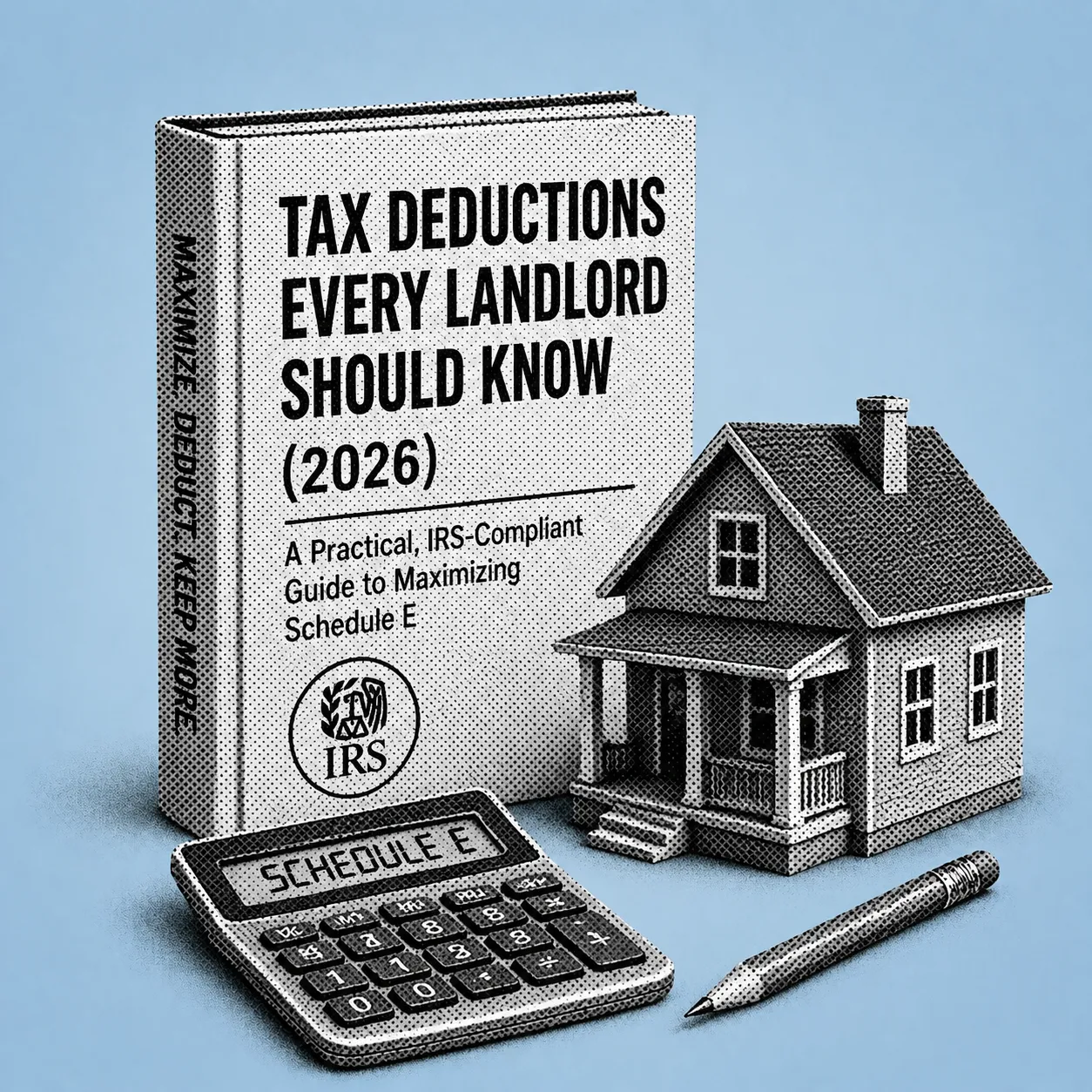
Tax Deductions Every Landlord Should Know (2026): A Practical, IRS-Compliant Guide to Maximizing Schedule E

photo of Miles Lerner, Blog Post Author
Miles Lerner

Tax Deductions Every Landlord Should Know (2026): A Practical, IRS-Compliant Guide to Maximizing Schedule E

Rental property can be one of the most tax-advantaged ways to build long-term wealth, but only if you claim the deductions you are entitled to and document them the way the IRS expects.

Miss a deduction and you overpay. Misclassify one, say calling a new roof a repair when it is an improvement, and you invite notices, disallowed expenses, penalties, and a stressful back-and-forth during an audit.

The hard part is not that deductions are hidden. It is that the rules are detailed: mortgage interest has tracing and allocation rules, points are usually amortized rather than deducted all at once, depreciation starts when the home is placed in service rather than when you close, and the repairs-versus-improvements line can change the timing of your write-off by years. The IRS lays much of this out in Publication 527 and Publication 946, but few landlords have time to translate those documents into a step-by-step system they can run all year.

This guide walks you through the major rental-property deductions for 2026, the when and how of claiming each one, and the record-keeping habits that keep you fully compliant.

What You Will Learn and Why It Matters

Most independent landlords understand the basics: collect rent, pay expenses, report net income on Schedule E. The real savings come from mastering three areas: what is deductible, when it is deductible, and how to substantiate it.

IRS guidance for residential rentals centers on Schedule E reporting and the rules in Publication 527 covering Residential Rental Property and Publication 946 covering How To Depreciate Property.

The six core deduction categories covered below are mortgage interest including points, refinances, and mixed-use allocations; depreciation covering 27.5-year building write-offs, appliances, and bonus depreciation; repairs versus improvements and how classification affects timing and audit risk; operating expenses and the everyday costs that are often missed; travel deductions covering what qualifies and how to document mileage; and home office and administrative costs covering when you can claim them and how to support the deduction.

Each section includes a plain-English definition, the IRS rule to anchor your decision, an eligibility checklist, a worked example, specific action steps, and one common pitfall to avoid.

The Six Deduction Categories: Step-by-Step Workflows

1. Mortgage Interest: Points, Refinances, and Tracing Rules

What it is: Mortgage interest is generally deductible as a rental expense when the debt is tied to your rental activity, meaning the loan proceeds were used to buy, build, or improve the rental property, or otherwise used for rental purposes under interest tracing rules. Publication 527 and Schedule E instructions emphasize proper reporting and allocation when a property has any personal-use component.

Core IRS compliance rule: If you refinance or do a cash-out refinance, you may need to allocate interest based on how the proceeds were used. You do not automatically get "all interest is rental" treatment. The temporary interest allocation regulations under 26 CFR §1.163-8T provide the tracing framework.

Eligibility checklist: The property is held out for rent or treated as a rental activity. The loan proceeds were used for rental acquisition, improvement, or operations and are traceable. You can substantiate with statements, an amortization schedule, and closing documents such as a Closing Disclosure.

Worked example: You buy a four-plex and pay $18,400 of mortgage interest in 2026. You rent all units all year. You generally deduct the full $18,400 on Schedule E as a rental expense, subject to passive loss limitations discussed in the FAQ. If you live in one unit representing 25% personal use, you typically allocate the interest between personal and rental based on a reasonable method such as square footage or unit count, deducting only the rental portion on Schedule E.

Points and loan fees: For rentals, points and origination fees are usually amortized over the life of the loan rather than deducted all at once. This is a common landlord miss that results in either a lost deduction or an improper full deduction in year one.

What to do now: Create a loan proceeds map. If you refinance, document exactly where cash-out funds went using invoices and a bank paper trail. This supports interest tracing under §1.163-8T. Also track points as an amortized asset by setting up a recurring monthly amortization entry so you do not forget a legitimate deduction that spans years.

Pitfall to avoid: Deducting 100% of interest on a cash-out refinance when part of the proceeds paid personal expenses. Without tracing and allocation documentation, that portion may be disallowed.

Mini case study: A duplex owner refinanced and used part of the cash-out to replace the HVAC, a rental improvement, and part to pay off personal credit cards. After organizing proceeds with bank transaction links and categorizing receipts, they deducted only the properly traceable interest on Schedule E, avoiding an all-or-nothing position that can collapse under scrutiny.

2. Depreciation: 27.5-Year Buildings, Appliances, and Recapture

What it is: Depreciation is the annual deduction for the wear-and-tear of your rental assets. Residential rental buildings are generally depreciated using MACRS over 27.5 years using the straight-line method with a mid-month convention. Depreciation typically begins when the property is placed in service, meaning ready and available for rent, not necessarily when you close on the purchase.

What counts: Your depreciable basis is usually the purchase price plus certain acquisition costs and later capital improvements, minus land value. Land is not depreciable. Publication 527 and Publication 946 provide the framework for basis and MACRS recovery.

Eligibility checklist: You own the property and use it for rental or income production. You can allocate land versus building value, often using local assessment records as a starting point. You track the placed-in-service date and improvement dates since the mid-month convention impacts the first-year deduction.

Worked example: You purchase a single-family rental for $400,000. Local records support allocating $80,000 to land and $320,000 to building. Your annual building depreciation is roughly $320,000 divided by 27.5 years, which equals approximately $11,636 per full year before first-year mid-month adjustments. You report depreciation on Form 4562 and flow it to Schedule E.

Appliances and shorter-life assets: Items like appliances, carpeting, and some building components may have shorter recovery periods than the 27.5-year building, often five, seven, or fifteen years, which can accelerate deductions, especially when paired with a well-supported cost segregation approach.

Bonus depreciation: Current practitioner guidance indicates 100% bonus depreciation was restored for qualifying property placed in service after January 19, 2025 under interim guidance. This generally applies to assets with recovery periods of 20 years or less and does not apply to the 27.5-year building itself. Confirm eligibility by asset type and placed-in-service date and document thoroughly before claiming.

What to do now: Separate assets in your books from day one by tracking building, land improvements, and personal property as distinct categories so you are not stuck reconstructing five years of records. Treat every major improvement as its own depreciation schedule since a roof, remodel, or new HVAC is typically a new asset placed in service when completed rather than a retroactive addition to the original building basis.

Pitfall to avoid: Skipping depreciation because it feels complicated. Depreciation can still affect gain calculations and may be subject to recapture rules when you sell under the unrecaptured Section 1250 gain concept. Not claiming depreciation does not make recapture go away.

Mini case study: A four-plex owner replaced all unit refrigerators and added new carpeting. By tracking each purchase as a separate asset class rather than burying it in the repairs category, they captured faster depreciation on personal property and kept clean support files including invoice, installation date, and unit assignment, which simplified Form 4562 reporting at tax time.

3. Repairs vs. Improvements: The Line That Changes Timing and Scrutiny

What it is: Repairs are generally costs that keep your property in ordinarily efficient operating condition and are often deductible in the year paid or incurred. Improvements generally add value, prolong useful life, or adapt the property to a new use and are typically capitalized and depreciated. Publication 527 instructs landlords to treat improvements differently from repairs.

Why it matters: This classification is one of the most common places landlords get into trouble because the tax impact is immediate. A $9,000 repair might be fully deductible now, but a $9,000 improvement may be spread over years. Tax court outcomes often turn on documentation, consistency, and the facts and circumstances of the specific work performed.

Eligibility checklist: Did the work fix a specific issue, which points toward a repair, or upgrade or replace a major component, which often points toward an improvement? Is the work part of a larger renovation plan, which typically points toward capitalization? Do you have itemized invoices describing labor, materials, and scope, which are critical support in any dispute?

Worked example: You pay $650 to patch a small roof leak and replace damaged shingles. This is often a repair. But a $14,500 full roof replacement is typically an improvement that would be depreciated as a separate asset. Publication 527 explains that improvements must be recovered through depreciation rather than expensed like routine repairs.

What to do now: Split invoices when possible. If a contractor can separately invoice repair items versus betterment items, you have stronger support for the portion currently deductible in the year incurred. Also write a one-paragraph purpose memo for big projects. Save a short note explaining what failed, what you did, and why it qualifies as a repair or improvement. Pair it with before and after photos and the invoice.

Pitfall to avoid: Calling turnover work a repair when it is clearly a remodel with new kitchen cabinets, layout changes, or full flooring replacement across a unit. Those facts can undermine credibility if the return is examined.

Mini case study: A short-term rental host renovated a bathroom and also fixed a running toilet in a different unit. By categorizing the toilet repair as repairs and maintenance and capitalizing the bathroom renovation as an improvement with its own placed-in-service date, the host kept records clean and avoided an end-of-year scramble to reclassify expenses after the fact.

4. Operating Expenses: The Everyday Deductions That Add Up

What they are: Operating expenses are ordinary and necessary costs to manage, conserve, and maintain your rental property. They are typically deducted in the year incurred and reported on Schedule E in categories including advertising, cleaning and maintenance, commissions, insurance, legal and professional fees, management fees, utilities, and supplies. Publication 527 and Schedule E instructions emphasize allocating costs when a property has mixed rental and personal use.

What landlords commonly miss: Bank charges tied to rental accounts. Tenant screening fees. Software subscriptions used for rental bookkeeping. Small tools and supplies used exclusively for maintenance. Professional services including CPA fees, attorney fees for drafting a lease, and eviction filing fees, though deductibility of legal fees depends on facts and timing and can be nuanced.

Worked example: You self-manage a single-family rental. In 2026 you pay $1,450 in insurance, $650 for lawn care, $310 in listing fees, $980 to a plumber, $1,200 for CPA and tax prep, and $720 for a bookkeeping subscription used solely for your rentals. These are generally operating expenses deductible on Schedule E, subject to capitalization rules if any invoice is actually for an improvement.

What to do now: Use Schedule E categories all year rather than only at tax time. If you bucket expenses the way Schedule E expects throughout the year, you reduce errors and rework at filing. Also attach every expense to a property and a purpose. Multi-property landlords should tag each receipt to a specific address or unit and category so that any question about what was spent where can be answered in seconds.

Pitfall to avoid: Lumping large vague totals into one line such as calling everything repairs or other without supporting invoices. If you are ever asked to substantiate, you want a clean trail showing payee, date, amount, purpose, property, and supporting document.

5. Travel Deductions: Mileage, Trips, and Documentation

What they are: Travel costs can be deductible when they are ordinary and necessary for your rental activity, covering property visits for repairs, meeting contractors, buying supplies, or collecting rents where applicable. The catch is that travel is easy to abuse and easy to document poorly, which makes it a frequent scrutiny point.

IRS anchor: While Publication 463 is the IRS travel and vehicle substantiation guide, the key principle is consistent documentation covering business purpose, date, destination, and mileage or expense records.

Eligibility checklist: The trip is primarily for rental business. You can document date, miles, and purpose. You allocate mixed-purpose trips and claim only the business portion.

Worked example: You drive 18 miles round-trip to meet a plumber at your rental, then 12 miles round-trip to pick up a replacement smoke detector. You log each trip with date, starting and ending odometer reading or an app mileage capture, the property address, and the purpose. Your deduction is total miles multiplied by the applicable IRS standard mileage rate for the tax year.

What to do now: Log mileage in real time rather than reconstructing it later. Reconstructed logs are weak if questioned. Use an app or a simple form that captures purpose and property for each trip at the time it happens. Keep receipts for away-from-home travel. If you travel overnight primarily for rental business, retain lodging receipts and a schedule showing the business activities conducted.

Pitfall to avoid: Claiming commuting miles as rental travel. Driving from home to your W-2 job or any unrelated workplace is not rental business mileage, and mixing categories is a classic red flag.

Mini case study: A small-portfolio landlord with three properties was consistently under-claiming travel because receipts and mileage records were scattered. After switching to a system that captures trips and ties them to properties, they stopped missing deductible supply runs and contractor visits and reduced time spent reconstructing mileage records at year-end.

6. Home Office and Administrative Costs: When You Can Legitimately Claim Them

What they are: Home-office and administrative costs can be deductible when you use part of your home regularly and exclusively for managing your rental activity and it is your principal place of business for that activity. Even if you do not qualify for a home-office deduction, you may still deduct direct administrative expenses tied to rentals including postage, a dedicated phone line, office supplies, and bookkeeping and tax preparation costs when they are ordinary and necessary.

Eligibility checklist for the home office: Regular and exclusive use of a specific area. Used for rental management activities including communications, bookkeeping, tenant screening, and lease work. You can substantiate with a simple floor plan measurement, photos, and utility bills.

Worked example: You manage a four-plex from a dedicated 120 square foot office in a 1,200 square foot home, representing 10% of the space. If eligible, you may allocate 10% of qualifying home expenses such as utilities and certain maintenance to your rental administrative activity, plus deduct 100% of direct office expenses like a desk or printer used solely for rentals, subject to depreciation rules for equipment.

What to do now: Separate admin from property expenses. Tag costs as either property-specific such as Unit 2 plumbing or portfolio admin such as bookkeeping and office supplies. This prevents double-counting and makes Schedule E preparation cleaner at filing time.

Pitfall to avoid: Claiming a home office that is not exclusive, such as a dining table or shared guest room. If you cannot defend exclusivity, focus instead on the clearly deductible administrative expenses you can fully support such as tax preparation fees, software subscriptions, postage, and a dedicated landlord phone line.

Mini case study: A single-family landlord tried to claim a home office but realized the space doubled as a guest room. They skipped the home-office allocation and instead tightened administrative deductions they could fully support, keeping their file clean and defensible without sacrificing legitimate write-offs.

Year-Round Checklist: Stay Audit-Ready

Create a separate bank account and card for rental activity to keep funds clearly segregated from personal transactions.

Save your Closing Disclosure and loan documents and track points and origination fees for amortization over the life of the loan rather than treating them as a single-year deduction.

Maintain a fixed-asset list covering building basis less land, improvements, appliances, and other depreciable items with placed-in-service dates for each.

Categorize every transaction to a Schedule E category and a specific property or unit at the time it happens rather than sorting it all at year-end.

Store invoices, receipts, and contracts with short notes indicating what was purchased, why it was purchased, and which property it relates to.

Keep mileage and travel logs contemporaneously with date, miles, purpose, and property recorded at the time of each trip.

Review the repairs-versus-improvements classification quarterly and reclassify before year-end if needed rather than discovering a misclassification during filing.

Frequently Asked Questions

When do I report rental income and expenses on Schedule E?

You generally report rental income and deductible expenses annually on Schedule E with your Form 1040. The Schedule E instructions explain the expense categories and how to report them consistently. All rental income received during the year is reported, and deductible expenses are listed by category for each property.

Can I depreciate appliances separately from the building?

Often yes. Publication 946 explains that different assets can have different recovery periods under MACRS. Appliances and certain personal property typically depreciate over shorter lives than the 27.5-year building, which can accelerate deductions when tracked and documented correctly from the time of purchase.

What are passive loss limits and can they reduce my deduction this year?

Rental real estate is commonly treated as a passive activity with limited exceptions, which can restrict how much loss you can use against other income in a given year. If losses are limited under the passive activity rules, they typically carry forward to future years when you have passive income or sell the property.

If I did not take depreciation in prior years, can I fix it?

Often yes, but the correction method depends on the facts and may involve an accounting method change filed with the IRS. At a minimum, understand that depreciation affects gain calculations and may be subject to recapture rules when you sell, regardless of whether you actually claimed the deductions in prior years. Consult a tax professional before attempting a catch-up correction.

If you want to maximize deductions and reduce compliance stress, make this your operational standard: every expense should be categorized to the right Schedule E line, tied to the right property or unit, and backed by a retrievable source document. Start by running a Schedule E readiness check using the checklist above.

Book a demo to see how Shuk's expense tracking, receipt organization, and property-level categorization tools help you keep records tax-ready throughout the year rather than scrambling at filing time.


QUICK VIEW
DIVE DEEPER
Stop Reacting to Vacancies. Start Seeing Them Coming.

Shuk helps landlords and property managers get ahead of vacancies, improve renewal visibility, and bring more predictability to every lease cycle.

Book a demo to get started with a free trial.

Stay in the Shuk Loop

Tax Deductions Every Landlord Should Know (2026): A Practical, IRS-Compliant Guide to Maximizing Schedule E

Rental property can be one of the most tax-advantaged ways to build long-term wealth, but only if you claim the deductions you are entitled to and document them the way the IRS expects.

Miss a deduction and you overpay. Misclassify one, say calling a new roof a repair when it is an improvement, and you invite notices, disallowed expenses, penalties, and a stressful back-and-forth during an audit.

The hard part is not that deductions are hidden. It is that the rules are detailed: mortgage interest has tracing and allocation rules, points are usually amortized rather than deducted all at once, depreciation starts when the home is placed in service rather than when you close, and the repairs-versus-improvements line can change the timing of your write-off by years. The IRS lays much of this out in Publication 527 and Publication 946, but few landlords have time to translate those documents into a step-by-step system they can run all year.

This guide walks you through the major rental-property deductions for 2026, the when and how of claiming each one, and the record-keeping habits that keep you fully compliant.

What You Will Learn and Why It Matters

Most independent landlords understand the basics: collect rent, pay expenses, report net income on Schedule E. The real savings come from mastering three areas: what is deductible, when it is deductible, and how to substantiate it.

IRS guidance for residential rentals centers on Schedule E reporting and the rules in Publication 527 covering Residential Rental Property and Publication 946 covering How To Depreciate Property.

The six core deduction categories covered below are mortgage interest including points, refinances, and mixed-use allocations; depreciation covering 27.5-year building write-offs, appliances, and bonus depreciation; repairs versus improvements and how classification affects timing and audit risk; operating expenses and the everyday costs that are often missed; travel deductions covering what qualifies and how to document mileage; and home office and administrative costs covering when you can claim them and how to support the deduction.

Each section includes a plain-English definition, the IRS rule to anchor your decision, an eligibility checklist, a worked example, specific action steps, and one common pitfall to avoid.

The Six Deduction Categories: Step-by-Step Workflows

1. Mortgage Interest: Points, Refinances, and Tracing Rules

What it is: Mortgage interest is generally deductible as a rental expense when the debt is tied to your rental activity, meaning the loan proceeds were used to buy, build, or improve the rental property, or otherwise used for rental purposes under interest tracing rules. Publication 527 and Schedule E instructions emphasize proper reporting and allocation when a property has any personal-use component.

Core IRS compliance rule: If you refinance or do a cash-out refinance, you may need to allocate interest based on how the proceeds were used. You do not automatically get "all interest is rental" treatment. The temporary interest allocation regulations under 26 CFR §1.163-8T provide the tracing framework.

Eligibility checklist: The property is held out for rent or treated as a rental activity. The loan proceeds were used for rental acquisition, improvement, or operations and are traceable. You can substantiate with statements, an amortization schedule, and closing documents such as a Closing Disclosure.

Worked example: You buy a four-plex and pay $18,400 of mortgage interest in 2026. You rent all units all year. You generally deduct the full $18,400 on Schedule E as a rental expense, subject to passive loss limitations discussed in the FAQ. If you live in one unit representing 25% personal use, you typically allocate the interest between personal and rental based on a reasonable method such as square footage or unit count, deducting only the rental portion on Schedule E.

Points and loan fees: For rentals, points and origination fees are usually amortized over the life of the loan rather than deducted all at once. This is a common landlord miss that results in either a lost deduction or an improper full deduction in year one.

What to do now: Create a loan proceeds map. If you refinance, document exactly where cash-out funds went using invoices and a bank paper trail. This supports interest tracing under §1.163-8T. Also track points as an amortized asset by setting up a recurring monthly amortization entry so you do not forget a legitimate deduction that spans years.

Pitfall to avoid: Deducting 100% of interest on a cash-out refinance when part of the proceeds paid personal expenses. Without tracing and allocation documentation, that portion may be disallowed.

Mini case study: A duplex owner refinanced and used part of the cash-out to replace the HVAC, a rental improvement, and part to pay off personal credit cards. After organizing proceeds with bank transaction links and categorizing receipts, they deducted only the properly traceable interest on Schedule E, avoiding an all-or-nothing position that can collapse under scrutiny.

2. Depreciation: 27.5-Year Buildings, Appliances, and Recapture

What it is: Depreciation is the annual deduction for the wear-and-tear of your rental assets. Residential rental buildings are generally depreciated using MACRS over 27.5 years using the straight-line method with a mid-month convention. Depreciation typically begins when the property is placed in service, meaning ready and available for rent, not necessarily when you close on the purchase.

What counts: Your depreciable basis is usually the purchase price plus certain acquisition costs and later capital improvements, minus land value. Land is not depreciable. Publication 527 and Publication 946 provide the framework for basis and MACRS recovery.

Eligibility checklist: You own the property and use it for rental or income production. You can allocate land versus building value, often using local assessment records as a starting point. You track the placed-in-service date and improvement dates since the mid-month convention impacts the first-year deduction.

Worked example: You purchase a single-family rental for $400,000. Local records support allocating $80,000 to land and $320,000 to building. Your annual building depreciation is roughly $320,000 divided by 27.5 years, which equals approximately $11,636 per full year before first-year mid-month adjustments. You report depreciation on Form 4562 and flow it to Schedule E.

Appliances and shorter-life assets: Items like appliances, carpeting, and some building components may have shorter recovery periods than the 27.5-year building, often five, seven, or fifteen years, which can accelerate deductions, especially when paired with a well-supported cost segregation approach.

Bonus depreciation: Current practitioner guidance indicates 100% bonus depreciation was restored for qualifying property placed in service after January 19, 2025 under interim guidance. This generally applies to assets with recovery periods of 20 years or less and does not apply to the 27.5-year building itself. Confirm eligibility by asset type and placed-in-service date and document thoroughly before claiming.

What to do now: Separate assets in your books from day one by tracking building, land improvements, and personal property as distinct categories so you are not stuck reconstructing five years of records. Treat every major improvement as its own depreciation schedule since a roof, remodel, or new HVAC is typically a new asset placed in service when completed rather than a retroactive addition to the original building basis.

Pitfall to avoid: Skipping depreciation because it feels complicated. Depreciation can still affect gain calculations and may be subject to recapture rules when you sell under the unrecaptured Section 1250 gain concept. Not claiming depreciation does not make recapture go away.

Mini case study: A four-plex owner replaced all unit refrigerators and added new carpeting. By tracking each purchase as a separate asset class rather than burying it in the repairs category, they captured faster depreciation on personal property and kept clean support files including invoice, installation date, and unit assignment, which simplified Form 4562 reporting at tax time.

3. Repairs vs. Improvements: The Line That Changes Timing and Scrutiny

What it is: Repairs are generally costs that keep your property in ordinarily efficient operating condition and are often deductible in the year paid or incurred. Improvements generally add value, prolong useful life, or adapt the property to a new use and are typically capitalized and depreciated. Publication 527 instructs landlords to treat improvements differently from repairs.

Why it matters: This classification is one of the most common places landlords get into trouble because the tax impact is immediate. A $9,000 repair might be fully deductible now, but a $9,000 improvement may be spread over years. Tax court outcomes often turn on documentation, consistency, and the facts and circumstances of the specific work performed.

Eligibility checklist: Did the work fix a specific issue, which points toward a repair, or upgrade or replace a major component, which often points toward an improvement? Is the work part of a larger renovation plan, which typically points toward capitalization? Do you have itemized invoices describing labor, materials, and scope, which are critical support in any dispute?

Worked example: You pay $650 to patch a small roof leak and replace damaged shingles. This is often a repair. But a $14,500 full roof replacement is typically an improvement that would be depreciated as a separate asset. Publication 527 explains that improvements must be recovered through depreciation rather than expensed like routine repairs.

What to do now: Split invoices when possible. If a contractor can separately invoice repair items versus betterment items, you have stronger support for the portion currently deductible in the year incurred. Also write a one-paragraph purpose memo for big projects. Save a short note explaining what failed, what you did, and why it qualifies as a repair or improvement. Pair it with before and after photos and the invoice.

Pitfall to avoid: Calling turnover work a repair when it is clearly a remodel with new kitchen cabinets, layout changes, or full flooring replacement across a unit. Those facts can undermine credibility if the return is examined.

Mini case study: A short-term rental host renovated a bathroom and also fixed a running toilet in a different unit. By categorizing the toilet repair as repairs and maintenance and capitalizing the bathroom renovation as an improvement with its own placed-in-service date, the host kept records clean and avoided an end-of-year scramble to reclassify expenses after the fact.

4. Operating Expenses: The Everyday Deductions That Add Up

What they are: Operating expenses are ordinary and necessary costs to manage, conserve, and maintain your rental property. They are typically deducted in the year incurred and reported on Schedule E in categories including advertising, cleaning and maintenance, commissions, insurance, legal and professional fees, management fees, utilities, and supplies. Publication 527 and Schedule E instructions emphasize allocating costs when a property has mixed rental and personal use.

What landlords commonly miss: Bank charges tied to rental accounts. Tenant screening fees. Software subscriptions used for rental bookkeeping. Small tools and supplies used exclusively for maintenance. Professional services including CPA fees, attorney fees for drafting a lease, and eviction filing fees, though deductibility of legal fees depends on facts and timing and can be nuanced.

Worked example: You self-manage a single-family rental. In 2026 you pay $1,450 in insurance, $650 for lawn care, $310 in listing fees, $980 to a plumber, $1,200 for CPA and tax prep, and $720 for a bookkeeping subscription used solely for your rentals. These are generally operating expenses deductible on Schedule E, subject to capitalization rules if any invoice is actually for an improvement.

What to do now: Use Schedule E categories all year rather than only at tax time. If you bucket expenses the way Schedule E expects throughout the year, you reduce errors and rework at filing. Also attach every expense to a property and a purpose. Multi-property landlords should tag each receipt to a specific address or unit and category so that any question about what was spent where can be answered in seconds.

Pitfall to avoid: Lumping large vague totals into one line such as calling everything repairs or other without supporting invoices. If you are ever asked to substantiate, you want a clean trail showing payee, date, amount, purpose, property, and supporting document.

5. Travel Deductions: Mileage, Trips, and Documentation

What they are: Travel costs can be deductible when they are ordinary and necessary for your rental activity, covering property visits for repairs, meeting contractors, buying supplies, or collecting rents where applicable. The catch is that travel is easy to abuse and easy to document poorly, which makes it a frequent scrutiny point.

IRS anchor: While Publication 463 is the IRS travel and vehicle substantiation guide, the key principle is consistent documentation covering business purpose, date, destination, and mileage or expense records.

Eligibility checklist: The trip is primarily for rental business. You can document date, miles, and purpose. You allocate mixed-purpose trips and claim only the business portion.

Worked example: You drive 18 miles round-trip to meet a plumber at your rental, then 12 miles round-trip to pick up a replacement smoke detector. You log each trip with date, starting and ending odometer reading or an app mileage capture, the property address, and the purpose. Your deduction is total miles multiplied by the applicable IRS standard mileage rate for the tax year.

What to do now: Log mileage in real time rather than reconstructing it later. Reconstructed logs are weak if questioned. Use an app or a simple form that captures purpose and property for each trip at the time it happens. Keep receipts for away-from-home travel. If you travel overnight primarily for rental business, retain lodging receipts and a schedule showing the business activities conducted.

Pitfall to avoid: Claiming commuting miles as rental travel. Driving from home to your W-2 job or any unrelated workplace is not rental business mileage, and mixing categories is a classic red flag.

Mini case study: A small-portfolio landlord with three properties was consistently under-claiming travel because receipts and mileage records were scattered. After switching to a system that captures trips and ties them to properties, they stopped missing deductible supply runs and contractor visits and reduced time spent reconstructing mileage records at year-end.

6. Home Office and Administrative Costs: When You Can Legitimately Claim Them

What they are: Home-office and administrative costs can be deductible when you use part of your home regularly and exclusively for managing your rental activity and it is your principal place of business for that activity. Even if you do not qualify for a home-office deduction, you may still deduct direct administrative expenses tied to rentals including postage, a dedicated phone line, office supplies, and bookkeeping and tax preparation costs when they are ordinary and necessary.

Eligibility checklist for the home office: Regular and exclusive use of a specific area. Used for rental management activities including communications, bookkeeping, tenant screening, and lease work. You can substantiate with a simple floor plan measurement, photos, and utility bills.

Worked example: You manage a four-plex from a dedicated 120 square foot office in a 1,200 square foot home, representing 10% of the space. If eligible, you may allocate 10% of qualifying home expenses such as utilities and certain maintenance to your rental administrative activity, plus deduct 100% of direct office expenses like a desk or printer used solely for rentals, subject to depreciation rules for equipment.

What to do now: Separate admin from property expenses. Tag costs as either property-specific such as Unit 2 plumbing or portfolio admin such as bookkeeping and office supplies. This prevents double-counting and makes Schedule E preparation cleaner at filing time.

Pitfall to avoid: Claiming a home office that is not exclusive, such as a dining table or shared guest room. If you cannot defend exclusivity, focus instead on the clearly deductible administrative expenses you can fully support such as tax preparation fees, software subscriptions, postage, and a dedicated landlord phone line.

Mini case study: A single-family landlord tried to claim a home office but realized the space doubled as a guest room. They skipped the home-office allocation and instead tightened administrative deductions they could fully support, keeping their file clean and defensible without sacrificing legitimate write-offs.

Year-Round Checklist: Stay Audit-Ready

Create a separate bank account and card for rental activity to keep funds clearly segregated from personal transactions.

Save your Closing Disclosure and loan documents and track points and origination fees for amortization over the life of the loan rather than treating them as a single-year deduction.

Maintain a fixed-asset list covering building basis less land, improvements, appliances, and other depreciable items with placed-in-service dates for each.

Categorize every transaction to a Schedule E category and a specific property or unit at the time it happens rather than sorting it all at year-end.

Store invoices, receipts, and contracts with short notes indicating what was purchased, why it was purchased, and which property it relates to.

Keep mileage and travel logs contemporaneously with date, miles, purpose, and property recorded at the time of each trip.

Review the repairs-versus-improvements classification quarterly and reclassify before year-end if needed rather than discovering a misclassification during filing.

Frequently Asked Questions

When do I report rental income and expenses on Schedule E?

You generally report rental income and deductible expenses annually on Schedule E with your Form 1040. The Schedule E instructions explain the expense categories and how to report them consistently. All rental income received during the year is reported, and deductible expenses are listed by category for each property.

Can I depreciate appliances separately from the building?

Often yes. Publication 946 explains that different assets can have different recovery periods under MACRS. Appliances and certain personal property typically depreciate over shorter lives than the 27.5-year building, which can accelerate deductions when tracked and documented correctly from the time of purchase.

What are passive loss limits and can they reduce my deduction this year?

Rental real estate is commonly treated as a passive activity with limited exceptions, which can restrict how much loss you can use against other income in a given year. If losses are limited under the passive activity rules, they typically carry forward to future years when you have passive income or sell the property.

If I did not take depreciation in prior years, can I fix it?

Often yes, but the correction method depends on the facts and may involve an accounting method change filed with the IRS. At a minimum, understand that depreciation affects gain calculations and may be subject to recapture rules when you sell, regardless of whether you actually claimed the deductions in prior years. Consult a tax professional before attempting a catch-up correction.

If you want to maximize deductions and reduce compliance stress, make this your operational standard: every expense should be categorized to the right Schedule E line, tied to the right property or unit, and backed by a retrievable source document. Start by running a Schedule E readiness check using the checklist above.

Book a demo to see how Shuk's expense tracking, receipt organization, and property-level categorization tools help you keep records tax-ready throughout the year rather than scrambling at filing time.

{

  "@context": "https://schema.org",

  "@type": "FAQPage",

  "mainEntity": [

    {

      "@type": "Question",

      "name": "When do I report rental income and expenses on Schedule E?",

      "acceptedAnswer": {

        "@type": "Answer",

        "text": "You generally report rental income and deductible expenses annually on Schedule E with your Form 1040. The Schedule E instructions explain the expense categories and how to report them consistently. All rental income received during the year is reported, and deductible expenses are listed by category for each property."

      }

    },

    {

      "@type": "Question",

      "name": "Can I depreciate appliances separately from the rental building?",

      "acceptedAnswer": {

        "@type": "Answer",

        "text": "Often yes. IRS Publication 946 explains that different assets can have different recovery periods under MACRS. Appliances and certain personal property typically depreciate over shorter lives than the 27.5-year building, which can accelerate deductions when tracked and documented correctly from the time of purchase."

      }

    },

    {

      "@type": "Question",

      "name": "What are passive loss limits and can they reduce my rental deduction this year?",

      "acceptedAnswer": {

        "@type": "Answer",

        "text": "Rental real estate is commonly treated as a passive activity with limited exceptions, which can restrict how much loss you can use against other income in a given year. If losses are limited under the passive activity rules, they typically carry forward to future years when you have passive income or sell the property."

      }

    },

    {

      "@type": "Question",

      "name": "If I did not take depreciation in prior years, can I fix it?",

      "acceptedAnswer": {

        "@type": "Answer",

        "text": "Often yes, but the correction method depends on the facts and may involve an accounting method change filed with the IRS. Understand that depreciation affects gain calculations and may be subject to recapture rules when you sell, regardless of whether you actually claimed the deductions in prior years. Consult a tax professional before attempting a catch-up correction."

      }

    }

  ]

}

Stop Reacting to Vacancies. Start Seeing Them Coming.

Shuk helps landlords and property managers get ahead of vacancies, improve renewal visibility, and bring more predictability to every lease cycle.

Book a demo to get started with a free trial.

Stay in the Shuk Loop

View Similar Articles

View Similar Articles

All Articles
Self-Managing vs. Hiring a Property Manager
How to Switch from a Property Manager to Self-Managing

How to Switch from a Property Manager to Self-Managing

Switching from a property manager to self-management is a structured handoff process, not a sudden break. It involves reviewing and terminating the existing management agreement, migrating tenant funds and records, building a replacement workflow for rent collection and maintenance, and communicating the change to tenants in a way that preserves stability. For landlords managing 1 to 100 units, the transition is manageable when treated as a documentation and operations project with a defined timeline rather than an emotional decision made under frustration.

This guide is part of the self-managing vs. hiring a property manager decision series for independent landlords.

The financial case for switching is straightforward. Full-service property management typically costs 8 to 12% of monthly rent, with common add-ons including leasing fees of 50 to 100% of one month's rent, renewal fees, inspection fees, and maintenance markups. For a small portfolio, those costs can represent thousands of dollars per year that could fund reserves, property improvements, or a software platform that handles the same operational functions at a fraction of the cost.

Step 1. Audit the Management Agreement and Map the Exit Terms

Most difficult transitions happen because landlords terminate emotionally rather than contractually. Before sending any notice, pull the signed property management agreement and read it as a checklist: required notice period, early termination fees, what must be returned at exit, and who currently holds tenant funds.

Thirty-day written notice is common across standard management agreements, though 30 to 60 days is also frequently required depending on the contract terms and state. Some agreements include early termination penalties framed as a flat fee or a multiple of monthly rent. Your goal is to plan around the notice period so tenants experience continuity rather than a gap in service.

Also confirm whether the property manager holds security deposits in a licensed trust or escrow account. Several states regulate trust accounting with specific timing and documentation requirements for transfers. Identifying this in advance allows you to request the correct documentation and plan the transfer properly.

Create a one-page exit terms summary before sending any notice. It should include the required notice date, effective termination date, termination fee calculation if applicable, a list of required deliverables including leases, ledgers, deposits, and keys, and confirmation of where tenant funds are currently held.

For the full annual cost breakdown of what you have been paying, see the true cost of hiring a property manager.

Step 2. Terminate Professionally and Plan a Cooperative Handoff

Even when the relationship has been frustrating, the goal of termination is cooperation. You need documents, vendor history, and clean accounting from the outgoing manager. A confrontational exit makes all of that harder to obtain.

Send a written termination notice that includes the effective termination date, instructions for final disbursement, a request for a complete document package, a request for tenant ledgers and security deposit accounting, and a plan for tenant communication. Also request a final statement that itemizes all fees and charges through the termination date, including any ancillary items that may not appear on the standard monthly statement.

Request a list of open work orders, pending vendor invoices, and any unresolved tenant issues before the effective date. Decide which items the manager should close out versus which ones you will assume on day one. Having this in writing prevents disputes about what was outstanding at handoff.

Step 3. Transfer Tenant Funds and Reconcile Accounting

Money is the highest-risk element of the transition and should be addressed before anything else is finalized. The three documents you need from the outgoing manager are the tenant ledger showing all charges, payments, late fees, and credits by tenant; the security deposit ledger showing the amount held, the bank or trust location, and any deductions to date; and the owner statement with year-to-date income and expense categories.

Before signing off on the final month, run a three-way match: bank deposits, tenant ledger totals, and the owner statement should all reconcile. Any mismatch becomes a written punch list to resolve before you accept the transfer.

Set up a dedicated operating account and a separate deposit account where required by your state before funds arrive. A clean transfer into properly structured accounts makes recordkeeping straightforward from day one and avoids inherited accounting errors that can become tenant disputes later.

Step 4. Migrate Leases, Records, and the Legal Paper Trail

A complete document migration is what separates a smooth transition from a chaotic one. Request a full export of every lease and addendum, move-in inspection reports and photos, renewal letters, notices served, and any documentation created during tenant screening. Also request property documents including warranties, appliance manuals, vendor contracts, permits, HOA rules, and prior repair invoices.

Build a folder structure before files arrive so nothing sits in an email inbox: Property, Unit, Tenant, Lease and Addenda, Ledger, Maintenance, Notices, Move-in and Move-out. Upload everything immediately and confirm you have a complete record for every active tenant before the transition date.

This document library becomes your enforcement foundation. Lease addenda, pet policies, and inspection photos from before the transition allow you to address issues consistently rather than relying on institutional memory that leaves with the manager.

Step 5. Build Your Self-Management Tool Stack

Self-management does not require multiple disconnected applications. It requires five capabilities: online rent collection, maintenance coordination, tenant communication, document storage and e-signatures, and basic expense tracking. Building a system that covers all five in one place avoids the administrative overhead that comes from managing several separate tools.

When evaluating platforms, look for automated payment reminders, recurring charges, autopay support, maintenance tickets with photo attachments and vendor assignment, message logging, and exportable reports for tax preparation. The goal is a stack where rent collection runs on autopilot, maintenance becomes ticket-based and traceable, and compliance becomes a checklist rather than a memory exercise.

The cost of a well-chosen platform is typically a fraction of professional management fees, and replacing the manager's infrastructure with your own system is what makes self-management sustainable rather than just cheaper in the short term.

For a checklist of every system you need, see essential systems for self-managing landlords.

Step 6. Define Your Rent, Maintenance, and Communication Workflows

Tenants rarely leave because a landlord is self-managing. They leave because of uncertainty about who handles things, how quickly requests are addressed, and whether the transition signals instability. Defining your workflows in advance and communicating them clearly prevents all three concerns.

For rent collection, set the due date, grace period, and late fee policy exactly as stated in the lease. Enable online payments and autopay. Send one reminder before the due date, one notice after, and then follow your state's legal process for nonpayment. Consistency and predictability matter more than any specific tool.

For maintenance, require all non-emergency requests through a single channel. Define what constitutes an emergency and how those are handled after hours. Keep a vendor list with coverage for common issue types. Track all approvals and invoices so you have a complete record for each unit.

For communication, announce response time standards and hold to them. Log all tenant communications in one place. Use templates for entry notices, policy reminders, and maintenance updates so your communication is consistent and professional regardless of the situation.

For the complete workflow map covering every landlord task, see the complete guide to self-managing rental properties.

Step 7. Announce the Change to Tenants

Tenants do not need to be enthusiastic about the change. They need to know exactly what is changing, what is staying the same, and what to do next. Answer those three questions clearly and the transition is far less likely to trigger anxiety or early move-outs.

Your tenant announcement should include the effective date of the change, confirmation that lease terms remain identical, new payment instructions with a specific start date, maintenance request instructions including how to submit and what to do in an emergency, your contact information for formal notices, and a brief reassurance that security deposits remain held as required and will be credited appropriately at move-out.

Send the announcement in two steps: a heads-up notice when you serve the manager's termination, and a go-live reminder three to five days before the effective date. Switch payment methods on the first of the month whenever possible to avoid partial payments going to the wrong place.

How Shuk Supports the Transition to Self-Management

Shuk consolidates the five capabilities self-managing landlords need into one platform: online rent collection with autopay and late-fee automation, maintenance request tracking with photos and vendor assignment, centralized tenant messaging, document storage and e-signatures, and expense tracking organized for tax preparation.

For landlords switching from a property manager, Shuk's Lease Indication Tool provides early renewal signals that replace one of the key services managers offer, specifically advance warning about which tenants are likely to leave. In early platform data, every tenant who indicated they were unlikely to renew or unsure about renewing ultimately moved out. That visibility allows landlords to start marketing before a vacancy opens rather than after the surprise.

Year-round listing visibility keeps properties discoverable even when occupied, so landlords maintain a warm pipeline between leases rather than starting from zero at every turnover.

Frequently Asked Questions

Will tenants leave if I switch from a property manager to self-managing?

Most tenant departures after a management transition are caused by service disruption or confusion, not the change itself. Tenants who know exactly where to pay rent, how to submit maintenance requests, and that their lease terms are unchanged typically experience the transition as neutral or positive. Communicating the change in two steps, a heads-up notice followed by go-live instructions, prevents the uncertainty that drives departures.

How much can a landlord save by switching from a property manager to self-management?

Full-service management typically costs 8 to 12% of monthly rent plus common add-ons including leasing fees, renewal fees, inspection fees, and maintenance markups. Self-managing landlords replace some of those costs with software, accounting support, and vendor coordination, but the net improvement to cash flow is often significant for stable portfolios. The actual savings depend on portfolio size, property condition, and how efficiently the self-management system is built.

What legal issues should landlords watch when ending a property management agreement?

The primary legal risks are ignoring the termination clause in the management agreement and mishandling tenant funds during the transition. Most agreements require 30 to 60 days written notice and may include early termination fees. Security deposits and trust funds are regulated in many states with specific requirements for transfer timing and documentation. Confirming the terms of your specific agreement and your state's requirements before sending any notice prevents the most common and costly mistakes.

What documents should a landlord request from a property manager at transition?

Request tenant ledgers showing all charges and payments, security deposit records by tenant, a final owner statement with year-to-date income and expense categories, all leases and addenda, move-in inspection reports and photos, notice history, vendor contact lists, warranties, appliance manuals, and any communication logs available from the management portal. Getting everything in writing before the effective date prevents disputes about what was outstanding at handoff.

How do you set up self-management workflows after leaving a property manager?

Start with three workflows: rent collection, maintenance, and communication. For rent, configure online payments with autopay, set a consistent late fee schedule, and establish a clear notice process for nonpayment. For maintenance, route all non-emergency requests through a single ticketing channel, define emergencies separately, and keep a vendor list with after-hours coverage. For communication, set response time standards, log all interactions, and use templates for recurring notices to maintain consistency across every tenant interaction.

Compliance and Legal
Tenant Screening Compliance Requirements: A Step-by-Step Playbook

Tenant Screening Compliance Requirements: A Step-by-Step Playbook

Tenant screening compliance is the set of legal requirements that govern how a landlord or property manager obtains, uses, and acts on consumer reports during the rental application process. At the federal level, compliance centers on the Fair Credit Reporting Act, which requires a documented permissible purpose for pulling reports, written authorization from applicants, and a compliant adverse action notice whenever a report influences a denial or less favorable terms.

For a full overview of how fair housing law applies at every stage of the rental relationship, see the fair housing overview guide.

Federal fair housing law adds a parallel requirement that screening criteria be applied consistently and without discriminatory effects. State and local jurisdictions layer additional requirements on top: application fee caps, pre-screening disclosure requirements, criminal history timing and lookback restrictions, and protections for applicants using housing subsidies. The enforcement environment around screening has intensified, with significant FTC and CFPB settlements against screening vendors and housing providers alike for accuracy failures and inadequate adverse action processes.

This guide is part of the compliance and legal hub for independent landlords.

Why Screening Compliance Is Now a Documented, Auditable Function

Most landlords understand that they cannot discriminate in screening. Fewer recognize that the obligation extends to the mechanics of how screening is conducted: when reports can be pulled, what authorizations are required, what notices must follow an adverse decision, how criminal history policies are structured and documented, and what disclosure requirements apply in the states and cities where they operate.

A landlord who applies consistent, documented criteria and provides proper notices when denying an application has a defensible position when a decision is challenged. A landlord who uses the same vendor and the same instincts but cannot produce written criteria, cannot explain why two similar applicants were treated differently, and never sent an adverse action notice has significant exposure even if the actual screening decisions were legitimate.

Regulatory enforcement has established clear patterns. FTC action against AppFolio resulted in a multi-million-dollar penalty tied to screening report accuracy issues including outdated eviction records. A subsequent FTC and CFPB settlement with a major screening vendor involved allegations including failure to ensure report accuracy. The downstream risk for landlords who rely on those reports without governance over accuracy, dispute handling, and adverse action notices is real.

For a practical breakdown of the 8 most costly screening mistakes and how to avoid them, see the guide to common tenant screening mistakes.

Step-by-Step: Building a Compliant Screening Workflow

Step 1. Map Your Legal Requirements Before Setting Criteria

The fastest path to a screening violation is standardizing a process across properties without checking what rules apply in each jurisdiction. FCRA and the Fair Housing Act apply everywhere. State and local rules can change the process significantly.

New York caps application fees at the lesser of $20 or actual cost, requires itemized receipts, and mandates delivery of the screening report to the applicant within a defined timeframe. Washington requires written disclosure of screening criteria and the name of the screening company to the applicant before any fee is charged, and limits the fee to actual cost. Colorado requires landlords to accept portable tenant screening reports in defined circumstances, reducing duplicative fees. California's SB 267 limits the use of credit history for applicants using government rental subsidies and requires landlords to consider alternative proof of ability to pay.

New York City's Fair Chance for Housing law, effective January 2025, restricts when in the process criminal history can be considered and narrows the lookback window after a conditional offer is made. Seattle's Fair Chance Housing ordinance has similar protections with local-specific parameters.

For a step-by-step guide to interpreting credit patterns, eviction filings vs judgments, and criminal history under individualized assessment, see the tenant background check guide.

Build a one-page jurisdiction rules sheet for every market where you operate covering: fee cap and actual cost documentation requirement, pre-screening disclosure obligations, criminal history timing restrictions, lookback period limits, and any subsidy-holder protections. Treat this as a living document updated whenever local law changes.

Step 2. Define and Document Consistent Screening Standards

Written screening criteria are the foundation of a defensible, non-discriminatory process. Criteria should cover income verification method and minimum income threshold, credit evaluation parameters, rental history requirements, criminal history policy, and occupancy standard. Every criterion should be tied to a legitimate business justification: the ability to pay rent, the likelihood of lease compliance, or the safety of residents and property.

Criminal history criteria require particular attention. HUD has cautioned that blanket bans on applicants with any criminal history are likely to produce discriminatory effects because of disproportionate impact on certain protected classes. The recommended approach is individualized assessment: evaluating the nature and severity of the conviction, its recency, and whether it bears a direct relationship to housing safety or to the safety of other residents. Arrests without convictions, sealed records, and expunged records should generally be excluded.

A criminal history criteria matrix specifies which offense categories are relevant, what lookback periods apply, and what mitigating factors such as rehabilitation evidence or personal references are considered. The matrix should require the same analysis for every applicant with reportable history and should be completed by the same decision-maker using the same form.

For the complete operational system for reducing discrimination risk across screening and beyond, see the fair housing compliance guide.

Pre-publish criteria where required by state law. Even where not required, making criteria available before the application reduces disputes about what standard was applied and supports the consistency argument that is central to fair housing compliance.

Step 3. Obtain Proper FCRA Authorizations

FCRA compliance begins before the report is ordered. The CFPB has emphasized a strict interpretation of permissible purpose: a consumer report should only be obtained when the landlord has a legally valid reason tied to an actual housing transaction. Pulling a report on a prospect who toured but never submitted an application creates permissible purpose risk.

The authorization for a consumer report must be clear, written, and retained. Many landlords use a single application authorization that covers both the general application and the consumer report pull. While this is common practice, the authorization must clearly describe the scope of the consent and should be retained in the applicant file tied to the application date.

If your screening product includes an investigative consumer report, meaning information gathered through interviews about the applicant's character or reputation, the FCRA imposes additional disclosure requirements with specific timing. Ask your screening vendor whether any component of the product qualifies as an investigative consumer report and confirm whether the required disclosures are built into the platform workflow.

Step 4. Send Compliant Adverse Action Notices

The adverse action notice requirement is the most frequently missed FCRA obligation in residential screening. Any time a consumer report influences a denial, a conditional approval with less favorable terms such as a higher deposit, or any other adverse change, FCRA requires a compliant adverse action notice.

The notice must include the name, address, and phone number of the consumer reporting agency that provided the report, a statement that the agency did not make the decision and cannot explain why the decision was made, notice of the applicant's right to obtain a free copy of the report within 60 days, notice of the right to dispute the accuracy or completeness of the report, and if a credit score was used, specific disclosures about the score.

Send the notice immediately upon making the adverse decision. Log the delivery date, delivery method, and the report that influenced the decision. Treat conditional approvals where the conditions are report-driven as adverse action and notice accordingly. A platform that generates and stores adverse action notices automatically and ties them to the underlying report significantly reduces the risk of omissions.

Step 5. Apply Fee and Disclosure Rules by Jurisdiction

Application fees and disclosure timing are common sources of technical violations for landlords operating across multiple states, precisely because these requirements feel administrative rather than substantive.

In New York, a fee above $20 or the actual cost of the screening is a violation regardless of the applicant's qualifications or the landlord's intent. The landlord must also provide an itemized receipt and a copy of the screening report within the required timeframe. In Washington, the disclosure of screening criteria and the identity of the screening company must be provided before any fee is charged, not after. In Colorado, a landlord who refuses to accept a portable tenant screening report provided by the applicant and charges a new fee may be in violation of the state's application fairness framework.

Build fee compliance into the front end of your screening workflow rather than treating it as an afterthought. Confirm the applicable fee cap, issue a receipt for every application fee, and document the actual cost of the screening as the basis for the fee in states that require it.

Step 6. Retain Records Securely with Access Controls

Screening records are sensitive consumer data. They should be stored in a centralized, access-controlled system rather than email threads, shared drives, or paper files that circulate freely through an office.

The retention file for each applicant should include the completed application, the signed consent and authorization, the criteria in effect at the time of the decision, the screening report, the decision record with the specific criteria applied, and the adverse action notice if one was sent. For approved applicants, the screening records should be retained for the same period as the lease file.

Disputes arising from screening decisions can surface months after the application was processed. A landlord who cannot produce the criteria, the report, and the adverse action notice on short notice is in a poor position to defend the decision. A centralized system with search functionality, version control, and audit logs makes the response to an inquiry or complaint substantially more manageable.

Tenant Screening Compliance Checklist

Pre-screening: Written criteria published or available to applicants before the application. Jurisdiction rules sheet confirms applicable fee cap, disclosure requirements, and criminal history timing rules. Application fee and receipt process matches jurisdiction requirements.

Authorization: Completed application received before any report is ordered. Written authorization for consumer report captured and retained. Any investigative consumer report components identified and required disclosures prepared.

Report ordering: Permissible purpose confirmed: active application tied to a housing transaction. Screening vendor confirmed to maintain accuracy controls and a dispute resolution pathway.

Criteria application: Same income, credit, rental history, and occupancy standards applied to every applicant in the same sequence. Criminal history evaluated using the individualized assessment form. Blanket bans and arrest-based denials avoided. Exception approval and documentation process followed.

Decision and notice: Decision recorded with the specific criterion applied and the evidence relied on. Adverse action notice sent immediately for any report-influenced denial or conditional approval. Notice includes all required FCRA elements. Delivery method and date logged.

Records: Applicant file includes application, authorization, criteria version, report, decision record, and adverse action notice. Stored in a secure, access-controlled system. Retention period applied consistently.

How Shuk Supports Screening Compliance

Shuk integrates with RentPrep for tenant screening, providing credit, criminal background, and eviction history reports through a documented workflow tied to each applicant record. Screening requests are initiated from within the platform, creating an auditable record of when reports were ordered and what authorization supported the request.

Centralized applicant records keep the application, the screening output, and any related communications in one place rather than distributed across email threads, making the decision file immediately accessible if a decision is later challenged.

Frequently Asked Questions

What is an adverse action notice and when is it required in tenant screening?

An adverse action notice is a written disclosure required by FCRA any time a consumer report, including credit, criminal, or eviction history, influences a decision to deny an application or to offer less favorable terms. The notice must include the screening agency's contact information, a statement that the agency did not make the decision, the applicant's right to a free copy of the report, and the right to dispute inaccuracies. It should be sent immediately upon making the adverse decision.

Can a landlord use a blanket no-criminal-history policy for tenant screening?

Blanket policies that deny any applicant with any criminal history carry significant fair housing risk. HUD has cautioned that such policies are likely to produce discriminatory effects because of their disproportionate impact on certain protected classes. The recommended approach is individualized assessment that considers the nature, severity, and recency of the conviction and its relevance to housing safety. Arrests without convictions should not be used as a basis for denial.

What state rules most commonly catch landlords off guard in screening?

New York's $20 application fee cap and report delivery requirement, Washington's pre-fee disclosure of screening criteria, and California's SB 267 limitation on credit history use for subsidy holders are among the most frequently overlooked. Landlords expanding across state lines often apply a single standard from their home market without checking whether it violates the specific rules of the new jurisdiction. A jurisdiction rules sheet updated whenever entering a new market is the most practical preventive measure.

How should a landlord handle a dispute from an applicant about the accuracy of their screening report?

Route the dispute to the consumer reporting agency that provided the report. FCRA gives applicants the right to dispute the accuracy of information in consumer reports, and the obligation to investigate and correct inaccurate information rests with the agency. Document the date the dispute was received, the referral to the CRA, and any subsequent update to the applicant file. If the report is corrected and the applicant reapplies, evaluate the revised report against the same written criteria applied to other applicants.

What should be in a written tenant selection criteria document?

A written tenant selection criteria document should specify the income threshold and how income is calculated and verified, the minimum credit criteria or the credit factors that are evaluated, rental history requirements including how prior evictions or landlord references are treated, criminal history policy including the categories of convictions considered and the lookback period, occupancy standards, and the process for reviewing exceptions. The document should be version-controlled and the version in effect on the date of any decision should be retained in the applicant file.

Self-Managing vs. Hiring a Property Manager
How Much Does a Property Manager Cost? The True Cost Breakdown

How Much Does a Property Manager Cost? The True Cost Breakdown

How much does a property manager cost is the first question most landlords ask when deciding between self-managing and outsourcing. The headline answer, typically 8% to 12% of collected monthly rent, understates the real expense. Leasing fees, renewal charges, maintenance markups, inspection fees, and vacancy-related costs compound on top of that base percentage, often pushing the true annual cost to 15% to 25% of scheduled rent for small portfolio owners.

This guide is part of the self-managing vs. hiring a property manager decision series for independent landlords.

This guide breaks down every fee category, shows how costs scale across 1, 3, 5, and 10-unit portfolios, and gives you a worksheet to calculate your own all-in number before signing a management agreement. Understanding the full cost stack is the first step in deciding whether to self-manage, hire a PM, or use software as a middle path.

What You Are Actually Paying For

To make a smart decision about how much a property manager costs, replace vague percentages with a full-year, all-in estimate. Here is the breakdown of every common fee category.

Monthly management fee is the base layer, commonly 8% to 12% of rent. Leasing or tenant placement fees typically run 50% to 100% of one month's rent per turnover. Renewal fees are commonly $150 to $300 per renewal. Maintenance markups or coordination fees often add 5% to 15% on vendor invoices.

Vacancy-related charges and lease-up admin fees vary by firm and are sometimes embedded in leasing fees, sometimes billed separately. Early termination and offboarding charges vary widely and can be material. Hidden add-ons like setup fees ($200 to $500), inspections (around $100), and eviction admin round out the cost stack.

The practical framework is straightforward: compare what you are buying (time, systems, compliance discipline, vendor coordination) against what you are paying (a predictable base fee plus less-predictable event fees). Because rents vary dramatically by market, this guide uses a $1,500/unit/month base scenario and scales it across portfolio sizes.

Before comparing PM fees against self-management costs, use the free amortization calculator to see exactly how your mortgage payment splits between principal and interest — so your cost comparison includes your true carrying cost per property.

Once you have the true cost number, use the when to hire a property manager decision framework to evaluate whether the fee is justified.

Fee-by-Fee Breakdown and How They Compound

Monthly Management Percentage

The ongoing fee for day-to-day management covers rent collection, tenant communication, basic coordination, and owner reporting. Nationwide, this commonly runs 8% to 12% of monthly rent, sometimes calculated on collected rent rather than scheduled rent.

Check whether the fee is based on collected or scheduled rent. If collected, the manager's fee drops during vacancy, but you may still pay other vacancy or lease-up fees. Some firms set a minimum monthly fee, which hits low-rent units harder. Small multifamily buildings (5 to 10 units) may get a slightly better percentage than scattered single-family homes, but the contract often shifts costs into maintenance coordination, inspections, or lease-up.

Dollar example (1 unit at $1,500 rent): At 10% management: $150/month, or $1,800/year.

Portfolio scaling (assume 10% and full occupancy): 1 unit: $1,800/year. 3 units: $5,400/year. 5 units: $9,000/year. 10 units: $18,000/year.

Management fees directly reduce NOI and cap rate. Use the free cap rate calculator to see exactly how a 10% management fee affects the cap rate on your specific property.

How to reduce this cost. Negotiate tiered pricing ("10% for the first unit, 8% after unit 3"). Clarify what is included: ask whether inspections, renewals, and maintenance coordination are part of the percentage or billed separately. If you have higher rents, request a fee cap above a certain rent level.

Many landlords save the 8-12% management fee by using property management software for small landlords instead — these platforms automate 80% of what a property manager does at a fraction of the cost.

Leasing and Tenant Placement Fees

This fee covers marketing the property, showings, screening applicants, preparing the lease, and coordinating move-in. Typical ranges run 50% to 100% of one month's rent.

Check whether the contract says "leasing fee," "placement fee," or "first month's rent," as each can mean a different dollar amount. Ask about lease-break protection: if the tenant breaks the lease early, do you pay another placement fee? Professional photos, premium listings, and signage may also be extra.

Dollar example (1 unit at $1,500 rent): Placement at 75% of one month: $1,125 per turnover. Placement at 100% of one month: $1,500 per turnover.

Compounding effect across a small portfolio (assume one turnover per unit every 2 years, or 0.5 turnovers/unit/year): 1 unit: $562.50/year. 3 units: $1,687.50/year. 5 units: $2,812.50/year. 10 units: $5,625/year.

How to reduce this cost. Negotiate a leasing fee cap (for example, "no more than $900") for lower-rent units. Ask about renewal incentives where the manager reduces placement frequency by focusing on retention. Demand a marketing plan in writing: photos, syndication channels, showing process, and screening criteria.

To see exactly how management fees reduce your annual cash-on-cash return, run your numbers through the free cash on cash return calculator.

Renewal Fees

A charge to renew an existing tenant, often covering lease paperwork, rent adjustments, and documentation. Renewal fees are commonly quoted around $150 to $300.

Check whether the renewal fee applies even for month-to-month conversions. Some firms bundle it into the monthly management fee, while others charge per renewal.

Dollar examples: Single unit with a stable tenant: 1 renewal/year at $200 equals $200/year. 3-unit small multifamily with good retention: 2 renewals/year at $200 equals $400/year. 10 units: 7 renewals/year at $200 equals $1,400/year (if 70% renew annually).

How to reduce this cost. Ask for renewals included if you are paying 10% or more monthly. If they will not remove it, request a reduced renewal fee tied to performance such as on-time owner statements and low delinquencies.

Maintenance Markups and Coordination Fees

Many managers either add a percentage markup to vendor invoices or charge a maintenance coordination fee. Common maintenance markups run 5% to 15%. Ancillary revenue from maintenance coordination has become an increasingly important part of the property management business model.

Check whether the manager uses preferred vendor networks that charge you more than the vendor's direct invoice. Clarify trip fees and after-hours premiums. Review owner approval thresholds: "no approval needed under $300" can be convenient but expensive if repeated.

Dollar examples (assume annual maintenance spend of $1,200/unit): Markup at 10%: $120/unit/year. Portfolio scaling: 1 unit: $120/year. 3 units: $360/year. 5 units: $600/year. 10 units: $1,200/year.

Now add one big-ticket event: a $4,000 HVAC replacement in a year. A 10% markup equals $400 on one event. If you have 5 to 10 units, you are more likely to experience at least one major event annually, which means markups stop being theoretical.

How to reduce this cost. Ask for "no markup, coordination fee only" or vice versa so you can predict the pricing model. Require invoice transparency: "Provide vendor invoice; markup line item must be explicit." Set approval rules: "Owner approval required over $250 except emergencies."

Vacancy Costs

Vacancy costs show up in three ways: lost rent (the biggest cost), leasing and placement fees (already covered above), and vacancy-related admin charges that vary by company and may be marketed as "re-rent fee," "marketing fee," or "lease-up coordination."

Vacancy rates vary by market and cycle. Your practical takeaway: model vacancy in months per year, not as a generic percentage.

Dollar examples (using $1,500 rent): 1 month vacant: $1,500 lost rent. 2 weeks vacant: $750 lost rent.

Portfolio scaling (assume 0.5 months vacancy per unit per year as a planning placeholder): 1 unit: $750/year. 3 units: $2,250/year. 5 units: $3,750/year. 10 units: $7,500/year.

A scattered single-family rental may take longer to re-rent if it is in a niche school district or has seasonality. Small multifamily in a dense rental market may re-lease faster but could see higher churn. Either way, vacancy is the cost driver, and it is separate from management fees.

How to reduce this cost. Ask for leasing cycle metrics: average days on market, showing volume, and application-to-approval timeline. Require a price-reduction plan: "If no qualified applications in 14 days, propose rent adjustment." For a deeper look at reducing vacancy through year-round visibility and early renewal signals, see Essential Systems for Self-Managing Landlords.

For the complete list of systems that replace PM operational functions, see essential systems for self-managing landlords.

Early Termination Penalties

Two different early termination issues can cost you money. First, you terminate the property manager early (owner cancellation). Contracts may include notice periods, termination fees, or charges tied to lost management revenue. Second, the tenant terminates early (lease break). You may pay a second placement fee when re-leasing, plus vacancy loss.

Dollar examples (owner termination): If a contract requires 60-day notice and you pay $150/month management fee, that is $300 you may owe even if you switch managers immediately. If there is a flat termination fee of $300 to $500, that is on top.

Dollar examples (tenant lease break): 1 month vacant ($1,500) plus placement fee ($1,125) equals a $2,625 hit for one unit.

How to reduce this cost. Negotiate a trial period (first 60 to 90 days) with reduced termination friction. If you are considering transitioning away from a PM, see How to Switch from a Property Manager to Self-Managing for a step-by-step process.

If you are ready to leave your PM, see the step-by-step guide on how to switch from a property manager to self-managing.

Hidden Add-Ons: Setup, Inspections, Admin, Eviction Processing

Many firms charge one-time and per-event fees beyond the headline percentage. Common items include setup or onboarding fees (often $200 to $500), inspection fees (often around $100), eviction admin or court coordination (varies), and miscellaneous charges like postage, statements, and ACH fees.

Dollar examples (typical first-year extras for 1 unit): Setup: $300. Two inspections: $200. Miscellaneous admin: $50. Total extras: $550 first year.

Portfolio scaling (assume setup per owner, inspections per unit): 3 units: setup $300 plus inspections $600 equals $900. 5 units: setup $300 plus inspections $1,000 equals $1,300. 10 units: setup $300 plus inspections $2,000 equals $2,300.

How to reduce this cost. Ask for a fee schedule exhibit attached to the agreement: "If it is not listed, it cannot be charged." Request inspections be event-driven (move-in and move-out only) unless there is a compliance reason.

Annual True Cost Math for 1, 3, 5, and 10 Units

Here is a realistic, transparent baseline. Adjust these assumptions to your market.

Assumptions: Rent: $1,500/unit/month. Management fee: 10%. Placement fee: 75% of one month's rent. Turnover: 0.5 per unit per year. Renewal fee: $200 per renewal, with 70% renewals. Vacancy: 0.5 months per unit per year. Maintenance spend: $1,200/unit/year with 10% markup. Inspections: 2 per year per unit at $100. Setup: $300 first year.

Per-unit annualized costs (excluding setup): Management: $1,800. Vacancy loss: $750. Placement annualized: $562.50. Renewal annualized: $140. Maintenance markup: $120. Inspections: $200. Total per unit: $3,572.50/year.

Portfolio totals (add $300 setup in year one): 1 unit: $3,872.50/year. 3 units: $11,017.50/year. 5 units: $18,162.50/year. 10 units: $36,025/year.

What this means. Your "10% manager" is not costing 10% in this model. Compare to annual scheduled rent per unit: $1,500 times 12 equals $18,000. True cost ratio per unit: $3,572.50 divided by $18,000 equals approximately 19.85%, plus any major repairs.

That does not automatically make it a bad deal. It means you should judge value based on whether the manager reduces vacancy, increases retention, improves rent pricing, prevents legal mistakes, and saves you meaningful time. But you deserve to see the full cost stack before signing.

Annual Cost Worksheet

Use this worksheet to calculate your annual true cost in under 15 minutes. The goal is a decision-grade estimate you can compare against DIY plus software.

1) Scheduled Gross Rent (SGR): Units multiplied by monthly rent multiplied by 12. Example: 5 units times $1,500 times 12 equals $90,000.

2) Base Management Fee: SGR multiplied by management percentage. Example: $90,000 times 10% equals $9,000.

3) Vacancy Loss: Units multiplied by monthly rent multiplied by vacancy months per unit per year. Example: 5 times $1,500 times 0.5 equals $3,750.

4) Leasing and Placement Fees: Units multiplied by turnovers per unit per year multiplied by placement fee. Example: 5 times 0.5 times ($1,500 times 75%) equals $2,812.50.

5) Renewal Fees: Units multiplied by percent that renew annually multiplied by renewal fee. Example: 5 times 0.7 times $200 equals $700.

6) Maintenance Markup: Annual maintenance spend multiplied by markup percentage. Example: (5 times $1,200) times 10% equals $600.

7) Inspections plus Setup plus Admin: Inspections: units times inspections per year times fee. Setup: flat if charged. Example: 5 times 2 times $100 equals $1,000 plus $300 setup.

8) True Cost Total: Items 2 through 7 combined. True Cost as a percentage of SGR: True Cost divided by SGR.

Contract Evaluation Checklist

Ask any property manager these questions before signing.

Is the monthly fee based on collected or scheduled rent? What is the leasing or placement fee in dollars and as a percent of rent? Are there renewal fees and when are they charged? Do you charge maintenance markups, and will you share vendor invoices? What are setup, inspection, and admin fees? What are the termination terms, including notice period, fees, and handover costs?

For a full breakdown of what property managers actually do and which tasks are easy to handle yourself, see the companion guide in this series.

Frequently Asked Questions

Is a property manager worth it for one rental?

One unit is where PM fees feel heaviest because there is no scale. At 10% on $1,500 rent, the base cost alone is $1,800/year before leasing, vacancy, renewals, and markups. It can still be worth it for remote owners, time-constrained landlords, or high-maintenance properties, but run the full worksheet first.

Do property management fees change by state and city?

Yes. Higher-cost metros often land at the upper end of common ranges, while less expensive markets may be lower. Treat national ranges (8% to 12% monthly, 50% to 100% placement) as a starting point and request a full fee schedule from local firms for your exact property type.

Can I deduct property management fees on my taxes?

Generally, ordinary and necessary expenses for managing rental property are deductible against rental income. However, tax rules depend on your situation, and some costs may need to be capitalized when tied to improvements. Consult a qualified tax professional for your specific facts.

Do property managers make money on maintenance?

Many do, either through maintenance markups of 5% to 15% or coordination charges, plus other ancillary services. That is not automatically wrong since you are paying for coordination, after-hours response, and vendor management. The key is transparency: know whether you are paying a markup, how it is calculated, and whether invoices are shared.

How can I negotiate property management fees without getting worse service?

Focus negotiations on clarity and alignment, not just shaving the percentage. Negotiate renewals included, lower leasing fee caps, no maintenance markup with an explicit coordination fee instead, and clear approval thresholds. Those changes reduce surprise costs while still respecting the manager's workload.