
Vacancy Reduction Hub
Cut Vacancy Days, Protect Cash Flow, and Grow NOI With a Proactive System
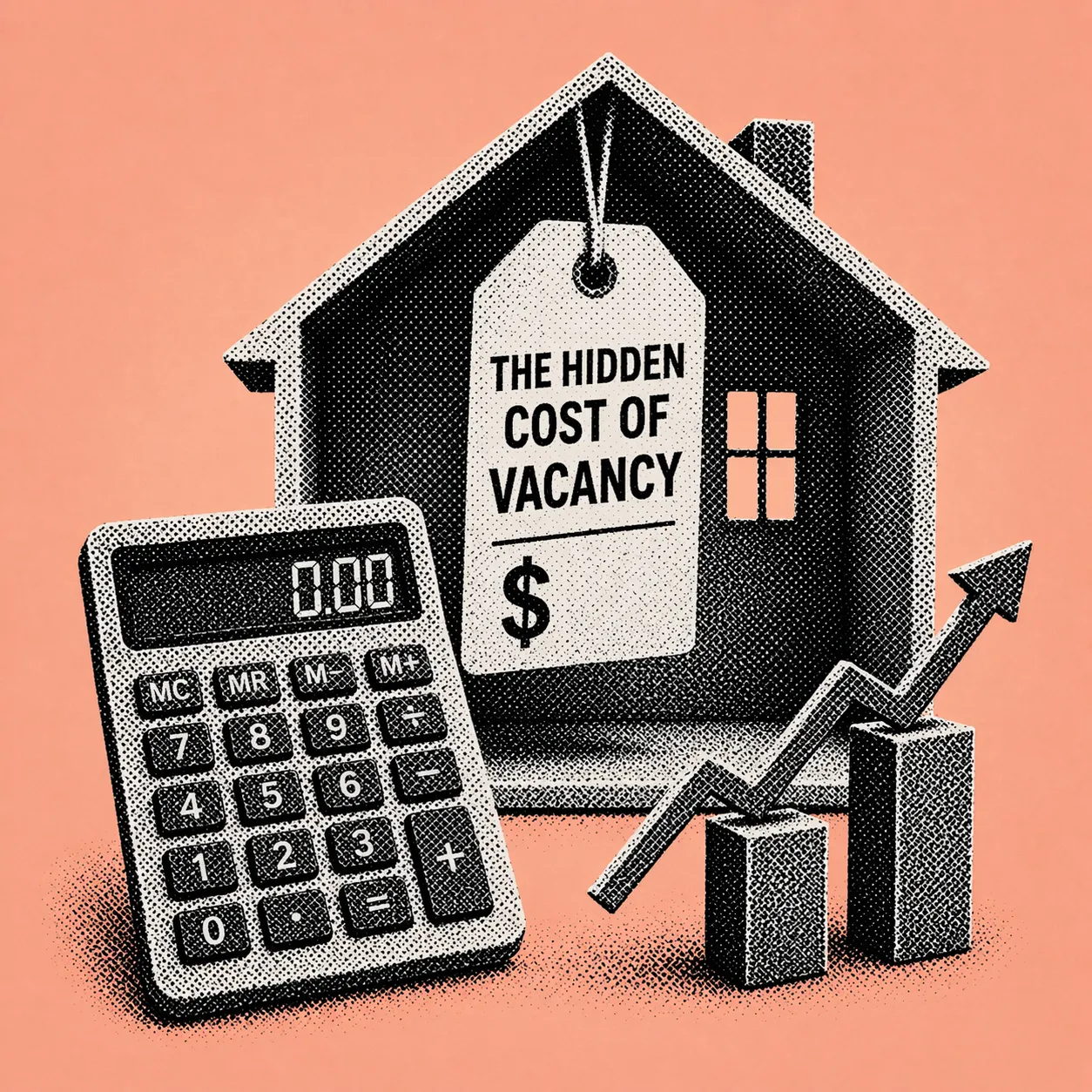
Vacancy hits twice: you lose rent and you still pay the mortgage, taxes, and utilities. This hub covers the four disciplines that compress vacancy days: measurement, leasing execution, renewal strategy, and year-round visibility.
Vacancy Reduction Hub: Cut Vacancy Days, Protect Cash Flow, and Grow NOI With a Proactive System
Vacancy is the most expensive silent expense in your rental business because it hits twice: you lose rent and you still pay the mortgage, taxes, utilities, and time. For independent landlords and property managers managing 1 to 100 units, vacancy reduction is not one tactic. It is a chain of small, controllable steps that either compress or expand your time-to-lease. The national rental vacancy rate has trended higher in recent quarters, and leasing timelines have stretched in many markets. In that environment, waiting to market until after notice, or relying on a post-and-wait approach, compounds your risk quickly.
Shuk's vacancy-reduction system is built to keep you ahead of the next gap with predictive lease renewal insights, continuous marketing visibility, and tenant review systems that help you retain strong residents and attract the next one faster. This hub curates practical resources, proof, and next steps so you can reduce vacancy days and strengthen NOI without adding chaos to your week.
What you will get here: fewer vacancy days through earlier renewals and better leasing execution when turnover happens, and higher NOI confidence through clearer numbers, faster decisions, and repeatable processes.
Start today: Track your notice-to-lease timeline for every unit and treat it as a KPI, not a surprise. Set a rule that renewal outreach begins before you think you need it.
The Four Disciplines Every Vacancy Reduction System Requires
Most landlords treat vacancy as a marketing problem. In practice it is four disciplines that interact and reinforce each other. Weak execution in any one of them compounds the cost of every turnover.
Measuring in days is where most vacancy strategies fall apart. Landlords who track vacancy as a rough annual rate cannot see the individual turn performance that actually drives results. Days vacant per turn and days from listing live to lease signed are the two metrics that reveal whether your process is compressing or expanding over time.
Leasing execution determines how quickly a qualified tenant moves from inquiry to signed lease. Strong listings, fast response times, friction-free showings, and immediate application steps after tours are the operational variables that separate landlords who fill units in two weeks from those who average six.
Renewal strategy is the highest-leverage vacancy tool because retention avoids the entire turn: marketing, showings, cleaning, repairs, and days empty. The landlords who perform best treat renewals like pre-leasing, starting earlier, standardizing the message, and using data signals rather than guesswork to prioritize outreach.
Year-round visibility means you always have a warm pipeline rather than starting from zero at turnover. Maintaining consistent marketing presence so prospective renters know your properties before a unit becomes available is the difference between a 10-day turn and a 45-day one.
Curated Resources: Vacancy Fundamentals and Advanced Optimization
Vacancy reduction resources below are grouped into two tracks. Vacancy Fundamentals covers pricing, listing quality, showing flow, and communication for building a clean, repeatable baseline. Advanced Optimization covers proactive renewals, year-round marketing visibility, and resident experience signals for shrinking vacancy further once the fundamentals are solid.
Vacancy Fundamentals
1. Vacancy Rate and Days Vacant Calculator
If you manage 1 to 100 units, vacancy is easiest to control when you measure it in days rather than feelings. A calculator translates one empty unit into a monthly and annual income impact, and lets you compare your performance against your own history rather than a national headline that may not reflect your market.
Track two metrics: days vacant per turn, and days from listing live to lease signed. Review them monthly and set a target to beat your last quarter by 10%. If you cannot say your last three turns averaged specific numbers, you do not have a vacancy strategy. You have a vacancy hope.
Scenario: You own a 6-unit building. One unit sits empty for 30 days. Even if your annual vacancy rate looks acceptable, that single month can wipe out a meaningful portion of your yearly cash flow. Measuring it in days makes the cost visible and the fix actionable.
2. Listing Quality Guide: Photos, Descriptions, and Trust Signals That Shorten Time-on-Market
When leasing timelines stretch, the landlords who win are not always the cheapest. They are the clearest. Strong listings reduce back-and-forth, attract better-fit renters, and improve conversion from inquiry to showing to application. In slower periods, renters compare more options, scrutinize details, and delay decisions. A clearer listing is often the fastest renovation you can do.
Add a friction-killer section to every listing: requirements, deposit structure, availability date, and showing method. Your goal is to answer the top 10 questions before a renter asks them.
Scenario: A first-time landlord posts five dim photos, no floor plan, and a vague description. They get inquiries but most ghost after asking basics. Another owner includes 20 bright photos, room dimensions, a simple pet policy, and a straightforward how-to-apply section. They get fewer junk inquiries but more showings that convert.
3. Showings and Follow-Up Playbook: The Standard That Prevents Dead Leads
Even great listings fail when the workflow is slow. Leads go cold fast, especially when renters are touring multiple units simultaneously. A showing playbook standardizes response time, scheduling, and follow-up so you do not lose qualified prospects to delay.
Set a non-negotiable: every inquiry gets a same-day response and a scheduled next step. If you cannot do same-day consistently, tighten your showing windows so renters can plan and you do not burn time. Vacancy is often not a marketing problem. It is a follow-through problem.
Scenario: A property manager with 18 units replies to inquiries once per day. By the time they respond, the renter has already toured two other options. After implementing a same-day response rule, they confirm a showing window quickly and send an application link immediately after the tour, converting more showings into completed applications.
Advanced Optimization
4. Predictive Renewal Readiness Guide: Prevent Vacancy Before Notice Arrives
The lowest vacancy day is the one that never happens. Renewal strategy is your highest-leverage vacancy tool because retention avoids the entire turn: marketing, showings, cleaning, repairs, and days empty. Your best defense is knowing which residents are likely to renew, which are at risk, and what to do earlier.
Create a renewal calendar that starts 90 to 120 days before lease end. Use predictive renewal insights to flag at-risk leases early so you can stabilize retention or start marketing before the turn begins with an accurate timeline. Vacancy reduction is not just about filling faster. It is about keeping longer, on purpose.
Scenario: You manage 22 units and wait for tenants to bring up renewal. Two of your best residents quietly plan to move and you learn 30 days out. You scramble and eat 25 vacancy days. With a proactive system, you would have started renewal conversations earlier, identified uncertainty signals, and offered clear options well before the decision was already made.
5. Year-Round Marketing Visibility Blueprint: Stay Discoverable Even When You Are Not Actively Leasing
Many DIY landlords market only when a unit is empty. That approach can be costly in a slower leasing environment where time-to-lease has stretched in many markets. Year-round visibility means you always have a warm pipeline: renters who have seen your properties, trust your process, and can move quickly when availability opens.
Maintain a coming-soon process: collect inquiries 30 to 60 days ahead when you can, and keep your property marketing consistent so you are not starting from zero at turnover. The goal is not to advertise more. The goal is to advertise earlier and more consistently so vacancy days compress.
Scenario: A 12-unit landlord in a suburban market posts listings only after a unit is vacant. Their average vacancy is 45 to 60 days. Another owner keeps a consistent presence with updated property pages, consistent branding, and a waitlist-style intake for future availability. When a tenant gives notice, they already have interested prospects to tour within days.
6. Tenant Review and Reputation System: Build the Trust Signals That Improve Conversions
Renters make decisions based on perceived risk. A unit that looks great but feels unknown can lose to a slightly worse unit with clear credibility signals. Review systems also support retention because residents are more likely to stay when they feel heard and see issues resolved consistently.
Choose two review moments: after a successful maintenance completion and after a renewal. Keep the request short, consistent, and automated where possible. Reviews are not vanity. They are a vacancy-reduction lever because trust shortens decision time.
Scenario: A small operator notices that applicants repeatedly ask the same questions: "Are repairs handled quickly?" and "Is the landlord responsive?" Without a reputation system, each leasing cycle starts from scratch and qualified renters hesitate. After implementing a structured review request at key moments, they build a simple trust layer that increases showing-to-application conversion.
What Vacancy Reduction Looks Like When the System Works
Macro conditions matter. Rental vacancy rates and leasing timelines have both trended in directions that make execution more important than it was in years of strong demand. When list-to-lease times stretch and vacancy rates rise, the gap between a landlord with a proactive system and one without becomes measurable in lost income.
The two examples below reflect how a proactive approach using predictive renewal insights, continuous marketing visibility, and better resident experience signals translates into outcomes.
Case Study 1: Independent landlord cuts vacancy from 60 to 15 days with year-round visibility
A DIY landlord owned 12 units across two small buildings. Each turnover historically produced 45 to 60 days of vacancy. The owner marketed only after move-out, relied on inconsistent follow-up, and often faced pricing uncertainty at the start of every leasing cycle.
Using Shuk, the owner implemented a continuous visibility approach: standardized listing templates, a coming-soon workflow, and faster lead follow-up. They tightened the showing process with pre-set windows and immediate application steps after tours.
Average vacancy days per turnover fell from approximately 60 days to approximately 15 days over two turns, converting a chronic vacancy pattern into a predictable, shorter leasing cycle.
Actionable takeaway: If you currently wait until the unit is empty, shift your timeline forward. Begin marketing the moment you have a credible availability date, even if it is coming soon.
Case Study 2: Property manager improves retention by 20% with predictive renewal insights
A small property management team oversaw 45 units across single-family and small multifamily properties. Their vacancy was not only a leasing issue. It was a renewal issue. They were often surprised by non-renewals, leaving too little time to market before a unit went dark.
They adopted Shuk's predictive renewal insights to identify renewal risk early, standardized a renewal communication cadence covering options, timelines, and clear expectations, and paired this with a resident experience loop of issue resolution and review prompts.
The team improved retention by 20% over the next renewal cycle and reduced surprise non-renewals, creating more predictable leasing timelines and fewer emergency turns.
Actionable takeaway: Treat renewals like pre-leasing. Start earlier, standardize your message, and use data signals rather than guesswork to prioritize outreach.
Frequently Asked Questions
How do I get started reducing vacancy if I only have 1 to 5 units?
Start by controlling the controllables: measure vacancy in days, tighten your response time, and standardize your listing and showing workflow. Your biggest gains come from removing friction in your process. Pick one metric and one workflow improvement this week. Track days from listing live to lease signed, and implement same-day inquiry response even if it starts as a templated reply. Small process improvements compound quickly at a small portfolio size because every vacant day represents a larger percentage of your annual income.
What is the fastest way to reduce vacancy time without dropping rent?
The fastest non-price lever is speed and clarity: faster lead response, clearer listings, and a smoother application-to-approval pipeline. Before you cut rent, run a quick conversion audit. Are you replying within hours rather than days? Does the listing answer the pet policy, deposit structure, and move-in timing clearly? Do you send the application immediately after the tour? In slower conditions, renters compare more options and delay decisions. Removing uncertainty from your listing and process often closes the gap without any price reduction.
When should I start marketing a unit before it is available?
Start as early as you can with an accurate availability date. In markets where leasing timelines have stretched, two-week turns are not guaranteed. If your region is experiencing higher vacancy rates, earlier marketing is a practical hedge. Create a pre-lease checklist at the moment notice is received: confirm the earliest realistic move-in date, schedule one to two showing blocks in advance, and publish a coming-soon listing immediately with clear expectations. The landlords who fill units fastest are the ones who never start from zero.
Can I collect rent while a unit is vacant?
If a tenant has legally vacated, rent typically stops. But if a tenant leaves early or breaks a lease, many jurisdictions require you to mitigate damages by re-renting, meaning your marketing and documentation both matter. Keep a vacancy file with a move-out and surrender confirmation, a listing-live date, and a showing log with applicant notes. Even if you manage casually, treating vacancy like an auditable process protects you and supports any claim for lost rent during the period the unit was reasonably marketed.
How do I measure the true cost of vacancy beyond lost rent?
Lost rent is only the headline. Track vacancy cost in three buckets: income loss calculated as days vacant multiplied by daily rent, turn cost covering make-ready, cleaning, and utilities, and risk cost covering delays, rushed tenant selection, and any eviction-related exposure. Most landlords who track all three find the true per-vacancy cost is significantly higher than a single month of rent. That full picture is what makes proactive renewal strategy and pre-leasing worth the effort.
Next Step: Build Your Proactive Vacancy Reduction System
Vacancy does not usually explode overnight. It creeps in when renewals are reactive, marketing starts late, and the leasing workflow depends on how busy you are that week. The landlords who reduce vacancy consistently share three disciplines: they measure performance in days and review it monthly, they run a standardized leasing workflow that does not depend on individual memory, and they treat renewals as a proactive system rather than an annual surprise.
Shuk is built to help you run vacancy reduction as a system: predictive lease renewal insights so you can keep good tenants longer and see risk earlier, continuous marketing visibility so you are never starting from zero when a unit turns, and tenant review tools to build the trust signals that improve conversions and reduce churn.
If you want to see how the workflow fits your portfolio, book a demo and walk through how Shuk's renewal, leasing, and visibility tools work together for landlords managing 1 to 100 units.
Shuk helps landlords and property managers get ahead of vacancies, improve renewal visibility, and bring more predictability to every lease cycle.
Book a free 20-min demo to see Shuk today.
The following guides cover every dimension of reducing rental vacancy: vacancy rate calculation and performance benchmarking, listing quality and time-on-market compression, showing and follow-up workflow, predictive lease renewal strategy, year-round marketing visibility, and tenant review systems that build the trust signals that shorten leasing cycles. Together they give independent landlords a repeatable, proactive system for keeping strong residents longer and filling vacancies faster when turnover happens.



Frequently Asked Questions
Find answers to common questions about our products and services
How do I get started reducing vacancy if I only have 1 to 5 units?
When should I start marketing a unit before it is available?
How do I measure the true cost of vacancy beyond lost rent?
What is the fastest way to reduce vacancy time without dropping rent?
Can I collect rent while a unit is vacant?
Vacancy does not usually explode overnight. It creeps in when renewals are reactive, marketing starts late, and the leasing workflow depends on how busy you are that week. Platforms like Shuk Rentals support vacancy reduction by bringing predictive renewal insights, continuous marketing visibility, and tenant review systems into one connected workflow so the gap between your leasing model and your actual NOI stays as narrow as possible.