
Every renter who moves out leaves with knowledge of how to get into your unit, and often with a key you never got back. They may have made copies, given one to a friend or dog walker, or handed one to a contractor. When the next renter moves in, those keys still work unless you change something. That is why rekeying locks between tenants is one of the cheapest and most important steps in a turnover.
This guide covers the difference between rekeying and replacing, typical costs, the state laws that require rekeying or lock changes, smart locks and master keys, who pays, and how to build a simple key control log. For more on keeping units in shape, browse our maintenance guides for independent landlords and small property managers.
Note: This article is general education, not legal advice. Rekeying, security device and lock-change rules vary by state and city, and the statutes described below can change. Check your state and local law, and consult a local attorney if you are unsure what applies to your property.
Rekeying versus replacing a lock
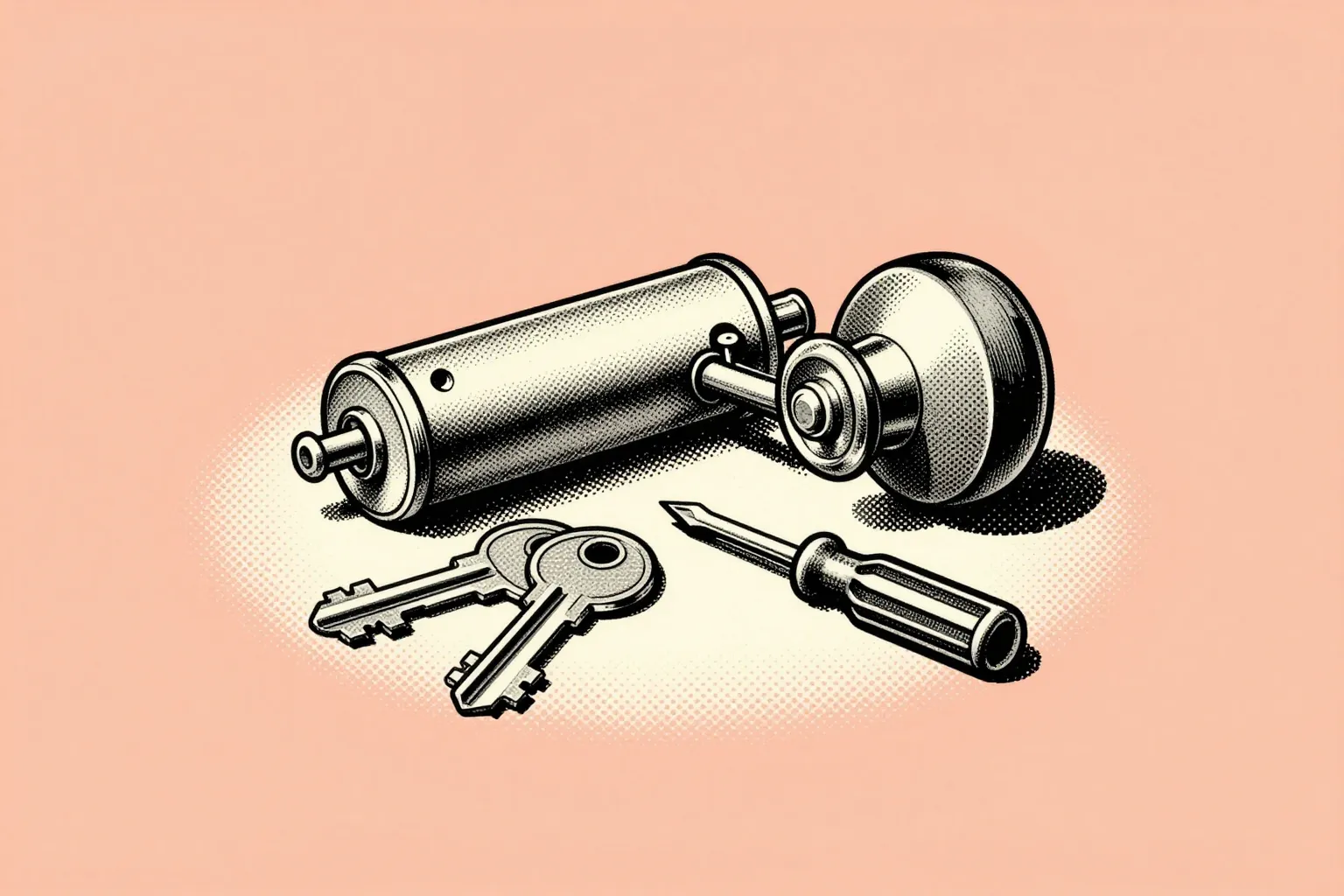
Rekeying changes the inside of the lock so old keys no longer work. A locksmith (or a landlord with the right kit) removes the cylinder, swaps the small pins inside to match a new key, and reinstalls it. The hardware on the door stays the same.
Replacing means installing new hardware: a new knob, lever, deadbolt or smart lock.
| Situation | Usually the better choice |
|---|---|
| Routine turnover, locks in good working order | Rekey |
| Lock is worn, sticks, or does not latch reliably | Replace |
| Door was forced or the lock was damaged | Replace, and repair the door and frame |
| You want all exterior doors on one key | Rekey to a single key, if the locks share a keyway |
| Upgrading to keyless or smart locks | Replace |
| Cheap builder-grade locks on a unit you are renovating | Replace with better-quality hardware |
Rekeying is usually cheaper because you keep the hardware. Replacement makes sense when the lock is failing anyway or when you are upgrading.
What rekeying costs
Prices vary by region, lock type and how many cylinders you have. Angi's 2026 locksmith cost guide puts rekeying at about $50 to $130 per lock, plus a service call fee of about $35 to $100, and full lock replacement at about $100 to $300 per lock. It lists professional smart lock installation at about $100 to $200, with after-hours calls adding more.
Illustrative example
Suppose a single-family rental has a front door and a back door, each with a knob and a deadbolt, so four cylinders. At Angi's ranges, rekeying all four would run roughly $200 to $520 plus a $35 to $100 service call. Replacing all four would run roughly $400 to $1,200. Ask for a per-cylinder price and a combined quote before the locksmith arrives, and schedule the visit for the same day as other turnover work so you pay one trip fee. These figures are illustrative only.
Some landlords rekey themselves. Certain lock brands sell user-rekeyable cylinders, and pinning kits exist for common keyways. Doing it yourself can pay off across many doors, but a poorly pinned lock can fail, so weigh the savings against your time and skill.
State laws that require rekeying
Most states do not have a statute that specifically requires rekeying between renters. Where there is no statute, rekeying is still widely treated as basic good practice, and a break-in by someone using an old key can create liability arguments you do not want to defend.
Texas is the clearest example of a state that does require it:
- Required devices. Texas Property Code 92.153 requires landlords to provide, at their expense, specific security devices, including a keyed dead bolt or doorknob lock, a keyless bolting device and a door viewer on each exterior door, latches on exterior windows, and a pin lock with a handle latch or security bar on sliding glass doors, subject to some exceptions.
- Seven-day rekey. Texas Property Code 92.156 requires the landlord to rekey key, card or combination operated security devices at the landlord's expense no later than the seventh day after each tenant turnover date. It does not apply to closet doors or other interior doors.
- Extra rekeying at the renter's request. The same section lets a renter ask for additional rekeying or changes at any time, at the renter's expense.
- Master keys. Rekeying required because of the landlord's use or change of a master key must be paid by the landlord.
- Remedies. Under Texas Property Code 92.164, a renter whose landlord fails to rekey can, in some circumstances, rekey and deduct the cost from rent, terminate the lease after a written request goes unanswered, or sue for damages and civil penalties.
Cities and counties can add their own security or habitability requirements, so check local codes too. Our guide to what landlords are legally required to provide under the implied warranty of habitability covers how working locks fit into the broader duty to keep a unit livable.
Lock changes for survivors of domestic violence
A growing number of states require landlords to change locks quickly for renters who are survivors of domestic violence, sexual assault, stalking or similar abuse. The details differ sharply from state to state, so treat these as examples only.
- California, when the abuser is not a tenant in the unit. Under California Civil Code 1941.5, the landlord must change the locks within 24 hours after the renter provides a written request and qualifying documentation, such as a protective order, a police report, a statement from a qualified third party, or other documentation that reasonably verifies the abuse. The landlord pays. If the landlord does not act within 24 hours, the renter may change the locks, must use locks of similar or better quality, must notify the landlord within 24 hours and give the landlord a key, and the landlord must reimburse the renter within 21 days.
- California, when the abuser is a tenant in the same unit. California Civil Code 1941.6 applies a similar process, but the renter must provide a court order that excludes the restrained person from the unit. The restrained person remains liable under the lease.
- Washington. RCW 59.18.585 requires a landlord to rekey or replace a lock when a renter provides a court order granting the renter possession to the exclusion of a cotenant. Here the renter pays for the change, and the landlord may not give a new key to the excluded person.
Other states have their own versions, with different deadlines, documents and payment rules. Write a short internal procedure now: who receives the request, how you verify the documents your state allows, which locksmith you call, and how you keep the request and documents confidential. When the request comes, you will need to move within hours, not days.
Smart locks and code resets
Smart locks and keypads remove the need to collect metal keys, but they create their own turnover tasks. Old codes and app access are the new version of an unreturned key.
- Delete every renter user code, guest code and temporary code from the lock.
- Remove the former renter from any lock app, hub or account that controls the device.
- Change your own admin or master code if the renter ever saw it or if a contractor used it.
- If the lock also has a physical key override, rekey that cylinder too.
- Replace batteries at turnover and note the date.
- Confirm the device is on current firmware if the manufacturer provides updates.
- Issue the new renter their own code on move-in day, not before.
Put smart lock access terms in your lease or a lease addendum, including who may create codes, whether the renter may connect the lock to their own account, and what happens to codes at move-out.
Master key systems
A master key system lets one key open every unit while each renter's key opens only their own door. It is convenient for small multifamily owners who need maintenance access, but it concentrates risk.
- A lost master key is expensive. If it goes missing, every lock on the system should be rekeyed.
- Keep master keys to as few people as possible and log every one.
- Turnover still matters. Rekeying one unit on a master system must keep it working with the master key, so use a locksmith who has the system's key chart.
- Entry rules still apply. Having a key does not change your notice obligations. Our guide to how much notice you must give tenants before entering covers state rules.
Who pays for rekeying
As a starting point, rekeying at turnover is generally a landlord expense, because it protects the property and the incoming renter. Texas makes that explicit. Beyond that, your lease and state law decide.
- Lost keys or fobs during a tenancy. Many leases charge the renter for replacement keys or fobs, or for rekeying if a renter loses a key. Put the charge in the lease and keep it reasonable.
- Unreturned keys at move-out. Some leases allow a charge if keys are not returned. Whether you can deduct it from the deposit depends on state deposit law; Texas, for example, allows a deposit deduction for rekeying only when the renter left in breach of the lease and the lease contains a deduction clause that is underlined or in bold print.
- Renter-requested changes. Extra rekeying a renter asks for is often at the renter's expense, as in Texas.
- Survivor lock changes. Follow your state's rule; California puts the cost on the landlord and Washington on the renter in the situations described above.
Before you deduct anything, check the rules in our guide to security deposit laws by state for landlords.
Keep a key control log
A key control log is a simple record of every key, fob and code for each unit. It tells you what to collect at move-out and proves what you did at turnover. Track these fields:
- Unit and door (front, back, garage, mailbox, storage, common area)
- Key, fob or code identifier and how many were issued
- Who received each one and the date
- Date returned and how many came back
- Date the lock was rekeyed or replaced, who did it, and the cost
- Date smart lock codes were deleted and new codes issued
- Who holds master or spare keys
Store the log with each property's records, and keep the locksmith's invoice with it.
Where rekeying fits in the turnover checklist
Timing matters. Rekey too early and contractors working in the unit will need the new key. Rekey too late and you risk missing the move-in date or, in Texas, the seven-day deadline.
- Move-out day. Collect every key, fob, remote and access card and check them against your log. Delete the renter's smart lock codes.
- Move-out inspection. Record the condition of every lock, door and frame, and note whether all keys came back. Our move-out inspection checklist for landlords walks through the full inspection.
- Repairs and cleaning. Let contractors use a lockbox or temporary code during make-ready work.
- Rekey or replace. Once outside workers are done, rekey or replace all exterior locks, including garage entry doors and any shared entry locks the renter could open.
- Test. Try every new key in every lock, including deadbolts, from both sides.
- Update the log. Record the new key counts and the rekey date.
- Move-in. Hand over keys and codes, have the renter sign for them, and record the count.
For the rest of the turnover sequence, see our tenant turnover checklist to cut vacancy days.
Frequently asked questions
Do landlords have to rekey locks between tenants?
It depends on the state. Texas requires landlords to rekey within seven days after each tenant turnover, while many states have no specific statute. Rekeying is still widely treated as good practice everywhere.
How much does it cost to rekey a lock?
Angi's 2026 cost guide puts rekeying at about $50 to $130 per lock, plus a service call fee of about $35 to $100. Prices vary by region and lock type.
Can a landlord charge a tenant for rekeying?
Sometimes. Turnover rekeying is generally a landlord expense, but a lease may charge the renter for lost keys or requested lock changes where state law allows. Check your state's deposit and security device rules first.
Is rekeying cheaper than changing the locks?
Usually, because rekeying keeps the existing hardware and only changes the pins inside the cylinder. Replacement makes more sense when locks are worn, damaged or being upgraded.
What to do next
Rekeying is a small job that is easy to forget in the rush of a turnover. Doing it well means knowing which keys came back, proving the condition of the locks at move-out, billing charges your lease allows, and having a locksmith ready when a renter needs a lock changed quickly.
Shuk keeps those pieces in one place. The Inspection Tool records move-out inspections with photos, videos and notes on each item and produces a final inspection report, so the condition of every lock and door is documented. Payment requests let you bill a renter for key or fob replacement or rekeying where your lease and state law allow, with the locksmith's invoice attached. Landlord-only maintenance tasks track preventive work such as lock checks and smart lock battery changes by property. And the Service Provider Network, a directory of local service providers organized by trade and service area, helps you find contact details when you need a locksmith.
At as low as $2 per unit per month, with no setup fees and no contract, and with White Glove Onboarding included at no additional cost, Shuk makes secure, well-documented turnovers feasible for landlords and property managers up to 200 units.
Book a demo at shukrentals.com/book-a-demo to see how the Inspection Tool, payment requests, landlord-only maintenance tasks and the Service Provider Network work together so every turnover ends with locks you control and records you can prove.