Run Maintenance Like a System, Not a Scramble
Maintenance feels unmanageable when it is handled as a stream of one-off messages: a text from a resident, a voicemail from a vendor, an invoice that does not match the quote, and a recurring HVAC issue no one logged as a pattern. The goal of this hub is to replace that chaos with a repeatable playbook covering schedule what you can, standardize what you repeat, and track what you spend. The financial case is clear. Reactive maintenance costs are commonly 25% to 30% higher than preventive work due to after-hours labor premiums, expedited parts, and everything-is-urgent inefficiencies. Industry research from NAA and IFMA shows that proactive programs can reduce unexpected breakdowns and downtime significantly while lowering overall maintenance costs. In multifamily operations, work orders often take multiple days end-to-end, and automation can cut completion time by approximately 37% by removing manual routing and follow-up loops. This hub covers the five operational areas where most maintenance systems break down: preventive scheduling, vendor management, work order workflows, emergency protocols, and cost tracking. Together they give independent landlords and small property teams a repeatable system that reduces emergency frequency, speeds resolution, and produces maintenance budgets you can explain and defend month after month.
Maintenance operations improve fastest when you pick one high-impact starting point and implement it end to end. The guides in this hub are organized by where you feel the most pain today, so you can start there and build toward a complete maintenance operating system over time. Use the links below to find your entry point.
Preventive maintenance is how you reclaim control. Industry findings consistently show that reactive maintenance costs are 25% to 30% higher than preventive work due to after-hours labor premiums, expedited parts, and the compounding inefficiency of treating everything as urgent. IFMA research emphasizes that proactive programs can reduce unexpected breakdowns and downtime while lowering overall maintenance costs. NAA notes that many operators have formal preventive maintenance programs, but the gap is execution: consistency, documentation, and scalable scheduling.
Practical starting points: Build a seasonal HVAC cadence with filter checks monthly during peak season and system inspections pre-summer and pre-winter, logging findings so "same unit, same issue" patterns become visible. Run quarterly leak checks at common failure points including under sinks, supply lines, and water heaters to reduce catastrophic events that trigger emergency pricing. Standardize make-ready inspections so small issues do not become day-three surprises that delay occupancy and inflate vacancy.
Actionable takeaway: Pick ten preventive tasks that address your most expensive recurring emergencies, schedule them for the next 30 days, and track completion before expanding. Build the schedule from your actual invoices and work orders, not a generic checklist. Recurring spend is the best indicator of what should become preventive.
Most maintenance delays are not hard repairs. They are coordination failures: waiting on callbacks, unclear scopes, and missed appointments. Vendor management is the discipline of having the right vendors with the right expectations ready before you need them.
Practical starting points: Build a two-tier vendor bench with one preferred vendor and one backup for each trade covering plumbing, electrical, and HVAC. Require day-before and day-of confirmations for occupied-unit appointments to reduce wasted trips and resident frustration. Standardize what vendors must submit including photos, part numbers, and not-to-exceed thresholds before work begins to reduce invoice disputes and pricing discrepancies that are commonly tied to informal manual processes.
Actionable takeaway: Set three non-negotiables for every vendor: a response time target, required documentation, and a billing format. Then enforce it consistently. Your best vendor is often the one who is easiest to manage at scale, not necessarily the one with the lowest hourly rate.
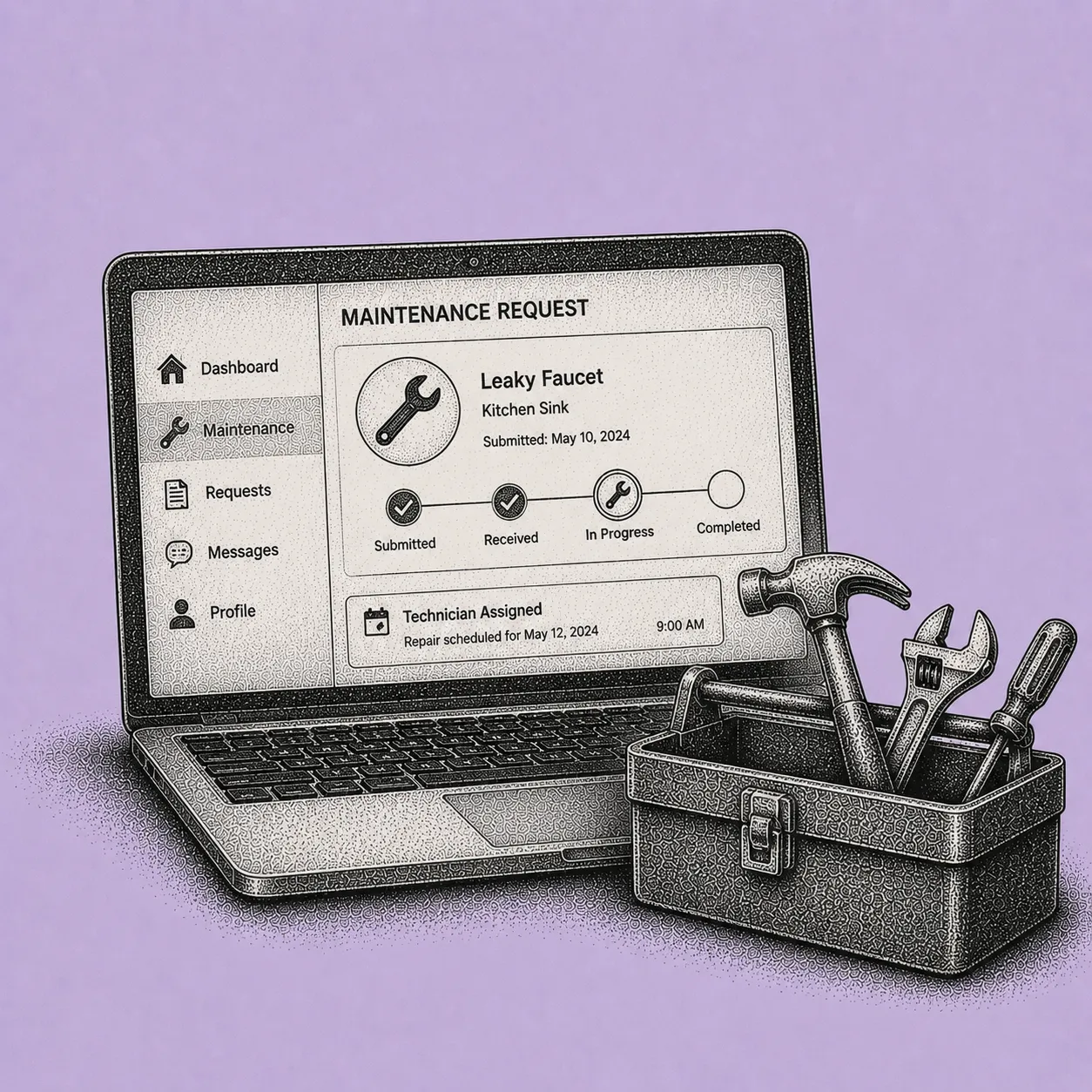
The maintenance workflow is the path every request follows: intake, triage, assignment, scheduling, completion, resident communication, and cost capture. When any step is ambiguous, you get repeat messages, rework, and stalled work orders.
Research consistently supports that workflow discipline matters. Automated maintenance systems can reduce average work order completion time by approximately 37% by tightening assignment, scheduling, and follow-up loops. Multifamily benchmarks show completion times measured in days rather than hours for many portfolios, reinforcing the value of removing manual bottlenecks.
Practical starting points: Define triage categories of emergency, urgent, and routine with response time expectations for each, so not everything is treated as a crisis. Send automatic status messages at key moments including received, scheduled, technician en route, and completed, because communication drives satisfaction and reduces duplicate tickets. Build a dedicated workflow for unit turns covering inspection, scope, parts, vendor scheduling, and final quality check so vacancy days do not inflate due to sequencing mistakes.
Actionable takeaway: Write your workflow in five statuses and commit to them. If a work order cannot be put in a status instantly, your process is too complicated for real operations.
Emergencies are inevitable. Chaos is optional. Reactive and emergency repairs commonly carry cost multipliers of three to five times the cost of scheduled work, plus after-hours labor premiums. Beyond cost, emergencies are where reputations are made or broken, especially when residents do not know what is happening.
Practical starting points: Map shutoff locations for every property and create a "first ten minutes" water event checklist with photo documentation steps for vendors and insurance. Build heat and air conditioning outage triage rules with temporary mitigation steps and vendor escalation rules based on temperature and local habitability requirements. Create three standard resident communication templates: one for "we are aware," one for "here is the estimated timeline," and one for "here is what you should do right now," to reduce inbound calls and confusion.
Actionable takeaway: Draft your emergency decision tree before the next emergency. If you only build it when you are already stressed, you will miss critical steps and lose time when minutes matter.
Maintenance costs become uncontrollable when they are not categorized, compared, and trended. Preventive maintenance is easier to defend financially when you can point to reduced breakdowns, fewer emergencies, and tighter vendor billing. IFMA research highlights material cost differences between reactive and preventive approaches. NAA also points to preventive programs producing operational expense reductions in the 12% to 18% range in some analyses, with compelling ROI when measured consistently.
Practical starting points: Track spend in system-level buckets covering HVAC, plumbing, electrical, appliances, exterior, and turns so you can see where costs are shifting. Set not-to-exceed approval thresholds for routine work so anything above the cap requires photos and scope review before approval. Flag repeat issues: if the same unit or asset type generates the same repair repeatedly, convert it into a preventive maintenance task. This is how reactive spend becomes planned spend over time.
Actionable takeaway: Hold a 30-minute monthly maintenance review covering your top five vendors by spend, your top five recurring issues, and the one preventive maintenance change you will make next month.
Mini-case study 1, faster closes through standardized intake and automated routing: A small property team managing a mixed portfolio struggled with lost requests. Residents emailed, texted, and called. The same issue would be reported multiple times and vendor assignment depended on whoever noticed first. After standardizing intake into a single work-order workflow and using automation to route requests by category and trigger resident status updates, work orders closed faster, consistent with the approximately 37% reduction in completion time associated with automated maintenance processing in industry comparisons. Administrative time dropped because residents stopped checking in once updates became predictable. If your biggest problem is volume and follow-up, workflow automation is often the quickest win because it reduces coordination time before it reduces repair time.
Mini-case study 2, fewer emergencies by converting repeat repairs into a preventive plan: A landlord with older building systems faced repeated emergency calls especially around water and HVAC issues. Repairs were happening after failure, driving after-hours premiums. After identifying top recurring issues from invoices, building a small preventive schedule and executing it consistently, and shifting vendor relationships to include scheduled inspection blocks, the portfolio experienced fewer surprise breakdowns and more predictable monthly spend with fewer after-hours calls. The simplest preventive plan is often built from your last 90 days of work orders. Repeat issues are your roadmap.
How do I set up a preventive maintenance schedule that is realistic?
Start with what breaks most often and what costs most when it breaks. List your critical systems covering HVAC, plumbing, electrical, appliances, and life-safety devices. Pick a minimum viable set of ten to fifteen tasks you can complete monthly or quarterly. Assign intervals by season and risk rather than trying to build a perfect comprehensive program upfront. Track completion in one place so missed preventive maintenance does not disappear. Review quarterly: if a task does not prevent issues, revise it. If a reactive issue repeats, add a preventive task for it. Build the schedule from your invoices and work orders, not from a generic template.
What is a reasonable maintenance turnaround time and how can workflows improve it?
Many multifamily maintenance operations measure completion in days rather than hours, with benchmarks around 3.88 days appearing in industry materials. When the process is manual, delays often happen before repairs begin through intake confusion, slow assignment, and repeated scheduling attempts. A single intake channel reduces duplicate tickets and missed details. Triage rules prevent routine requests from being treated like emergencies. Automated routing and reminders reduce the "waiting for someone to notice" gap. Status updates reduce resident follow-ups and administrative churn. Track two timestamps: submitted to scheduled, and scheduled to completed. Your biggest improvement opportunity is usually the longer of the two.
How do I prevent vendor no-shows and invoice surprises?
Vendor no-shows and billing disputes are symptoms of unclear expectations and weak documentation. Require day-before and day-of appointment confirmations for occupied units. Standardize scope formats requiring problem description, photos, and access notes in the work order. Set not-to-exceed approval caps for routine categories with documentation required above the threshold. Require invoices to reference the work order ID and include a parts and labor breakdown to reduce mismatches. Track on-time rate, documentation quality, and cost variance by vendor on a quarterly basis. If a vendor cannot follow your documentation requirements, they are not scalable regardless of their technical skill.
What is the most important thing to measure first in a maintenance operation?
Start with two baselines: average time from submitted to scheduled, and average time from scheduled to completed. Even without perfect data, tracking these exposes your biggest bottleneck. Then identify your top three recurring repairs from the past 90 days and convert them into preventive tasks. Reactive spend is the most actionable indicator of where your preventive investment should go next.
If you want to see how maintenance scheduling, vendor coordination, work orders, and expense tracking work together in one system built for landlords managing one to 100 units, book a demo and walk through how Shuk's maintenance workflow applies to your specific portfolio size and property types.
{
"@context": "https://schema.org",
"@type": "FAQPage",
"mainEntity": [
{
"@type": "Question",
"name": "How do I set up a preventive maintenance schedule that is realistic?",
"acceptedAnswer": {
"@type": "Answer",
"text": "Start with what breaks most often and what costs most when it breaks. Pick ten to fifteen tasks covering your critical systems and assign intervals by season and risk. Track completion in one place so missed tasks do not disappear. Review quarterly and build from your actual invoices and work orders rather than a generic template."
}
},
{
"@type": "Question",
"name": "What is a reasonable maintenance turnaround time and how can workflows improve it?",
"acceptedAnswer": {
"@type": "Answer",
"text": "Many portfolios measure completion in days rather than hours, with benchmarks around 3.88 days in industry data. A single intake channel, triage rules, automated routing, and status updates reduce both administrative delays and resident follow-up calls. Track submitted-to-scheduled and scheduled-to-completed separately since your biggest improvement is usually in the longer of the two."
}
},
{
"@type": "Question",
"name": "How do I prevent vendor no-shows and invoice surprises?",
"acceptedAnswer": {
"@type": "Answer",
"text": "Require day-before and day-of confirmations for occupied units. Standardize scope formats with problem description, photos, and access notes. Set not-to-exceed approval caps with documentation required above the threshold. Require invoices to reference the work order ID with a parts and labor breakdown. Track performance by vendor quarterly."
}
},
{
"@type": "Question",
"name": "What is the most important thing to measure first in a maintenance operation?",
"acceptedAnswer": {
"@type": "Answer",
"text": "Start with two baselines: average time from submitted to scheduled, and average time from scheduled to completed. Then identify your top three recurring repairs from the past 90 days and convert them into preventive tasks. Reactive spend is the most actionable indicator of where your preventive investment should go next."
}
}
]
}
Shuk helps landlords and property managers get ahead of vacancies, improve renewal visibility, and bring more predictability to every lease cycle.
Book a demo to get started with a free trial.
The following guides cover every dimension of a professional maintenance operation: how to build a preventive schedule by system and season, how to onboard and manage vendors with documented service-level expectations, how to design a work order workflow from intake through close so requests never fall through the cracks, how to prepare for emergencies before they happen, and how to track and analyze maintenance costs by unit and property. Together they give landlords and property teams the structure to shift from reactive firefighting to proactive system management.

A pest complaint is never just a bug. It is a habitability risk, a reputation risk, and often a cost snowball waiting to happen.
Here is the scale: about 14.8 million U.S. housing units reported rodent signs in a 12-month period, and roughly 14 million showed cockroach sightings according to U.S. Census housing-condition data. If you manage multifamily properties, the odds you will deal with pests at least once a year are high. Industry surveys show pest pressure is a routine operating reality for rentals across all property types and markets.
The hard part is not admitting pests happen. The hard part is managing the crisis fast, documenting every step, and preventing repeats without blowing your budget or mishandling tenant communication. That is where most independent landlords get stretched thin: you are coordinating inspections, scheduling vendors, tracking follow-ups, and trying to keep a clear paper trail while tenants understandably want immediate answers.
This guide shows you how to run pest response like a professional maintenance program, from early detection through long-term prevention, while keeping requests, messages, photos, vendors, and expenses organized in one place.
Treat every pest report as a time-sensitive maintenance work order with documentation, deadlines, and a prevention plan, not an informal "I'll swing by later" task.
Effective pest control in rentals is less about a single exterminator visit and more about a repeatable system. The most reliable approach is Integrated Pest Management, a prevention-first framework that reduces pests by combining sanitation, exclusion through sealing entry points, targeted treatment, and ongoing monitoring instead of relying only on sprays. Many housing and public-health programs emphasize IPM because it is safer, more sustainable, and often more cost-effective over time.
You also have legal obligations. Across the U.S., the implied warranty of habitability generally requires landlords to keep rentals safe and healthy, often tied to local housing codes and public health standards. Pest infestations can fall squarely into that territory and the rules vary significantly by state and city. New York City's Local Law 55 prioritizes IPM-style remediation and sets compliance expectations around indoor allergen hazards including pests. Chicago's bed bug ordinance requires documented timely action and can impose significant daily fines for violations. Texas sets repair and remedy rules and timelines when health and safety is affected. Florida includes pest control in habitability obligations in many rentals, with property-type caveats and notice requirements in certain circumstances.
The winning operational formula is to detect early, communicate clearly, choose the right method, budget intentionally, and prevent recurrence. Use a single system of record for requests, messages, invoices, and follow-ups. If it is not documented, it might as well not have happened, especially during disputes.
Start by classifying the pest and confirming your assessment with an inspection rather than assumptions. The most common rental-property pests have different drivers, health impacts, and best first moves.
Rodents. National housing data shows rodent signs are widespread, with approximately 14.8 million U.S. housing units reporting sightings or signs in a year. Rodents can carry diseases and contaminate food. They also chew wiring and building materials, increasing fire and repair risk. The CDC emphasizes prevention and safe cleanup rather than reactive treatment alone.
Cockroaches. About 14 million U.S. housing units reported cockroach sightings in a year, and sightings are strongly associated with structural deficiencies. Roaches are a well-documented asthma trigger, and housing research links cockroach allergens with increased asthma morbidity especially where cracks, moisture, and disrepair persist.
Bed bugs. NPMA research underscores how pervasive bed bugs are across housing types, with pest professionals reporting bed bugs across apartments and single-family homes at very high rates. Bed bugs are not known for disease transmission but they cause significant psychological distress and tenant disruption, and they are commonly misidentified.
Ants. Ant activity commonly spikes in spring and summer and is often linked to moisture, landscaping, and entry points.
Your legal duty: In most jurisdictions you must provide habitable housing. The Legal Information Institute explains the implied warranty of habitability as a baseline doctrine requiring landlords to maintain safe livable conditions, often tied to code compliance. Beyond that baseline, local rules can be highly specific, so confirm timelines and requirements for your jurisdiction before responding.
What identification looks like in practice: One roach sighting in a condo unit likely indicates German roaches, which often signal a larger hidden population. Prioritize a building-wide inspection rather than a single-unit spray. Rodent droppings in a basement laundry room should be treated as an exclusion problem covering gaps, doors, and penetrations plus sanitation, not just traps. When a tenant reports bites, avoid guessing. Schedule a qualified inspection and ask for photos or specimens rather than relying on bite patterns, since bed bugs are frequently misidentified.
Classify the pest, confirm with inspection rather than assumptions, and map likely sources across food, water, shelter, and entry points. Then match your response to the pest and your local legal timeline.
Pest problems escalate when tenants feel ignored, or when landlords act without clear notice and preparation instructions. Your goal is to be fast, calm, and specific.
A professional response timeline you can reuse: Within 24 hours, acknowledge the report, request photos and details, and provide immediate safety and containment tips. Within 48 hours, schedule an inspection through your maintenance tech or a pest professional. Within 72 hours, schedule treatment or provide a written plan and date window. Adjust this timeline for your jurisdiction, the severity of the infestation, and vendor availability. For some issues like bed bugs, certain cities require faster formal steps.
Tenant-ready scripts:
Acknowledgment within 24 hours: "Thanks for letting me know. I am opening a pest-control work order today. Please reply with where you saw activity, when you saw it, and any photos. We will schedule an inspection within 48 hours and share next steps."
Preparation instructions before treatment: "To make treatment effective, please complete the attached prep checklist by this date: remove items from under sinks, seal food, reduce clutter, and follow any laundry or bagging steps provided by the pest company."
Entry notice reminder: "We will provide the required notice before entry, and the technician will only access the affected areas unless you authorize otherwise." This is particularly important in states with explicit notice rules such as California's Civil Code entry requirements.
Documentation as your best defense: Keep a single organized record covering the tenant report date and time, photos and videos, inspection notes including "no evidence found" when applicable, vendor recommendations and treatment plan, notices to enter and tenant prep confirmations, and invoices and follow-up outcomes. This matters because tenant remedies including repair-and-deduct and rent withholding can hinge on whether you responded timely and reasonably under habitability standards. Without records you also cannot spot patterns such as a recurring unit, a recurring vendor, or a recurring entry point.
Communication examples: An ant surge after heavy rain where a tenant reports ants in the kitchen: respond the same day, ask for photos, provide immediate steps, schedule an inspection for the moisture source, and seal the entry point near a plumbing penetration. A bed bug allegation in a six-unit building: notify adjacent units for inspection without naming the reporting tenant, document everything, and issue prep instructions early to prevent spread and reduce re-treatments.
Create one standard pest communication workflow covering acknowledge, inspect, treat, and follow up, and keep it in writing. Consistency builds tenant trust and reduces legal risk.
Your method should be driven by pest type, severity, building layout, and health and safety risk.
DIY versus professional service: DIY is reasonable for minor isolated issues such as a few outdoor ants or a single mouse caught early, if local law and lease terms allow and you can safely execute. Professional service is strongly recommended for bed bugs, recurring roaches, and multi-unit rodent activity because partial treatment can push pests into adjacent units and worsen the problem.
Why IPM tends to win in rentals: EPA and housing-focused IPM guidance emphasizes combining sanitation to remove food sources, exclusion through sealing gaps, repairing screens, and adding door sweeps, moisture control through fixing leaks and improving ventilation, targeted treatment using baits, gels, dusts, and limited sprays as needed, and monitoring through sticky traps and follow-up inspections. IPM is particularly effective in multifamily because it addresses root causes including building cracks, penetrations, and shared chases, rather than masking symptoms.
Vendor vetting, what to ask before you hire: Request a written IPM plan for your building type, scope clarity covering which units and common areas are included, prep responsibility specifying what tenants must do versus what the vendor will handle, a re-treatment policy covering how many visits are included and over what timeline, documentation in the form of treatment reports you can store for compliance and disputes, and proof of insurance and licensing with local verification.
Method choices in practice: A bed bug situation handled late can balloon from approximately $1,200 when caught early through proactive inspection to $7,500 or more once multiple units, repeat treatments, and tenant disruption stack up. The operational lesson is to act fast, inspect adjacent units, and use a structured plan. For rodents in an older duplex, traps are secondary to exclusion: sealing gaps around utility penetrations and adding door sweeps. For German roaches in a multi-unit, a professional uses baits and crack-and-crevice treatment plus recommendations to seal wall gaps and address moisture.
Choose vendors who talk about exclusion, sanitation, and follow-ups rather than one-and-done spray solutions. One-and-done is rarely a real plan in rentals.
Pest control costs are easiest to manage when you plan for them like any other maintenance category: predictable baseline plus contingency reserve.
Typical cost categories to track: Initial inspection sometimes credited toward treatment. Treatment costs covering one-time or multi-visit service. Exclusion and repairs covering sealing, sweeps, screens, and minor carpentry. Unit turns covering deep cleaning and disposal of contaminated items especially in severe bed bug cases. Ongoing contract costs for quarterly or annual IPM monitoring.
Rodent infestation cost ranges can be wide depending on severity, from low hundreds to several thousand dollars when exclusion and repairs are needed. Your real financial risk is the secondary cost: vacancy loss, tenant concessions, repeated callbacks, and potential code enforcement exposure.
Sample budget comparison by approach:
DIY traps and baits cover materials and your time. Best for early isolated mouse or ant activity. The risk is missing the root cause and generating recurring service calls.
A one-time professional visit covers treatment and a short follow-up. Best for minor roach or ant issues with a verified limited scope. The risk is failure in a multi-unit setting without an IPM approach.
An annual IPM contract covers monitoring, targeted treatments, and reporting. Best for multifamily and recurring issues. The risk is that it requires consistent access and documentation to function as intended.
ROI of prevention: The bed bug early versus late example demonstrates classic return on investment: spending a smaller amount early prevents a multi-unit spiral that becomes several times more expensive. The same logic applies to rodents where exclusion repairs feel expensive compared to traps but reduce repeat infestations and property damage risk.
Tracking pest expenses by property and by unit allows you to identify chronic hotspots. Attaching receipts and invoices to the work order ties every cost to the event and vendor. Categorizing spending by inspection, treatment, and repairs shows you what is driving totals. Documenting tenant-caused conditions with photos and notes is useful if your lease allows chargebacks and your local law permits it.
Do not manage pest costs from your bank feed alone. Track by unit and property and by category so you can eliminate repeat spend rather than just paying it.
Prevention is where small landlords can outperform larger operators because you can be nimble and consistent. The key is converting pest events into maintenance standards.
A practical IPM-based prevention cycle: Quarterly or seasonal inspections of common areas, basements, trash areas, mechanical rooms, and the exterior perimeter. Exclusion tasks covering door sweeps, sealing penetrations, repairing screens, and weatherstripping. Moisture control through fixing leaks within a defined service-level agreement, cleaning gutters, and checking crawlspaces. Sanitation standards covering trash storage rules, dumpster area cleanliness, and tenant guidance. Monitoring through strategic placement of glue boards in non-living areas where legal and appropriate, with trend tracking and scheduled follow-ups.
Tenant education that actually works: Tenants are part of the IPM system but you cannot rely on common sense. Provide short specific instructions at move-in and renewal: store food in sealed containers, report leaks immediately, reduce clutter especially for bed bug prevention and treatment prep, do not bring in discarded furniture without inspection, and follow trash rules. Keep it non-accusatory and framed as "how we keep the building healthy."
Record-keeping for compliance and continuity: Local laws can require documentation. Even where not required, your records help you prove timely response, track recurring building defects, improve vendor performance, and plan capital improvements such as sealing and building envelope repairs.
Prevention in action: Before spring, schedule a pre-season exterior walkthrough and seal foundation cracks near landscaped beds since ant activity often peaks in spring and summer. After repeated roach sightings, approve wall crack repairs and moisture fixes since housing condition improvements reduce triggers and infestation persistence. At unit turns, add a standard inspection step covering mattress seams and baseboards, and provide a tenant handout about avoiding curbside furniture.
Prevention is a schedule, not a slogan. Put recurring inspections, exclusion, and tenant education into your maintenance calendar and track completion like any other compliance task.
Intake, same day within 24 hours: Create a maintenance request noting pest type suspected, unit, date and time, and reporter. Request photos, video, exact locations, and frequency. Provide immediate containment tips covering food storage, clutter reduction, and avoiding pesticide misuse. Start a documentation folder covering messages, photos, and notes.
Inspection within 48 hours: Schedule inspection through in-house staff or a licensed pest professional. Send an entry notice per your state and city requirements. Inspect adjacent units if pest type warrants it, which applies to bed bugs and roaches in multifamily settings. Record findings including evidence found and contributing conditions such as cracks, moisture, and sanitation issues.
Treatment plan within 72 hours or per local law: Choose method based on an IPM plan with targeted treatment. Send tenant prep checklist with a clear deadline. Confirm whether temporary evacuation is needed since this is jurisdiction-dependent. Schedule the vendor and confirm scope covering units, common areas, and follow-ups.
Execution and follow-up over seven to twenty-one days adjusted as needed: Collect treatment report from vendor. Schedule re-check date and additional visits if required. Verify exclusion repairs completed covering door sweeps, seals, and screens. Close out only after monitoring confirms resolution.
Cost and compliance: Upload invoice and receipt categorized by inspection, treatment, and repairs. Track total cost per unit and property and note the root cause. Save all notices, reports, and tenant communications for your records.
Am I always responsible for pest control as the landlord?
In many places you are responsible when pests affect habitability, especially when building conditions contribute. The implied warranty of habitability is a common baseline across the U.S. but specific responsibilities vary significantly by state and city. Review your local statutes and ordinances before assuming either full responsibility or full tenant responsibility for any pest situation.
Can I enter the unit immediately if there is a pest emergency?
Rules vary. Many states require advance notice for non-emergency entry, with California commonly requiring written notice often of 24 hours. For urgent health and safety issues, emergency exceptions may apply, but you should consult local rules before acting. Send and store all notices in a documented system so you have a timestamped record.
Should I treat only the affected unit in a multifamily building?
Often no. Bed bugs and German roaches can spread through walls, chases, and shared spaces, making adjacent-unit inspection and coordinated treatment plans more effective than single-unit treatment. IPM principles support building-wide thinking as the standard approach in multifamily settings.
What is the most common reason infestations keep coming back?
Root causes are not being fixed: entry points, moisture, clutter, trash handling, and inconsistent follow-up are the usual culprits. Research links housing disrepair including cracks and gaps with roach allergen persistence and ongoing infestation challenges. IPM's core principle is to correct conditions rather than simply eliminate pests repeatedly.
Turn pest control into a repeatable maintenance system rather than a series of reactive emergencies. Book a demo to see how Shuk's maintenance tracking, centralized communications, and expense tools work together so you can log pest reports, standardize tenant messaging, attach documentation, schedule follow-ups, and track costs by unit and property without hunting through texts and emails when you need the record.
Find answers to common questions about our products and services
How do I set up a preventive maintenance schedule that is realistic?
How do I prevent vendor no-shows and invoice surprises?
What is a reasonable maintenance turnaround time and how can workflows improve it?
What is the most important thing to measure first in a maintenance operation?
The most common maintenance failure for independent landlords is not a lack of effort. It is a lack of structure. When requests live in texts, vendor relationships are informal, and costs are tracked in bank feeds, everything feels equally urgent and nothing gets measured. A simple maintenance operating system, even one covering just ten preventive tasks, a two-tier vendor bench, and a five-status work order flow, outperforms any amount of good intention applied inconsistently. Platforms like Shuk are built specifically for independent landlords and small property managers with 1 to 100 units, with maintenance request tracking, vendor coordination, photo and document storage, and expense categorization in one connected system at a predictable per-unit price.