

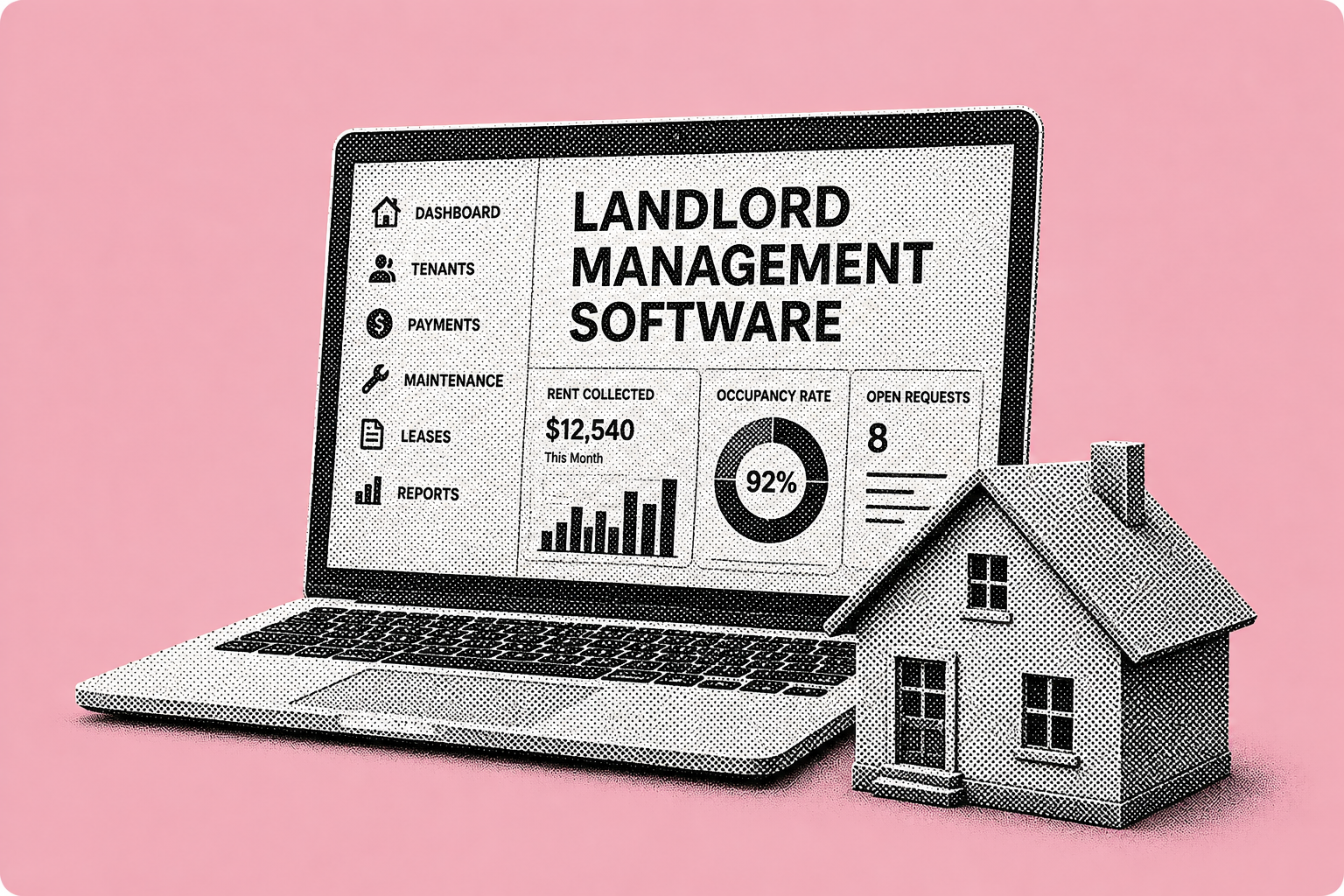

Property Management Software

Landlord Management Software: The 7 Features That Actually Save You Time

photo of Miles Lerner, Blog Post Author
Miles Lerner

Managing 1 to 100 Units Without a Full Back Office

Managing 1 to 100 units without a full back office means you are doing more than collecting rent. You are chasing late payments, answering the same questions, coordinating repairs, tracking receipts at tax time, and working to keep good tenants from leaving. Independent landlord surveys consistently point to the same bottlenecks: maintenance and screening sit at the top of the stress list.

Note: This article provides general education about landlord management software features, not product recommendations. Feature availability, pricing, and performance vary by platform.

The right landlord management software does not just centralize tasks. It removes the repetitive ones. Below are seven features that consistently save the most time for independent landlords and small property managers, plus how Shuk Rentals implements each one.

1) Automated Rent Collection with Zero ACH Fees

Manual rent collection is a monthly tax on your time: reminders, check pickups, bank deposits, and "Did you get my payment?" texts. Industry analysis shows manual workflows correlate with meaningfully more late payments compared to automated collection. Surveys show strong tenant preference for paying online, and ACH is the most-used electronic method among renters.

Shuk Rentals offers online rent collection with zero ACH transaction fees, removing the biggest friction point that stops tenants from switching to online payments. Many platforms charge per ACH payment, which leads to more "I will just mail a check" behavior. With Shuk, you can push autopay enrollment without asking residents to pay a convenience fee.

2) Tenant Screening with Credit/Eviction/Criminal Reports

Screening is where small landlords lose days, not because it is hard, but because it is fragmented. You are juggling identity questions, inconsistent criteria, and separate report vendors.

Shuk Rentals provides tenant screening through our partner (RentPrep/TransUnion) for credit, criminal, and eviction reports in one flow, so you are not sending applicants to three different places or manually matching PDFs to names. Faster approvals with consistent standards, and fewer "Where do I upload this?" messages.

3) Maintenance Request Tracking

Maintenance is the number one time sink because it is communication-heavy. Industry surveys cite maintenance and turnover tied to maintenance performance as a top operational challenge for rental owners.

A proper maintenance tracker turns "texts plus calls plus photos" into a single ticket with status, notes, and documentation. Shuk Rentals' maintenance request tracking lets tenants submit issues with photos, videos, documents, and notes, organizing requests in one place per unit so you are not rebuilding the story every time a tenant follows up.

4) E-Signature Through Adobe-Powered Integration

Leasing gets hectic when you are doing everything twice: drafting, printing, scanning, chasing signatures, and re-saving documents. E-signatures compress the entire lease cycle into one repeatable workflow.

Shuk Rentals' e-signature through our Adobe-powered integration lets you send lease packets, get signatures, and store them automatically with the tenant record. No missing initials, no lost addendum, no "Can you resend the signed copy?" two months later.

5) Schedule E-Aligned Expense Organization

Most landlords do not feel the pain until tax time, or until they need a lender-ready snapshot. Receipts live in email, vendor texts, and shoe boxes. Then you spend a weekend reconstructing the year.

Shuk Rentals' Schedule E-aligned expense organization with digital receipts pairs expenses to properties. Payment and income reports filterable by property, tenant, and date and exportable to PDF or Excel reduce bookkeeping time and make monthly check-ins realistic, even if you are self-managing after work.

6) Two-Way Reviews

Bad-fit tenants cost time in a hundred small ways: late payments, preventable conflicts, and excessive maintenance noise. Landlords often operate with zero memory beyond their own notes, and tenants move on with no accountability.

Shuk Rentals includes Two-Way Reviews, letting landlords document real rental behavior while also giving tenants a way to build credibility. Fewer repeated judgment calls, fewer "I wish I had known" situations, and faster confidence when deciding between similar applicants.

7) Early Lease Renewal Intelligence (Lease Indication Tool)

Renewals become a scramble when you find out too late that a tenant is leaving. That means rushed showings, compressed make-ready timelines, and vacancy you could have prevented with a simple early check-in.

Shuk's Lease Indication Tool (LIT) provides early renewal intelligence starting six months before lease end through tenant polling and predictive lease renewal insights, creating a simple renewal forecast rather than a mental guessing game. If three leases end in September and two indicate "likely renewing" in July, you focus your energy on the one at risk before it becomes a vacancy.

What This Adds Up To

The biggest time drains are rent follow-ups, maintenance coordination, leasing paperwork, and bookkeeping catch-up. Moving rent to autopay and removing ACH friction reclaims several hours on its own. Maintenance tracking reduces coordination overhead per ticket. Digital leases, clean reporting, and proactive renewals compound the savings.

Frequently Asked Questions

Which feature saves the most time for small landlords?

For most landlords, automated rent collection saves the most time because it eliminates the monthly cycle of reminders, check pickups, bank deposits, and late-payment follow-ups. The time savings compound when paired with autopay enrollment and configurable late fees.

Do I need all seven features, or can I start with a few?

You can start with the features that address your biggest pain point, but the compounding benefit comes from using them together. Rent collection plus maintenance tracking alone can reclaim significant hours each month.

How does landlord management software differ from general business tools?

General tools are not built for property-level tracking, tenant-linked transactions, lease lifecycle management, or rental-specific expense categories. Landlord software handles these by default, reducing the workarounds that consume time in generic tools.

What to Do Next

At $5 per unit per month with no setup fees, and with White Glove Onboarding included at no additional cost, Shuk makes property management feasible for landlords running 1 to 100 units.

Book a demo at shukrentals.com/book-a-demo to see all seven features in action.

QUICK VIEW
Stop Reacting to Vacancies. Start Seeing Them Coming.

Shuk helps landlords and property managers get ahead of vacancies, improve renewal visibility, and bring more predictability to every lease cycle.

Book a free 20-min demo to see Shuk today.

Stay in the Shuk Loop

Managing 1 to 100 Units Without a Full Back Office

Managing 1 to 100 units without a full back office means you are doing more than collecting rent. You are chasing late payments, answering the same questions, coordinating repairs, tracking receipts at tax time, and working to keep good tenants from leaving. Independent landlord surveys consistently point to the same bottlenecks: maintenance and screening sit at the top of the stress list.

Note: This article provides general education about landlord management software features, not product recommendations. Feature availability, pricing, and performance vary by platform.

The right landlord management software does not just centralize tasks. It removes the repetitive ones. Below are seven features that consistently save the most time for independent landlords and small property managers, plus how Shuk Rentals implements each one.

1) Automated Rent Collection with Zero ACH Fees

Manual rent collection is a monthly tax on your time: reminders, check pickups, bank deposits, and "Did you get my payment?" texts. Industry analysis shows manual workflows correlate with meaningfully more late payments compared to automated collection. Surveys show strong tenant preference for paying online, and ACH is the most-used electronic method among renters.

Shuk Rentals offers online rent collection with zero ACH transaction fees, removing the biggest friction point that stops tenants from switching to online payments. Many platforms charge per ACH payment, which leads to more "I will just mail a check" behavior. With Shuk, you can push autopay enrollment without asking residents to pay a convenience fee.

2) Tenant Screening with Credit/Eviction/Criminal Reports

Screening is where small landlords lose days, not because it is hard, but because it is fragmented. You are juggling identity questions, inconsistent criteria, and separate report vendors.

Shuk Rentals provides tenant screening through our partner (RentPrep/TransUnion) for credit, criminal, and eviction reports in one flow, so you are not sending applicants to three different places or manually matching PDFs to names. Faster approvals with consistent standards, and fewer "Where do I upload this?" messages.

3) Maintenance Request Tracking

Maintenance is the number one time sink because it is communication-heavy. Industry surveys cite maintenance and turnover tied to maintenance performance as a top operational challenge for rental owners.

A proper maintenance tracker turns "texts plus calls plus photos" into a single ticket with status, notes, and documentation. Shuk Rentals' maintenance request tracking lets tenants submit issues with photos, videos, documents, and notes, organizing requests in one place per unit so you are not rebuilding the story every time a tenant follows up.

4) E-Signature Through Adobe-Powered Integration

Leasing gets hectic when you are doing everything twice: drafting, printing, scanning, chasing signatures, and re-saving documents. E-signatures compress the entire lease cycle into one repeatable workflow.

Shuk Rentals' e-signature through our Adobe-powered integration lets you send lease packets, get signatures, and store them automatically with the tenant record. No missing initials, no lost addendum, no "Can you resend the signed copy?" two months later.

5) Schedule E-Aligned Expense Organization

Most landlords do not feel the pain until tax time, or until they need a lender-ready snapshot. Receipts live in email, vendor texts, and shoe boxes. Then you spend a weekend reconstructing the year.

Shuk Rentals' Schedule E-aligned expense organization with digital receipts pairs expenses to properties. Payment and income reports filterable by property, tenant, and date and exportable to PDF or Excel reduce bookkeeping time and make monthly check-ins realistic, even if you are self-managing after work.

6) Two-Way Reviews

Bad-fit tenants cost time in a hundred small ways: late payments, preventable conflicts, and excessive maintenance noise. Landlords often operate with zero memory beyond their own notes, and tenants move on with no accountability.

Shuk Rentals includes Two-Way Reviews, letting landlords document real rental behavior while also giving tenants a way to build credibility. Fewer repeated judgment calls, fewer "I wish I had known" situations, and faster confidence when deciding between similar applicants.

7) Early Lease Renewal Intelligence (Lease Indication Tool)

Renewals become a scramble when you find out too late that a tenant is leaving. That means rushed showings, compressed make-ready timelines, and vacancy you could have prevented with a simple early check-in.

Shuk's Lease Indication Tool (LIT) provides early renewal intelligence starting six months before lease end through tenant polling and predictive lease renewal insights, creating a simple renewal forecast rather than a mental guessing game. If three leases end in September and two indicate "likely renewing" in July, you focus your energy on the one at risk before it becomes a vacancy.

What This Adds Up To

The biggest time drains are rent follow-ups, maintenance coordination, leasing paperwork, and bookkeeping catch-up. Moving rent to autopay and removing ACH friction reclaims several hours on its own. Maintenance tracking reduces coordination overhead per ticket. Digital leases, clean reporting, and proactive renewals compound the savings.

Frequently Asked Questions

Which feature saves the most time for small landlords?

For most landlords, automated rent collection saves the most time because it eliminates the monthly cycle of reminders, check pickups, bank deposits, and late-payment follow-ups. The time savings compound when paired with autopay enrollment and configurable late fees.

Do I need all seven features, or can I start with a few?

You can start with the features that address your biggest pain point, but the compounding benefit comes from using them together. Rent collection plus maintenance tracking alone can reclaim significant hours each month.

How does landlord management software differ from general business tools?

General tools are not built for property-level tracking, tenant-linked transactions, lease lifecycle management, or rental-specific expense categories. Landlord software handles these by default, reducing the workarounds that consume time in generic tools.

What to Do Next

At $5 per unit per month with no setup fees, and with White Glove Onboarding included at no additional cost, Shuk makes property management feasible for landlords running 1 to 100 units.

Book a demo at shukrentals.com/book-a-demo to see all seven features in action.
{

  "@context": "https://schema.org",

  "@type": "FAQPage",

  "mainEntity": [

    {

      "@type": "Question",

      "name": "Which landlord management software feature saves the most time?",

      "acceptedAnswer": {

        "@type": "Answer",

        "text": "For most landlords automated rent collection saves the most time because it eliminates the monthly cycle of reminders, check pickups, bank deposits, and late-payment follow-ups. The time savings compound when paired with autopay enrollment and configurable late fees."

      }

    },

    {

      "@type": "Question",

      "name": "Do I need all seven property management features or can I start with a few?",

      "acceptedAnswer": {

        "@type": "Answer",

        "text": "You can start with the features that address your biggest pain point but the compounding benefit comes from using them together. Rent collection plus maintenance tracking alone can reclaim significant hours each month."

      }

    },

    {

      "@type": "Question",

      "name": "How does landlord management software differ from general business tools?",

      "acceptedAnswer": {

        "@type": "Answer",

        "text": "General tools are not built for property-level tracking, tenant-linked transactions, lease lifecycle management, or rental-specific expense categories. Landlord software handles these by default reducing the workarounds that consume time in generic tools."

      }

    }

  ]

}

Stop Reacting to Vacancies. Start Seeing Them Coming.

Shuk helps landlords and property managers get ahead of vacancies, improve renewal visibility, and bring more predictability to every lease cycle.

Book a demo to get started with a free trial.

Stay in the Shuk Loop

View Similar Articles

View Similar Articles

All Articles
Compliance and Legal
Pet Policy for Rental Properties: How to Set Rules That Protect You

Pet Policy for Rental Properties: How to Set Rules That Protect You

Set Clear Pet Rules to Reduce Vacancy Risk and Protect Your Property

A clear pet policy for rental properties can reduce vacancy risk and attract more applicants, or it can expose you to costly damage and liability. Most U.S. households have pets, and pet-friendly listings often command higher rents and longer tenancies. But pets introduce real risks: property damage, nuisance complaints, and liability exposure. Dog-bite claims alone average near $69,000, according to Insurance Information Institute reporting.

Note: This article provides general education about rental pet policies and assistance animal obligations, not legal advice. Fair Housing Act requirements, HUD assistance animal guidance, ADA service animal rules, state security deposit laws, and local breed restrictions vary by jurisdiction. Before setting pet policies or responding to accommodation requests, confirm your obligations under applicable law.

This guide shows you how to decide whether to allow pets and how to write a landlord pet policy that reduces risk while staying compliant with Fair Housing rules on service and assistance animals, per HUD's FHEO-2020-01 guidance.

What a Strong Pet Policy Does and What It Must Avoid

A strong pet policy does two things: (1) it sets unmistakably clear expectations for tenants, and (2) it gives you practical, legally defensible tools to enforce those expectations. Keep your pet rules in a dedicated pet addendum referenced by the lease, so you can be specific about species, size, behavior standards, cleaning requirements, and inspections without cluttering the main lease.

Your policy must clearly separate pets (optional, subject to fees and restrictions) from assistance animals (requested as a reasonable accommodation for a disability under the Fair Housing Act). Under the FHA, housing providers must make reasonable accommodations in rules when necessary for equal use and enjoyment of the dwelling (42 U.S.C. 3604(f)(3)(B)). HUD's FHEO-2020-01 guidance explains how to evaluate requests, what documentation may be appropriate, and when fees are not allowed.

The workflow: decide whether to allow pets; set deposits, fees, and rent; write enforceable rules; screen and verify; inspect and document move-out damage; and enforce a "no pets" lease without violating Fair Housing protections.

Step-by-Step: How to Build a Pet Policy That Reduces Risk

1. Decide Whether "Pet-Friendly" Fits Your Property

Start with a business decision. Demand is high: pet ownership is widespread, and renter preference surveys consistently show pets heavily influence housing choice, per National Apartment Association reporting. Revenue upside is real: pet-friendly units may command higher rents and improve retention, reducing turnover costs.

Weigh that against: property damage (studies cited by pet-housing advocates often show average pet damage is modest, commonly around a couple hundred dollars annually, though some tenants cause meaningful damage), liability exposure (dog-bite claims are expensive and rising, per Insurance Information Institute), and building constraints (carpets, shared hallways, small yards, or strict HOA rules may push you toward tighter rules or "cats only").

Concrete example. A second-floor, carpeted unit might allow one cat with strict litter-box and odor rules. A single-family home with a fenced yard might allow one dog under 50 lbs plus a renters-insurance requirement.

2. Define What Is Allowed

Your landlord pet policy should be specific enough to enforce, but not so complex that it becomes inconsistent.

Common levers: Species (dogs/cats only; exclude reptiles, rodents, birds, farm animals, or aquariums over a set gallon size). Number of pets (typically 1 to 2). Size/weight (for example, 40 to 60 lb limit; note that some local laws restrict pet limits). Breed restrictions (many landlords use them for insurance reasons, but be careful: HUD emphasizes that assistance animal requests must be evaluated individually and not denied due to breed/size alone if the animal is needed as an accommodation, per FHEO-2020-01 and HUDExchange FAQ guidance).

Write behavior-based rules: no aggression, excessive barking, or repeated complaints; pets must be leashed in common areas; waste must be picked up immediately. Require vaccination/licensing per local law and proof of spay/neuter if you choose (where permitted).

Example clause. "Approval is conditional on the pet not posing a direct threat or causing substantial property damage; repeated verified complaints are grounds for removal."

3. Set Fair, Legal Pet Charges

Use pet charges to align incentives and fund risk, not to punish tenants.

Pet deposit (typically refundable). Held to cover pet-related damage beyond ordinary wear and tear; subject to your state's security-deposit rules (limits, interest, return deadlines).

Pet fee (typically non-refundable). Often used as an administrative charge (for example, cleaning/flea treatment). Be careful with terminology: some states treat "fees" like deposits if they function as damage security.

Pet rent (monthly). A predictable amount to offset increased wear, filters, deodorizing, and common-area cleaning.

Practical ranges (use as a starting point, then validate locally): Pet deposit: $200 to $500 per pet. Non-refundable pet fee: $150 to $350. Pet rent: $25 to $60/month per pet.

Critical compliance point. Do not charge pet deposits, pet fees, or pet rent for a service animal or other assistance animal approved as a reasonable accommodation under the FHA, per HUD FHEO-2020-01. You can still charge the tenant for actual damage the animal causes if you charge any tenant for damage they cause.

4. Put It in Writing: The Pet Addendum

Your lease should say "no pets allowed without written approval," then point to a pet addendum that includes:

Identifying details: Pet name, species, breed (if applicable), color, weight, age, photo.

Approved areas: Where the pet may be (and may not be), rules for balconies/yards/common areas.

Noise/odor/sanitation: Waste disposal, litter requirements, flea control, odor remediation.

Damage and liability: Tenant responsible for all pet-related damage and pest treatment; tenant indemnifies landlord (consistent with state law).

Insurance requirement: Renters insurance with liability coverage (confirm your insurer's requirements; dog-related injuries are a key driver of claims, per Insurance Information Institute).

Inspections and remedies: Right to inspect with proper notice; cure periods; removal of pet for repeated violations; fees for unauthorized pets (where permitted).

Concrete example. Add a "three strikes" structure: two written warnings for verified waste/noise violations, then mandatory removal or lease enforcement on the third.

5. Screen Pets Consistently and Document Decisions

Pet screening is risk management, and it supports Fair Housing compliance by keeping decisions consistent.

Best practices (keep it uniform for every applicant with a pet):

Collect a pet application: Vet records, vaccination proof, microchip, references (prior landlord if possible). Ask for behavior evidence: Training certificates, day-care evaluation, or neutral third-party attestations (optional). Do a meet-and-greet: Observe leash behavior, jumping, barking, reactivity.

Documentation. HUD encourages an "interactive process" and reliable documentation when disability/need is not obvious for assistance animal requests, with prompt decisions (HUD guidance often references timelines around 10 days as a best practice), per FHEO-2020-01 and HUD/DOJ Joint Statement (2004).

6. Understand the Legal Line: Pets vs. Service Animals vs. Emotional Support Animals

This is where many landlords get into trouble.

ADA service animals (public access rules) are typically dogs (and sometimes miniature horses) trained to perform tasks for a person with a disability.

FHA assistance animals include service animals and "other assistance animals" (which can include emotional support animals). HUD notes they may be different species and may not require specialized training, but must provide disability-related assistance or support, per FHEO-2020-01.

Key rules to follow:

Requests can be oral or written; treat them seriously and respond promptly, per FHEO-2020-01.

If disability/need is not obvious, you may request reliable documentation from a healthcare professional. HUD warns against overreaching demands and notes that "internet certificates" with no therapeutic relationship may be unreliable (evaluate case-by-case), per FHEO-2020-01.

You generally cannot deny based on breed/size policies alone; you must do an individualized assessment. Denial is typically limited to direct threat or substantial property damage that cannot be reduced by another reasonable accommodation, per FHEO-2020-01 and HUDExchange FAQ.

HUD/DOJ enforcement actions show real monetary consequences for mishandling ESA requests. DOJ has pursued cases like United States v. Carl Torkelson where landlords faced penalties for Fair Housing Act violations related to assistance animal denials.

7. Enforce and Inspect: Unauthorized Pets and Move-Out Damage

Enforcing a no-pet policy. If your lease is "no pets," enforce it consistently: investigate complaints (photos, timestamps, neighbor statements). Serve a written notice to cure/quit per your state process. If the tenant claims it is an assistance animal, pause enforcement and run the FHA accommodation process promptly, per FHEO-2020-01.

Move-out inspection best practices. Pet damage is easiest to recover when you can prove it: use a move-in condition report with photos/video, then repeat the same checklist at move-out. Look for pet-specific issues: urine staining (UV light helps), scratched doors/trim, chewed blinds, odor in subfloor, flea infestation, damaged screens. Document repair invoices and distinguish damage from normal wear and tear.

Concrete example. If you find urine in carpet, document with dated photos, note odor location, get a professional cleaning invoice, and if needed, document replacement of pad/subfloor sealing. This supports lawful deductions and reduces disputes.

Pet Policy Checklist

Property decision: Pets allowed? If yes, which species (dogs/cats), how many, and any size limit? Any building/insurance constraints documented (for example, HOA rules, insurer exclusions)?

Financial terms: Pet deposit amount (refundable) and when it is returned (align with state deposit law). Pet fee amount (non-refundable) and what it covers. Monthly pet rent and when it is due. Statement: no pet fees/rent/deposits for FHA assistance animals, per FHEO-2020-01.

Addendum clauses: Pet identification plus photo. Vaccination/licensing requirements. Waste/odor/noise rules plus complaint process. Damage liability plus cleaning/flea treatment obligations. Inspection rights (with legal notice) and remedies for violations.

Fair Housing workflow: Separate assistance-animal request form plus documentation log, per FHEO-2020-01.

[Template download placeholder: Miles will need to create and host the Pet Addendum Starter Template asset on Shuk.]

Frequently Asked Questions

Can I refuse certain dog breeds in my pet policy?

For pets, many landlords set breed restrictions due to insurance and risk. For assistance animals, HUD emphasizes an individualized assessment; a breed/size rule alone is not a sufficient reason to deny an accommodation if the animal is needed because of a disability, per FHEO-2020-01 and HUDExchange FAQ.

Can I charge pet rent or a pet deposit for a service animal or emotional support animal?

No. HUD's FHA guidance is clear: you generally cannot charge pet fees, pet rent, or pet deposits for an assistance animal approved as a reasonable accommodation, per FHEO-2020-01. You may still charge for actual damage caused by the animal, consistent with how you charge any tenant for damage.

What if a tenant sneaks in a pet in a "no pets" unit?

Follow your lease and state notice procedure, document evidence, and give the tenant a chance to cure. If the tenant says it is an assistance animal, shift immediately into the FHA accommodation process and respond promptly, per FHEO-2020-01.

What to Do Next

A strong pet policy is only as good as your ability to apply it consistently across applicants, renewals, inspections, and accommodation requests.

Shuk's document storage keeps pet addendums, condition reports, accommodation request documentation, and inspection records organized in one place per unit, so your pet policy decisions are retrievable and defensible. E-signature through our Adobe-powered integration handles pet addendum execution so approvals are signed, dated, and stored. Maintenance request tracking with photos, videos, documents, and notes creates a documented condition history that supports pet-damage deductions at move-out. Security deposit tracking organizes pet deposits per unit/property so you can show clean separation. Centralized in-app messaging with email and push notifications keeps accommodation request conversations, complaint timelines, and violation notices time-stamped and searchable. And if you screen the pet owner as part of the application, tenant screening through our partner (RentPrep/TransUnion) for credit, criminal, and eviction reports keeps your applicant evaluation consistent and documented.

At $5 per unit per month with no setup fees, and with White Glove Onboarding included at no additional cost, Shuk makes documented, consistent pet policy management feasible for landlords and property managers running 1 to 100 units.

Book a demo at shukrentals.com/book-a-demo to see how document storage, e-signature, maintenance tracking, and messaging work together so your pet policy is applied consistently and your accommodation decisions are defensible.

Rent Collection Hub
Late Payment Strategies for Landlords: A Compliant, Automated Playbook to Prevent, Address, and Resolve Late Rent

Late Payment Strategies for Landlords: A Compliant, Automated Playbook to Prevent, Address, and Resolve Late Rent

Late rent is not just frustrating. It is operational drag. One missed payment can cascade into mortgage stress, deferred maintenance, vendor delays, and a tenant relationship that becomes harder to repair the longer you wait.

Here is what the data shows: the CFPB, analyzing rental payment data, reported that late fees peaked with 23% of renters incurring them in February 2023, and that many renters who incur late fees return to current status soon after. That means your process and timing can materially change outcomes. At the same time, renters are under pressure. New York Fed research shows renters expected rent increases of 8.2% over the next year in 2023, with eviction expectations rising to 6.1%, a signal that more households are financially strained and may need structured, respectful intervention early.

The trap for independent landlords and small managers is relying on memory, manual texts, and inconsistent case-by-case decisions. That approach increases your risk of charging an unenforceable fee, missing a required notice timeline, or accidentally treating tenants inconsistently, which is a Fair Housing red flag.

This guide gives you a step-by-step late-payment system built around automation, clear communication, and legal compliance. You will learn how to set policy, schedule reminders, calculate late fees correctly, document everything, and escalate appropriately. Treat late rent like a workflow rather than a personal confrontation. Timing and documentation drive results.

What a Modern Late-Rent Strategy Includes and Why It Works

A late-payment strategy is not about how tough you are. It is about how predictable you are. When tenants know exactly what happens before, on, and after the due date, you reduce friction, increase on-time payment rates, and protect your ability to enforce your lease if you must escalate.

A complete strategy has three layers.

Prevention means making paying easy and expectations unmistakable. Online rent collection reduces "I forgot to get a check" scenarios and creates timestamped payment records you can export when disputes arise. Automation helps you send consistent reminders so tenants are not surprised by a fee or a notice.

Early intervention means most late payments resolve quickly when you respond early, politely, and consistently. The CFPB noted that over half of renters who incurred late fees became current soon after, which supports a process focused on fast contact, simple payment options, and a clear path back to good standing.

Compliant escalation means if rent remains unpaid, your job shifts to enforcing your lease while complying with state and local law. Rules differ widely. Washington generally prohibits charging late fees until rent is more than five days late and caps late fees at 1.5% of monthly rent. Texas has a mandatory two-day grace period and caps late fees at 12% of monthly rent, and the fee must be specified in the lease. Colorado requires a seven-day grace period and caps late fees at the greater of $50 or 5% of monthly rent. California has no statewide mandatory grace period and no fixed late-fee cap, but fees must be reasonable and may be constrained by local ordinances.

Write one master workflow and adapt only the legal variables: grace period, fee cap, and notice rules by jurisdiction. Standardization reduces Fair Housing risk by ensuring similar situations receive similar treatment with documented exceptions.

Eight Steps to a Compliant Late-Payment System

Step 1. Put Rent Collection Rules in Writing and Make Them Easy to Understand

Your lease is where late fees become enforceable. In Texas, late fees must be specified in the lease to be charged at all. Even where statutes do not require precise language, clarity prevents disputes and reduces the likelihood of tenants claiming they did not know the rules.

Include these items in plain language: Due date and payment methods covering when a payment counts as received. Grace period and when fees begin, which must align with your jurisdiction. Late fee calculation and cap, which varies significantly by state. Returned payment and NSF fee policy kept compliant and consistent. Communication policy covering where notices will be sent and how tenants should contact you for hardship requests.

Examples you can implement:

"Rent is due on the 1st. If it is not received by the end of the grace period, a late fee will be assessed automatically according to state law and this lease."

"Payments made through the online portal are credited the day they are submitted with a timestamp, unless reversed or returned."

"All tenants receive the same reminder schedule and fee rules. Any approved payment plan must be in writing."

Compliance note: Late-fee rules can be affected by local ordinances especially in rent-controlled areas, and some lease provisions can be invalid if they conflict with state statute. Washington warns that non-compliant provisions carry risk. When in doubt, confirm with your state's official resources or legal counsel before enforcing any fee provision.

Align your lease language to your state's grace period and fee cap rules before you enforce them. Standardize wording so reminders and notices match the lease exactly.

Step 2. Prevent Late Payments With Frictionless Collection

Late rent often happens at the last mile: a tenant forgets, cannot get to the bank, or misunderstands the deadline. Your best prevention tool is to remove steps and create a default habit.

Modern rent collection practices that reduce delinquency: Online rent collection so tenants can pay quickly without coordinating schedules. Autopay and recurring payments to reduce "I forgot" delinquencies. Instant receipts and ledger transparency so that if a tenant disputes payment, a clear ledger resolves it quickly rather than creating an emotional confrontation.

Concrete scenarios: A tenant claims they paid on the first. You pull the portal timestamp and settlement record to confirm whether it was submitted on time or reversed. A tenant who used to mail checks now uses autopay, eliminating mailing delays and "the check is in the mail" ambiguity entirely. You manage forty doors with two due dates and automation sends reminders for each lease schedule and posts receipts to each tenant ledger with no manual spreadsheet updates.

Why this matters for compliance: Consistent documented payment records protect you if you later need to serve a pay-or-quit notice or appear in court. Consistent systems also reduce the risk of uneven treatment across tenants, which is important for Fair Housing compliance.

Make online payment the default and encourage autopay at move-in and at renewal. Keep your rent ledger clean with every charge, fee, payment, waiver, and note recorded.

Step 3. Build a Due-Date-to-Day-Ten Reminder Cadence

A modern late-rent strategy relies on predictable communication. The goal is to resolve the issue early without escalating emotions. Your reminders should be polite, factual, and uniform across every tenant.

A practical cadence adjusted to your state's grace period: Three to five days before the due date send a friendly reminder with an autopay prompt. On the due date morning send a rent is due today reminder with a payment link. On day one after the due date acknowledge you have not seen payment and offer help if there is a technical issue. On days three to five send a stronger reminder mentioning the upcoming late fee if allowed and how to avoid it. On days six through ten if rent is still unpaid, move to formal notice territory depending on your state's timelines.

Examples from friendly to firm:

Pre-due reminder: "Hi [Name], this is a friendly reminder that rent is due on [Date]. Paying online takes about a minute. If you need help setting up autopay, reply here."

Day-after reminder: "We do not see a rent payment posted yet. If you paid already, please share your confirmation number. Otherwise you can pay now using this link."

Pre-fee reminder where legal: "If rent is not received by [end of grace period], a late fee will be assessed per your lease and state law."

The CFPB found many renters who incur late fees return to current status soon after, which supports a workflow that prioritizes fast clear contact rather than waiting two weeks and then reacting. Write your reminders once and automate them rather than reinventing the tone each month. Always include a payment link and a way for the tenant to prove they already paid.

Step 4. Apply Grace Periods Correctly

Grace periods are one of the most common compliance pitfalls. If your lease says late after the second but your state mandates a longer grace period, your fee may be unenforceable and could expose you to penalties.

Key statutory examples: Washington prohibits late fees until rent is more than five days late. Texas has a mandatory two-day grace period. Colorado has a mandatory seven-day grace period with statutory late-fee rules. California has no statewide mandatory grace period, but fees must be reasonable and local ordinances may be stricter.

How to operationalize without confusion: Maintain a jurisdiction table covering state plus city if needed with due date, grace period, fee cap, notice type, and service method. Configure your platform's fee rules so the system will not assess a fee until the lawful day. Apply the same timeline for every tenant in that jurisdiction.

Real-world examples: You own in both Washington and Texas. Your Texas tenant can be charged after the two-day statutory grace period if the fee is in the lease, but your Washington unit cannot be assessed a late fee until after day five. In Colorado, even if your tenant agrees to a shorter grace period, statute controls, so your system should enforce the longer statutory window. In California, you use a three to five-day grace period as a business practice but ensure the fee is reasonable and consistent with local rules.

Never copy-paste one late-fee rule across states. Configure by jurisdiction. Use automation to prevent accidental early fees since one error can undermine your credibility and your case later.

Step 5. Calculate Late Fees Compliantly

Late fees work best when they are predictable, lawful, and easy to explain. They should encourage timely payment rather than create a compounding debt spiral that makes it harder for tenants to recover. The CFPB's analysis highlights that late fees are common and sometimes repeated across a year for the same household, which is exactly why your fee policy must be both compliant and operationally sound.

State examples: Washington caps late fees at 1.5% of monthly rent with local rules potentially stricter. Texas caps at 12% of monthly rent and requires the fee to be in the lease. Colorado caps at the greater of $50 or 5% of monthly rent with statute also addressing how late fees relate to eviction proceedings. California has no fixed statutory cap, with courts looking to reasonableness and local ordinances potentially restricting further.

Three examples with compliance-first framing: A Washington unit at $2,000 rent has a maximum late fee of $30 under the 1.5% cap unless a local ordinance is stricter. A Colorado unit at $1,400 rent has a cap of $70 since 5% equals $70 which is greater than $50. A California unit at $2,500 rent might use a fee near 5% at $125 only if you can justify it as reasonable and compliant with local rules.

An integrated late-fee calculator prevents math mistakes and applies the correct cap per jurisdiction. It also posts the fee to the tenant ledger automatically, creating a clean audit trail you can export if needed.

Configure late fees as rules covering cap plus trigger day so they are applied consistently. Keep fees and waivers visible in the ledger. Undocumented off-ledger deals create disputes later.

Step 6. Handle Partial Payments, Promises, and Payment Plans Without Losing Control

Once a tenant is late, you will commonly hear one of three things: "I can pay part now," "I'll pay Friday," or "I'm waiting on assistance." Your process needs to be both humane and firm, and it needs documentation.

Best-practice approach: Accepting partial rent may affect your legal position in some jurisdictions. If you accept partial payment, document what it does not waive including remaining balance due, late fees, and your right to serve notices as allowed. Convert verbal promises into written confirmation the same day. For payment plans, use a simple written addendum covering amounts, dates, how payments are applied, and what happens if a date is missed.

Examples you can reuse:

"Thanks for the update. To confirm: you will pay $600 today and the remaining $900 by Friday, April 12. I am sending this in writing so we are aligned."

"We can offer a one-time plan: $X by [date], $Y by [date]. If a payment is missed, we will proceed with the standard notice process."

"If you are pursuing rental assistance, please share the application confirmation and expected funding date by [date]."

Compliance reminders: For Fair Housing, offer payment plans using consistent criteria such as one plan per twelve months with proof of income timing required, and avoid subjective standards that could be seen as discriminatory. If you use a third-party debt collector, FDCPA rules may apply. Even if you collect yourself, communicate professionally, avoid harassment, and document everything.

Treat every plan as a contract: written, dated, and saved to the tenant record. Make it easy to pay immediately with an online link so "I'll pay later" becomes "paid now."

Step 7. Move From Reminders to Formal Notices

If rent remains unpaid, you must shift from informal reminders to formal notices that align with your state's eviction framework. This is where many landlords fail: sending the right message at the wrong time, or serving it incorrectly.

California eviction for nonpayment typically requires a three-day notice often called pay or quit, and late-fee enforceability depends on reasonableness and local rules. Washington, Texas, and Colorado each have specific statutory constraints on fees and timing that must be reflected in your notice and ledger.

Build a documentation package as you go: Tenant ledger showing charges, payments, and fees. Copies of reminders from email or portal logs. Copy of lease clause on rent, grace period, and fees. Proof of service for any formal notice covering method and date. Notes from any calls covering date, time, summary, and next steps.

Examples of compliant tone for formal notices:

"This notice is to inform you that rent in the amount of $____ remains unpaid as of ____. Please pay the total amount due or comply as required by state law and your lease."

"Payment options: you may pay online at ____ or contact us immediately if you believe this is an error."

"If you have already paid, provide your confirmation number within 24 hours so we can reconcile your ledger."

When your platform can generate a delinquency report, attach the ledger, and log delivery of messages, you reduce human error and can prove your timeline later.

Do not mention eviction casually. Move to formal notices only when your timeline and documentation are complete. Keep all communication factual since you are building a record, not winning an argument.

Step 8. Escalate to Recovery Options

When late rent becomes chronic or crosses your legal threshold for action, you need a decision tree covering cure, settle, or proceed.

Option A, cure quickly: If a tenant can pay within days, prioritize speed by offering a same-day payment link. Consider a one-time late-fee waiver only if your policy allows it and you document it. Encourage autopay enrollment going forward to prevent recurrence.

Option B, structured settlement: If the tenant is behind but cooperative, use a written plan with dates and amounts. Apply payments consistently based on your lease and state law. Keep the plan in the tenant record with all supporting documentation.

Option C, legal remedies: If the tenant will not engage, repeatedly breaks plans, or the balance is too large, proceed with required notices and legal steps in your jurisdiction. Ensure your fee calculations, grace periods, and notice timing comply with applicable statutes. If you transfer collection to a third party, FDCPA may apply to that collector.

Three real-world decision examples: A tenant who is late by two days every month gets consistent reminders plus autopay enrollment, and you stop waiving fees after the first documented courtesy waiver. A tenant who loses a job and communicates early gets a two-payment plan with documentation, and if they comply you avoid vacancy costs entirely. A tenant who ignores all messages gets a pivot to formal notice and legal counsel quickly because delay increases losses and weakens urgency.

Chronic lateness is a pattern problem. Solve it with automation and policy rather than repeated emotional negotiations. Escalate based on a predetermined threshold covering days late, dollar amount, or repeat offenses to stay consistent and defensible.

Late Rent Prevention and Collection Checklist

Before move-in or renewal: Lease clause confirms due date, accepted payment methods, when payment is credited, grace period, and late-fee calculation and cap for your jurisdiction. Tenant is invited to enroll in online payments and autopay with confirmation of their preferred email and phone for reminders. Rent ledger is set up to track rent, fees, and receipts clearly.

Reminder cadence adjusted to your state: Five days before due date send a rent due soon reminder with an autopay prompt. On the due date morning send a rent due today reminder with a payment link. On day one late acknowledge no payment received and ask for confirmation or offer the payment link. On day three late send a reminder about the upcoming late fee if not received by the grace period end date. On days five through seven send a final courtesy reminder before formal notice, adjusted for Washington, Colorado, and Texas grace rules.

When rent becomes delinquent: Confirm ledger balance covering rent versus fees and check for payment reversals. Apply late fee only after the lawful grace period and within the applicable cap. Save copies of all communications to the tenant record.

Escalation: Prepare formal notice with the correct amount due and service method for your jurisdiction. If a payment plan is offered, write it, sign it, store it, and schedule automated reminders. If proceeding legally, export ledger plus communications plus proof of service.

Copy-and-paste reminder templates:

Friendly pre-due reminder: "Hi [Name], rent of $[Amount] is due on [Date]. You can pay online here: [Link]. If you would like to set up autopay, reply and we will help."

Day-one late reminder: "Hi [Name], we do not see your rent payment posted yet. If you already paid, please send your confirmation number. If not, you can pay here: [Link]."

Pre-fee reminder only if allowed: "Reminder: if rent is not received by [Date/Time], a late fee will be assessed per your lease and applicable law."

Frequently Asked Questions

Can you waive late fees just once without creating problems later?

Yes, if you do it consistently and in writing. The risk is not the waiver itself but unpredictable treatment and undocumented exceptions. From a Fair Housing perspective, inconsistent waivers can appear to be unequal treatment if you cannot explain your criteria. Operationally, repeated waivers train tenants that deadlines are optional. Define a clear policy such as one courtesy waiver per twelve months if the tenant requests it before the fee posts and pays within 24 to 48 hours. In states with strict late-fee rules, post the fee when it is triggered and then post a separate credit or waiver line item with a note to preserve the audit trail.

How long should you wait before sending a pay-or-quit notice?

Your timeline should follow state law and your lease and should be consistent across all tenants. California commonly uses a three-day notice for nonpayment. Other states have different notice requirements and procedures. A practical approach separates reminders from formal notices. Reminders can start before the due date. Formal notices begin when the statutory grace period has passed, when you have verified the ledger balance and payment status, and when your documentation package is complete.

Should you accept partial rent if the tenant cannot pay in full?

It depends on your risk tolerance and legal context. Partial payments can help you recover cash quickly but can complicate enforcement if not documented. If you accept a partial payment, immediately document the remaining balance and your expectations, and convert the rest into a written payment plan. Keep all entries in the rent ledger for clarity. Example language: "We are applying $500 to April rent. The remaining $1,200 is due by April 10 under the attached payment plan."

What if a tenant says they paid but you do not see it?

Treat this as a reconciliation issue first, not a confrontation. Ask for a confirmation number or receipt, check for processing delays, and confirm whether the payment was reversed. A clean ledger and online payment record help you resolve this quickly. If your platform timestamps submissions, you can distinguish submitted on time from submitted late. Keep communication factual and ledger-based. Disputes are won with records.

You now have the late-payment workflow: prevent with online payments and autopay, communicate on a set cadence, apply grace periods and late fees correctly, document everything, and escalate only when your legal prerequisites are satisfied. The gap for most independent landlords is not knowledge. It is execution. Manual reminders get skipped. Fee math gets misapplied across jurisdictions. Notes get lost in texts. And inconsistency creates risk.

Book a demo to see how Shuk's automated late-fee calculation, reminder workflows, online rent collection, and ledger tracking work together so your late-rent process runs consistently across every unit and every jurisdiction without requiring manual oversight at each step.

Property Acquisition Hub
Rental Property Cash Flow: How to Calculate and Improve It

Rental Property Cash Flow: How to Calculate and Improve It

If the Bank Balance Feels Tight, You Are Not Alone

If you have ever looked at your rent deposits and thought, "I should be doing well... so why does the bank balance feel tight?" you are not alone. Rental income is easy to see. True profitability is not.

Between rising operating costs, especially insurance, and normal revenue leakage from vacancy, turns, and late payments, many landlords run fine on paper while experiencing real-world cash strain. Industry data shows typical operating expense ratios in the 35% to 55% range for U.S. multifamily properties before you even consider debt service, per HUD's Rental Housing Finance Survey. Meanwhile, vacancy is never zero: the U.S. rental vacancy rate has been around 7% in recent national data, which is why many landlords underwrite a 5% to 7% vacancy/collection allowance even in solid markets, per Census Bureau data.

Note: This article provides general education about rental property cash flow calculation and improvement strategies, not financial advice. Operating expense ratios, vacancy assumptions, DSCR thresholds, and refinancing outcomes vary by property, market, and lender. Before making financing or investment decisions, consult qualified professionals.

The fix starts with clarity. Once you can calculate rental property cash flow consistently and interpret what it is telling you, you can make targeted changes that raise your monthly surplus without guessing.

What You Will Learn

Rental property cash flow is the money left over after your property collects income and pays all of its costs, including the mortgage. It is the metric that decides whether the property supports itself month-to-month, whether you can build reserves, and whether you can scale.

This guide covers a clear definition of rental property cash flow and how it differs from ROI, a step-by-step calculation you can run monthly and annually, a complete expense checklist including reserves many landlords forget, how to interpret positive vs. negative cash flow using practical benchmarks like DSCR, four ways to improve cash flow (rent strategy, vacancy reduction, expense control, and refinancing), and two mini case studies showing before/after results.

1. Define Cash Flow the Landlord Way (and Separate It from NOI)

There are two closely related numbers landlords often mix up:

Net Operating Income (NOI) = Effective gross income minus operating expenses. NOI ignores financing.

Cash Flow (Before Tax) = NOI minus debt service (principal plus interest). Cash flow is what you feel.

Why it matters: A property can have healthy NOI and still have weak or negative cash flow if the mortgage is heavy or rates are high. With mortgage rates having hovered around roughly 7% in recent periods, financing costs have been a bigger swing factor for investors than they were a few years ago. Freddie Mac's small-balance/multifamily lending guidance makes clear that cash flow stability is often evaluated through DSCR.

Track both NOI and cash flow. NOI helps you compare properties. Cash flow tells you if the property is actually funding your life and reserves.

2. Calculate Your Monthly Rental Property Cash Flow (Step-by-Step)

Use this formula: Monthly Cash Flow = Effective Gross Income minus Operating Expenses minus Debt Service.

Step A: Start with Gross Scheduled Rent (GSR). GSR is the rent you would collect if every unit paid in full, on time, all month. Example (3-unit property): Gross scheduled rent = $4,200/month.

Step B: Subtract vacancy plus collection loss (do not skip this). Even well-run portfolios have turnover, nonpayment, and make-ready downtime. Many landlords underwrite 5% to 7% vacancy/collection loss; that aligns with national vacancy data around 7% and common underwriting practice. 5% of $4,200 = $210/month. Effective residential rent = $4,200 minus $210 = $3,990/month.

Step C: Add other income. Other income is small but real: parking, laundry, pet rent, storage, application fees (where legal). Even small buildings sometimes generate $50 to $80/month from coin laundry setups. Other income = $210/month. Effective Gross Income (EGI) = $3,990 plus $210 = $4,200/month. Notice: other income can offset vacancy loss, useful when rent growth is capped by the market.

Step D: List operating expenses (the full landlord version). Operating expenses are the keep-it-running costs, excluding mortgage principal and interest. Across the industry, operating expense ratios commonly land in the 35% to 55% band, per HUD RHFS data.

A practical expense set includes: property taxes, landlord insurance (notably volatile lately; some property segments saw major insurance increases in recent years), repairs and maintenance (many landlords budget 8% to 10% of rent as a starting point), CapEx reserve for big-ticket replacements (roof, HVAC, exterior) often underwritten 5% to 10% of rent, utilities you pay (water/sewer/trash, common electric), property management fees (often 8% to 10% depending on market and services), bookkeeping/CPA/legal/licenses/bank fees, marketing/leasing/turnover costs, HOA (if applicable), and pest control/lawn/snow (if owner-paid).

Example operating expenses (monthly): Taxes: $420. Insurance: $210. Repairs and maintenance: $350. CapEx reserve: $210. Utilities (owner-paid): $240. Management/admin: $320. Marketing/leasing: $60. Total OpEx = $2,020/month.

Step E: Subtract debt service. Debt service is principal plus interest (P&I). Escrows for taxes/insurance are already counted above if you are tracking them as expenses. Choose one consistent method. Mortgage P&I = $1,700/month.

Step F: Compute cash flow. Cash Flow = $4,200 minus $2,020 minus $1,700 = $480/month. Cash Flow per unit = $480 / 3 = $160/unit/month.

What this means: This is solidly positive. If your portfolio target is at least $100/door/month, this clears it with buffer. Your target should reflect property class, leverage, and local volatility.

3. Convert Monthly Cash Flow to Annual and Sanity-Check with DSCR

Annualizing helps you plan reserves, taxes, and capital projects. Annual cash flow = monthly cash flow times 12. In our example: $480 times 12 = $5,760/year.

Now sanity-check your stability using DSCR (Debt Service Coverage Ratio): DSCR = NOI divided by Annual Debt Service. Many lenders look for a minimum DSCR around 1.20 for stability in small-balance/multifamily-style underwriting, per Freddie Mac guidance. That means your NOI should be at least 20% higher than your annual mortgage payments.

Example: EGI: $4,200/month = $50,400/year. OpEx: $2,020/month = $24,240/year. NOI: $26,160/year. Debt service: $1,700/month = $20,400/year. DSCR: 26,160 divided by 20,400 = 1.28.

If your DSCR is close to 1.0, you are one vacancy spike or insurance jump away from negative cash flow. A DSCR cushion matters more when national vacancy is elevated or local supply is rising.

4. Improve Cash Flow with Targeted, High-ROI Moves (Four Core Levers)

Once you know your number, improving rental property cash flow is about pulling the levers that move it most.

Strategy 1: Raise Rent in a Retention-First Way

A rent increase is the fastest lever, but only if it does not backfire into vacancy. Compare your rents to local baselines like HUD Fair Market Rents (FMR) or Small Area FMRs where applicable. If you are significantly below, you may have room. Tie increases to tangible value: small upgrades, faster maintenance response, better tenant communication. Use staggered renewals so not all units reset in the same season.

Quick math: A $75/month increase on 3 units adds $225/month. Even if you budget 5% vacancy loss, you still net roughly $214/month in EGI.

Strategy 2: Reduce Vacancy and Turn Time

Vacancy is a double hit: you lose rent and often spend more on turns/marketing.

Actionable moves: Pre-lease early by starting marketing 30 to 45 days before move-out. Standardize your turn checklist and vendor response times. Price renewals slightly below new tenant rent when it reduces turnover risk. Track vacancy and collection loss as separate line items so you can see what is actually happening.

Mini case study 1 (vacancy reduction). A triplex underwriting 7% vacancy on $4,200 GSR loses $294/month. Tightening operations to 5% reduces loss to $210/month, a $84/month improvement, or $1,008/year, without raising rents. This aligns with the common 5% to 7% underwriting band used by many landlords and supported by national vacancy conditions.

Strategy 3: Cut Expenses the Smart Way (Focus on the Big Three)

Because operating expenses often sit in the 35% to 55% range, small reductions compound quickly. The three categories that commonly swing most are taxes, insurance, and maintenance.

Actionable moves: Insurance: Shop annually and document property improvements (roof, plumbing, electrical). Insurance pressure has been significant in recent industry expense reporting, and it can move faster than rent. Maintenance: Budget a routine maintenance reserve and reduce emergencies through preventative maintenance (HVAC service, gutter cleaning). Utilities: Where legal and practical, convert to tenant-paid utilities or install submetering/RUBS; if not, reduce leaks and waste.

Do not cut CapEx reserves to make cash flow look better. That is not improving cash flow. It is delaying a future cash crisis.

Strategy 4: Refinance or Restructure Debt (Only If the Math Improves Cash Flow)

When rates are high, refinancing may not help. But restructuring can: extending amortization, removing PMI, or improving DSCR to qualify for better terms. Lender underwriting often centers on DSCR; improving NOI (through rent/vacancy/expenses) can unlock financing options.

Actionable steps: Run a refinance scenario with conservative assumptions (same vacancy, same reserves). Compare total monthly payment (P&I) and closing costs to expected monthly savings. If a refi does not improve monthly cash flow, consider waiting and focusing on NOI first.

Mini case study 2 (refi plus operations before/after). Using an Indianapolis triplex-style P&L from recent market-style underwriting, the property produced about $338/month cash flow before tax at a 1.22 DSCR with a 30-year loan at 6.5% and a 5% vacancy factor. If the owner improves operations by adding modest other income (for example, parking/laundry where feasible) and tightening expense controls (especially insurance shopping and preventative maintenance), cash flow can rise even without major rent increases. If rates later drop and the owner refinances to lower the payment, the same NOI produces a larger surplus, turning modestly positive into comfortably positive. The key is sequencing: stabilize NOI first, then optimize debt.

Monthly Cash Flow Checklist

Income

  • Gross scheduled rent (by unit)
  • Vacancy loss (target 5% to 7% allowance)
  • Collection loss / write-offs (separate from vacancy if possible)
  • Other income (laundry, parking, fees, storage)

Operating Expenses

  • Property taxes
  • Insurance (note renewal date; compare annually)
  • Repairs and maintenance (track by category: plumbing, HVAC, turnover)
  • CapEx reserve transfer (separate bank account preferred)
  • Utilities (owner-paid)
  • Management fees / leasing fees (even if self-managed, track your paid vendors)
  • Admin: bookkeeping/CPA, licenses, bank charges
  • Marketing / tenant placement

Financing

  • Mortgage principal and interest (debt service)
  • DSCR check (NOI divided by annual debt service; aim for roughly 1.20 or higher for cushion)

Outputs

  • NOI (monthly plus YTD)
  • Cash flow before tax (monthly plus YTD)
  • Cash flow per unit (monthly)
  • Notes: what changed this month (rent changes, vacancy, major repairs)

Frequently Asked Questions

What is the difference between cash flow and ROI?

Cash flow is the monthly/annual surplus after expenses and mortgage. ROI measures return on invested capital (down payment, closing costs, rehab) and can include appreciation and loan paydown. A property can have low cash flow but high ROI (for example, strong appreciation) or high cash flow but mediocre ROI (for example, lots of cash invested).

What is a healthy rental property cash flow?

A practical benchmark is cash flow that survives normal volatility: vacancy (often modeled at 5% to 7%) plus rising expenses. Many investors also watch DSCR; underwriting often targets roughly 1.20 or higher as a stability threshold.

How often should I calculate cash flow?

Monthly, with a year-to-date view. Cash flow is a management metric. If you wait until tax time, you will miss the window to correct rising insurance, creeping repairs, or increasing vacancy.

Should I include reserves as expenses?

Yes, at least a CapEx reserve line. It is the difference between looks profitable and stays profitable. Reserve benchmarks vary, but the point is consistency and realism.

What to Do Next

Once you have done the math a few times, the real bottleneck becomes consistency: tracking every income stream, categorizing every expense correctly, and seeing cash flow trends across units and months without living in spreadsheets.

Shuk handles the tracking that makes cash flow visible: online rent collection with zero ACH transaction fees creates a consistent income record per unit. Payment and income reports are filterable by property, tenant, and date and exportable to PDF or Excel, so your monthly close takes minutes. Schedule E-aligned expense organization with digital receipts keeps operating costs categorized consistently. And configurable late fees applied automatically reduce the collection loss line in your cash flow calculation.

At $5 per unit per month with no setup fees, and with White Glove Onboarding included at no additional cost, Shuk makes monthly cash flow tracking feasible for landlords and property managers running 1 to 100 units.

Book a demo at shukrentals.com/book-a-demo to see how income and expense tracking work together so you always know your real cash flow.