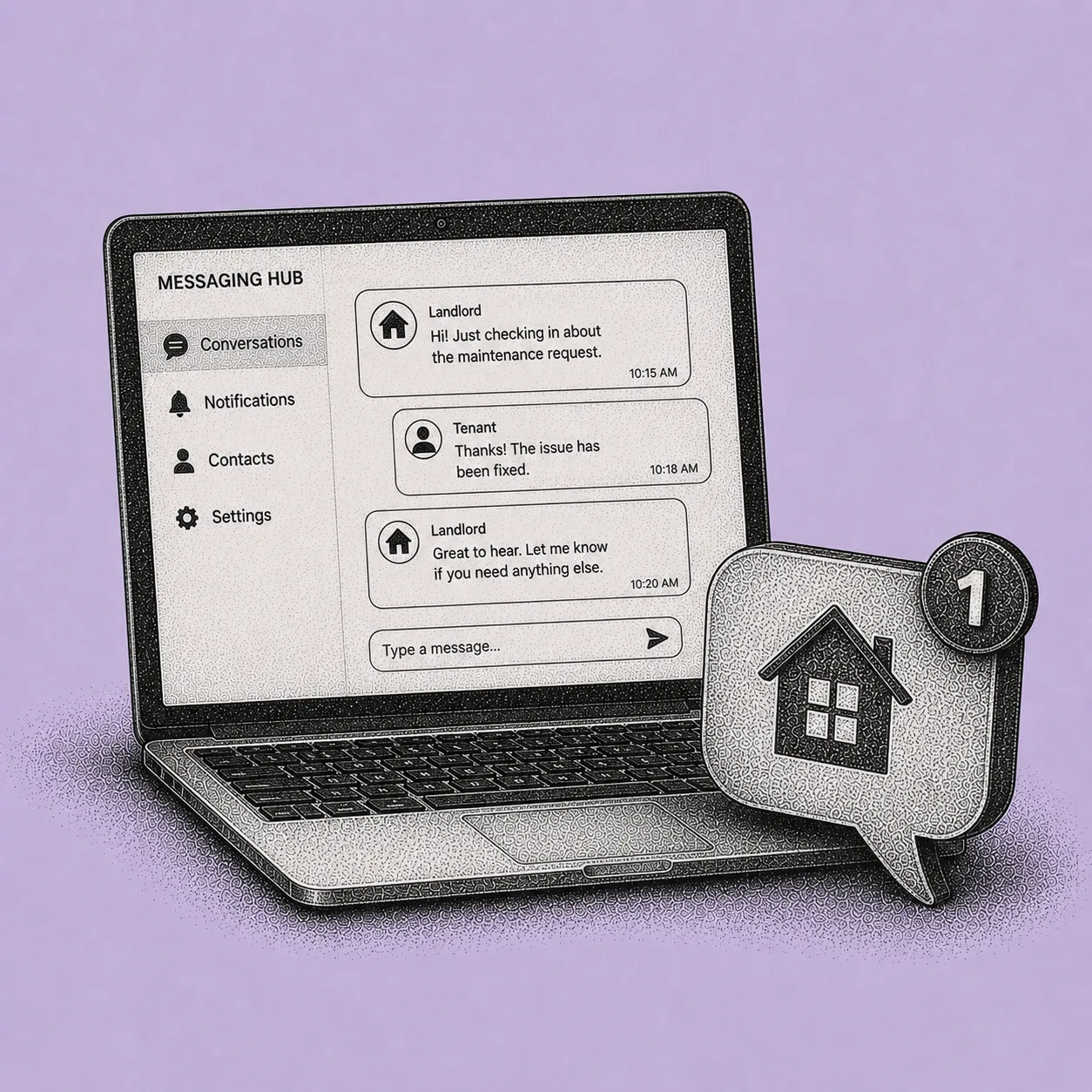
Strong tenant communication strategies are a foundation of successful rental property management. Clear, timely, and documented communication helps landlords reduce disputes, improve tenant retention, and stay compliant with housing regulations.
This guide explains how landlords can communicate with tenants effectively throughout the rental lifecycle—covering communication channels, response standards, documentation, and conflict handling.
This article is part of the rental management guides series for independent landlords and small property managers.
Tenant communication strategies refer to the systems, channels, and processes landlords use to share information, handle requests, and maintain clear two-way communication with tenants.
Effective communication supports:
Tenant communication doesn’t stop at messages—it directly impacts maintenance outcomes and lease renewals.
Poor communication is one of the most common causes of tenant dissatisfaction and early move-outs. Missed messages, unclear expectations, or undocumented conversations can also lead to legal disputes.
For new landlords, a strong communication system starts with understanding the basics of getting started as a landlord and setting expectations early.
Well-defined landlord tenant communication best practices help landlords:
Landlords should identify and standardize approved communication channels early in the tenancy.
Common channels include:
Using consistent channels improves response times and record-keeping.
Tenants expect predictable responses. Establishing response timelines improves trust and reduces follow-ups.
Best practices include:
Clear response standards are a core part of tenant communication best practices.
Automation helps landlords reduce manual work while keeping tenants informed.
Many routine reminders work best when paired with clear rent collection strategies that reduce missed payments and follow-ups.
Examples of automated communication:
Automation ensures consistency without losing professionalism.
Maintaining a written record of tenant communication protects both parties. Documentation is especially important for:
Following up verbal conversations with written summaries helps avoid confusion and supports compliance.
Conflicts should be handled with clarity, empathy, and consistency.
Best practices for conflict communication:
Structured communication reduces escalation and protects landlord credibility.
Encouraging tenant feedback helps landlords identify issues early and improve retention.
Examples include:
Two-way communication strengthens long-term tenant relationships.
The best approach combines written communication for documentation with quick channels like portals or texts for timely updates.
Yes, but consent is required in many regions. Landlords should also provide opt-out options.
Follow up verbal discussions with a written summary via email or secure messaging.
Communication should be proactive but not excessive—mainly for maintenance, notices, and important updates.
Clear communication reduces disputes, improves satisfaction, and supports legal compliance.
Managing tenant communication becomes easier when messages, requests, and records are centralized. Platforms like Shuk Rentals help landlords organize tenant conversations, track requests, automate routine updates, and maintain clear communication—supporting stronger tenant relationships without increasing administrative workload.
Strong tenant communication strategies are a foundation of successful rental property management. Clear, timely, and documented communication helps landlords reduce disputes, improve tenant retention, and stay compliant with housing regulations.
This guide explains how landlords can communicate with tenants effectively throughout the rental lifecycle—covering communication channels, response standards, documentation, and conflict handling.
This article is part of the rental management guides series for independent landlords and small property managers.
Tenant communication strategies refer to the systems, channels, and processes landlords use to share information, handle requests, and maintain clear two-way communication with tenants.
Effective communication supports:
Tenant communication doesn’t stop at messages—it directly impacts maintenance outcomes and lease renewals.
Poor communication is one of the most common causes of tenant dissatisfaction and early move-outs. Missed messages, unclear expectations, or undocumented conversations can also lead to legal disputes.
For new landlords, a strong communication system starts with understanding the basics of getting started as a landlord and setting expectations early.
Well-defined landlord tenant communication best practices help landlords:
Landlords should identify and standardize approved communication channels early in the tenancy.
Common channels include:
Using consistent channels improves response times and record-keeping.
Tenants expect predictable responses. Establishing response timelines improves trust and reduces follow-ups.
Best practices include:
Clear response standards are a core part of tenant communication best practices.
Automation helps landlords reduce manual work while keeping tenants informed.
Many routine reminders work best when paired with clear rent collection strategies that reduce missed payments and follow-ups.
Examples of automated communication:
Automation ensures consistency without losing professionalism.
Maintaining a written record of tenant communication protects both parties. Documentation is especially important for:
Following up verbal conversations with written summaries helps avoid confusion and supports compliance.
Conflicts should be handled with clarity, empathy, and consistency.
Best practices for conflict communication:
Structured communication reduces escalation and protects landlord credibility.
Encouraging tenant feedback helps landlords identify issues early and improve retention.
Examples include:
Two-way communication strengthens long-term tenant relationships.
The best approach combines written communication for documentation with quick channels like portals or texts for timely updates.
Yes, but consent is required in many regions. Landlords should also provide opt-out options.
Follow up verbal discussions with a written summary via email or secure messaging.
Communication should be proactive but not excessive—mainly for maintenance, notices, and important updates.
Clear communication reduces disputes, improves satisfaction, and supports legal compliance.
Managing tenant communication becomes easier when messages, requests, and records are centralized. Platforms like Shuk Rentals help landlords organize tenant conversations, track requests, automate routine updates, and maintain clear communication—supporting stronger tenant relationships without increasing administrative workload.

Manual rent collection creates friction for both landlords and tenants. Paper checks, late payments, manual follow-ups, and scattered records consume time and introduce unnecessary stress. As economic conditions tighten and household budgets fluctuate, landlords face increasing uncertainty around on-time payments and cash flow consistency.
This article is part of our complete property management software guide for independent landlords.
Rent collection software for landlords replaces manual processes with a centralized, automated system for accepting payments, sending reminders, enforcing lease rules, and tracking records. This guide explains how rent collection software works, how to implement it effectively, and how landlords can avoid common mistakes while modernizing rent operations.
Rent collection is one part of the bigger property management workflow. Once rent tracking is organized, the next bottlenecks are usually lease tracking and maintenance follow-ups. That’s why many landlords start with payments and then move into a complete system.
Rent collection software is a digital platform that allows landlords to collect rent online and manage payment workflows in one place. Instead of handling checks, deposits, and manual ledgers, landlords use software to automate the rent lifecycle.
Core capabilities typically include:
For landlords managing any number of units, rent collection software turns rent day into a predictable, low-effort process.
Tenant payment preferences have shifted rapidly toward digital methods. At the same time, landlords want fewer late payments, clearer records, and less manual reconciliation. Manual systems struggle to meet both needs.
Rent collection software helps landlords:
As online payments become the norm, software adoption is no longer optional for landlords who want operational stability.
Autopay allows tenants to schedule recurring payments, reducing “forgot to pay” delays. When combined with automated reminders, landlords see higher on-time payment rates.
Benefits include:
Autopay shifts rent collection from reactive to automatic.
Online payments settle faster than checks and automatically update tenant ledgers.
This results in:
Manual data entry and end-of-month cleanup are significantly reduced.
Rent collection software enforces lease rules consistently. Late fees and notices are applied according to predefined settings.
Why this matters:
Consistency protects landlords during disputes.
Small portfolios benefit most when rent reminders and payment history sit inside property management software for small landlords, so nothing gets missed.
Centralized Communication and Transparency
Payment reminders, receipts, and notices are stored within the platform, tied to each tenant and billing period.
Benefits include:
This keeps rent-related communication professional and traceable.
Start by identifying non-negotiable features:
The right platform should automate at least three manual steps in your current rent process.
ACH is typically the most cost-effective and reliable option for recurring rent payments. Card payments can be offered as a fallback.
Best practices:
Clear setup reduces adoption friction.
A structured reminder cadence keeps tenants informed without confrontation.
Typical cadence:
Neutral, automated messaging maintains professionalism.
Good rent collection software automatically matches payments to tenants and billing periods.
Landlord best practices:
Automation reduces accounting errors.
Rent collection software is ideal for:
If rent collection requires manual tracking or frequent follow-ups, software delivers immediate value.
Rent collection software is a digital tool that allows landlords to accept online rent payments, automate reminders, and track payment records in one system.
Online rent collection is secure when provided by reputable platforms using encryption, audit logs, and compliance standards.
Yes. Most rent collection platforms allow tenants to set up recurring autopay schedules aligned with their pay cycles.
Yes. Automated reminders and autopay significantly improve on-time payment rates.
Some platforms support partial payments, but landlords should configure policies carefully based on lease terms and local regulations.
Rent collection software helps landlords replace unpredictable, manual payment processes with a structured, automated system. By centralizing payments, reminders, records, and enforcement, landlords gain clearer cash flow visibility and spend less time managing rent logistics.
To understand how rent collection fits into the full product, check rental property management software features.
Platforms like Shuk Rentals support landlords by integrating online rent collection into a broader rental management workflow—helping rent payments stay consistent, documented, and aligned with the rest of property operations.

Small landlords play a major role in the U.S. rental market, often managing properties alongside full-time jobs. While many portfolios are small—ranging from 1 to 100 units—the operational workload can be significant. Rent collection, tenant communication, maintenance coordination, accounting, and compliance frequently spill into nights and weekends.
This article is part of our complete property management software guide for independent landlords.
Property management software for small landlords simplifies these responsibilities by replacing fragmented tools like spreadsheets, paper leases, text messages, and bank screenshots with one centralized, cloud-based system. This guide explains how these platforms work, what features matter most for small landlords, and how they deliver real return on investment through time savings and operational clarity.
Shuk Rentals is designed specifically for independent landlords managing between 1 and 100 rental units. Whether you own a few single-family homes or a small portfolio of apartments, the platform focuses on the workflows that matter most—rent collection, lease tracking, maintenance coordination, and tenant communication—without overwhelming you with enterprise-level complexity.
You don’t need an accounting team or a dedicated operations manager to use it effectively. The dashboard is simple, clear, and structured around daily landlord tasks, so you can see rent status, upcoming renewals, and open maintenance requests at a glance. Instead of juggling spreadsheets, reminders, and scattered messages, everything is organized in one place.
Affordable pricing also matters for small portfolios. Software should support your growth, not eat into your margins. Shuk Rentals is built to remain practical and cost-effective for small landlords who want structure, clarity, and control without paying for features they’ll never use.
Property management software for small landlords is a digital platform designed to help independent property owners manage rental operations from a single dashboard. It consolidates essential tasks such as:
For landlords managing small portfolios, this software reduces manual work, improves organization, and creates a more professional experience for tenants.
Tenant expectations and operational pressures have shifted. Renters increasingly expect digital payments, online communication, and faster maintenance responses. At the same time, landlords want real-time visibility into cash flow and property performance.
Property management software helps small landlords:
For many self-managing landlords, software becomes essential once manual systems start breaking down.
For landlords managing 1–100 units, the biggest gains come from automating workflows that affect every tenant and create the most risk when handled manually.
To understand what tools matter most, review the core rental property management software features that help landlords automate rent payments, tenant communication, and maintenance tracking.
Rent collection is the most repetitive and time-sensitive task in property management. Software enables tenants to pay rent online through secure bank transfers and supports features such as autopay and automated reminders.
Key benefits include:
Removing friction from rent payments improves cash flow consistency and reduces administrative stress.
Using dedicated rent collection software for landlords allows tenants to pay online, set up autopay, and avoid late payment issues.
Many small landlords communicate through a mix of texts, emails, and phone calls, which quickly becomes difficult to track. A resident portal centralizes all tenant communication, documents, and payment history.
Benefits of a tenant portal:
This improves professionalism and reduces misunderstandings.
Cloud-based lease management allows landlords to store, reuse, and track leases digitally. Features often include templates, e-signatures, and renewal reminders.
Many landlords also use lease management software to track lease agreements, renewal dates, and tenant documentation in one dashboard.
Why this matters:
Digital lease workflows save time and reduce documentation errors.
Maintenance issues can escalate quickly if they are not tracked properly. Property management software allows tenants to submit maintenance requests online, often with photos and priority levels.
Maintenance tracking helps landlords:
This protects property value and improves tenant satisfaction.
Screening tenants consistently is critical for risk reduction. Software helps landlords manage applications, screening results, and decision documentation in one place.
Benefits include:
While software does not replace legal guidance, it supports consistent processes.
Manual bookkeeping becomes harder as portfolios grow. Property management software automates income and expense tracking and generates financial reports.
Typical accounting features include:
This significantly reduces time spent preparing financials.
Small landlords must manage leases, notices, maintenance records, and payment histories carefully. Software creates a centralized, time-stamped record of all activities.
This helps landlords:
Centralized records lower operational risk.
This software is ideal for:
If your current process depends on memory, scattered messages, or manual follow-ups, software provides immediate value.
Yes. Even landlords with 1–5 units often save time and reduce stress by automating rent collection, communication, and recordkeeping.
Most landlords can complete basic setup—adding properties, tenants, leases, and payments—within a short time by starting with core features.
Online rent collection is widely used and secure when provided by reputable, cloud-based platforms with proper security controls.
Software supports consistency in applications and documentation, but landlords remain responsible for understanding and following all applicable laws.
Yes. One of the biggest advantages is scalability—software allows landlords to add units without rebuilding their workflows.
Property management software for small landlords is no longer a luxury—it is a practical tool for saving time, improving organization, and maintaining consistent cash flow. By centralizing rent collection, communication, maintenance, and reporting, landlords can manage properties more efficiently and with less stress.
If you want to compare the most popular tools available today, see our guide to the best rental property management software in the USA used by independent landlords.
Platforms like Shuk Rentals are designed to support small landlords by bringing rent collection, tenant management, maintenance tracking, and financial organization into a single, cloud-based system—helping landlords modernize operations without relying on manual processes.

First-time rental property investor mistakes are the recurring errors new landlords make during property evaluation, financing, and ongoing management that turn otherwise reasonable deals into cash-flow problems. These mistakes are predictable and largely preventable with disciplined underwriting, conservative financing assumptions, and repeatable management systems. For independent landlords and small property managers, avoiding these early missteps is the difference between building a portfolio and funding a liability.
Buying your first rental property can feel straightforward: find a property, collect rent, pay the mortgage, repeat. But the gap between "it looked good on paper" and "it cash-flows in real life" is where most mistakes happen.
Vacancy is real, and it is not evenly distributed. The U.S. Census Bureau reported single-family rental vacancy at 5.3% in Q1 2024 while larger multifamily of 5 or more units ran higher at 7.8%, with the overall national rental vacancy rate at 6.6% in the same period. If you are undercapitalized or over-leveraged, just one vacancy stretch plus a repair can turn your passive income plan into a monthly cash call.
Add financing pressure. DSCR lending commonly looks for roughly 1.25 or higher for better terms, with typical investor LTV caps around 75% to 80% meaning 20% to 25% down. Rates in the mid-to-high single digits have been common in recent investor-loan pricing. If you do not stress-test those terms, the deal may only work on a spreadsheet with perfect assumptions.
Three scenarios you will recognize.
Accidental landlord. You move for work, rent out your old home, and discover that maintenance and turnover eat the extra money you expected.
DIY landlord. You self-manage to save fees, but inconsistent screening creates late payments and expensive evictions. The highest-cost landlord problems are usually preventable process failures.
Small-portfolio owner. You buy a duplex assuming expenses are maybe 20%, then learn why many small multifamily underwriters view 35% to 45% expense ratios as a healthier range.
A strong first rental is less about finding a great deal and more about building a repeatable decision system. That system has three parts.
You are trying to estimate net operating income and risk accurately. Market metrics help, but they do not replace property-specific diligence. Industry reporting has shown multifamily NOI growth of 5.9% in 2024 while rental income grew 8.7% from the prior year. That sounds encouraging until you realize NOI is what is left after expenses, and expenses are exactly what new investors undercount.
Investor loans are not the same as a primary-home mortgage. DSCR expectations, down-payment requirements, and rate variability can make your monthly payment significantly higher than expected. Your goal is not to get approved. Your goal is to ensure the property can carry debt through real-life events: vacancy, repairs, property tax changes, and insurance increases. Those are the four most common post-closing surprises cited by new landlords.
Self-management can be profitable, but only if you treat it like an operations role. The first-time trap is to improvise: casual screening, inconsistent leases, no maintenance reserve, and no vendor list. National benchmarking work in the property-management industry emphasizes navigating elevated costs in a constrained operating environment. You need a plan, not just good intentions.
What it is. You judge a deal by whether rent covers the mortgage, ignoring true operating expenses including taxes, insurance, maintenance, management, turnover, utilities, and admin.
Why it happens. You are used to personal budgeting, not business accounting. Many listing pro formas also omit or minimize real expenses.
Example. A DIY landlord buys a single-family rental expecting slim but positive cash flow. They budget $50 per month for repairs. In practice, average single-family maintenance has been cited around $137 per month, with older homes higher. The cash flow disappears.
How to avoid it.
Build an NOI worksheet: gross scheduled rent, subtract vacancy, subtract operating expenses, equals NOI. Compare your expenses to benchmarks. Small multifamily underwriting often lands in the 35% to 45% expense ratio range. Treat listing numbers as starting points, not truth. Verify taxes, insurance quotes, utility responsibility, and trash and water billing rules before you close.
Real example. A first-time duplex buyer used the seller's $1,200 per year maintenance line item. Year one included a water-heater failure and plumbing leak. The deal survived only because they had extra savings. Survived is not the same as performed.
What it is. You budget for small repairs but not major replacements including roof, HVAC, sewer line, and windows.
Why it happens. CapEx is lumpy and emotionally easy to ignore. New investors also confuse "inspection passed" with "no future replacements."
How to avoid it.
Create a CapEx schedule listing roof age, HVAC age, water heater, major appliances, and exterior paint. Estimate remaining useful life by asking your inspector and requesting permit history where available. Convert to monthly reserves: total CapEx expected over 10 years divided by 120 months equals your monthly CapEx reserve. Negotiate with evidence. If the roof is near end-of-life, ask for a credit or price reduction supported by contractor estimates.
Real example. An accidental landlord rents out their former home. Two years later HVAC dies in July. They finance the replacement at a high rate because they did not build reserves. The rental income becomes a payment plan.
What it is. You assume 0% vacancy because you already have a tenant lined up or because the area feels tight.
Why it happens. Optimism bias and recency bias. If your unit is occupied now, you assume it stays occupied.
How to avoid it.
Underwrite vacancy as an annual percentage. Start with 5% to 8% depending on property type and your market, then adjust using local comps. Add a turn cost line item covering cleaning, paint, minor repairs, marketing, and lost rent during make-ready. Track days-to-lease in your neighborhood by watching listings weekly for 60 days before buying.
Real example. A first-time investor buys a small multifamily assuming it will rent in a week. Turnover takes 45 days due to poor photos and slow maintenance coordination. The lost rent plus utilities wipe out three months of profit.
What it is. You buy based on cap rate headlines or assume a lower cap rate always means better without tying it to real NOI quality.
Why it happens. Cap rate is easy to compare but easy to misuse.
How to avoid it.
Calculate cap rate yourself from verified NOI, not broker NOI. Run cap rate sensitivity: what happens if expenses rise 10%? What if rent is 5% lower than projected? If that breaks the deal, it is fragile. Do not confuse cap rate with cash-on-cash return. Financing terms can turn a decent cap rate into poor cash flow.
Real example. A buyer paid a premium price for a turnkey rental at a low cap rate. Insurance renewal came in far higher than expected. Cap rate was irrelevant because the mortgage stayed fixed but expenses did not.
What it is. You get a quote, assume it holds, and buy a deal that only works under best-case terms.
Why it happens. Many first-timers shop property first and financing second.
How to avoid it.
Underwrite with a rate shock buffer. Add 0.5% to 1.0% to the quoted rate and see if you still cash flow. Confirm DSCR calculation method since some lenders use gross rent and others use appraiser market rent. Clarify early. Keep liquidity: plan for down payment plus closing plus 3 to 6 months of reserves.
Real example. A small-portfolio owner planned 80% LTV but the lender capped at 75% due to property type. They scrambled for cash, closed anyway, and drained reserves. Then they faced immediate plumbing repairs.
What it is. You rely on rosy macro indicators and ignore property-level risk.
Why it happens. Headlines can sound reassuring.
How to avoid it.
Build a bad year model: assume one month vacancy plus one major repair plus 5% rent drop and confirm you can pay the mortgage. Avoid thin deals. If your monthly cushion is under 5% to 10% of rent, you are one event away from negative cash flow. Add landlord insurance and require renters insurance to reduce liability and claims risk.
Real example. An accidental landlord assumed defaults are low so rentals are stable. Their tenant paid late repeatedly. Without strict enforcement and reserves, the landlord started covering the mortgage with credit cards.
What it is. You treat maintenance as occasional, not continuous.
Why it happens. New owners focus on the purchase, not the operation.
Single-family rentals have been cited at roughly $137 per month average maintenance, rising with property age. National benchmarking has reported average multifamily maintenance expenses around $8,657 per unit annually in 2024.
How to avoid it.
Budget maintenance as a line item from day one, not leftover money. Set service standards including response time, approval limits, and vendor expectations. Build a vendor bench before you need it: plumber, electrician, HVAC, handyman, and locksmith.
Real example. A DIY landlord tried to do everything personally to save money. After-hours calls, travel time, and rushed repairs caused tenant churn, creating vacancy losses bigger than any management fee.
What it is. You rent based on vibes, urgency, or a partial application.
Why it happens. You fear vacancy and want rent coming in fast.
How to avoid it.
Set written screening criteria including income multiple, credit threshold or explanations allowed, rental history, and criminal policy consistent with local laws. Verify income through pay stubs and employer verification and call prior landlords, not just the current one. Use a consistent process for every applicant to reduce fair-housing risk.
Real example. A first-time landlord accepts a tenant who offers to pay cash upfront but will not provide verifiable employment. Three months later, payments stop. The fast fill becomes months of loss.
What it is. You operate ad hoc with no reserve policy, no documentation, and no calendar for inspections and renewals.
Why it happens. You think one property does not need infrastructure.
How to avoid it.
Create a simple ops calendar covering lease renewal outreach, filter changes, seasonal HVAC service, and annual smoke and CO checks. Use separate bank accounts and track property-level P&L monthly. Establish reserve targets for maintenance, CapEx, and vacancy. Tie reserves to rent so they scale.
Real example. A small-portfolio owner did not track expenses by property. One unit silently underperformed for 18 months. They only noticed when taxes and insurance jumped and cash got tight.
Use this as your operating checklist. It is designed to prevent the most common first-time rental property investor mistakes by forcing you to verify numbers, stress-test financing, and set up management systems.
Rent validation. Pull 5 to 10 comparable rentals and document rent, days listed, and concessions. Underwrite vacancy using Census reference points with single-family at 5% or higher and multifamily higher.
NOI verification. Confirm property taxes from assessor records. Get an insurance quote before making an offer. Use an expense ratio reality check with 35% to 45% as a healthier range for small multifamily.
CapEx plan. List ages for roof, HVAC, water heater, and appliances. Convert expected replacements into a monthly CapEx reserve. Request seller receipts and permits where possible.
Confirm DSCR target and calculation method, aiming to clear roughly 1.25 or higher if possible. Confirm max LTV of 75% to 80% and required down payment. Underwrite your payment at the quoted rate and a higher buffer rate and see if you still cash flow. Keep liquidity covering down payment plus closing plus 3 to 6 months of reserves.
Tenant screening system. Written criteria and consistent steps.
Lease and rules. Late fees, maintenance reporting, and utilities responsibility.
Maintenance budget. Use benchmarks as a sanity check with single-family maintenance cited at roughly $137 per month average and multifamily maintenance at roughly $8,657 per unit annually.
Vacancy plan. Pre-make a turn checklist covering paint, cleaning, photos, and showing schedule.
Tracking. Separate property bank account and monthly P&L review.
Three quick examples in action. A buyer discovers insurance is 30% higher than assumed and renegotiates price. A landlord sets reserves upfront and covers a surprise water-heater replacement without debt. A DIY landlord standardizes screening and reduces late pays and turnover.
For small multifamily, many operators consider 35% to 45% of income a healthier underwriting range, with below 35% being unusually lean in most cases. For single-family rentals, maintenance alone has been cited around $137 per month on average and tends to rise with property age. Underwrite conservatively and treat any savings as upside rather than expected performance.
Start with reality-based baselines. Census data measured 5.3% vacancy for single-family rentals and 7.8% for multifamily of 5 or more units in Q1 2024. Your submarket can be tighter or looser, so also track days-on-market for comparable rentals locally. Underwrite vacancy even if a unit is currently occupied.
Not inherently. DSCR loans can be useful, especially for LLC borrowers. But you must price them correctly into your deal. DSCR lenders commonly prefer roughly 1.25 or higher for better terms with 75% to 80% LTV caps typical. If your deal only works at lower rates than currently available, it is not a deal. It is a bet.
Because macro delinquency does not equal micro profitability. National serious delinquency rates near 0.5% to 0.6% signal overall mortgage health, but your rental can still struggle due to vacancy, repairs, local rent softness, or poor tenant screening. Reserves, conservative underwriting, and repeatable systems are the protections that actually matter at the property level.
Weak tenant screening is consistently the most expensive shortcut. A rushed placement to avoid vacancy often leads to late payments, property damage, and eventual eviction costs that far exceed the vacancy loss you were trying to avoid. Written criteria, income verification, and landlord reference calls cost almost nothing and prevent the most damaging outcomes.
Plan for at least 3 to 6 months of total housing expense including mortgage, taxes, insurance, and estimated maintenance. This covers a vacancy stretch, a major repair, or both happening at once. If your reserves are depleted by the down payment and closing costs alone, the deal is likely too thin to absorb normal operating volatility.
If you want to avoid repeating the classic first-time rental property investor mistakes, your best next step is to formalize how you evaluate and underwrite deals before you look at the next listing. That starts with centralizing your lease files, rent roll, income and expense tracking, and property-level reporting so you are not rebuilding your records from scratch after every acquisition.