Rent Collection Hub

Free Rent Collection Apps for Landlords: What's Actually Free (And What's Not)

photo of Miles Lerner, Blog Post Author
Miles Lerner

The Pattern Behind "Free"

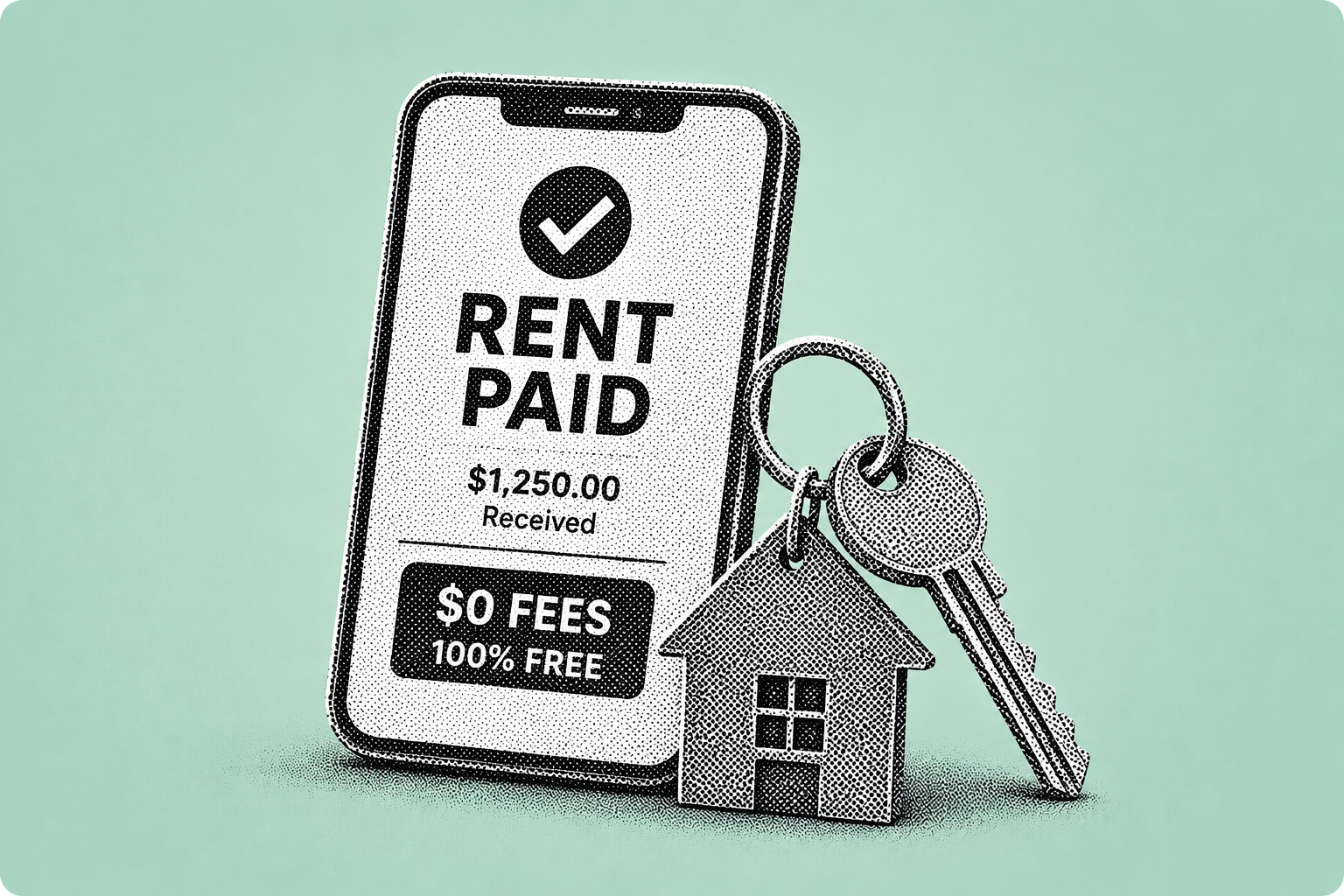
If you have searched for a free rent collection app, you have probably noticed a pattern: lots of tools advertise "$0," but somebody usually pays, either you, your tenant, or your future self in paperwork time. For small landlords (1 to 15 units), the hidden costs add up fast: per-payment ACH "convenience" fees, card percentages, slow deposits that force you to float expenses, and missing records that make tax time (or a dispute) painful.

Note: This article provides general education about rent collection app pricing structures, not product endorsements. Fees, features, and terms change frequently. Verify current pricing directly with each platform before making decisions.

What Does "Free" Really Mean?

When a platform says "free," it usually means one of four things:

Free to the landlord, not the tenant. Many rent tools shift ACH fees to tenants, commonly $2 to $2.50 per payment on free tiers (TurboTenant and Avail are clear examples). That may keep your direct cost at $0, but it can create tenant frustration and reduce on-time payment behavior.

Free ACH, but paid card payments. Some platforms keep ACH at $0 while charging tenants a card percentage (for example, 2.75% to 3.5%).

Free transfers, paid "instant" access. Peer-to-peer apps often advertise free standard transfers, then charge a percentage for instant cash-out (Venmo and PayPal both use 1.75% for instant transfers).

Free software, expensive time. Several "free" tools do not give you landlord-grade bookkeeping, partial-payment controls, lease integration, or clean compliance records, pushing the cost into manual reconciliation and admin time.

A free rent collection app is only truly free if it is free for you and your tenants, does not force upgrades to remove core payment fees, and reduces (not increases) bookkeeping work.

Popular "Free" Options Compared

Venmo. Can move money via standard bank transfer for $0, but collecting rent properly typically requires a Business Profile, which triggers a seller fee of 1.9% plus $0.10 per payment. Instant transfer is 1.75%. Using a personal account for rent can violate terms.

Zelle. Fee-free and typically settles in minutes. The catch: banks set transfer limits, Zelle does not provide rent-specific features like recurring invoices, ledgers, or partial-payment rules.

PayPal. Rent collection generally requires merchant-style acceptance at 3.49% plus $0.49 per domestic transaction. Chargebacks can cost $20 (non-refundable).

Apartments.com (Cozy successor). $0 for ACH for both landlord and tenant, 2.75% for card. Deposits commonly 3 to 5 banking days. Many landlords still export data to spreadsheets.

TurboTenant. Free tier typically charges tenants $2.00 per ACH payment and 3.49% for cards. ACH fees waived only on paid tiers. Free-tier ACH can take 5 to 7 business days.

Avail. Free tier generally pushes $2.50 ACH per payment to tenants, and 3.5% for cards. Faster deposits and $0 ACH tied to Unlimited Plus at $9/unit/month.

Hidden Costs Landlords Often Miss

Tenant-paid fees that reduce cooperation ($2.50 ACH fee is $30/year per tenant). Partial payments you cannot control (P2P apps do not reliably block partial rent). No rent ledger equals messy bookkeeping. Deposit lag becomes a financing cost (5 to 7 days on free tiers). Weak audit trail for disputes.

What a Truly Free Platform Should Include

$0 to the landlord for standard rent payments. $0 to the tenant for ACH payments. Clear, downloadable payment history by unit and tenant. Controls for partial payments. Automated receipts. Predictable deposit timing. Support for late fees and notices. No surprise "convenience fees."

How Shuk Compares

Shuk Rentals offers online rent collection with zero ACH transaction fees, so neither you nor your tenants pay per-payment ACH charges. Autopay enrollment reduces late payments. Configurable late fees applied automatically enforce your lease terms consistently. Payment and income reports filterable by property, tenant, and date and exportable to PDF or Excel give you the clean records that P2P apps and free tiers lack.

At $5 per unit per month with no setup fees, and with White Glove Onboarding included at no additional cost, Shuk makes rent collection feasible for landlords running 1 to 100 units without hidden transaction costs.

Book a demo at shukrentals.com/book-a-demo to see how zero ACH transaction fees work in practice.

Frequently Asked Questions

Is Venmo or Zelle safe for collecting rent?

They can move money, but they were not designed for rent workflows. Venmo's terms restrict commercial use on personal accounts, and Zelle does not provide rent-specific features like ledgers, partial-payment controls, or late-fee automation. Both create documentation gaps that can become problems during disputes or at tax time.

What is the real cost of "tenant-paid" ACH fees?

Even though you do not pay directly, tenant-paid fees ($2 to $2.50 per payment) create friction: complaints, delayed payments, or requests to revert to checks. Over a year, a $2.50 fee costs each tenant $30, which can feel disproportionate when rent already increased.

How do I know if a free rent collection app will stay free?

Check whether core features (ACH payments, basic reporting, autopay) require a paid upgrade. If the free tier passes fees to tenants or limits deposit speed, the platform is monetizing the features you need most.

QUICK VIEW
DIVE DEEPER
Stop Reacting to Vacancies. Start Seeing Them Coming.

Shuk helps landlords and property managers get ahead of vacancies, improve renewal visibility, and bring more predictability to every lease cycle.

Book a free 20-min demo to see Shuk today.

Stay in the Shuk Loop

The Pattern Behind "Free"

If you have searched for a free rent collection app, you have probably noticed a pattern: lots of tools advertise "$0," but somebody usually pays, either you, your tenant, or your future self in paperwork time. For small landlords (1 to 15 units), the hidden costs add up fast: per-payment ACH "convenience" fees, card percentages, slow deposits that force you to float expenses, and missing records that make tax time (or a dispute) painful.

Note: This article provides general education about rent collection app pricing structures, not product endorsements. Fees, features, and terms change frequently. Verify current pricing directly with each platform before making decisions.

What Does "Free" Really Mean?

When a platform says "free," it usually means one of four things:

Free to the landlord, not the tenant. Many rent tools shift ACH fees to tenants, commonly $2 to $2.50 per payment on free tiers (TurboTenant and Avail are clear examples). That may keep your direct cost at $0, but it can create tenant frustration and reduce on-time payment behavior.

Free ACH, but paid card payments. Some platforms keep ACH at $0 while charging tenants a card percentage (for example, 2.75% to 3.5%).

Free transfers, paid "instant" access. Peer-to-peer apps often advertise free standard transfers, then charge a percentage for instant cash-out (Venmo and PayPal both use 1.75% for instant transfers).

Free software, expensive time. Several "free" tools do not give you landlord-grade bookkeeping, partial-payment controls, lease integration, or clean compliance records, pushing the cost into manual reconciliation and admin time.

A free rent collection app is only truly free if it is free for you and your tenants, does not force upgrades to remove core payment fees, and reduces (not increases) bookkeeping work.

Popular "Free" Options Compared

Venmo. Can move money via standard bank transfer for $0, but collecting rent properly typically requires a Business Profile, which triggers a seller fee of 1.9% plus $0.10 per payment. Instant transfer is 1.75%. Using a personal account for rent can violate terms.

Zelle. Fee-free and typically settles in minutes. The catch: banks set transfer limits, Zelle does not provide rent-specific features like recurring invoices, ledgers, or partial-payment rules.

PayPal. Rent collection generally requires merchant-style acceptance at 3.49% plus $0.49 per domestic transaction. Chargebacks can cost $20 (non-refundable).

Apartments.com (Cozy successor). $0 for ACH for both landlord and tenant, 2.75% for card. Deposits commonly 3 to 5 banking days. Many landlords still export data to spreadsheets.

TurboTenant. Free tier typically charges tenants $2.00 per ACH payment and 3.49% for cards. ACH fees waived only on paid tiers. Free-tier ACH can take 5 to 7 business days.

Avail. Free tier generally pushes $2.50 ACH per payment to tenants, and 3.5% for cards. Faster deposits and $0 ACH tied to Unlimited Plus at $9/unit/month.

Hidden Costs Landlords Often Miss

Tenant-paid fees that reduce cooperation ($2.50 ACH fee is $30/year per tenant). Partial payments you cannot control (P2P apps do not reliably block partial rent). No rent ledger equals messy bookkeeping. Deposit lag becomes a financing cost (5 to 7 days on free tiers). Weak audit trail for disputes.

What a Truly Free Platform Should Include

$0 to the landlord for standard rent payments. $0 to the tenant for ACH payments. Clear, downloadable payment history by unit and tenant. Controls for partial payments. Automated receipts. Predictable deposit timing. Support for late fees and notices. No surprise "convenience fees."

How Shuk Compares

Shuk Rentals offers online rent collection with zero ACH transaction fees, so neither you nor your tenants pay per-payment ACH charges. Autopay enrollment reduces late payments. Configurable late fees applied automatically enforce your lease terms consistently. Payment and income reports filterable by property, tenant, and date and exportable to PDF or Excel give you the clean records that P2P apps and free tiers lack.

At $5 per unit per month with no setup fees, and with White Glove Onboarding included at no additional cost, Shuk makes rent collection feasible for landlords running 1 to 100 units without hidden transaction costs.

Book a demo at shukrentals.com/book-a-demo to see how zero ACH transaction fees work in practice.

Frequently Asked Questions

Is Venmo or Zelle safe for collecting rent?

They can move money, but they were not designed for rent workflows. Venmo's terms restrict commercial use on personal accounts, and Zelle does not provide rent-specific features like ledgers, partial-payment controls, or late-fee automation. Both create documentation gaps that can become problems during disputes or at tax time.

What is the real cost of "tenant-paid" ACH fees?

Even though you do not pay directly, tenant-paid fees ($2 to $2.50 per payment) create friction: complaints, delayed payments, or requests to revert to checks. Over a year, a $2.50 fee costs each tenant $30, which can feel disproportionate when rent already increased.

How do I know if a free rent collection app will stay free?

Check whether core features (ACH payments, basic reporting, autopay) require a paid upgrade. If the free tier passes fees to tenants or limits deposit speed, the platform is monetizing the features you need most.

{

  "@context": "https://schema.org",

  "@type": "FAQPage",

  "mainEntity": [

    {

      "@type": "Question",

      "name": "Is Venmo or Zelle safe for collecting rent?",

      "acceptedAnswer": {

        "@type": "Answer",

        "text": "They can move money but were not designed for rent workflows. Venmo's terms restrict commercial use on personal accounts and Zelle does not provide rent-specific features like ledgers, partial-payment controls, or late-fee automation. Both create documentation gaps that can become problems during disputes or at tax time."

      }

    },

    {

      "@type": "Question",

      "name": "What is the real cost of tenant-paid ACH fees?",

      "acceptedAnswer": {

        "@type": "Answer",

        "text": "Even though you do not pay directly, tenant-paid fees of $2 to $2.50 per payment create friction including complaints, delayed payments, or requests to revert to checks. Over a year a $2.50 fee costs each tenant $30."

      }

    },

    {

      "@type": "Question",

      "name": "How do I know if a free rent collection app will stay free?",

      "acceptedAnswer": {

        "@type": "Answer",

        "text": "Check whether core features like ACH payments, basic reporting, and autopay require a paid upgrade. If the free tier passes fees to tenants or limits deposit speed the platform is monetizing the features you need most."

      }

    }

  ]

}

Stop Reacting to Vacancies. Start Seeing Them Coming.

Shuk helps landlords and property managers get ahead of vacancies, improve renewal visibility, and bring more predictability to every lease cycle.

Book a demo to get started with a free trial.

Stay in the Shuk Loop

View Similar Articles

View Similar Articles

All Articles
Compliance and Legal
How to Write a Lease Termination Letter (With Template)

How to Write a Lease Termination Letter (With Template)

The Problem: Small Errors, Big Delays

A lease termination letter is one of the most routine documents you will send as a landlord, until a missing date, the wrong notice period, or an unprovable delivery method turns a clean move-out into a delayed vacancy, a contested notice, or a court dismissal that forces you to start over.

This guide is built for U.S. landlords and property managers who want to end tenancies professionally and legally, without escalating into an eviction unless it is truly necessary. A lease termination letter ends the landlord-tenant relationship with proper notice. It does not remove someone immediately. Courts and local housing authorities care less about your intent ("I told them to leave") and more about whether you followed the required steps and timelines.

Note: This article provides general education about lease termination notices, not legal advice. Notice periods, cure requirements, service methods, just-cause overlays, and termination procedures vary by state and municipality. Before serving any termination notice, confirm your obligations under applicable state and local law, and consult a qualified attorney for contested or complex situations.

Real-world examples show how quickly small errors become expensive:

Example 1. A portfolio manager sends a non-renewal letter with a move-out date that is 59 days away in a jurisdiction where 60 days is required, so the tenant challenges the notice and the manager loses weeks re-noticing.

Example 2. A small landlord emails a notice because it is faster. Later, the tenant denies receiving it and the landlord cannot prove service, creating avoidable delay.

Treat every termination like it may be reviewed by a judge or agency. Write clearly, follow the statute, and keep proof of service. Start your timeline early. If your state requires 60 to 91 days (yes, some do), waiting until the last month can force an unwanted renewal or extra month-to-month rent.

What a Lease Termination Letter Is (and Is Not)

A lease termination letter is written notice that a tenancy will end on a specific date, along with instructions for move-out, keys, and next steps. You will use it for: fixed-term non-renewal (end of lease), ending a month-to-month or other periodic tenancy, and ending for cause (like non-payment or lease violations) when your state allows termination after notice and any required cure period.

Lease termination letter vs. eviction notice. A termination letter ends the lease relationship with notice. An eviction (unlawful detainer/forcible entry) is a court process to regain possession when the tenant does not leave or does not cure a breach. Many states require a specific statutory notice to quit/pay-or-quit/comply-or-quit before you can file, so mixing up terminology, deadlines, or service rules can undermine your case.

Two quick examples:

California end-of-lease non-renewal. For many month-to-month situations, California commonly requires 30 or 60 days depending on length of occupancy under Cal. Civ. Code 1946.1, and local ordinances may add rules.

Texas month-to-month termination. Texas sets a default 30-day notice for terminating a month-to-month tenancy under Tex. Prop. Code 91.001, unless your lease specifies otherwise.

Before writing, identify your tenancy type (fixed-term vs. month-to-month) and whether you are ending with cause. Confirm whether your city/county has overlays (rent control, just cause, or additional forms). State law is the floor. Local law can raise the bar.

Step-by-Step: How to Write a Lease Termination Letter That Holds Up

Step 1: Confirm the Tenancy Type and the Legal Basis

Start with the lease and the tenant's status.

Fixed-term lease. You may be non-renewing at the end date. Some states do not require notice unless the lease requires it (example: Alaska is commonly summarized as no notice required unless the lease says so). Others do require statutory notice in certain situations (example: Delaware requires 60 days in many periodic/non-renewal contexts).

Month-to-month (periodic) tenancy. The statute usually controls notice length and timing. Texas defaults to 30 days under Tex. Prop. Code 91.001. Georgia requires 60 days from landlords under O.C.G.A. 44-7-7. Washington allows 20 days' written notice for many month-to-month terminations under RCW 59.18.220, with additional just-cause considerations in some contexts. Wisconsin commonly requires 28 days ending on the rental period's last day.

Example (Texas). A landlord in Dallas wants to sell a single-family rental and needs the tenant out. Because the tenant is month-to-month, the landlord checks the lease (no longer notice period) and gives a written 30-day termination consistent with Tex. Prop. Code 91.001.

Example (Georgia). A property manager assumes 30 days is standard and serves a 30-day notice. The tenant points to Georgia's 60-day requirement for landlords under O.C.G.A. 44-7-7, forcing re-notice and delaying turnover.

If the lease requires more notice than the statute, follow the lease. If the statute requires more than the lease, follow the statute.

Step 2: Calculate the Correct Notice Period

Notice periods vary widely. Common patterns:

30 days: Many states (and Texas by default).

60 days: California in many cases for tenants in possession 1 or more years. Georgia landlord notice. Delaware.

Longer/strict: Colorado can require up to 91 days for some terminations depending on length of tenancy under C.R.S. 13-40-107. D.C. can require 90 days for some non-renewals. New Jersey is often cited as 90 days in certain month-to-month contexts tied to statutory requirements.

What notice means: It is usually counted from the date the tenant is served, not the date you drafted it. Also, some states require the termination date to align with a rental period end (for example, Wisconsin's ending on the rental period's last day).

Example (California end-of-lease non-renewal). A Los Angeles landlord has a tenant who has lived in the unit for 18 months. Even if the fixed term is ending, the landlord plans early and targets a 60-day timeline consistent with Cal. Civ. Code 1946.1 concepts, while verifying local rules.

Example (Colorado strict timing). A manager assumes 30 days is enough, but because the tenant has been in place over a year, Colorado's statute can require longer notice (up to 91 days depending on circumstances) under C.R.S. 13-40-107.

Create a notice calendar in your property management system that counts backward from the desired move-out date and includes buffer days for service issues.

Step 3: Include the Mandatory Elements

A legally durable lease termination letter is plain, specific, and complete. Include:

Date of the notice (the day you sign/serve it). Tenant(s) full legal names (match the lease). Property address plus unit number. Clear termination date/time (for example, "by 11:59 p.m. on..."). Reason (if required or if for-cause; for a simple non-renewal, many landlords keep it neutral, but local just-cause rules may require a stated reason). Next steps: keys/garage openers, forwarding address request, move-out inspection process, utilities, and how security deposit disposition will be handled under your state rules. Landlord/agent signature and contact information.

Example (documentation saves a deal). A regional PM sends a non-renewal with the wrong unit number (Unit B vs. Unit D). The tenant argues the notice is unclear. A corrected notice is required, shifting the vacancy window.

Example (for-cause clarity). A landlord ends up in court after sending a "terminate immediately" letter for non-payment. The judge asks where the statutory cure period is stated. Without it, the landlord must restart the process.

Use the lease's exact defined terms (Landlord, Tenant, Premises) to avoid ambiguity.

Step 4: Choose a Delivery Method You Can Prove

Even a perfectly written letter can fail if you cannot prove it was delivered in a legally acceptable way. Many jurisdictions allow: personal delivery (handing it to the tenant or a suitable person, depending on rules), certified mail/return receipt to document mailing and receipt attempt, posting plus mailing in some eviction contexts (often regulated), and electronic delivery only if your lease/state/local rules clearly allow it.

Practical approach. Use two methods (for example, certified mail plus personal delivery) so you have redundancy. Keep: copy of the signed letter, mailing receipt/tracking history/returned envelope if applicable, service log (who served, where, when), and photos if posting is used (where permitted).

Example (Washington 20-day notice). A landlord serves a 20-day notice for a month-to-month termination consistent with RCW 59.18.220, but forgets to keep a service declaration. The tenant later disputes receipt, complicating the timeline.

Make service audit-ready. If you cannot explain service in 30 seconds, with receipts, you are exposed.

Step 5: Keep the Tone Professional

A termination letter is not the place to vent. A neutral, businesslike letter often reduces friction and encourages a cooperative move-out. Offer a clear move-out checklist. Provide inspection scheduling options. State that rent is still due through the termination date unless otherwise required by law or agreement.

Example (tenant relations). A manager gives a courteous 60-day non-renewal and includes a pre-move-out walkthrough option. The tenant leaves the unit in better condition and returns keys on time.

Example (escalation avoidance). A landlord threatens credit reporting and sheriff removal in a termination letter. The tenant becomes uncooperative, increasing damage risk and delaying access.

Separate termination from collections. If money is owed, document it, but keep the termination notice clean and compliant.

State Notice Periods: At-a-Glance (Verify Before Sending)

Notice rules change and can have local overlays. Use this as a starting point, then confirm in your state's statutes or official resources.

California: 30 days (under 1 year occupancy) or 60 days (1 year or more) for many month-to-month terminations; local rules may add requirements.

Texas: 30 days by default for month-to-month termination.

Georgia: 60 days' notice from landlords to terminate a tenancy at will/month-to-month.

Washington: 20 days' written notice for many month-to-month terminations; just-cause rules may apply in certain places.

Colorado: 21/28/91 days depending on tenancy length under C.R.S. 13-40-107.

Delaware: 60 days in many termination/non-renewal contexts.

D.C.: commonly 90 days for some non-renewals.

North Carolina: 7 days for certain month-to-month terminations.

Wisconsin: 28 days, ending on the rental period's last day.

Virginia: 30 days for month-to-month under Va. Code 55.1-1253.

Quick Checklist: Before You Send Any Lease Termination Letter

Confirm tenancy type (fixed-term vs. month-to-month) and basis (non-renewal vs. for-cause). Verify the minimum notice period in your state statute and any local rules (rent control/just cause). Calculate the termination date correctly (and align to rental period end if required, for example WI). Include required elements: tenant names, property address, notice date, termination date, reason (if required), next steps, signature. Decide service method(s) you can prove (certified mail, personal service, etc.). Keep a complete service packet (copy of notice plus receipts plus log). Schedule operational steps: pre-move-out inspection, showings (where allowed), vendor turns, utility transfers.

Templates

Template 1: End-of-Lease Non-Renewal (Fixed-Term)

Subject: Notice of Non-Renewal / Lease Termination Letter

Date: __________ Tenant(s): __________ Property: __________

Dear __________,

This letter serves as formal notice that the fixed-term lease for the above property, dated __________, will end on __________ (termination date). The lease will not be renewed.

Please vacate the premises and return all keys, fobs, and access devices by __________ (time) on __________ (date). Please provide a forwarding address for future correspondence and any required security deposit accounting (per applicable law).

Move-out instructions: Move-out inspection: __________. Cleaning/condition expectations: __________. Utilities: __________.

Sincerely, __________ (Landlord/Agent Name) __________ (Company, if any) __________ (Phone/Email) Signature: __________

Template 2: Month-to-Month Termination (No Cause Stated)

Subject: Notice to Terminate Month-to-Month Tenancy

Date: __________ Tenant(s): __________ Property: __________

Dear __________,

This letter is formal notice that the month-to-month tenancy for the above property will terminate on __________ (termination date), consistent with applicable state law (for example, Texas default 30 days under Tex. Prop. Code 91.001).

Rent remains due through the termination date unless otherwise required by law or written agreement. Please return all keys and access devices by __________ on __________.

Next steps: Forwarding address: __________. Move-out inspection window: __________. How to schedule: __________.

Sincerely, Signature: __________

Template 3: For-Cause/Non-Payment (Cure-or-Quit Style)

Subject: Notice to Pay Rent or Vacate

Date: __________ Tenant(s): __________ Property: __________

Dear __________,

This letter provides notice that you are in non-payment of rent in the amount of $__________ for the period(s): __________.

You must pay the total amount due or vacate the premises by __________ (deadline), in accordance with applicable law and any required notice/cure period (for example, Ohio landlords should confirm statutory notice steps before filing, including references in Ohio Rev. Code 5321.17 and related procedures).

Payment instructions: __________

If you believe this notice is in error, contact: __________ immediately.

If payment is not received by the deadline, the landlord may pursue available legal remedies, which can include filing an eviction action (where permitted).

Sincerely, Signature: __________

Frequently Asked Questions

Do I always need to give written notice to end a lease?

Often yes, especially for month-to-month tenancies where statutes specify a minimum written notice period (for example, Texas 30 days, Georgia 60 days, Washington 20 days). Some fixed-term leases may end without notice unless the lease or statute requires it (Alaska is commonly summarized that way). Verify your state and lease.

Can a lease termination letter be emailed?

Sometimes, but it depends on state/local law and your lease language. If email is allowed, keep strong proof (delivery confirmation) and consider also mailing a copy.

What is the biggest mistake that voids a termination notice?

Using the wrong timeline or being unable to prove service are the two most common practical failures. Colorado's longer timeframes (up to 91 days in some cases) make miscalculation particularly costly.

What to Do Next

If you manage more than a handful of leases, the hardest part is not writing the lease termination letter. It is timing, tracking, and proof across many units.

Shuk's Lease Indication Tool (LIT) gives you early renewal intelligence starting six months before lease end, so you know which leases are approaching decision points well before notice windows open. Document storage keeps signed notices, service receipts, and communication records organized in one place per unit, so if a termination is challenged, you can quickly show what was sent, when, and how. Centralized in-app messaging with email and push notifications creates a time-stamped record of tenant communication throughout the termination process. E-signature through our Adobe-powered integration handles lease execution for new tenants after the turnover. And Year-Round Marketing keeps your pipeline warm so you are not starting from zero when a unit opens up.

At $5 per unit per month with no setup fees, and with White Glove Onboarding included at no additional cost, Shuk makes lease lifecycle management organized and documented for landlords and property managers running 1 to 100 units.

Use the templates above as your starting point, then verify your state/local rules and, when stakes are high, loop in a qualified attorney.

Book a demo at shukrentals.com/book-a-demo to see how lease tracking, document storage, and messaging work together so your termination process is timely, documented, and defensible.

Landlord Challenges
5 Practical Strategies to Fill Vacancies When Standard Leasing Is Not Working

5 Practical Strategies to Fill Vacancies When Standard Leasing Is Not Working

A vacant unit is not just frustrating. It is expensive. One empty month can eliminate roughly 8% to 10% of your annual rental income for that unit once you factor in fixed costs that keep running: mortgage, taxes, insurance, utilities, and maintenance. In high-rent markets, the dollar impact adds up fast. One Los Angeles landlord calculated approximately $10,000 lost from a 45-day vacancy on a $2,800 per month unit after carrying costs and missed rent.

Many independent landlords hit a wall where the usual fixes do not work. The rent is competitive, the listing is live, showings are happening, but no one applies or applicants drop out. Pricing matters, but it is not the only tool. Research shows that being $10 overpriced can add approximately three days of vacancy, while pricing within roughly 3% of market can improve lease-up speed by approximately 40%. After you have adjusted price and still cannot fill the unit, the real issue is usually positioning: you are offering the same product, the same way, to the same audience.

This guide walks through five practical strategies to reduce long-term vacancy using alternative rental formats, modern marketing tactics, strategic incentives, property adaptations, and niche targeting.

Before reading further, write down your current vacancy burn rate: monthly rent plus average monthly utilities plus recurring services. You will use this number to evaluate whether any tactic is worth implementing.

What You Will Do Differently in the Next 14 Days

When standard leasing fails, the goal is not to get more views. It is to create a clear reason to choose your unit now and a system to track every lead so you can double down on what works.

The five strategies below cover how to switch formats to meet real demand shifts, upgrade your listing experience to improve conversion, use incentives strategically without training renters to negotiate, make targeted upgrades that expand your qualified applicant pool, and market to specific groups who are actively looking for what you have. These tactics work best when managed like a funnel. Pick one strategy to implement this week and one to queue for next week. Vacancy is rarely solved by a single change but it is often solved by two coordinated ones.

Strategy 1. Offer Alternative Rental Formats: Furnished, Mid-Term, Corporate, and Month-to-Month

If a standard 12-month unfurnished lease is not filling, you may be trying to sell stability to a market that currently values flexibility. Remote work and ongoing relocation patterns have pushed more renters toward monthly and furnished options.

What the market data shows: In short-term rentals, 2024 U.S. average occupancy hovered around 56% to 59%, but STR is operationally intensive and increasingly regulated. Mid-term rentals at 28 or more days have surged with stays of that length up approximately 136% since 2019, now representing roughly 19% of demand. Corporate housing shows consistent stability with approximately 88.6% occupancy and an average stay near 96 nights. Month-to-month is mainstream with 31.8% of U.S. leases structured that way, often commanding a 5% to 10% or higher premium depending on market.

Real-world examples: A Denver single-family owner whose short-term rental revenue became inconsistent due to supply growth pivoted to a furnished mid-term model that reliably covered principal, interest, taxes, and insurance while reducing turnover frequency. A small landlord with a compact unit near a university reported strong monthly demand through furnished channels and meaningful monthly profit after accounting for furnishings and utilities. Multiple landlords on investor forums note that a modest month-to-month premium, such as $200 added to a $1,400 base, can keep flexibility while making the economics work, especially when it prevents a long vacancy.

Action steps in order:

Choose your minimum viable format change. The lowest lift is offering month-to-month with a premium. Medium lift is offering furnished 30 to 90 day rentals as a mid-term option. The highest lift is short-term rental, and you must confirm local rules before pursuing it.

Run a simple vacancy math check. If your unit sits empty, even a discounted alternative format can win. One vacancy month can erase a significant portion of your annual income for that unit.

Budget furnishings correctly if you go that route. Furnishing a three-bedroom can cost $8,000 to $15,000 upfront plus 10% to 15% annual replacement reserves.

Operationalize turnovers. Furnished formats add cleaning and utilities complexity. Short-term rental operating costs can run 15% to 25% higher due to utilities, cleaning, and platform fees.

What to avoid: Ignoring regulation and HOA rules, especially for short-term rentals. Market opportunity does not override compliance. Underpricing the furnished premium and accidentally creating more wear for the same net income. Having no system for renewals and extensions, since mid-term renters often book quickly and closer to their needed start date.

Shuk supports alternative rental formats by keeping year-round listings active and enabling flexible lease management including month-to-month renewals, extensions, and varied terms, while tracking every inquiry in a single tenant pipeline so leads do not disappear when you change formats.

When you cannot fill a vacancy with a standard lease, changing the product through format, term, or furnishing often outperforms changing the price alone.

Strategy 2. Upgrade Your Marketing: Virtual Tours, Video Walkthroughs, and Community Channels

In 2026, your marketing is not the listing. It is the experience of evaluating the home remotely. Renters increasingly expect 3D tours and video, and the conversion lift is significant.

What the research shows: A large virtual-tour analysis found listings using unit-level virtual tours delivered approximately 40% more leads, 72% more net leases, and a 38% higher lead-to-lease conversion rate. Renter preference research indicates approximately 74% of renters value 3D tours. Listings with virtual tours can see approximately 49% more inquiries in property management studies. Professional 3D tour costs vary widely from roughly $350 to $5,000 or more depending on size plus hosting fees. Treat tours like an asset you reuse year-round, not a one-time post.

Real-world examples: Small landlords on forums note that Facebook Marketplace generates high inquiry volume but requires fast screening and organized follow-up. Those who respond quickly and send a pre-screen link see meaningfully better lead quality and application rates. Landlords who pair virtual tours with active pricing adjustments report reduced vacancy and improved occupancy, consistent with conversion studies. Matterport case studies show drastic reductions in in-person showings when 3D tours are used, freeing time and speeding decisions for both parties.

Action steps:

Add one conversion asset to every listing this week. Either a 60 to 90 second video walkthrough or a 3D tour and floor plan bundle if budget allows.

Rewrite your first 200 characters to sell outcomes rather than features. "Quiet office nook with fiber-ready internet" outperforms "bedroom with window." "Pet-friendly with fenced yard" outperforms "allows pets."

Post where your target renter already is: neighborhood Facebook groups, local employer community boards, and university pages following each group's rules.

Measure the full funnel: lead to showing to application to lease. If you are not tracking conversion at each stage, you are guessing about where people drop off.

What to avoid: Polished media paired with slow response time. Speed to first reply is a conversion lever as important as the media itself. Over-editing that misrepresents the unit since it is better to be accurate and clean than cinematic and misleading. Not reusing assets across lease cycles since the ROI of a 3D tour improves when it supports year-round listings.

Shuk's centralized communications keeps every inquiry, follow-up, and showing note in one place, while tenant pipeline tracking shows exactly where prospects drop off so you know whether to fix traffic or trust.

Strong marketing is not about more eyeballs. It is about improving lead-to-lease conversion with trust-building media and fast, organized follow-up.

Strategy 3. Use Incentives Strategically: Move-In Specials, Discounts, and Referrals

When a unit has been vacant 30 or more days, incentives can be cheaper than another month empty if they are structured correctly. The mistake is offering incentives as a panic move without math or guardrails.

Vacancy math you can use: If one vacant month costs roughly 8% to 10% of annual income for that unit, a targeted incentive that saves even two weeks is often profitable. Pricing errors extend vacancy, and being slightly overpriced can add days quickly. Incentives are one way to buy back time without permanently lowering rent.

Real-world examples: Landlords commonly share scenarios where a short discount beats waiting, especially when the turnover season is ending. Property management calculators consistently frame the same logic: smaller concessions can outperform lost rent. A $200 to $500 referral bonus to current tenants can outperform paid ads because referred tenants often close faster and with fewer surprises. Landlords offering a flexible move-in date window within reason report more applications from relocating professionals who cannot sync perfectly with a rigid start date.

Action steps:

Pick one incentive type and set a hard deadline. Examples that work: "$500 off first month if lease is signed by Friday," "free pet fee for qualified applicants this week," or "$300 referral bonus after the new tenant pays their second month."

Protect your effective rent. Prefer one-time credits over permanent rent reductions since permanent cuts compound across every renewal.

Pre-screen before you concede. Incentives can create urgency, but you still need consistent standards covering income, credit, and landlord references following local laws.

Track effectiveness by comparing time-to-lease with and without incentives so you know what is actually working.

What to avoid: Stacking incentives through discounts plus waived fees plus a free month, which erodes your floor. Offering incentives without fixing the listing since bad photos just pay people to discover problems in person. Inconsistent messaging across platforms since renters frequently check multiple sources.

Shuk helps you operationalize incentives by tracking them per lead in the tenant pipeline, logging conversations in centralized communications, and keeping the listing active year-round so you can test incentives seasonally without rebuilding your process each time.

Incentives should be a controlled experiment: time-boxed, measurable, and designed to protect long-term rent.

Strategy 4. Upgrade and Adapt the Property: Pet-Friendly, Work-Ready, and Flexible Leases

When vacancy persists, your unit may be losing not on price but on fit. Strategic upgrades change who qualifies, how fast they decide, and what premium you can charge.

What renters are signaling: Remote work influences housing choices for a meaningful portion of today's renters. In one renter preference survey, 86% said they need high-speed internet and many valued work-compatible spaces. That does not mean you need to build a coworking lounge. It means you should present the unit as work-ready. Pet-friendly supply is constrained across most markets, which means allowing pets with reasonable rules often unlocks a significantly larger applicant pool.

Real-world examples: Small landlords who allow pets with clear rules consistently report dramatically higher inquiry volume because many renters have pets and pet-friendly options are scarce. Owners who install stronger Wi-Fi hardware and clearly advertise internet readiness report fewer objections from remote workers and faster application decisions, consistent with renter preference data. Landlords who offer a 9 to 10 month option or a month-to-month premium sometimes capture renters who would otherwise pass on a rigid 12-month structure.

Action steps:

Add one high-leverage upgrade within 48 hours: a smart lock for easier showings if compliant with local law, brighter LED lighting, fresh neutral paint in high-traffic areas, or professional cleaning with scent-neutral staging.

Become pet-competitive without losing control. Define allowed pets, weight and breed rules where legal, required vaccination proof, and damage accountability structures. Consider pet rent and pet deposit approaches consistent with local regulations.

Make the unit remote-work ready. Test internet speed, document provider options, and add a small desk nook where the layout allows.

Offer lease flexibility strategically by providing a 12-month standard plus a month-to-month option at a premium commonly 5% to 10% or more, or offer mid-term furnished terms if demand in your area supports it.

What to avoid: Over-renovating for the wrong renter. A luxury backsplash will not fix a dark unit with no media or no natural light. Allowing pets without pricing and process in place since you need rules, screening, and financial reserves. Announcing flexibility without a system since flexible terms increase administrative work if you do not track renewals and notice periods consistently.

Shuk's flexible lease management helps you handle different term lengths, renewals, and changes without losing consistency, while tenant pipeline tracking shows whether upgrades reduce drop-off between showings and applications.

Do not upgrade everything. Upgrade what changes applicant behavior: pets, work-readiness, and frictionless leasing.

Strategy 5. Target Niche Audiences: Students, Remote Workers, Relocating Professionals, and Seasonal Staff

Broad marketing creates broad results, which are usually slow ones. Niche targeting turns your vacant unit into a solution for a specific life moment, which speeds decision-making and reduces the back-and-forth that stalls applications.

Why niches are working right now: Monthly stays of 28 or more days have grown sharply since 2019, reflecting mobility, remote work, and transitional housing needs. Corporate housing demand remains strong with high occupancy and approximately three-month average stays. Remote work continues to influence renter preferences with internet access and work-compatible spaces as dominant decision factors.

Real-world examples: Landlords using furnished monthly models report higher occupancy and shorter vacancy gaps because many renters in this segment book quickly and within short windows. Owners near hospitals, manufacturing facilities, or large construction projects report consistent demand for 30 to 90 day furnished stays when they market turnkey housing aligned with corporate relocation patterns. Small landlords near campuses report that adjusting lease timing through pre-leasing and aligning with semester dates can meaningfully reduce off-season vacancy.

Action steps:

Pick one niche and rewrite your listing for it. For a remote worker audience: "quiet workspace with high-speed internet verified." For a relocation audience: "flexible move-in with furnished option available." For students: "roommate-friendly, walk or bike to campus, semester timing available."

Add niche-specific proof to your listing: commute times to major employers or campus, internet speed test results, and a furnished inventory list if applicable.

Adjust your availability rules to match the niche. For students, start marketing 60 to 90 days before the semester. For mid-term renters, keep your showing availability open and respond fast since booking windows are often short.

Build a repeatable pipeline by tracking which niche produces the best lead-to-lease conversion so you can prioritize that audience during future turns.

What to avoid: Trying to target four niches simultaneously with conflicting messaging since that reads as targeting no one. Not aligning term length to the niche since corporate and mid-term renters expect 30-plus day structures and are not evaluating standard 12-month leases. Letting leads go cold since niche renters often have hard deadlines and missed follow-up loses deals.

Shuk makes niche targeting practical because you can keep year-round listings active and tailored to different audiences, track lead sources and stages in the tenant pipeline, and manage back-and-forth quickly with centralized communications, which is especially important when renters are booking on short timelines.

Niche targeting reduces vacancy by reducing indecision. Your unit becomes the obvious fit for a specific renter rather than one option among many.

14-Day Vacancy-Filling Action Plan

Week 1, diagnose and repackage: Calculate your vacancy burn rate covering rent plus fixed monthly costs. Confirm pricing is within approximately 3% of market or correct it quickly. Choose one format shift from month-to-month premium, furnished mid-term, corporate, or short-term rental after verifying local rules. Add one conversion asset, either a video walkthrough or a 3D tour. Rewrite your listing opener in the first 200 characters for your chosen niche.

Week 2, increase conversion and close: Launch one time-boxed incentive structured as a one-time credit. Implement one upgrade that removes friction such as a clear pet policy, better lighting, or documented internet speed. Post to two niche channels such as community groups, employer pages, or campus boards. Track every lead stage from inquiry through showing through application through lease. Review results and keep what worked while cutting what did not.

If you only do one thing this week: add a video walkthrough and track inquiry-to-application conversion for seven days. It is the fastest way to determine whether your problem is traffic or trust.

Frequently Asked Questions

Are short-term or mid-term rentals too risky for small landlords?

They can be if you ignore operations and regulation. Short-term rental performance can be volatile and operating costs may increase 15% to 25% due to cleaning, utilities, and platform fees. Mid-term rentals at 28 or more days often reduce turnover and have seen major demand growth since 2019. Best practice is to start with month-to-month or mid-term furnished options before jumping to nightly short-term rentals, and always verify local rules and HOA restrictions before changing your format.

How much more can I charge for month-to-month?

Month-to-month premiums commonly fall in the 5% to 10% range, sometimes more in specific markets. Landlords often discuss examples like adding $200 to a $1,400 base rent. The right premium is the one that offsets higher churn risk while staying attractive compared to other options in your market. If the premium causes applications to drop significantly, lower it. If you fill quickly, you may be leaving money on the table.

Is a 3D virtual tour worth the cost for one or two units?

It can be if it lifts conversion. Studies show virtual tours can drive approximately 40% more leads and materially higher conversion rates, and the majority of renters now value 3D tours as part of their evaluation process. Costs vary widely from roughly $350 to $5,000 or more plus hosting fees. If that is too steep, start with a high-quality video walkthrough and upgrade to 3D when budget allows. The ROI improves when you reuse the asset across multiple lease cycles rather than treating it as a one-time expense.

How do I avoid attracting incentive shoppers?

Use incentives that are time-limited, structured as one-time credits rather than permanent rent cuts, and paired with consistent screening standards. Track whether incentives improve qualified applications rather than just raw inquiry volume. If you are getting more inquiries but the same number of qualified applicants, the incentive is generating noise rather than deals. Keep screening identical regardless of what incentives you offer.

If your unit has been sitting vacant 30 or more days, you do not need more random tactics. You need a system that helps you test creative strategies, measure results, and keep leads from slipping through the cracks.

Book a demo to see how Shuk's tenant pipeline tracking, year-round listings, flexible lease management, and centralized communications work together so you can fill vacancies faster without rebuilding your process from scratch every turn.

Property Acquisition Hub
First Rental Property Mistakes: How to Evaluate Deals, Finance Smart, and Manage Without Surprises