Tenant Screening Hub

Rental Property Red Flags: 7 Warning Signs You're About to Have a Problem Tenant

photo of Miles Lerner, Blog Post Author
Miles Lerner

Problem Tenants Rarely Announce Themselves

Problem tenants rarely announce themselves on move-in day. The warning signs show up earlier, during the inquiry, the showing, or the application, when you still have leverage and options.

Note: This article provides general education about tenant screening warning signs, not legal advice. Fair Housing Act requirements, FCRA adverse action rules, and local screening restrictions vary by jurisdiction.

Legal Screening Basics

Under the federal Fair Housing Act, you cannot treat applicants differently based on protected classes: race, color, national origin, religion, sex (including sexual orientation and gender identity), disability, and familial status. HUD also recognizes disparate impact. If you use a consumer report to deny an application, the FCRA typically requires an adverse action notice. Use the same written criteria, same questions, and same documentation for every applicant.

The 7 Red Flags

1) Income Inconsistencies

Industry tracking shows 6.4% of rental applications in 2024 were fraudulent, and AI-generated documents have made it easier to fake pay stubs. Require last two pay stubs and last two bank statements showing payroll deposits. Verify employment using public employer contact info. Walk-away threshold: clear contradictions between documents.

2) Missing or Vague References

Require prior landlord details. Ask for alternate proof if "my landlord will not talk." Walk-away threshold: no verifiable housing history for 24 months and no substitutes.

3) Pressure to Skip Steps

Stick to your process. Require completed application and written authorization before running any consumer report. Walk-away threshold: refuses screening authorization or repeatedly demands exceptions.

4) Bad-Mouthing Every Previous Landlord

Redirect to verification. Walk-away threshold: consistent pattern of unresolved conflict that cannot be corroborated.

5) Excessive Focus on Penalty Clauses

Questions are normal. Obsession with consequences (late fees, eviction timelines, loopholes) can signal planning. Walk-away threshold: requests to alter enforcement mechanisms.

6) Negative Credit Patterns

TransUnion reporting notes that residents with prior evictions have nearly three times the rental collection records compared to those without evictions. Look for patterns: frequency, recency, resolution. Walk-away threshold: recent, repeated delinquencies, especially housing-related collections.

7) Disrespectful Behavior During Showings

Use a simple showing checklist: punctuality, rule-following, communication style. Walk-away threshold: safety concerns, clear rule-breaking, or disrespect noted with objective facts.

Staying Legal and Fair

Generally permissible (if applied consistently): income and employment history, credit obligations, prior landlord references, pets/smoking/vehicles. Generally prohibited or high-risk: questions about protected classes, using arrest records (not convictions) as basis for denial, blanket criminal bans. Send FCRA adverse action notices when you deny based on a consumer report.

How Shuk Supports Screening

Tenant screening through our partner (RentPrep/TransUnion) for credit, criminal, and eviction reports centralizes verification. Two-Way Reviews help you learn from real rental experiences. Centralized in-app messaging keeps pre-lease communication organized. Document storage keeps screening reports and adverse action notices organized per applicant.

At $5 per unit per month with no setup fees, and with White Glove Onboarding included at no additional cost, Shuk makes consistent screening feasible for landlords running 1 to 100 units.

Book a demo at shukrentals.com/book-a-demo.

Frequently Asked Questions

How common is rental application fraud?

Industry tracking shows 6.4% of rental applications in 2024 were fraudulent. AI-generated documents have made it easier to produce convincing fake pay stubs.

Can I deny based on eviction history?

In most jurisdictions, yes, if applied consistently. TransUnion data shows residents with prior evictions have nearly three times the rental collection records. Check local restrictions on eviction record use.

What should I document when I deny an applicant?

Date/time of decision, reports used, key reason codes, the criteria that were not met, and the adverse action notice sent. If your decision is challenged, documentation beats memory.

QUICK VIEW
DIVE DEEPER
Stop Reacting to Vacancies. Start Seeing Them Coming.

Shuk helps landlords and property managers get ahead of vacancies, improve renewal visibility, and bring more predictability to every lease cycle.

Book a free 20-min demo to see Shuk today.

Stay in the Shuk Loop

Problem Tenants Rarely Announce Themselves

Problem tenants rarely announce themselves on move-in day. The warning signs show up earlier, during the inquiry, the showing, or the application, when you still have leverage and options.

Note: This article provides general education about tenant screening warning signs, not legal advice. Fair Housing Act requirements, FCRA adverse action rules, and local screening restrictions vary by jurisdiction.

Legal Screening Basics

Under the federal Fair Housing Act, you cannot treat applicants differently based on protected classes: race, color, national origin, religion, sex (including sexual orientation and gender identity), disability, and familial status. HUD also recognizes disparate impact. If you use a consumer report to deny an application, the FCRA typically requires an adverse action notice. Use the same written criteria, same questions, and same documentation for every applicant.

The 7 Red Flags

1) Income Inconsistencies

Industry tracking shows 6.4% of rental applications in 2024 were fraudulent, and AI-generated documents have made it easier to fake pay stubs. Require last two pay stubs and last two bank statements showing payroll deposits. Verify employment using public employer contact info. Walk-away threshold: clear contradictions between documents.

2) Missing or Vague References

Require prior landlord details. Ask for alternate proof if "my landlord will not talk." Walk-away threshold: no verifiable housing history for 24 months and no substitutes.

3) Pressure to Skip Steps

Stick to your process. Require completed application and written authorization before running any consumer report. Walk-away threshold: refuses screening authorization or repeatedly demands exceptions.

4) Bad-Mouthing Every Previous Landlord

Redirect to verification. Walk-away threshold: consistent pattern of unresolved conflict that cannot be corroborated.

5) Excessive Focus on Penalty Clauses

Questions are normal. Obsession with consequences (late fees, eviction timelines, loopholes) can signal planning. Walk-away threshold: requests to alter enforcement mechanisms.

6) Negative Credit Patterns

TransUnion reporting notes that residents with prior evictions have nearly three times the rental collection records compared to those without evictions. Look for patterns: frequency, recency, resolution. Walk-away threshold: recent, repeated delinquencies, especially housing-related collections.

7) Disrespectful Behavior During Showings

Use a simple showing checklist: punctuality, rule-following, communication style. Walk-away threshold: safety concerns, clear rule-breaking, or disrespect noted with objective facts.

Staying Legal and Fair

Generally permissible (if applied consistently): income and employment history, credit obligations, prior landlord references, pets/smoking/vehicles. Generally prohibited or high-risk: questions about protected classes, using arrest records (not convictions) as basis for denial, blanket criminal bans. Send FCRA adverse action notices when you deny based on a consumer report.

How Shuk Supports Screening

Tenant screening through our partner (RentPrep/TransUnion) for credit, criminal, and eviction reports centralizes verification. Two-Way Reviews help you learn from real rental experiences. Centralized in-app messaging keeps pre-lease communication organized. Document storage keeps screening reports and adverse action notices organized per applicant.

At $5 per unit per month with no setup fees, and with White Glove Onboarding included at no additional cost, Shuk makes consistent screening feasible for landlords running 1 to 100 units.

Book a demo at shukrentals.com/book-a-demo.

Frequently Asked Questions

How common is rental application fraud?

Industry tracking shows 6.4% of rental applications in 2024 were fraudulent. AI-generated documents have made it easier to produce convincing fake pay stubs.

Can I deny based on eviction history?

In most jurisdictions, yes, if applied consistently. TransUnion data shows residents with prior evictions have nearly three times the rental collection records. Check local restrictions on eviction record use.

What should I document when I deny an applicant?

Date/time of decision, reports used, key reason codes, the criteria that were not met, and the adverse action notice sent. If your decision is challenged, documentation beats memory.

{

  "@context": "https://schema.org",

  "@type": "FAQPage",

  "mainEntity": [

    {

      "@type": "Question",

      "name": "How common is rental application fraud?",

      "acceptedAnswer": {

        "@type": "Answer",

        "text": "Industry tracking shows 6.4 percent of rental applications in 2024 were fraudulent. AI-generated documents have made it easier to produce convincing fake pay stubs."

      }

    },

    {

      "@type": "Question",

      "name": "Can I deny a rental applicant based on eviction history?",

      "acceptedAnswer": {

        "@type": "Answer",

        "text": "In most jurisdictions yes if applied consistently. TransUnion data shows residents with prior evictions have nearly three times the rental collection records. Check local restrictions on eviction record use."

      }

    },

    {

      "@type": "Question",

      "name": "What should I document when I deny a rental applicant?",

      "acceptedAnswer": {

        "@type": "Answer",

        "text": "Date and time of decision, reports used, key reason codes, the criteria that were not met, and the adverse action notice sent. If your decision is challenged documentation beats memory."

      }

    }

  ]

}

Stop Reacting to Vacancies. Start Seeing Them Coming.

Shuk helps landlords and property managers get ahead of vacancies, improve renewal visibility, and bring more predictability to every lease cycle.

Book a demo to get started with a free trial.

Stay in the Shuk Loop

View Similar Articles

View Similar Articles

All Articles
Rental Management Guides
Tenant Communication Strategies: A Practical Guide for Landlords

Tenant Communication Strategies: A Practical Guide for Landlords

Strong tenant communication strategies are a foundation of successful rental property management. Clear, timely, and documented communication helps landlords reduce disputes, improve tenant retention, and stay compliant with housing regulations.

This guide is part of the Landlord Challenges hub for independent landlords managing 1 to 20 units.

This guide explains how landlords can communicate with tenants effectively throughout the rental lifecycle—covering communication channels, response standards, documentation, and conflict handling.

This article is part of the rental management guides series for independent landlords and property managers.

What Are Tenant Communication Strategies?

Tenant communication strategies refer to the systems, channels, and processes landlords use to share information, handle requests, and maintain clear two-way communication with tenants.

Effective communication supports:

  • Tenant satisfaction and trust

  • Faster issue resolution

  • Legal compliance

  • Lower tenant turnover

For the broader operational picture of how communication quality affects tenant retention and landlord reputation, see the standing out as a quality landlord guide.

Tenant communication doesn’t stop at messages—it directly impacts maintenance outcomes and lease renewals.

Why Effective Landlord–Tenant Communication Matters

Poor communication is one of the most common causes of tenant dissatisfaction and early move-outs. Missed messages, unclear expectations, or undocumented conversations can also lead to legal disputes.

For new landlords, a strong communication system starts with understanding the basics of getting started as a landlord and setting expectations early.

Well-defined landlord tenant communication best practices help landlords:

  • Set clear expectations

  • Respond consistently

  • Reduce misunderstandings

  • Maintain professional boundaries

Choosing the Right Communication Channels

Landlords should identify and standardize approved communication channels early in the tenancy.

Common channels include:

  • Email for official notices and documentation

  • Text messages for quick updates (with consent)

  • Tenant portals for requests and announcements

  • Phone calls for urgent or sensitive matters

Using consistent channels improves response times and record-keeping.

Setting Communication Response Standards

Tenants expect predictable responses. Establishing response timelines improves trust and reduces follow-ups.

Best practices include:

  • Emergency issues: immediate acknowledgement

  • Maintenance requests: response within 24–48 hours

  • General inquiries: response within one business day

Clear response standards are a core part of tenant communication best practices.

Automating Routine Tenant Communication

Automation helps landlords reduce manual work while keeping tenants informed.

Many routine reminders work best when paired with clear rent collection strategies that reduce missed payments and follow-ups.

Examples of automated communication:

  • Rent due reminders

  • Maintenance status updates

  • Lease renewal notices

  • Policy or building updates

Automation ensures consistency without losing professionalism.

Documenting Tenant Communication for Compliance

Maintaining a written record of tenant communication protects both parties. Documentation is especially important for:

  • Maintenance approvals

  • Lease changes

  • Notices and warnings

  • Dispute resolution

Following up verbal conversations with written summaries helps avoid confusion and supports compliance.

Handling Conflicts and Sensitive Conversations

Conflicts should be handled with clarity, empathy, and consistency.

Best practices for conflict communication:

  • Stick to documented facts

  • Use neutral, professional language

  • Avoid emotional responses

  • Escalate issues when required by law

Structured communication reduces escalation and protects landlord credibility.

Two-Way Communication and Feedback

Encouraging tenant feedback helps landlords identify issues early and improve retention.

Examples include:

  • Post-maintenance feedback

  • Periodic satisfaction surveys

  • Renewal feedback conversations

Two-way communication strengthens long-term tenant relationships.

Tenant Communication Checklist for Landlords

  • Define approved communication channels

  • Set response time standards

  • Automate routine messages

  • Document all important interactions

  • Train anyone communicating with tenants

  • Review communication processes regularly

Frequently Asked Questions

What is the best way for landlords to communicate with tenants?

The best approach combines written communication for documentation with quick channels like portals or texts for timely updates.

Are landlords allowed to text tenants?

Yes, but consent is required in many regions. Landlords should also provide opt-out options.

How should landlords document verbal conversations?

Follow up verbal discussions with a written summary via email or secure messaging.

How often should landlords communicate with tenants?

Communication should be proactive but not excessive—mainly for maintenance, notices, and important updates.

Why is tenant communication important in property management?

Clear communication reduces disputes, improves satisfaction, and supports legal compliance.

Conclusion: Simplifying Tenant Communication

Managing tenant communication becomes easier when messages, requests, and records are centralized. Platforms like Shuk Rentals help landlords organize tenant conversations, track requests, automate routine updates, and maintain clear communication—supporting stronger tenant relationships without increasing administrative workload.

Market Insights Hub
Short-Term vs. Long-Term Rental Strategies: A Practical Decision Framework

Short-Term vs. Long-Term Rental Strategies: A Practical Decision Framework

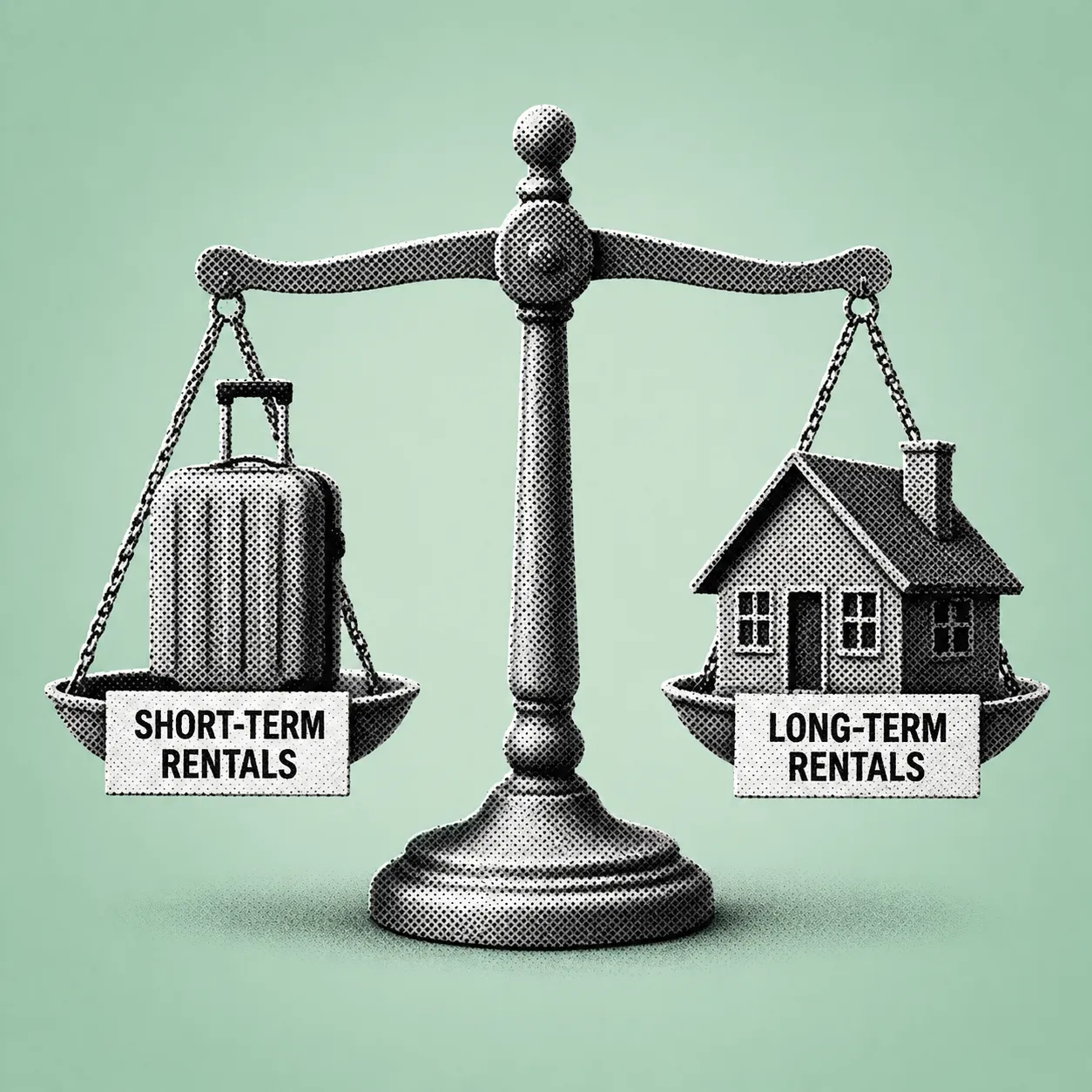
Rental property ownership offers more revenue paths and more ways to misjudge risk than ever before. On one side sits the short-term rental model: Airbnb-style stays, dynamic pricing, and hospitality operations. On the other sits the long-term rental model: traditional 12-month leases, predictable cash flow, and landlord-tenant compliance. The question many landlords now ask is more nuanced than which earns more. It is whether to run short-term versus long-term rentals, or whether to build a hybrid strategy that adapts to seasonality and market cycles.

The decision is not just about which option generates more money. In 2024, U.S. short-term rentals generated $67.3 billion in revenue with an average daily rate around $310 and occupancy at 54.3%, a large market with real demand but also real competition and volatility. Meanwhile, the traditional rental market is being reshaped by shifting vacancies, with the national rental vacancy rate reaching 7.2% in Q4 2025, ranging from 5.2% in the Northeast to 9.1% in the South, and ongoing rent growth pressures.

The best strategy depends on your property, your tolerance for operational complexity, local regulations, and how you want to be taxed, especially since short-term rental income can behave more like business income while long-term rental income is typically passive. Before you optimize revenue, decide what you are optimizing for: stability, time, risk, or maximum net income.

How Short-Term, Long-Term, and Hybrid Models Compare

Short-term rentals trade operational intensity for revenue upside. Long-term rentals trade some upside for predictability. The deciding factor is usually net operating income and cash flow stability after accounting for platform fees, utilities, cleaning, turnover, maintenance, insurance, and compliance overhead rather than gross revenue.

Short-term rental market reality: Performance has normalized after the post-2020 boom. AirDNA's U.S. overview describes a new equilibrium where 2024 saw supply growth of 6.4% and demand growth of 10.7% alongside slightly lower occupancy at 54.3% but improved revenue per available room thanks to rate gains. The market is still large, but hosts compete harder and must operate smarter. Pricing, reviews, amenity packages, and response times all matter more than they did in 2021.

Long-term rental market reality: Long-term rentals respond more slowly and are shaped by vacancy, wage growth, and new supply. In markets like Austin, rents fell from highs as inventory increased, with two-bedroom rents around $1,713 in one snapshot with noted declines before projected recovery. Nationally, vacancy differences matter because they change lease-up risk and the need for concessions.

Hybrid rental strategy: A hybrid model sits between the two. You run short-term rentals during peak seasons or around local events and convert to medium-term stays of 30 or more days or annual leases in slow months. Hybrid approaches are especially relevant in tourism-heavy markets where short-term demand spikes seasonally and in cities with tighter short-term rental rules where longer stays may reduce regulatory friction.

How owners choose based on market type:

In a tourism metro like Orlando, AirDNA projects an average daily rate near $245 with strong demand patterns, often supportive of short-term rentals if regulations and HOA rules allow it. In a supply-heavy long-term market like Austin, falling rents can pressure long-term rental pricing, and short-term rental can look attractive on gross revenue but must beat higher operating costs and competition to win on net operating income. In a high-vacancy region like the South at 9.1% vacancy, long-term lease-up risk increases and short-term rentals might diversify demand, but only if the property can attract travelers and you can manage seasonality.

Build two models: short-term rental as a hospitality business and long-term rental as a housing service. Then compare net operating income, risk profile, and time requirements before committing to either.

A Seven-Step Decision Framework

Step 1. Start With a True NOI Comparison, Not Gross Revenue

A clean comparison starts with the same output: net operating income calculated as income minus operating expenses before debt service. Short-term rentals often look better at the top line, but expenses can scale faster because every stay creates work and cost.

Use market baselines to sanity-check your short-term rental revenue assumptions. AirDNA reports 2024 occupancy of 54.3% and an average daily rate of $310 as national benchmarks, with market-specific results varying widely. If you model 75% occupancy at premium rates in a saturated market, your forecast is likely optimistic unless your property is unusually differentiated.

Example calculations: Short-term rental gross at an average daily rate of $250 times 54% occupancy times 365 days equals approximately $49,275 in gross revenue. Long-term rental gross at $2,000 per month times 12 months equals $24,000 in gross revenue. Then subtract the full expense stack. Short-term rentals may include cleaning, supplies, utilities, platform fees, higher wear-and-tear, and more administrative time. Long-term rentals commonly include repairs, leasing, and management costs that are more predictable.

Model base, conservative, and downside scenarios including occupancy minus ten percentage points and average daily rate minus five percent, because short-term rental revenue fluctuates with demand and supply. Track expense ratios as percentages of revenue. Your short-term rental profit margin is often the real differentiator between a good investment and a break-even operation.

Step 2. Benchmark Expenses Realistically

Expense realism is where many first-time short-term rental operators lose money. Short-term rental variable costs include cleaning, utilities, and platform fees, while fixed costs include furnishings and elevated maintenance due to higher turnover. Long-term rental expenses tend to cluster around ongoing maintenance, leasing and turnover, and property management.

Long-term rental expense benchmarks: A common planning range is 12% to 15% of rent for maintenance and 8% to 12% for property management, with taxes, insurance, and other costs on top. Even if your actual numbers differ, these ranges help you avoid underestimating what stable rentals cost to run.

Mini-examples: If cleaning costs $140 per turnover and your average stay is three nights, that is effectively approximately $47 per night in cleaning cost alone. Increasing average stay length often improves short-term rental margins significantly. Paying 10% management on a $2,000 rent is $200 per month, but it may reduce vacancy days and improve compliance documentation. Short-term rental furniture replacement every three to five years can be a meaningful annualized cost, while long-term rentals often have lower furnishing needs but may face larger capital expenditures at turnover.

For short-term rentals, design for durability using commercial-grade linens and stain-resistant finishes to control replacement cycles. For long-term rentals, budget vacancy and turnover explicitly covering lease-up costs, make-ready, and marketing even if you self-manage.

Step 3. Treat Regulations as a Go/No-Go Gate, Not an Afterthought

Regulatory risk is asymmetric. In many municipalities, your short-term rental can be legal today and restricted tomorrow. Municipal rules vary significantly, making it essential to map your property to three regulatory layers before spending money on furnishing or setup.

The three layers to verify: City and county short-term rental ordinances covering permits, caps, primary residence rules, night limits, and lodging taxes. Zoning and land-use rules confirming whether short-term rentals are allowed in the district. Private restrictions including HOA rules, condo bylaws, and lease terms if you are subletting.

Examples of regulatory friction: Permit caps and waitlists can make a profitable short-term rental impossible to legally operate if permits are capped and transfer rules are strict. Primary residence requirements can force investors relying on non-owner-occupied short-term rentals to convert to long-term or mid-term rentals. Noise and parking enforcement can trigger fines or permit revocation, raising operational demands significantly.

Before spending on furnishing, confirm the path to compliance covering registration, inspections, local lodging taxes, and insurance requirements. Build a conversion-ready plan and know what rent you would need to break even if you must switch to a long-term rental quickly.

Step 4. Measure Management Complexity Honestly Because Time Is a Cost

Short-term rentals are hospitality. Long-term rentals are housing. The skill sets overlap but they are not identical.

Growing competition in the short-term rental market means smarter pricing and improved guest experiences are increasingly required, both of which add management overhead. In practice, short-term rental operators handle dynamic pricing, guest messaging, cleaner coordination, restocking, same-day issue resolution, and reputation management through reviews. Long-term rental owners focus more on tenant screening, leases, maintenance scheduling, renewals, and compliance documentation.

Realistic operator outcomes: A short-term rental success story involves an owner in a tourism corridor who improves profitability by switching to data-driven pricing, tightening minimum-stay rules in high season, and reducing vacancy gaps with weekday discounts, stabilizing occupancy despite rising listings. A short-term rental failure story involves a host who underestimates operations: inconsistent cleaning leads to poorer reviews, which reduces bookings, and occupancy falls below the national 54.3% benchmark so the unit cannot cover fixed costs. A long-term rental success story involves a small landlord who prioritizes tenant quality and a renewal strategy, with fewer turnovers reducing make-ready costs and vacancy loss even when rent is slightly below the top of market.

If you want short-term rental returns without short-term rental labor, price in professional management or simplify with longer minimum stays. For long-term rentals, invest in screening and renewals. One bad placement can wipe out a year of stable cash flow.

Step 5. Account for Market Forces: Supply Growth, Seasonality, and Vacancy Cycles

Your rental strategy should match the demand engine of your location rather than a national average.

Short-term rental market forces: In 2024, demand and supply rose at nearly the same pace with competition remaining intense even as the market grows. Earlier in 2023, revenue per available room fell 14.1% due to declining average daily rate and occupancy, an important reminder that short-term rentals can swing materially year to year.

Long-term rental market forces: Vacancy is your key macro signal. The U.S. rental vacancy rate reached 7.2% in Q4 2025 with the South at 9.1% and the Northeast at 5.2%, a spread that materially changes leasing risk and rent growth power. Research from NMHC links vacancy to rent growth dynamics, reinforcing that supply shifts can quickly change landlord leverage in any given market.

Market-specific examples: In Orlando, short-term rental can thrive with tourism-driven demand and projected average daily rates around $245, but owners must plan for shoulder seasons and rising competition. In Austin, as rents retreat from highs amid increased supply, long-term rental owners may need concessions or unit upgrades to maintain occupancy. In suburban markets with strong livability signals like Overland Park, Kansas, renter demand can concentrate even when other markets soften.

Use short-term rental data covering average daily rate, occupancy, and revenue per available room alongside long-term rental data covering vacancy and rent trends before choosing a model. If your market is volatile, consider a hybrid plan that adjusts with seasons and local events.

Step 6. Understand Tax Implications

Taxes can flip the winner between models, especially since short-term rental income may be treated differently from long-term rental income depending on your situation.

Long-term rental basics: Long-term rentals are typically reported on Schedule E as passive rental income, allowing deductions for mortgage interest, property taxes, insurance, repairs, and depreciation. Confirm specifics with a tax professional for your situation.

Short-term rental tax considerations: Short-term rentals often involve more services such as cleaning, linens, and guest support. Depending on facts and circumstances including average stay length, services provided, and participation level, income may be treated more like active business income and could trigger additional tax considerations. Expense categories can also expand to include supplies, software, and cleaning labor.

Examples of tax-driven strategy choices: A high-income W-2 landlord may prefer long-term rentals to keep operations passive and simple, with depreciation and stable income fitting a long-term wealth plan. An operator with time and systems may lean toward short-term rentals, tracking expenses meticulously and treating the property like a small hospitality business. A hybrid owner using mid-term stays of 30 or more days can potentially reduce turnover costs and simplify certain local tax and compliance burdens, though rules vary by jurisdiction.

Decide early how you will keep books. Short-term rentals need category-level tracking of cleaning, supplies, and platform fees to defend deductions. Get professional tax guidance before switching models since the best strategy is often the one with the best after-tax outcome for your household, not the highest gross revenue.

Step 7. Build a Hybrid Rental Strategy for Flexibility When It Makes Sense

A hybrid model can be a smart middle path when you have seasonality, regulatory uncertainty, or personal time constraints.

Common hybrid patterns: Short-term rental in peak months combined with mid-term stays in the off-season reduces vacancy gaps and cleaning frequency while capturing high-season average daily rates. Event-based short-term rental keeps a unit on long-term leases most of the year and adjusts to short-term or mid-term only when legally and contractually feasible, which requires careful lease structure. A dual-unit strategy operates one unit as a short-term rental and one as a long-term rental to balance risk and workload across the portfolio.

Mini-examples: A beach-market owner runs short-term rentals during summer and targets traveling nurses or corporate stays during winter through mid-term arrangements, stabilizing occupancy year-round. An urban owner shifts to longer minimum stays as competition rises, trading some average daily rate for fewer turnovers and steadier reviews. A landlord in a tightening regulatory environment keeps the unit long-term-rental-ready with durable neutral furnishings and a leasing plan ready if permit rules change.

Hybrid works best when your property can appeal to multiple tenant segments without constant reconfiguration. Write your operating plan like a switch and define the trigger metrics covering occupancy threshold, regulatory change, or vacancy rate movement that cause you to pivot between models.

Decision Checklist and True NOI Template

Strategy fit scoring: Score each factor from one to five with five being strongly favorable, then total each column.

Local rules clearly allow the model covering permits, zoning, and HOA. Demand profile supports the model covering tourism versus resident renters. Revenue outlook using realistic benchmarks covering average daily rate and occupancy for short-term rentals or rent and vacancy for long-term rentals. Expense control covering cleaning and utilities for short-term rentals versus maintenance and management for long-term rentals. Your time availability or budget for professional management. Risk tolerance for year-to-year swings. Financing and insurance compatibility. Tax complexity you are willing to handle.

True NOI template to fill in monthly averages:

Income: short-term rental is average daily rate times occupancy times days. Long-term rental is monthly rent.

Operating expenses: property taxes, insurance, maintenance and repairs benchmarked at 12% to 15% of rent for long-term rental planning, management benchmarked at 8% to 12% for long-term rental planning. Short-term rental only: cleaning, utilities, platform fees, and supplies.

Net operating income equals income minus operating expenses.

Downside test: occupancy minus ten percentage points for short-term rental or vacancy plus one month per year for long-term rental, and record the resulting net operating income.

Frequently Asked Questions

Is an Airbnb-style short-term rental always more profitable than a long-term lease?

No. Short-term rentals can produce higher gross revenue, but they often carry higher variable expenses and more volatility. National short-term rental benchmarks show 54.3% occupancy in 2024 and rates that vary widely by market, so even a modest occupancy drop can materially change net operating income. The comparison must be made at the net operating income level, not gross revenue.

What occupancy rate should I assume for a short-term rental?

Start conservative and ground your model in local market data. AirDNA's national snapshot is 54.3% occupancy for 2024, but your neighborhood, property type, and seasonality can push you above or below that figure. Build a base case and a downside case before committing to any furnishing investment.

How do vacancy rates affect long-term rental strategy?

Vacancy determines pricing power and lease-up risk. The U.S. rental vacancy rate was 7.2% in Q4 2025, but regions vary significantly with the South at 9.1% and the Northeast at 5.2%. Higher vacancy in your region can change how aggressively you underwrite rent and how many concessions you need to budget.

When does a hybrid rental strategy make the most sense?

Hybrid is most effective when demand is seasonal, regulations are uncertain, or you want to balance workload and income stability. It works best when the unit can succeed with both traveler and resident segments without major reconfiguration between uses. Define your pivot triggers in advance rather than reacting under pressure.

Pick one property and run the decision tool above this week. Pull short-term rental benchmarks for your city covering average daily rate, occupancy, and revenue per available room alongside local long-term rental rent and vacancy signals, then build two true net operating income models covering a base case and a downside case. If short-term rental only wins in the optimistic scenario, consider a hybrid strategy or default to a strong long-term lease with renewal-focused management. When the numbers and your lifestyle both agree, you have found the right model.

Book a demo to see how Shuk's leasing, maintenance, and financial tracking tools support both long-term and hybrid rental strategies so you can manage your portfolio with the same rigor regardless of which model you choose.


Self-Managing vs. Hiring a Property Manager
How to Switch from a Property Manager to Self-Managing

How to Switch from a Property Manager to Self-Managing

Switching from a property manager to self-management is a structured handoff process, not a sudden break. It involves reviewing and terminating the existing management agreement, migrating tenant funds and records, building a replacement workflow for rent collection and maintenance, and communicating the change to tenants in a way that preserves stability. For landlords managing 1 to 100 units, the transition is manageable when treated as a documentation and operations project with a defined timeline rather than an emotional decision made under frustration.

This guide is part of the self-managing vs. hiring a property manager decision series for independent landlords.

The financial case for switching is straightforward. Full-service property management typically costs 8 to 12% of monthly rent, with common add-ons including leasing fees of 50 to 100% of one month's rent, renewal fees, inspection fees, and maintenance markups. For a small portfolio, those costs can represent thousands of dollars per year that could fund reserves, property improvements, or a software platform that handles the same operational functions at a fraction of the cost.

Step 1. Audit the Management Agreement and Map the Exit Terms

Most difficult transitions happen because landlords terminate emotionally rather than contractually. Before sending any notice, pull the signed property management agreement and read it as a checklist: required notice period, early termination fees, what must be returned at exit, and who currently holds tenant funds.

Thirty-day written notice is common across standard management agreements, though 30 to 60 days is also frequently required depending on the contract terms and state. Some agreements include early termination penalties framed as a flat fee or a multiple of monthly rent. Your goal is to plan around the notice period so tenants experience continuity rather than a gap in service.

Also confirm whether the property manager holds security deposits in a licensed trust or escrow account. Several states regulate trust accounting with specific timing and documentation requirements for transfers. Identifying this in advance allows you to request the correct documentation and plan the transfer properly.

Create a one-page exit terms summary before sending any notice. It should include the required notice date, effective termination date, termination fee calculation if applicable, a list of required deliverables including leases, ledgers, deposits, and keys, and confirmation of where tenant funds are currently held.

For the full annual cost breakdown of what you have been paying, see the true cost of hiring a property manager.

Step 2. Terminate Professionally and Plan a Cooperative Handoff

Even when the relationship has been frustrating, the goal of termination is cooperation. You need documents, vendor history, and clean accounting from the outgoing manager. A confrontational exit makes all of that harder to obtain.

Send a written termination notice that includes the effective termination date, instructions for final disbursement, a request for a complete document package, a request for tenant ledgers and security deposit accounting, and a plan for tenant communication. Also request a final statement that itemizes all fees and charges through the termination date, including any ancillary items that may not appear on the standard monthly statement.

Request a list of open work orders, pending vendor invoices, and any unresolved tenant issues before the effective date. Decide which items the manager should close out versus which ones you will assume on day one. Having this in writing prevents disputes about what was outstanding at handoff.

Step 3. Transfer Tenant Funds and Reconcile Accounting

Money is the highest-risk element of the transition and should be addressed before anything else is finalized. The three documents you need from the outgoing manager are the tenant ledger showing all charges, payments, late fees, and credits by tenant; the security deposit ledger showing the amount held, the bank or trust location, and any deductions to date; and the owner statement with year-to-date income and expense categories.

Before signing off on the final month, run a three-way match: bank deposits, tenant ledger totals, and the owner statement should all reconcile. Any mismatch becomes a written punch list to resolve before you accept the transfer.

Set up a dedicated operating account and a separate deposit account where required by your state before funds arrive. A clean transfer into properly structured accounts makes recordkeeping straightforward from day one and avoids inherited accounting errors that can become tenant disputes later.

Step 4. Migrate Leases, Records, and the Legal Paper Trail

A complete document migration is what separates a smooth transition from a chaotic one. Request a full export of every lease and addendum, move-in inspection reports and photos, renewal letters, notices served, and any documentation created during tenant screening. Also request property documents including warranties, appliance manuals, vendor contracts, permits, HOA rules, and prior repair invoices.

Build a folder structure before files arrive so nothing sits in an email inbox: Property, Unit, Tenant, Lease and Addenda, Ledger, Maintenance, Notices, Move-in and Move-out. Upload everything immediately and confirm you have a complete record for every active tenant before the transition date.

This document library becomes your enforcement foundation. Lease addenda, pet policies, and inspection photos from before the transition allow you to address issues consistently rather than relying on institutional memory that leaves with the manager.

Step 5. Build Your Self-Management Tool Stack

Self-management does not require multiple disconnected applications. It requires five capabilities: online rent collection, maintenance coordination, tenant communication, document storage and e-signatures, and basic expense tracking. Building a system that covers all five in one place avoids the administrative overhead that comes from managing several separate tools.

When evaluating platforms, look for automated payment reminders, recurring charges, autopay support, maintenance tickets with photo attachments and vendor assignment, message logging, and exportable reports for tax preparation. The goal is a stack where rent collection runs on autopilot, maintenance becomes ticket-based and traceable, and compliance becomes a checklist rather than a memory exercise.

The cost of a well-chosen platform is typically a fraction of professional management fees, and replacing the manager's infrastructure with your own system is what makes self-management sustainable rather than just cheaper in the short term.

For a checklist of every system you need, see essential systems for self-managing landlords.

Step 6. Define Your Rent, Maintenance, and Communication Workflows

Tenants rarely leave because a landlord is self-managing. They leave because of uncertainty about who handles things, how quickly requests are addressed, and whether the transition signals instability. Defining your workflows in advance and communicating them clearly prevents all three concerns.

For rent collection, set the due date, grace period, and late fee policy exactly as stated in the lease. Enable online payments and autopay. Send one reminder before the due date, one notice after, and then follow your state's legal process for nonpayment. Consistency and predictability matter more than any specific tool.

For maintenance, require all non-emergency requests through a single channel. Define what constitutes an emergency and how those are handled after hours. Keep a vendor list with coverage for common issue types. Track all approvals and invoices so you have a complete record for each unit.

For communication, announce response time standards and hold to them. Log all tenant communications in one place. Use templates for entry notices, policy reminders, and maintenance updates so your communication is consistent and professional regardless of the situation.

For the complete workflow map covering every landlord task, see the complete guide to self-managing rental properties.

Step 7. Announce the Change to Tenants

Tenants do not need to be enthusiastic about the change. They need to know exactly what is changing, what is staying the same, and what to do next. Answer those three questions clearly and the transition is far less likely to trigger anxiety or early move-outs.

Your tenant announcement should include the effective date of the change, confirmation that lease terms remain identical, new payment instructions with a specific start date, maintenance request instructions including how to submit and what to do in an emergency, your contact information for formal notices, and a brief reassurance that security deposits remain held as required and will be credited appropriately at move-out.

Send the announcement in two steps: a heads-up notice when you serve the manager's termination, and a go-live reminder three to five days before the effective date. Switch payment methods on the first of the month whenever possible to avoid partial payments going to the wrong place.

How Shuk Supports the Transition to Self-Management

Shuk consolidates the five capabilities self-managing landlords need into one platform: online rent collection with autopay and late-fee automation, maintenance request tracking with photos and vendor assignment, centralized tenant messaging, document storage and e-signatures, and expense tracking organized for tax preparation.

For landlords switching from a property manager, Shuk's Lease Indication Tool provides early renewal signals that replace one of the key services managers offer, specifically advance warning about which tenants are likely to leave. In early platform data, every tenant who indicated they were unlikely to renew or unsure about renewing ultimately moved out. That visibility allows landlords to start marketing before a vacancy opens rather than after the surprise.

Year-round listing visibility keeps properties discoverable even when occupied, so landlords maintain a warm pipeline between leases rather than starting from zero at every turnover.

Frequently Asked Questions

Will tenants leave if I switch from a property manager to self-managing?

Most tenant departures after a management transition are caused by service disruption or confusion, not the change itself. Tenants who know exactly where to pay rent, how to submit maintenance requests, and that their lease terms are unchanged typically experience the transition as neutral or positive. Communicating the change in two steps, a heads-up notice followed by go-live instructions, prevents the uncertainty that drives departures.

How much can a landlord save by switching from a property manager to self-management?

Full-service management typically costs 8 to 12% of monthly rent plus common add-ons including leasing fees, renewal fees, inspection fees, and maintenance markups. Self-managing landlords replace some of those costs with software, accounting support, and vendor coordination, but the net improvement to cash flow is often significant for stable portfolios. The actual savings depend on portfolio size, property condition, and how efficiently the self-management system is built.

What legal issues should landlords watch when ending a property management agreement?

The primary legal risks are ignoring the termination clause in the management agreement and mishandling tenant funds during the transition. Most agreements require 30 to 60 days written notice and may include early termination fees. Security deposits and trust funds are regulated in many states with specific requirements for transfer timing and documentation. Confirming the terms of your specific agreement and your state's requirements before sending any notice prevents the most common and costly mistakes.

What documents should a landlord request from a property manager at transition?

Request tenant ledgers showing all charges and payments, security deposit records by tenant, a final owner statement with year-to-date income and expense categories, all leases and addenda, move-in inspection reports and photos, notice history, vendor contact lists, warranties, appliance manuals, and any communication logs available from the management portal. Getting everything in writing before the effective date prevents disputes about what was outstanding at handoff.

How do you set up self-management workflows after leaving a property manager?

Start with three workflows: rent collection, maintenance, and communication. For rent, configure online payments with autopay, set a consistent late fee schedule, and establish a clear notice process for nonpayment. For maintenance, route all non-emergency requests through a single ticketing channel, define emergencies separately, and keep a vendor list with after-hours coverage. For communication, set response time standards, log all interactions, and use templates for recurring notices to maintain consistency across every tenant interaction.