Property Management Software

Best Residential Property Management Software in 2025

photo of Miles Lerner, Blog Post Author
Miles Lerner

Spreadsheets and Venmo Work Until They Do Not

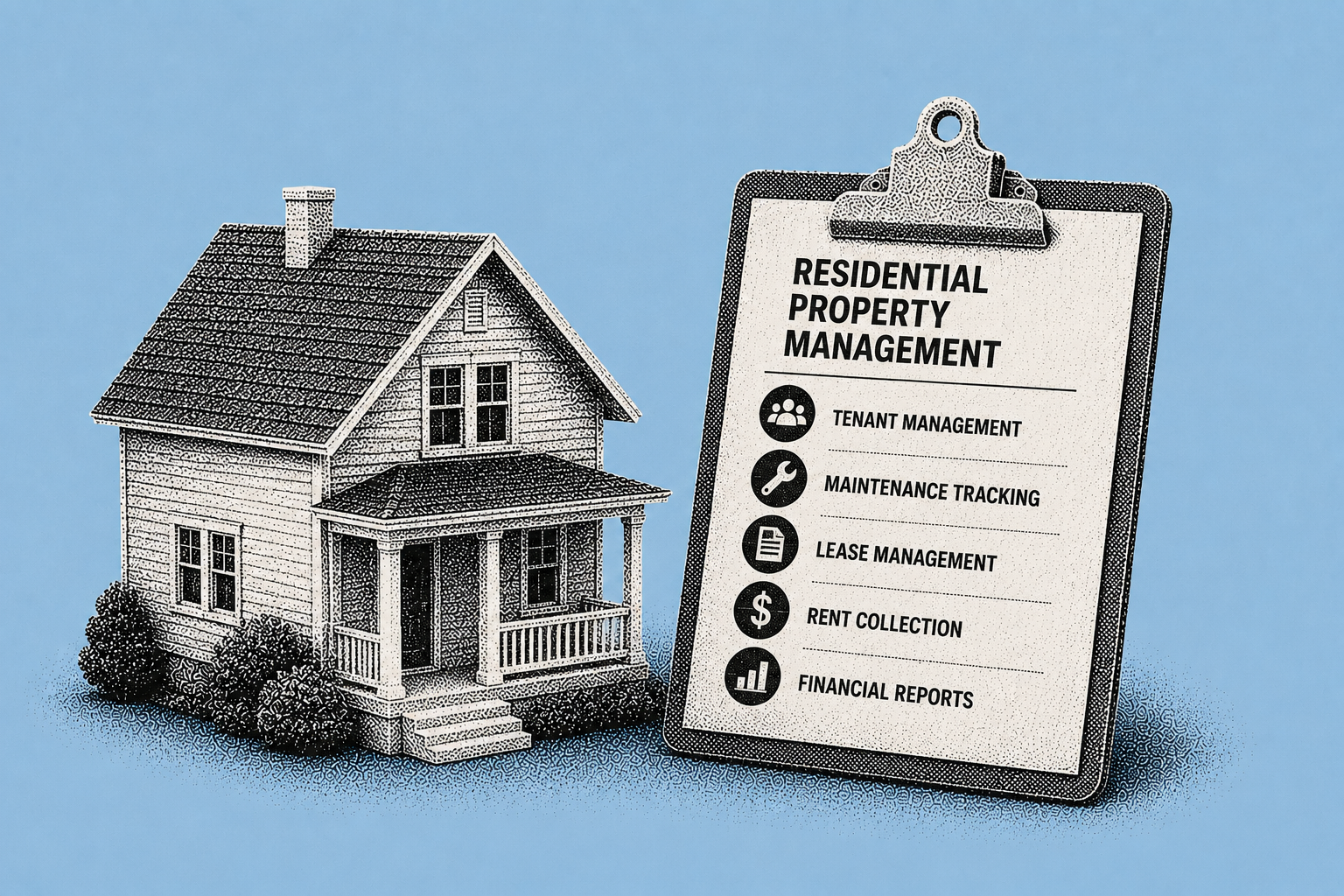
The moment you are managing late rent, repair requests, lease renewals, and tax receipts across multiple units, "good enough" systems start costing real time and money. That is why more independent landlords are looking for residential property management software that handles the basics without enterprise pricing or complexity.

Small landlords are not a niche. Nearly 46% of U.S. rental units are in properties with one-to-four units, and roughly 70% of those are owned by individual investors, often self-managing. With operating costs rising and rents under pressure, efficiency matters more than ever.

Note: This article provides general education about residential property management software options. Pricing, features, and terms change frequently. Verify current details directly with each platform.

Six Must-Have Features

1) Online rent collection (with automation). Online rent collection with autopay and automatic reminders reduces friction and helps stabilize cash flow.

2) Tenant screening that is consistent and defensible. Screening tools help standardize decision-making and reduce risk. Eviction is often cited around $3,500 per case in industry reporting, making better screening economics hard to ignore.

3) Lease management (templates, e-sign, renewals). Digital lease storage, e-signature, and renewal reminders reduce "calendar chaos."

4) Maintenance tracking. Centralizes requests, keeps a time-stamped record, and reduces repeat follow-ups. Only 16.2% of landlords report using digital systems for maintenance tracking per Avail's 2026 survey, suggesting a big opportunity.

5) Expense tracking (tax-ready records). Helps you categorize costs, measure property performance, and keep cleaner records.

6) Tenant communication (a single, searchable channel). A built-in message hub keeps communication documented and searchable.

Comparison: Buildium vs. TurboTenant vs. RentRedi vs. Shuk

Buildium. Feature-rich, often best for larger portfolios or managers who want deep accounting and workflows. Pricing starts around $55/month (Essential) up to roughly $400/month (Premium). ACH fees vary by plan.

TurboTenant. Popular with first-time landlords because a freemium tier lowers the barrier to entry. Free tier; roughly $149/year (Essentials) to roughly $199/year (Pro). Payment processing and support experiences vary.

RentRedi. Mobile-first and generally affordable. Roughly $12/month billed annually. Rent collection with convenience fees; maintenance requests via app.

Shuk Rentals. Purpose-built for landlords under 100 units. $5 per unit per month with no setup fees and zero ACH transaction fees. Differentiators: Lease Indication Tool (LIT) for early renewal intelligence, Two-Way Reviews, Year-Round Marketing, and White Glove Onboarding included at no additional cost.

Why Shuk Stands Out

Shuk's zero ACH transaction fee rent collection is a practical advantage for portfolios where every recurring fee hits your bottom line. White Glove Onboarding accelerates real adoption instead of shelfware. And Shuk is purpose-built for portfolios under 100 units, which means product decisions and support are aligned with how independent owners actually operate.

Frequently Asked Questions

Which software is best for 1 to 5 units?

Prioritize simplicity: rent collection, screening, and lease storage. A demo or trial matters because you will know fast if tenants will use it. At this size, fee transparency is critical since transaction fees on a small portfolio can exceed subscription costs.

When does Buildium make more sense than Shuk?

Buildium is often the better fit for larger portfolios (50+ units) or property managers who need deep accounting, custom workflows, and integrations. For landlords under 100 units who prioritize cost clarity and fast setup, Shuk is purpose-built for that stage.

Do I really need maintenance tracking software?

With only 16.2% of landlords using digital maintenance tracking, most are still handling repairs through texts and calls. A single documented channel reduces follow-ups, supports deposit deductions at move-out, and improves tenant satisfaction, which is strongly linked to renewals.

What to Do Next

At $5 per unit per month with no setup fees, zero ACH transaction fees, and White Glove Onboarding included at no additional cost, Shuk is built for small residential landlords who want predictable costs and fast setup.

Book a demo at shukrentals.com/book-a-demo to see how Shuk compares for your portfolio.

QUICK VIEW
Stop Reacting to Vacancies. Start Seeing Them Coming.

Shuk helps landlords and property managers get ahead of vacancies, improve renewal visibility, and bring more predictability to every lease cycle.

Book a free 20-min demo to see Shuk today.

Stay in the Shuk Loop

Spreadsheets and Venmo Work Until They Do Not

The moment you are managing late rent, repair requests, lease renewals, and tax receipts across multiple units, "good enough" systems start costing real time and money. That is why more independent landlords are looking for residential property management software that handles the basics without enterprise pricing or complexity.

Small landlords are not a niche. Nearly 46% of U.S. rental units are in properties with one-to-four units, and roughly 70% of those are owned by individual investors, often self-managing. With operating costs rising and rents under pressure, efficiency matters more than ever.

Note: This article provides general education about residential property management software options. Pricing, features, and terms change frequently. Verify current details directly with each platform.

Six Must-Have Features

1) Online rent collection (with automation). Online rent collection with autopay and automatic reminders reduces friction and helps stabilize cash flow.

2) Tenant screening that is consistent and defensible. Screening tools help standardize decision-making and reduce risk. Eviction is often cited around $3,500 per case in industry reporting, making better screening economics hard to ignore.

3) Lease management (templates, e-sign, renewals). Digital lease storage, e-signature, and renewal reminders reduce "calendar chaos."

4) Maintenance tracking. Centralizes requests, keeps a time-stamped record, and reduces repeat follow-ups. Only 16.2% of landlords report using digital systems for maintenance tracking per Avail's 2026 survey, suggesting a big opportunity.

5) Expense tracking (tax-ready records). Helps you categorize costs, measure property performance, and keep cleaner records.

6) Tenant communication (a single, searchable channel). A built-in message hub keeps communication documented and searchable.

Comparison: Buildium vs. TurboTenant vs. RentRedi vs. Shuk

Buildium. Feature-rich, often best for larger portfolios or managers who want deep accounting and workflows. Pricing starts around $55/month (Essential) up to roughly $400/month (Premium). ACH fees vary by plan.

TurboTenant. Popular with first-time landlords because a freemium tier lowers the barrier to entry. Free tier; roughly $149/year (Essentials) to roughly $199/year (Pro). Payment processing and support experiences vary.

RentRedi. Mobile-first and generally affordable. Roughly $12/month billed annually. Rent collection with convenience fees; maintenance requests via app.

Shuk Rentals. Purpose-built for landlords under 100 units. $5 per unit per month with no setup fees and zero ACH transaction fees. Differentiators: Lease Indication Tool (LIT) for early renewal intelligence, Two-Way Reviews, Year-Round Marketing, and White Glove Onboarding included at no additional cost.

Why Shuk Stands Out

Shuk's zero ACH transaction fee rent collection is a practical advantage for portfolios where every recurring fee hits your bottom line. White Glove Onboarding accelerates real adoption instead of shelfware. And Shuk is purpose-built for portfolios under 100 units, which means product decisions and support are aligned with how independent owners actually operate.

Frequently Asked Questions

Which software is best for 1 to 5 units?

Prioritize simplicity: rent collection, screening, and lease storage. A demo or trial matters because you will know fast if tenants will use it. At this size, fee transparency is critical since transaction fees on a small portfolio can exceed subscription costs.

When does Buildium make more sense than Shuk?

Buildium is often the better fit for larger portfolios (50+ units) or property managers who need deep accounting, custom workflows, and integrations. For landlords under 100 units who prioritize cost clarity and fast setup, Shuk is purpose-built for that stage.

Do I really need maintenance tracking software?

With only 16.2% of landlords using digital maintenance tracking, most are still handling repairs through texts and calls. A single documented channel reduces follow-ups, supports deposit deductions at move-out, and improves tenant satisfaction, which is strongly linked to renewals.

What to Do Next

At $5 per unit per month with no setup fees, zero ACH transaction fees, and White Glove Onboarding included at no additional cost, Shuk is built for small residential landlords who want predictable costs and fast setup.

Book a demo at shukrentals.com/book-a-demo to see how Shuk compares for your portfolio.

{

  "@context": "https://schema.org",

  "@type": "FAQPage",

  "mainEntity": [

    {

      "@type": "Question",

      "name": "Which property management software is best for 1 to 5 units?",

      "acceptedAnswer": {

        "@type": "Answer",

        "text": "Prioritize simplicity including rent collection, screening, and lease storage. At this size fee transparency is critical since transaction fees on a small portfolio can exceed subscription costs."

      }

    },

    {

      "@type": "Question",

      "name": "When does Buildium make more sense than Shuk?",

      "acceptedAnswer": {

        "@type": "Answer",

        "text": "Buildium is often the better fit for larger portfolios of 50 or more units or property managers who need deep accounting, custom workflows, and integrations. For landlords under 100 units who prioritize cost clarity and fast setup Shuk is purpose-built for that stage."

      }

    },

    {

      "@type": "Question",

      "name": "Do landlords really need maintenance tracking software?",

      "acceptedAnswer": {

        "@type": "Answer",

        "text": "With only 16.2 percent of landlords using digital maintenance tracking most are still handling repairs through texts and calls. A single documented channel reduces follow-ups, supports deposit deductions, and improves tenant satisfaction which is strongly linked to renewals."

      }

    }

  ]

}

Stop Reacting to Vacancies. Start Seeing Them Coming.

Shuk helps landlords and property managers get ahead of vacancies, improve renewal visibility, and bring more predictability to every lease cycle.

Book a demo to get started with a free trial.

Stay in the Shuk Loop

View Similar Articles

View Similar Articles

All Articles
Property Acquisition Hub
Rental Property Cash Flow: How to Calculate and Improve It

Rental Property Cash Flow: How to Calculate and Improve It

If the Bank Balance Feels Tight, You Are Not Alone

If you have ever looked at your rent deposits and thought, "I should be doing well... so why does the bank balance feel tight?" you are not alone. Rental income is easy to see. True profitability is not.

Between rising operating costs, especially insurance, and normal revenue leakage from vacancy, turns, and late payments, many landlords run fine on paper while experiencing real-world cash strain. Industry data shows typical operating expense ratios in the 35% to 55% range for U.S. multifamily properties before you even consider debt service, per HUD's Rental Housing Finance Survey. Meanwhile, vacancy is never zero: the U.S. rental vacancy rate has been around 7% in recent national data, which is why many landlords underwrite a 5% to 7% vacancy/collection allowance even in solid markets, per Census Bureau data.

Note: This article provides general education about rental property cash flow calculation and improvement strategies, not financial advice. Operating expense ratios, vacancy assumptions, DSCR thresholds, and refinancing outcomes vary by property, market, and lender. Before making financing or investment decisions, consult qualified professionals.

The fix starts with clarity. Once you can calculate rental property cash flow consistently and interpret what it is telling you, you can make targeted changes that raise your monthly surplus without guessing.

What You Will Learn

Rental property cash flow is the money left over after your property collects income and pays all of its costs, including the mortgage. It is the metric that decides whether the property supports itself month-to-month, whether you can build reserves, and whether you can scale.

This guide covers a clear definition of rental property cash flow and how it differs from ROI, a step-by-step calculation you can run monthly and annually, a complete expense checklist including reserves many landlords forget, how to interpret positive vs. negative cash flow using practical benchmarks like DSCR, four ways to improve cash flow (rent strategy, vacancy reduction, expense control, and refinancing), and two mini case studies showing before/after results.

1. Define Cash Flow the Landlord Way (and Separate It from NOI)

There are two closely related numbers landlords often mix up:

Net Operating Income (NOI) = Effective gross income minus operating expenses. NOI ignores financing.

Cash Flow (Before Tax) = NOI minus debt service (principal plus interest). Cash flow is what you feel.

Why it matters: A property can have healthy NOI and still have weak or negative cash flow if the mortgage is heavy or rates are high. With mortgage rates having hovered around roughly 7% in recent periods, financing costs have been a bigger swing factor for investors than they were a few years ago. Freddie Mac's small-balance/multifamily lending guidance makes clear that cash flow stability is often evaluated through DSCR.

Track both NOI and cash flow. NOI helps you compare properties. Cash flow tells you if the property is actually funding your life and reserves.

2. Calculate Your Monthly Rental Property Cash Flow (Step-by-Step)

Use this formula: Monthly Cash Flow = Effective Gross Income minus Operating Expenses minus Debt Service.

Step A: Start with Gross Scheduled Rent (GSR). GSR is the rent you would collect if every unit paid in full, on time, all month. Example (3-unit property): Gross scheduled rent = $4,200/month.

Step B: Subtract vacancy plus collection loss (do not skip this). Even well-run portfolios have turnover, nonpayment, and make-ready downtime. Many landlords underwrite 5% to 7% vacancy/collection loss; that aligns with national vacancy data around 7% and common underwriting practice. 5% of $4,200 = $210/month. Effective residential rent = $4,200 minus $210 = $3,990/month.

Step C: Add other income. Other income is small but real: parking, laundry, pet rent, storage, application fees (where legal). Even small buildings sometimes generate $50 to $80/month from coin laundry setups. Other income = $210/month. Effective Gross Income (EGI) = $3,990 plus $210 = $4,200/month. Notice: other income can offset vacancy loss, useful when rent growth is capped by the market.

Step D: List operating expenses (the full landlord version). Operating expenses are the keep-it-running costs, excluding mortgage principal and interest. Across the industry, operating expense ratios commonly land in the 35% to 55% band, per HUD RHFS data.

A practical expense set includes: property taxes, landlord insurance (notably volatile lately; some property segments saw major insurance increases in recent years), repairs and maintenance (many landlords budget 8% to 10% of rent as a starting point), CapEx reserve for big-ticket replacements (roof, HVAC, exterior) often underwritten 5% to 10% of rent, utilities you pay (water/sewer/trash, common electric), property management fees (often 8% to 10% depending on market and services), bookkeeping/CPA/legal/licenses/bank fees, marketing/leasing/turnover costs, HOA (if applicable), and pest control/lawn/snow (if owner-paid).

Example operating expenses (monthly): Taxes: $420. Insurance: $210. Repairs and maintenance: $350. CapEx reserve: $210. Utilities (owner-paid): $240. Management/admin: $320. Marketing/leasing: $60. Total OpEx = $2,020/month.

Step E: Subtract debt service. Debt service is principal plus interest (P&I). Escrows for taxes/insurance are already counted above if you are tracking them as expenses. Choose one consistent method. Mortgage P&I = $1,700/month.

Step F: Compute cash flow. Cash Flow = $4,200 minus $2,020 minus $1,700 = $480/month. Cash Flow per unit = $480 / 3 = $160/unit/month.

What this means: This is solidly positive. If your portfolio target is at least $100/door/month, this clears it with buffer. Your target should reflect property class, leverage, and local volatility.

3. Convert Monthly Cash Flow to Annual and Sanity-Check with DSCR

Annualizing helps you plan reserves, taxes, and capital projects. Annual cash flow = monthly cash flow times 12. In our example: $480 times 12 = $5,760/year.

Now sanity-check your stability using DSCR (Debt Service Coverage Ratio): DSCR = NOI divided by Annual Debt Service. Many lenders look for a minimum DSCR around 1.20 for stability in small-balance/multifamily-style underwriting, per Freddie Mac guidance. That means your NOI should be at least 20% higher than your annual mortgage payments.

Example: EGI: $4,200/month = $50,400/year. OpEx: $2,020/month = $24,240/year. NOI: $26,160/year. Debt service: $1,700/month = $20,400/year. DSCR: 26,160 divided by 20,400 = 1.28.

If your DSCR is close to 1.0, you are one vacancy spike or insurance jump away from negative cash flow. A DSCR cushion matters more when national vacancy is elevated or local supply is rising.

4. Improve Cash Flow with Targeted, High-ROI Moves (Four Core Levers)

Once you know your number, improving rental property cash flow is about pulling the levers that move it most.

Strategy 1: Raise Rent in a Retention-First Way

A rent increase is the fastest lever, but only if it does not backfire into vacancy. Compare your rents to local baselines like HUD Fair Market Rents (FMR) or Small Area FMRs where applicable. If you are significantly below, you may have room. Tie increases to tangible value: small upgrades, faster maintenance response, better tenant communication. Use staggered renewals so not all units reset in the same season.

Quick math: A $75/month increase on 3 units adds $225/month. Even if you budget 5% vacancy loss, you still net roughly $214/month in EGI.

Strategy 2: Reduce Vacancy and Turn Time

Vacancy is a double hit: you lose rent and often spend more on turns/marketing.

Actionable moves: Pre-lease early by starting marketing 30 to 45 days before move-out. Standardize your turn checklist and vendor response times. Price renewals slightly below new tenant rent when it reduces turnover risk. Track vacancy and collection loss as separate line items so you can see what is actually happening.

Mini case study 1 (vacancy reduction). A triplex underwriting 7% vacancy on $4,200 GSR loses $294/month. Tightening operations to 5% reduces loss to $210/month, a $84/month improvement, or $1,008/year, without raising rents. This aligns with the common 5% to 7% underwriting band used by many landlords and supported by national vacancy conditions.

Strategy 3: Cut Expenses the Smart Way (Focus on the Big Three)

Because operating expenses often sit in the 35% to 55% range, small reductions compound quickly. The three categories that commonly swing most are taxes, insurance, and maintenance.

Actionable moves: Insurance: Shop annually and document property improvements (roof, plumbing, electrical). Insurance pressure has been significant in recent industry expense reporting, and it can move faster than rent. Maintenance: Budget a routine maintenance reserve and reduce emergencies through preventative maintenance (HVAC service, gutter cleaning). Utilities: Where legal and practical, convert to tenant-paid utilities or install submetering/RUBS; if not, reduce leaks and waste.

Do not cut CapEx reserves to make cash flow look better. That is not improving cash flow. It is delaying a future cash crisis.

Strategy 4: Refinance or Restructure Debt (Only If the Math Improves Cash Flow)

When rates are high, refinancing may not help. But restructuring can: extending amortization, removing PMI, or improving DSCR to qualify for better terms. Lender underwriting often centers on DSCR; improving NOI (through rent/vacancy/expenses) can unlock financing options.

Actionable steps: Run a refinance scenario with conservative assumptions (same vacancy, same reserves). Compare total monthly payment (P&I) and closing costs to expected monthly savings. If a refi does not improve monthly cash flow, consider waiting and focusing on NOI first.

Mini case study 2 (refi plus operations before/after). Using an Indianapolis triplex-style P&L from recent market-style underwriting, the property produced about $338/month cash flow before tax at a 1.22 DSCR with a 30-year loan at 6.5% and a 5% vacancy factor. If the owner improves operations by adding modest other income (for example, parking/laundry where feasible) and tightening expense controls (especially insurance shopping and preventative maintenance), cash flow can rise even without major rent increases. If rates later drop and the owner refinances to lower the payment, the same NOI produces a larger surplus, turning modestly positive into comfortably positive. The key is sequencing: stabilize NOI first, then optimize debt.

Monthly Cash Flow Checklist

Income

  • Gross scheduled rent (by unit)
  • Vacancy loss (target 5% to 7% allowance)
  • Collection loss / write-offs (separate from vacancy if possible)
  • Other income (laundry, parking, fees, storage)

Operating Expenses

  • Property taxes
  • Insurance (note renewal date; compare annually)
  • Repairs and maintenance (track by category: plumbing, HVAC, turnover)
  • CapEx reserve transfer (separate bank account preferred)
  • Utilities (owner-paid)
  • Management fees / leasing fees (even if self-managed, track your paid vendors)
  • Admin: bookkeeping/CPA, licenses, bank charges
  • Marketing / tenant placement

Financing

  • Mortgage principal and interest (debt service)
  • DSCR check (NOI divided by annual debt service; aim for roughly 1.20 or higher for cushion)

Outputs

  • NOI (monthly plus YTD)
  • Cash flow before tax (monthly plus YTD)
  • Cash flow per unit (monthly)
  • Notes: what changed this month (rent changes, vacancy, major repairs)

Frequently Asked Questions

What is the difference between cash flow and ROI?

Cash flow is the monthly/annual surplus after expenses and mortgage. ROI measures return on invested capital (down payment, closing costs, rehab) and can include appreciation and loan paydown. A property can have low cash flow but high ROI (for example, strong appreciation) or high cash flow but mediocre ROI (for example, lots of cash invested).

What is a healthy rental property cash flow?

A practical benchmark is cash flow that survives normal volatility: vacancy (often modeled at 5% to 7%) plus rising expenses. Many investors also watch DSCR; underwriting often targets roughly 1.20 or higher as a stability threshold.

How often should I calculate cash flow?

Monthly, with a year-to-date view. Cash flow is a management metric. If you wait until tax time, you will miss the window to correct rising insurance, creeping repairs, or increasing vacancy.

Should I include reserves as expenses?

Yes, at least a CapEx reserve line. It is the difference between looks profitable and stays profitable. Reserve benchmarks vary, but the point is consistency and realism.

What to Do Next

Once you have done the math a few times, the real bottleneck becomes consistency: tracking every income stream, categorizing every expense correctly, and seeing cash flow trends across units and months without living in spreadsheets.

Shuk handles the tracking that makes cash flow visible: online rent collection with zero ACH transaction fees creates a consistent income record per unit. Payment and income reports are filterable by property, tenant, and date and exportable to PDF or Excel, so your monthly close takes minutes. Schedule E-aligned expense organization with digital receipts keeps operating costs categorized consistently. And configurable late fees applied automatically reduce the collection loss line in your cash flow calculation.

At $5 per unit per month with no setup fees, and with White Glove Onboarding included at no additional cost, Shuk makes monthly cash flow tracking feasible for landlords and property managers running 1 to 100 units.

Book a demo at shukrentals.com/book-a-demo to see how income and expense tracking work together so you always know your real cash flow.

Property Marketing
Year-Round Marketing Guide: A Comprehensive Strategy for Rental Property Managers and Landlords

Navigating the rental property business can be a complex task, especially when it comes to maintaining low vacancy rates and ensuring a steady stream of potential tenants. With the cost of vacancies climbing to an average of $4,000 per turnover—including lost rent and administrative expenses—it's imperative for rental property managers and landlords to adopt a proactive approach to marketing [1]. This year-round marketing guide provides advanced strategies to achieve continuous visibility for your rental listings, thereby minimizing the downtime between tenants.

Overview of Proactive, Year-Long Marketing

Effective rental property marketing isn't confined to the typical leasing season. Tenants initiate their housing searches well in advance—commonly two to three months before their intended move-in date [2]. Consequently, maintaining a consistent marketing approach throughout the year can ensure that your properties consistently remain in front of prospective renters, thereby circumventing the dreaded 60-day vacancy scramble.

This guide will educate you on an actionable, systemized marketing framework that leverages continuous listing visibility, early renewal incentives, transparent pricing, and more to keep your properties in demand. By integrating modern technology, from digital listing platforms to comprehensive lease management software, property managers and DIY landlords can achieve up to 3× more inquiries per listing through effective marketing strategies [3].

Step 1: Maintain Continuous Listing Visibility

To capture the attention of potential renters who predominantly use mobile devices for their searches, it's crucial to ensure your listings on platforms like Zillow and Apartments.com are continuously optimized and visible throughout the year. With 86% of renters preferring digital search platforms and 75% relying on mobile devices, staying visible requires regular engagement and updates [4][5].

Key Actions:

  • Schedule bi-weekly updates to your listings, incorporating fresh photos or highlighting recently upgraded amenities.
  • Utilize high-resolution images and virtual tours to maximize digital engagement, as these features significantly influence decision-making [6].
  • Ensure all listings provide transparent pricing and clear lease conditions to improve attractiveness and conversion rates.

Step 2: Implement a Waitlist Strategy

Proactively managing tenant turnover is vital. Establish a waitlist system to capture interest from potential tenants even before listings become vacant. This early-bird approach can significantly reduce the time your properties remain unoccupied.

Key Actions:

  • Develop a streamlined onboarding process for waitlist subscribers, providing them with priority viewing schedules and alerts for upcoming availabilities.
  • Offer early-bird discounts to incentivize quick lease signings, further boosting your occupancy rates during low-demand periods.
  • Use email marketing software to maintain regular contact with waitlist members, ensuring ongoing engagement and retention of interest.

The financial case for year-round marketing becomes clearest when you calculate the daily cost of vacancy — see the vacancy cost guide to put a real number on each empty day.

Step 3: Foster Early Renewal Insights

Early renewal incentives can be a game-changer by increasing tenant retention, thus lowering turnover costs. Use lease management software to track lease expirations well in advance, allowing you to propose renewals with favorable terms.

Key Actions:

  • Analyze tenant behaviors and lease conditions using data analytics tools to identify key drivers for renewals.
  • Offer strategic incentives, such as minor upgrades or flexible lease terms, to encourage early renewals.
  • Set reminders for six-month review meetings with tenants to discuss satisfaction and assess renewal possibilities.

Step 4: Optimize Your Marketing and Leasing Tools

Technology integration remains a cornerstone of modern rental marketing. Utilizing tools such as tenant screening services and digital lease management applications can streamline operations and improve conversion rates.

Sub-Checklist for Tool Optimization:

  • Implement tenant screening tools to secure quality tenants while reducing potential turnover risks.
  • Choose a comprehensive lease management platform that allows digital signing and easy interaction between tenants and management.
  • Continuously evaluate the effectiveness of these tools by monitoring key performance indicators (KPIs), such as leasing cycle duration and tenant satisfaction scores.

Step 5: Regularly Refresh Property Listings

Staying competitive in the rental market requires constant innovation, especially when listings begin to stagnate. Implement a quarterly checklist to ensure your properties remain appealing and competitive.

Quarterly Refresh Checklist:

  • Update listing descriptions and visuals to reflect the latest enhancements or changes in your properties.
  • Conduct market analysis to compare rental prices and adjust accordingly.
  • Introduce seasonal promotions or limited-time offers to attract new tenants.

Year-round marketing works best when combined with a proactive renewal strategy — see the early lease renewal strategies guide for the 6-month conversation framework that reduces turnover before it happens.

Checklist: Master Marketing Plan

  • Set bi-weekly updates for all rental listings.
  • Maintain a potential tenant waitlist with scheduled newsletters.
  • Conduct semi-annual tenant satisfaction reports for renewal.
  • Integrate digital marketing tools thoroughly.
  • Complete quarterly listing refresh cycles.

Related Questions

Why is year-round marketing advantageous for rental properties? Year-round marketing ensures that your properties maintain visibility during off-peak times and prepares your operation for early engagement with prospective renters.

How can a landlord effectively manage tenant turnover costs? Providing consistent communication and valuable incentives can lead to strong tenant retention, reducing the costs associated with turnover. Employing a proactive marketing strategy, as detailed in this guide, also aids in minimizing these expenses.

Proof & Results

The efficacy of our year-round marketing framework is exemplified by clients such as Mike T., who reported, "Switching to this system allowed us to triple our inquiry volume compared to traditional, seasonal marketing efforts." Our data supports that continuous visibility strategies have led to a remarkable 40% reduction in vacancy durations [3][7].

Call to Action

Elevate your rental management strategy: Discover our platform's demo and experience a streamlined, always-on marketing system designed specifically for property managers and landlords aiming to minimize vacancies.

For more insights on reducing rental vacancies and optimizing property management, explore our series of detailed guides here.

Sources

  1. https://www.zillow.com/research/renters-consumer-housing-trends-report-2023-33317/
  2. https://www.zillow.com/research/prospective-buyers-consumer-housing-trends-2023-33077/
  3. https://www.zillow.com/research/buyers-housing-trends-report-2023-32978/
  4. https://www.youtube.com/watch?v=M1Tnx2JSlUc
  5. https://www.zillow.com/research/sellers-results-from-the-zillow-consumer-housing-trends-report-2023-33222/
  6. https://www.go-globe.com/mobile-vs-desktop-internet-usage-statistics/
  7. https://www.semrush.com/blog/mobile-vs-desktop-usage/
  8. https://www.censtatd.gov.hk/en/wbr.html?ecode=B11302012024XX02
  9. https://www.facebook.com/ruchi/posts/yesterday-mark-zuckerberg-visited-south-park-commons-along-with-3-llamas-to-cele/10103763477013739/
  10. https://www.nmhc.org/research-insight/research-report/nmhc-grace-hill-renter-preferences-survey-report/2024-renter-preferences-report-interactive-dashboard-faqs/
  11. https://www.multihousingnews.com/industry-surveys-reveal-renter-preferences-for-2024/
  12. https://www.nmhc.org/research-insight/research-report/nmhc-grace-hill-renter-preferences-survey-report/methodology/
  13. https://www.nmhc.org/news/research-corner/2024/renters-show-increasing-interest-in-managed-wi-fi-amid-growing-demand-for-seamless-connectivity/
  14. https://www.nmhc.org/news/press-release/2023/national-multifamily-housing-council-nmhc-and-grace-hill-2024-renter-preferences-survey-report-reveals-renters-evolving-priorities/
  15. https://www.jchs.harvard.edu/state-nations-housing-2023
  16. https://www.jchs.harvard.edu/sites/default/files/reports/files/Harvard_JCHS_The_State_of_the_Nations_Housing_2023_0.pdf
  17. https://www.jchs.harvard.edu/blog/renters-affordability-challenges-worsened-last-year
  18. https://www.novoco.com/notes-from-novogradac/jchs-update-to-the-american-rental-housing-report-shows-steady-increase-in-cost-burdened-renters-consistent-with-findings-of-2025-gap-report
  19. https://www.linkedin.com/posts/riordanfrost_mapmonday-harvardhousingreport-mappymonday-activity-7350509471917334531-YDEz
  20. https://www.zillow.com/research/renters-housing-trends-report-2024-34387/
  21. https://www.zillowstatic.com/bedrock/app/uploads/sites/42/2023/11/Zillow-Rentals-Consumer-Housing-Trends-Report-2024.pdf
  22. https://www.zillow.com/rentals-network/zillow-rentals-consumer-housing-trends-report-2024/
  23. https://www.sterlingwestrentals.com/renting-in-the-united-states-trends-and-insights-for-2024
  24. https://www.zillow.com/research/sellers-housing-trends-report-2024-34385/
  25. https://www.facebook.com/equityarcade/posts/lets-talk-about-our-lack-of-enthusiasm-for-graphics-these-days-httpowlyzchtr/1667687816789277/
  26. http://ow.ly/
  27. https://lei.report/LEI/Q4ZWFZ2PKK979ZCHTR12
  28. https://www.youtube.com/watch?v=BMJ28nMBRX8
  29. https://www.tiktok.com/@_zchtr_
  30. https://3v4l.org/Zchtr
  31. https://www.zillow.com/learn/how-to-find-a-short-term-lease/
  32. https://www.linkedin.com/posts/luke-bell-6132603_this-week-zillow-rolled-out-new-rental-price-activity-7369034125112029184-D-qB
  33. https://zillow.mediaroom.com/2024-08-12-One-third-of-property-managers-are-offering-concessions-as-rental-market-cools
  34. https://investors.zillowgroup.com/investors/news-and-events/news/news-details/2025/Rental-hunting-season-hits-fever-pitch-as-June-begins-Zillow-data-shows/default.aspx
  35. https://statisticsbyjim.com/basics/median/
  36. https://www.investopedia.com/terms/m/median.asp
  37. https://www.calculatorsoup.com/calculators/statistics/mean-median-mode.php
  38. https://www.cuemath.com/data/median/
  39. https://www.statisticshowto.com/probability-and-statistics/statistics-definitions/median/
  40. https://use.rently.com/blog/top-3-reasons-to-invest-in-smart-home-technology-in-2024/
  41. https://www.homestratosphere.com/the-new-normal-searching-for-homes-online/
  42. https://mitechnews.com/guest-columns/how-renters-use-technology-to-find-their-next-home/
  43. https://american-apartment-owners-association.org/property-management/latest-news/new-survey-confirms-apartment-hunters-like-using-their-mobile-devices/?srsltid=AfmBOopSPdC2twooLeM0RpbMSusCJI43VH9GR7h4X_OxfeVxP0nRQ7yT
  44. https://www.zillow.com/research/sellers-housing-trends-report-2025-35674/
  45. https://www.zillow.com/learn/how-to-save-money-when-renting/
  46. https://www.nasdaq.com/articles/zillows-new-renters-insurance:-shop-for-an-apartment-then-buy-your-coverage
  47. https://www.zillow.com/homedetails/2205-Walnut-St-Boulder-CO-80302/13176939_zpid/
  48. https://www.consumeraffairs.com/homeowners/zillowcom.html?page=3
  49. https://www.facebook.com/groups/1968357313184032/posts/25484888837770882/
  50. https://www.zillow.com/homedetails/210-E-Wentworth-St-Englewood-FL-34223/47590716_zpid/
  51. https://www.reddit.com/r/Zillow/
  52. https://www.reddit.com/r/realestateinvesting/comments/toknb5/does_anyone_use_zillows_leases_for_their_rental/
  53. https://www.reddit.com/r/legaladvice/comments/v0p158/i_got_scammed_on_zillow_now_what/
  54. https://www.reddit.com/r/Zillow/comments/pl7us5/how_do_i_view_my_messages_on_the_zillow_mobile_app/
  55. https://www.reddit.com/r/Zillow/comments/w6w80p/how_to_download_my_houses_photos_off_zillow/
  56. https://www.instagram.com/reel/DJ4aeCtx_yB/
  57. https://www.reddit.com/r/nova/comments/1kgh5y5/what_am_i_doing_wrong_while_looking_for_a_rental/
  58. https://www.youtube.com/watch?v=fFcWFqd7VWg
  59. https://centralsystems.com/rental-hunting-2025-how-to-vet-an-apartment-online-before-moving/
  60. https://www.facebook.com/groups/FloridaResidents/posts/1280671766601215/
  61. https://www.msn.com/en-xl/money/portfolio?id=a1pokr
  62. https://www.alphaspread.com/security/nasdaq/chtr/summary
  63. https://www.nestseekers.com/Guides/MarketReports/
  64. https://www.reddit.com/r/ValueInvesting/comments/1dv5vkz/gray_televisiongtn_the_company_no_one_wants_to/
  65. https://www.facebook.com/groups/landlordstenantsontariocases/posts/3914723628815590/
  66. https://www.realtor.com/research/december-2024-rent/
  67. https://www.experian.com/thought-leadership/business/report-state-of-rental-market-2024
  68. https://www.jchs.harvard.edu/americas-rental-housing-2024
  69. https://www.jchs.harvard.edu/sites/default/files/reports/files/Harvard_JCHS_Americas_Rental_Housing_2024.pdf
  70. https://www.directsupply.com/blog/managing-unit-turnover-in-senior-living/
  71. https://naahq.org/news/apartment-market-pulse-summer-2023
  72. https://www.multifamilydive.com/news/turnover-costs-4000-apartment-multifamily/696298/
  73. https://www.landlorddoc.com/tenant-turnover-vs-retention-cost-analysis/
  74. https://naahq.org/property-management-industry-pulse-2023
  75. https://www.linkedin.com/pulse/multifamily-industry-numbers-jimmy-warlick-xwqqc
  76. https://naahq.org/news/one-record-books
  77. https://www.nmhc.org/globalassets/research--insight/research-reports/behind_the_high_cost_of_rent.pdf
  78. https://swiftlane.com/blog/apartment-turnover/
  79. https://naahq.org/news/units/2022-augustseptember
  80. https://www.buildium.com/blog/cut-vacancy-time-in-half-with-property-management-software/
  81. https://www.buildium.com/resource/2024-property-management-industry-report/
  82. https://moneywise.com/investing/reviews/buildium
  83. https://bubblegumbi.com/how-to/average-days-vacant
  84. https://www.buildium.com/dictionary/vacancy-rate/
  85. https://www.multifamilyinsiders.com/multifamily-blogs/resident-retention-the-true-cost-of-turnover.html
  86. https://gracehill.com/resources/calculators/resident-turnover-costs/
  87. https://naahq.org/news/survey-data-shows-several-disconnects-between-property-managers-and-renters
  88. https://www.foresightmanage.com/the-real-cost-of-resident-turnover-in-multifamily-housing
  89. https://www.realpage.com/analytics/vacant-days-climbs/
  90. https://www.nestfinders.com/blog/december-2024-and-3-year-rental-market-trends-in-jacksonville-st-augustine
  91. https://arbor.com/wp-content/uploads/2024/09/Arbor_Single_Family_Invest_Rental_Report_2024-Q3_VF.pdf
  92. https://resimpli.com/blog/rental-market-trends/

Tenant Screening Hub
Income Verification for Rental Applications: Best Practices for Landlords

Income Verification Best Practices

Income verification for rental applications is the process of confirming that an applicant earns enough to pay the rent reliably, that the income claimed is genuine and stable, and that the documentation provided accurately represents actual earnings. For independent landlords, income verification is both the most critical screening step for predicting long-term payment behavior and the step most commonly weakened by accepting a single document at face value. Application fraud involving edited pay stubs, falsified employment letters, and manipulated bank statements has become significantly more common, making a multi-source verification approach the functional standard rather than a precaution reserved for suspicious applications.

What Good Income Verification Accomplishes

Effective income verification answers three questions: Is the income real? Is the income stable? And is the income sufficient against the written standard applied to every applicant?

Answering all three requires more than reviewing a single pay stub. It requires a document package that can be cross-validated, an employment or income source confirmation through an independently obtained contact, and a calculation that applies the stated standard consistently regardless of employment type.

Step-by-Step Income Verification Workflow

Step 1. Define the Income Standard in Writing Before Taking Applications

The income standard must be established before any specific applicant's information is reviewed. The most common benchmark is gross monthly income of at least three times the monthly rent. Your specific standard may differ but must be documented and applied equally to every applicant.

The written standard should also specify how you treat different income types, what documentation is required for W-2 employment versus self-employment versus benefits, and what compensating factors allow approval despite income that falls below the standard. Apply the standard to the tenant-paid portion of rent for applicants using housing vouchers rather than the full contract rent. Many jurisdictions protect source of income as a class, and applying the income ratio inconsistently between voucher holders and other applicants creates discriminatory exposure.

Step 2. Collect a Document Package That Enables Cross-Validation

For W-2 employees, the standard package is two to three consecutive recent pay stubs and two months of bank statements showing payroll deposits at the corresponding frequency and net pay amount. An offer letter confirming the employment status and compensation rate is useful as a third source.

For self-employed applicants, the most reliable combination is the prior year tax return with all schedules and three months of business and personal bank statements showing consistent deposits.

For fixed-income applicants receiving Social Security, pension payments, or disability benefits, a benefit award letter downloaded directly from the agency's online portal combined with bank statements showing matching deposits provides reliable verification.

Step 3. Calculate the Rent-to-Income Ratio Using a Consistent Method

Apply the income standard using the same calculation method for every applicant. For employees with variable income components, use a conservative average of the trailing three to six months rather than a peak period. Document the specific income figure used, how it was calculated, and the resulting rent-to-income ratio.

Step 4. Verify Employment and Income Source Through an Independently Obtained Contact

For W-2 employees, verify employment through the main phone number of the employer obtained from a publicly listed source such as the company website rather than from the employment letter or pay stub. Confirm that the applicant is an active employee in the stated role. Log every verification attempt: the date, who was contacted, how, and what was confirmed.

For self-employed applicants, verify through a third source such as a business registration confirmation, client letters, or relevant licensing.

Step 5. Identify and Evaluate Document Red Flags

Pay stubs with identical net pay in every period despite variable hours are a common fraud signal. A calculation of whether the YTD earnings figure is mathematically consistent with the period earnings is one of the fastest fraud detection checks available. Bank statements with formatting inconsistencies across pages or deposit entries that do not correspond to the pay frequency described in the pay stubs warrant a pause and a request for clarification.

Step 6. Document the Decision and Apply the Standard Consistently

Complete the verification with a written record showing the income figure verified, the method of verification, the rent-to-income ratio calculated, whether the standard was met, any compensating factors applied, and the resulting decision. This record should be the same format for every applicant. If a consumer report contributed to the decision, FCRA adverse action requirements apply.

Income Verification Checklist

Pre-screen criteria: Written income standard documented. Income types accepted defined. Variable income averaging method defined. Treatment of voucher and subsidy income documented.

Document collection (W-2 employment): Two to three consecutive pay stubs. Two months of bank statements showing payroll deposits. Offer letter or employment confirmation.

Document collection (self-employed): Prior year tax return with all schedules. Three months of bank and business statements.

Document collection (fixed income): Benefit award letter from agency source. Bank statements showing matching deposits.

Calculation: Verified gross monthly income documented. Variable income calculated using defined averaging method. Rent-to-income ratio calculated and compared to written standard. Result documented in file.

Employment verification: Employer contacted through independently obtained contact. Confirmation documented with date, method, and outcome.

Document authenticity review: YTD figures mathematically checked. Pay frequency consistent with bank deposit pattern. Any anomaly documented and followed up.

Decision: Income standard met or not met documented. Compensating factor applied or not applied documented. File retained per retention policy.

Frequently Asked Questions

What is the standard rent-to-income ratio for rental applications?

The most commonly applied benchmark is gross monthly income of at least three times the monthly rent, corresponding to housing costs of approximately 30% of gross income. Your specific standard may vary but must be documented and applied equally to every applicant. For applicants using housing vouchers, apply the ratio to the tenant-paid portion of rent rather than the full contract rent to avoid source-of-income discrimination in jurisdictions that protect it.

What proof of income should a landlord accept for rental applications?

Acceptable proof depends on employment type. W-2 employees should provide consecutive pay stubs and bank statements showing corresponding deposits. Self-employed applicants should provide tax returns with all schedules and bank statements. Fixed-income applicants should provide benefit award letters and bank statements. Requiring the same documents for the same income type applied equally to every applicant satisfies both the verification goal and the fair housing consistency requirement.

How do landlords verify income for self-employed applicants?

Self-employed income verification relies on the prior year tax return with all schedules for an annual baseline and three months of bank statements showing recent cash flow. A conservative approach averages trailing six to twelve months of deposits rather than using a peak period. When additional confidence is needed, an IRS Form 4506-C authorizing transcript access can corroborate reported tax figures through official records.

What are the biggest income verification red flags to watch for?

The most reliable fraud indicators are YTD figures mathematically inconsistent with period earnings, identical net pay figures in every period despite variable hours, pay frequency that does not match bank deposit patterns, missing standard fields such as employer address or pay period identifiers, and bank statement formatting inconsistencies. Require consecutive documents and verify the basic arithmetic before treating any document as confirmed.

Can a landlord deny an applicant solely because of income?

Yes, if the denial is based on a consistently applied, written income standard supported by a documented calculation. The risk arises when the standard is applied selectively, when different documentation requirements are imposed on different applicants for the same income type, or when the income standard functions as discrimination based on source of income in jurisdictions that protect it.

Book a demo to see how Shuk helps landlords stay ahead of vacancies and keep units filled.