


Property Acquisition Hub

Rental Property Cash Flow: How to Calculate and Improve It

photo of Miles Lerner, Blog Post Author
Miles Lerner

Rental Property Cash Flow: How to Calculate and Improve It

If the Bank Balance Feels Tight, You Are Not Alone

If you have ever looked at your rent deposits and thought, "I should be doing well... so why does the bank balance feel tight?" you are not alone. Rental income is easy to see. True profitability is not.

Between rising operating costs, especially insurance, and normal revenue leakage from vacancy, turns, and late payments, many landlords run fine on paper while experiencing real-world cash strain. Industry data shows typical operating expense ratios in the 35% to 55% range for U.S. multifamily properties before you even consider debt service, per HUD's Rental Housing Finance Survey. Meanwhile, vacancy is never zero: the U.S. rental vacancy rate has been around 7% in recent national data, which is why many landlords underwrite a 5% to 7% vacancy/collection allowance even in solid markets, per Census Bureau data.

Note: This article provides general education about rental property cash flow calculation and improvement strategies, not financial advice. Operating expense ratios, vacancy assumptions, DSCR thresholds, and refinancing outcomes vary by property, market, and lender. Before making financing or investment decisions, consult qualified professionals.

The fix starts with clarity. Once you can calculate rental property cash flow consistently and interpret what it is telling you, you can make targeted changes that raise your monthly surplus without guessing.

What You Will Learn

Rental property cash flow is the money left over after your property collects income and pays all of its costs, including the mortgage. It is the metric that decides whether the property supports itself month-to-month, whether you can build reserves, and whether you can scale.

This guide covers a clear definition of rental property cash flow and how it differs from ROI, a step-by-step calculation you can run monthly and annually, a complete expense checklist including reserves many landlords forget, how to interpret positive vs. negative cash flow using practical benchmarks like DSCR, four ways to improve cash flow (rent strategy, vacancy reduction, expense control, and refinancing), and two mini case studies showing before/after results.

1. Define Cash Flow the Landlord Way (and Separate It from NOI)

There are two closely related numbers landlords often mix up:

Net Operating Income (NOI) = Effective gross income minus operating expenses. NOI ignores financing.

Cash Flow (Before Tax) = NOI minus debt service (principal plus interest). Cash flow is what you feel.

Why it matters: A property can have healthy NOI and still have weak or negative cash flow if the mortgage is heavy or rates are high. With mortgage rates having hovered around roughly 7% in recent periods, financing costs have been a bigger swing factor for investors than they were a few years ago. Freddie Mac's small-balance/multifamily lending guidance makes clear that cash flow stability is often evaluated through DSCR.

Track both NOI and cash flow. NOI helps you compare properties. Cash flow tells you if the property is actually funding your life and reserves.

2. Calculate Your Monthly Rental Property Cash Flow (Step-by-Step)

Use this formula: Monthly Cash Flow = Effective Gross Income minus Operating Expenses minus Debt Service.

Step A: Start with Gross Scheduled Rent (GSR). GSR is the rent you would collect if every unit paid in full, on time, all month. Example (3-unit property): Gross scheduled rent = $4,200/month.

Step B: Subtract vacancy plus collection loss (do not skip this). Even well-run portfolios have turnover, nonpayment, and make-ready downtime. Many landlords underwrite 5% to 7% vacancy/collection loss; that aligns with national vacancy data around 7% and common underwriting practice. 5% of $4,200 = $210/month. Effective residential rent = $4,200 minus $210 = $3,990/month.

Step C: Add other income. Other income is small but real: parking, laundry, pet rent, storage, application fees (where legal). Even small buildings sometimes generate $50 to $80/month from coin laundry setups. Other income = $210/month. Effective Gross Income (EGI) = $3,990 plus $210 = $4,200/month. Notice: other income can offset vacancy loss, useful when rent growth is capped by the market.

Step D: List operating expenses (the full landlord version). Operating expenses are the keep-it-running costs, excluding mortgage principal and interest. Across the industry, operating expense ratios commonly land in the 35% to 55% band, per HUD RHFS data.

A practical expense set includes: property taxes, landlord insurance (notably volatile lately; some property segments saw major insurance increases in recent years), repairs and maintenance (many landlords budget 8% to 10% of rent as a starting point), CapEx reserve for big-ticket replacements (roof, HVAC, exterior) often underwritten 5% to 10% of rent, utilities you pay (water/sewer/trash, common electric), property management fees (often 8% to 10% depending on market and services), bookkeeping/CPA/legal/licenses/bank fees, marketing/leasing/turnover costs, HOA (if applicable), and pest control/lawn/snow (if owner-paid).

Example operating expenses (monthly): Taxes: $420. Insurance: $210. Repairs and maintenance: $350. CapEx reserve: $210. Utilities (owner-paid): $240. Management/admin: $320. Marketing/leasing: $60. Total OpEx = $2,020/month.

Step E: Subtract debt service. Debt service is principal plus interest (P&I). Escrows for taxes/insurance are already counted above if you are tracking them as expenses. Choose one consistent method. Mortgage P&I = $1,700/month.

Step F: Compute cash flow. Cash Flow = $4,200 minus $2,020 minus $1,700 = $480/month. Cash Flow per unit = $480 / 3 = $160/unit/month.

What this means: This is solidly positive. If your portfolio target is at least $100/door/month, this clears it with buffer. Your target should reflect property class, leverage, and local volatility.

3. Convert Monthly Cash Flow to Annual and Sanity-Check with DSCR

Annualizing helps you plan reserves, taxes, and capital projects. Annual cash flow = monthly cash flow times 12. In our example: $480 times 12 = $5,760/year.

Now sanity-check your stability using DSCR (Debt Service Coverage Ratio): DSCR = NOI divided by Annual Debt Service. Many lenders look for a minimum DSCR around 1.20 for stability in small-balance/multifamily-style underwriting, per Freddie Mac guidance. That means your NOI should be at least 20% higher than your annual mortgage payments.

Example: EGI: $4,200/month = $50,400/year. OpEx: $2,020/month = $24,240/year. NOI: $26,160/year. Debt service: $1,700/month = $20,400/year. DSCR: 26,160 divided by 20,400 = 1.28.

If your DSCR is close to 1.0, you are one vacancy spike or insurance jump away from negative cash flow. A DSCR cushion matters more when national vacancy is elevated or local supply is rising.

4. Improve Cash Flow with Targeted, High-ROI Moves (Four Core Levers)

Once you know your number, improving rental property cash flow is about pulling the levers that move it most.

Strategy 1: Raise Rent in a Retention-First Way

A rent increase is the fastest lever, but only if it does not backfire into vacancy. Compare your rents to local baselines like HUD Fair Market Rents (FMR) or Small Area FMRs where applicable. If you are significantly below, you may have room. Tie increases to tangible value: small upgrades, faster maintenance response, better tenant communication. Use staggered renewals so not all units reset in the same season.

Quick math: A $75/month increase on 3 units adds $225/month. Even if you budget 5% vacancy loss, you still net roughly $214/month in EGI.

Strategy 2: Reduce Vacancy and Turn Time

Vacancy is a double hit: you lose rent and often spend more on turns/marketing.

Actionable moves: Pre-lease early by starting marketing 30 to 45 days before move-out. Standardize your turn checklist and vendor response times. Price renewals slightly below new tenant rent when it reduces turnover risk. Track vacancy and collection loss as separate line items so you can see what is actually happening.

Mini case study 1 (vacancy reduction). A triplex underwriting 7% vacancy on $4,200 GSR loses $294/month. Tightening operations to 5% reduces loss to $210/month, a $84/month improvement, or $1,008/year, without raising rents. This aligns with the common 5% to 7% underwriting band used by many landlords and supported by national vacancy conditions.

Strategy 3: Cut Expenses the Smart Way (Focus on the Big Three)

Because operating expenses often sit in the 35% to 55% range, small reductions compound quickly. The three categories that commonly swing most are taxes, insurance, and maintenance.

Actionable moves: Insurance: Shop annually and document property improvements (roof, plumbing, electrical). Insurance pressure has been significant in recent industry expense reporting, and it can move faster than rent. Maintenance: Budget a routine maintenance reserve and reduce emergencies through preventative maintenance (HVAC service, gutter cleaning). Utilities: Where legal and practical, convert to tenant-paid utilities or install submetering/RUBS; if not, reduce leaks and waste.

Do not cut CapEx reserves to make cash flow look better. That is not improving cash flow. It is delaying a future cash crisis.

Strategy 4: Refinance or Restructure Debt (Only If the Math Improves Cash Flow)

When rates are high, refinancing may not help. But restructuring can: extending amortization, removing PMI, or improving DSCR to qualify for better terms. Lender underwriting often centers on DSCR; improving NOI (through rent/vacancy/expenses) can unlock financing options.

Actionable steps: Run a refinance scenario with conservative assumptions (same vacancy, same reserves). Compare total monthly payment (P&I) and closing costs to expected monthly savings. If a refi does not improve monthly cash flow, consider waiting and focusing on NOI first.

Mini case study 2 (refi plus operations before/after). Using an Indianapolis triplex-style P&L from recent market-style underwriting, the property produced about $338/month cash flow before tax at a 1.22 DSCR with a 30-year loan at 6.5% and a 5% vacancy factor. If the owner improves operations by adding modest other income (for example, parking/laundry where feasible) and tightening expense controls (especially insurance shopping and preventative maintenance), cash flow can rise even without major rent increases. If rates later drop and the owner refinances to lower the payment, the same NOI produces a larger surplus, turning modestly positive into comfortably positive. The key is sequencing: stabilize NOI first, then optimize debt.

Monthly Cash Flow Checklist

Income

  • Gross scheduled rent (by unit)
  • Vacancy loss (target 5% to 7% allowance)
  • Collection loss / write-offs (separate from vacancy if possible)
  • Other income (laundry, parking, fees, storage)

Operating Expenses

  • Property taxes
  • Insurance (note renewal date; compare annually)
  • Repairs and maintenance (track by category: plumbing, HVAC, turnover)
  • CapEx reserve transfer (separate bank account preferred)
  • Utilities (owner-paid)
  • Management fees / leasing fees (even if self-managed, track your paid vendors)
  • Admin: bookkeeping/CPA, licenses, bank charges
  • Marketing / tenant placement

Financing

  • Mortgage principal and interest (debt service)
  • DSCR check (NOI divided by annual debt service; aim for roughly 1.20 or higher for cushion)

Outputs

  • NOI (monthly plus YTD)
  • Cash flow before tax (monthly plus YTD)
  • Cash flow per unit (monthly)
  • Notes: what changed this month (rent changes, vacancy, major repairs)

Frequently Asked Questions

What is the difference between cash flow and ROI?

Cash flow is the monthly/annual surplus after expenses and mortgage. ROI measures return on invested capital (down payment, closing costs, rehab) and can include appreciation and loan paydown. A property can have low cash flow but high ROI (for example, strong appreciation) or high cash flow but mediocre ROI (for example, lots of cash invested).

What is a healthy rental property cash flow?

A practical benchmark is cash flow that survives normal volatility: vacancy (often modeled at 5% to 7%) plus rising expenses. Many investors also watch DSCR; underwriting often targets roughly 1.20 or higher as a stability threshold.

How often should I calculate cash flow?

Monthly, with a year-to-date view. Cash flow is a management metric. If you wait until tax time, you will miss the window to correct rising insurance, creeping repairs, or increasing vacancy.

Should I include reserves as expenses?

Yes, at least a CapEx reserve line. It is the difference between looks profitable and stays profitable. Reserve benchmarks vary, but the point is consistency and realism.

What to Do Next

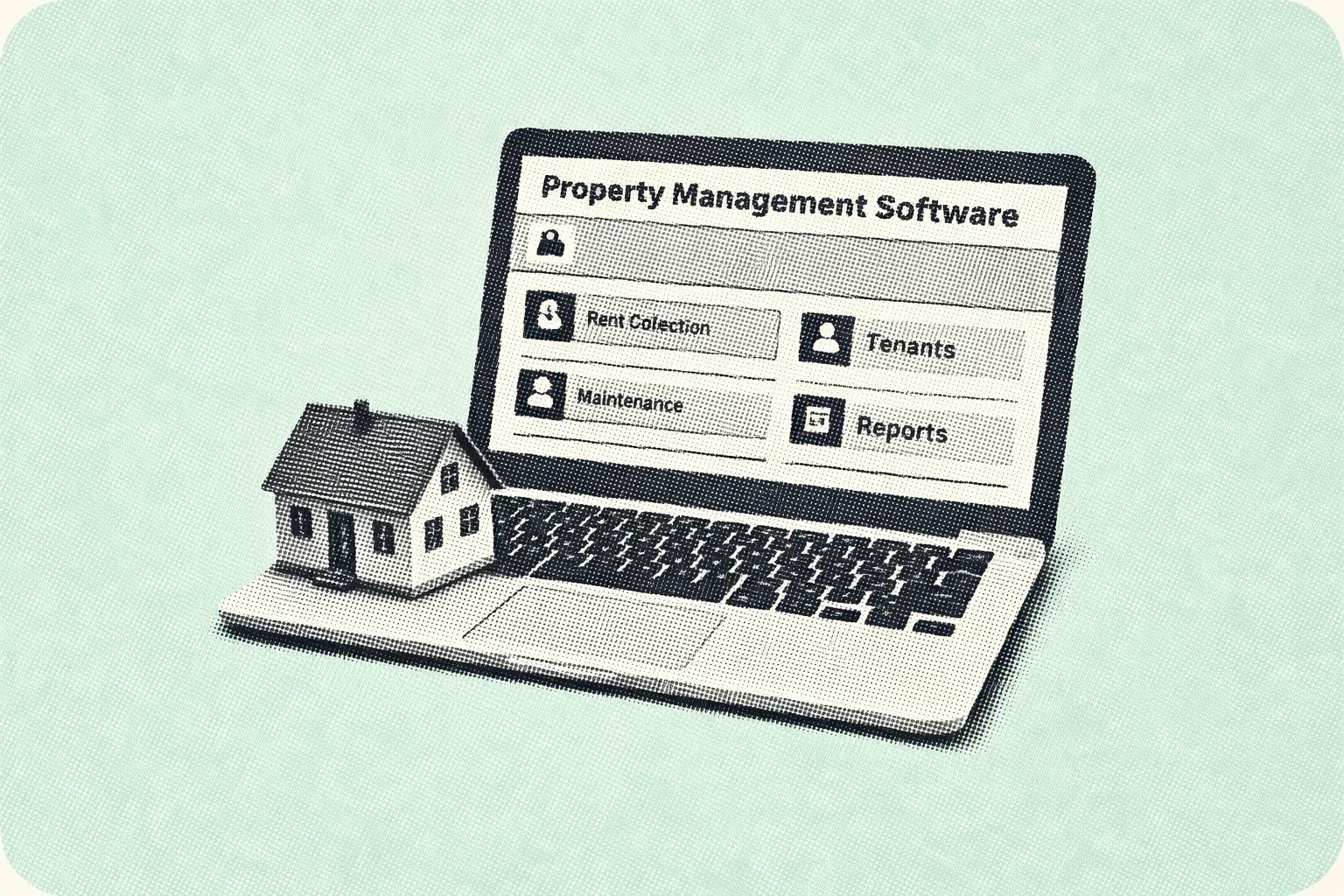
Once you have done the math a few times, the real bottleneck becomes consistency: tracking every income stream, categorizing every expense correctly, and seeing cash flow trends across units and months without living in spreadsheets.

Shuk handles the tracking that makes cash flow visible: online rent collection with zero ACH transaction fees creates a consistent income record per unit. Payment and income reports are filterable by property, tenant, and date and exportable to PDF or Excel, so your monthly close takes minutes. Schedule E-aligned expense organization with digital receipts keeps operating costs categorized consistently. And configurable late fees applied automatically reduce the collection loss line in your cash flow calculation.

At $5 per unit per month with no setup fees, and with White Glove Onboarding included at no additional cost, Shuk makes monthly cash flow tracking feasible for landlords and property managers running 1 to 100 units.

Book a demo at shukrentals.com/book-a-demo to see how income and expense tracking work together so you always know your real cash flow.
QUICK VIEW
DIVE DEEPER
Stop Reacting to Vacancies. Start Seeing Them Coming.

Shuk helps landlords and property managers get ahead of vacancies, improve renewal visibility, and bring more predictability to every lease cycle.

Book a free 20-min demo to see Shuk today.

Stay in the Shuk Loop

Rental Property Cash Flow: How to Calculate and Improve It

If the Bank Balance Feels Tight, You Are Not Alone

If you have ever looked at your rent deposits and thought, "I should be doing well... so why does the bank balance feel tight?" you are not alone. Rental income is easy to see. True profitability is not.

Between rising operating costs, especially insurance, and normal revenue leakage from vacancy, turns, and late payments, many landlords run fine on paper while experiencing real-world cash strain. Industry data shows typical operating expense ratios in the 35% to 55% range for U.S. multifamily properties before you even consider debt service, per HUD's Rental Housing Finance Survey. Meanwhile, vacancy is never zero: the U.S. rental vacancy rate has been around 7% in recent national data, which is why many landlords underwrite a 5% to 7% vacancy/collection allowance even in solid markets, per Census Bureau data.

Note: This article provides general education about rental property cash flow calculation and improvement strategies, not financial advice. Operating expense ratios, vacancy assumptions, DSCR thresholds, and refinancing outcomes vary by property, market, and lender. Before making financing or investment decisions, consult qualified professionals.

The fix starts with clarity. Once you can calculate rental property cash flow consistently and interpret what it is telling you, you can make targeted changes that raise your monthly surplus without guessing.

What You Will Learn

Rental property cash flow is the money left over after your property collects income and pays all of its costs, including the mortgage. It is the metric that decides whether the property supports itself month-to-month, whether you can build reserves, and whether you can scale.

This guide covers a clear definition of rental property cash flow and how it differs from ROI, a step-by-step calculation you can run monthly and annually, a complete expense checklist including reserves many landlords forget, how to interpret positive vs. negative cash flow using practical benchmarks like DSCR, four ways to improve cash flow (rent strategy, vacancy reduction, expense control, and refinancing), and two mini case studies showing before/after results.

1. Define Cash Flow the Landlord Way (and Separate It from NOI)

There are two closely related numbers landlords often mix up:

Net Operating Income (NOI) = Effective gross income minus operating expenses. NOI ignores financing.

Cash Flow (Before Tax) = NOI minus debt service (principal plus interest). Cash flow is what you feel.

Why it matters: A property can have healthy NOI and still have weak or negative cash flow if the mortgage is heavy or rates are high. With mortgage rates having hovered around roughly 7% in recent periods, financing costs have been a bigger swing factor for investors than they were a few years ago. Freddie Mac's small-balance/multifamily lending guidance makes clear that cash flow stability is often evaluated through DSCR.

Track both NOI and cash flow. NOI helps you compare properties. Cash flow tells you if the property is actually funding your life and reserves.

2. Calculate Your Monthly Rental Property Cash Flow (Step-by-Step)

Use this formula: Monthly Cash Flow = Effective Gross Income minus Operating Expenses minus Debt Service.

Step A: Start with Gross Scheduled Rent (GSR). GSR is the rent you would collect if every unit paid in full, on time, all month. Example (3-unit property): Gross scheduled rent = $4,200/month.

Step B: Subtract vacancy plus collection loss (do not skip this). Even well-run portfolios have turnover, nonpayment, and make-ready downtime. Many landlords underwrite 5% to 7% vacancy/collection loss; that aligns with national vacancy data around 7% and common underwriting practice. 5% of $4,200 = $210/month. Effective residential rent = $4,200 minus $210 = $3,990/month.

Step C: Add other income. Other income is small but real: parking, laundry, pet rent, storage, application fees (where legal). Even small buildings sometimes generate $50 to $80/month from coin laundry setups. Other income = $210/month. Effective Gross Income (EGI) = $3,990 plus $210 = $4,200/month. Notice: other income can offset vacancy loss, useful when rent growth is capped by the market.

Step D: List operating expenses (the full landlord version). Operating expenses are the keep-it-running costs, excluding mortgage principal and interest. Across the industry, operating expense ratios commonly land in the 35% to 55% band, per HUD RHFS data.

A practical expense set includes: property taxes, landlord insurance (notably volatile lately; some property segments saw major insurance increases in recent years), repairs and maintenance (many landlords budget 8% to 10% of rent as a starting point), CapEx reserve for big-ticket replacements (roof, HVAC, exterior) often underwritten 5% to 10% of rent, utilities you pay (water/sewer/trash, common electric), property management fees (often 8% to 10% depending on market and services), bookkeeping/CPA/legal/licenses/bank fees, marketing/leasing/turnover costs, HOA (if applicable), and pest control/lawn/snow (if owner-paid).

Example operating expenses (monthly): Taxes: $420. Insurance: $210. Repairs and maintenance: $350. CapEx reserve: $210. Utilities (owner-paid): $240. Management/admin: $320. Marketing/leasing: $60. Total OpEx = $2,020/month.

Step E: Subtract debt service. Debt service is principal plus interest (P&I). Escrows for taxes/insurance are already counted above if you are tracking them as expenses. Choose one consistent method. Mortgage P&I = $1,700/month.

Step F: Compute cash flow. Cash Flow = $4,200 minus $2,020 minus $1,700 = $480/month. Cash Flow per unit = $480 / 3 = $160/unit/month.

What this means: This is solidly positive. If your portfolio target is at least $100/door/month, this clears it with buffer. Your target should reflect property class, leverage, and local volatility.

3. Convert Monthly Cash Flow to Annual and Sanity-Check with DSCR

Annualizing helps you plan reserves, taxes, and capital projects. Annual cash flow = monthly cash flow times 12. In our example: $480 times 12 = $5,760/year.

Now sanity-check your stability using DSCR (Debt Service Coverage Ratio): DSCR = NOI divided by Annual Debt Service. Many lenders look for a minimum DSCR around 1.20 for stability in small-balance/multifamily-style underwriting, per Freddie Mac guidance. That means your NOI should be at least 20% higher than your annual mortgage payments.

Example: EGI: $4,200/month = $50,400/year. OpEx: $2,020/month = $24,240/year. NOI: $26,160/year. Debt service: $1,700/month = $20,400/year. DSCR: 26,160 divided by 20,400 = 1.28.

If your DSCR is close to 1.0, you are one vacancy spike or insurance jump away from negative cash flow. A DSCR cushion matters more when national vacancy is elevated or local supply is rising.

4. Improve Cash Flow with Targeted, High-ROI Moves (Four Core Levers)

Once you know your number, improving rental property cash flow is about pulling the levers that move it most.

Strategy 1: Raise Rent in a Retention-First Way

A rent increase is the fastest lever, but only if it does not backfire into vacancy. Compare your rents to local baselines like HUD Fair Market Rents (FMR) or Small Area FMRs where applicable. If you are significantly below, you may have room. Tie increases to tangible value: small upgrades, faster maintenance response, better tenant communication. Use staggered renewals so not all units reset in the same season.

Quick math: A $75/month increase on 3 units adds $225/month. Even if you budget 5% vacancy loss, you still net roughly $214/month in EGI.

Strategy 2: Reduce Vacancy and Turn Time

Vacancy is a double hit: you lose rent and often spend more on turns/marketing.

Actionable moves: Pre-lease early by starting marketing 30 to 45 days before move-out. Standardize your turn checklist and vendor response times. Price renewals slightly below new tenant rent when it reduces turnover risk. Track vacancy and collection loss as separate line items so you can see what is actually happening.

Mini case study 1 (vacancy reduction). A triplex underwriting 7% vacancy on $4,200 GSR loses $294/month. Tightening operations to 5% reduces loss to $210/month, a $84/month improvement, or $1,008/year, without raising rents. This aligns with the common 5% to 7% underwriting band used by many landlords and supported by national vacancy conditions.

Strategy 3: Cut Expenses the Smart Way (Focus on the Big Three)

Because operating expenses often sit in the 35% to 55% range, small reductions compound quickly. The three categories that commonly swing most are taxes, insurance, and maintenance.

Actionable moves: Insurance: Shop annually and document property improvements (roof, plumbing, electrical). Insurance pressure has been significant in recent industry expense reporting, and it can move faster than rent. Maintenance: Budget a routine maintenance reserve and reduce emergencies through preventative maintenance (HVAC service, gutter cleaning). Utilities: Where legal and practical, convert to tenant-paid utilities or install submetering/RUBS; if not, reduce leaks and waste.

Do not cut CapEx reserves to make cash flow look better. That is not improving cash flow. It is delaying a future cash crisis.

Strategy 4: Refinance or Restructure Debt (Only If the Math Improves Cash Flow)

When rates are high, refinancing may not help. But restructuring can: extending amortization, removing PMI, or improving DSCR to qualify for better terms. Lender underwriting often centers on DSCR; improving NOI (through rent/vacancy/expenses) can unlock financing options.

Actionable steps: Run a refinance scenario with conservative assumptions (same vacancy, same reserves). Compare total monthly payment (P&I) and closing costs to expected monthly savings. If a refi does not improve monthly cash flow, consider waiting and focusing on NOI first.

Mini case study 2 (refi plus operations before/after). Using an Indianapolis triplex-style P&L from recent market-style underwriting, the property produced about $338/month cash flow before tax at a 1.22 DSCR with a 30-year loan at 6.5% and a 5% vacancy factor. If the owner improves operations by adding modest other income (for example, parking/laundry where feasible) and tightening expense controls (especially insurance shopping and preventative maintenance), cash flow can rise even without major rent increases. If rates later drop and the owner refinances to lower the payment, the same NOI produces a larger surplus, turning modestly positive into comfortably positive. The key is sequencing: stabilize NOI first, then optimize debt.

Monthly Cash Flow Checklist

Income

  • Gross scheduled rent (by unit)
  • Vacancy loss (target 5% to 7% allowance)
  • Collection loss / write-offs (separate from vacancy if possible)
  • Other income (laundry, parking, fees, storage)

Operating Expenses

  • Property taxes
  • Insurance (note renewal date; compare annually)
  • Repairs and maintenance (track by category: plumbing, HVAC, turnover)
  • CapEx reserve transfer (separate bank account preferred)
  • Utilities (owner-paid)
  • Management fees / leasing fees (even if self-managed, track your paid vendors)
  • Admin: bookkeeping/CPA, licenses, bank charges
  • Marketing / tenant placement

Financing

  • Mortgage principal and interest (debt service)
  • DSCR check (NOI divided by annual debt service; aim for roughly 1.20 or higher for cushion)

Outputs

  • NOI (monthly plus YTD)
  • Cash flow before tax (monthly plus YTD)
  • Cash flow per unit (monthly)
  • Notes: what changed this month (rent changes, vacancy, major repairs)

Frequently Asked Questions

What is the difference between cash flow and ROI?

Cash flow is the monthly/annual surplus after expenses and mortgage. ROI measures return on invested capital (down payment, closing costs, rehab) and can include appreciation and loan paydown. A property can have low cash flow but high ROI (for example, strong appreciation) or high cash flow but mediocre ROI (for example, lots of cash invested).

What is a healthy rental property cash flow?

A practical benchmark is cash flow that survives normal volatility: vacancy (often modeled at 5% to 7%) plus rising expenses. Many investors also watch DSCR; underwriting often targets roughly 1.20 or higher as a stability threshold.

How often should I calculate cash flow?

Monthly, with a year-to-date view. Cash flow is a management metric. If you wait until tax time, you will miss the window to correct rising insurance, creeping repairs, or increasing vacancy.

Should I include reserves as expenses?

Yes, at least a CapEx reserve line. It is the difference between looks profitable and stays profitable. Reserve benchmarks vary, but the point is consistency and realism.

What to Do Next

Once you have done the math a few times, the real bottleneck becomes consistency: tracking every income stream, categorizing every expense correctly, and seeing cash flow trends across units and months without living in spreadsheets.

Shuk handles the tracking that makes cash flow visible: online rent collection with zero ACH transaction fees creates a consistent income record per unit. Payment and income reports are filterable by property, tenant, and date and exportable to PDF or Excel, so your monthly close takes minutes. Schedule E-aligned expense organization with digital receipts keeps operating costs categorized consistently. And configurable late fees applied automatically reduce the collection loss line in your cash flow calculation.

At $5 per unit per month with no setup fees, and with White Glove Onboarding included at no additional cost, Shuk makes monthly cash flow tracking feasible for landlords and property managers running 1 to 100 units.

Book a demo at shukrentals.com/book-a-demo to see how income and expense tracking work together so you always know your real cash flow.

{

  "@context": "https://schema.org",

  "@type": "FAQPage",

  "mainEntity": [

    {

      "@type": "Question",

      "name": "What is the difference between cash flow and ROI for rental properties?",

      "acceptedAnswer": {

        "@type": "Answer",

        "text": "Cash flow is the monthly or annual surplus after expenses and mortgage. ROI measures return on invested capital and can include appreciation and loan paydown. A property can have low cash flow but high ROI or high cash flow but mediocre ROI."

      }

    },

    {

      "@type": "Question",

      "name": "What is a healthy rental property cash flow?",

      "acceptedAnswer": {

        "@type": "Answer",

        "text": "A practical benchmark is cash flow that survives normal volatility including vacancy often modeled at 5% to 7% plus rising expenses. Many investors also watch DSCR with underwriting often targeting roughly 1.20 or higher as a stability threshold."

      }

    },

    {

      "@type": "Question",

      "name": "How often should I calculate rental property cash flow?",

      "acceptedAnswer": {

        "@type": "Answer",

        "text": "Monthly with a year-to-date view. Cash flow is a management metric. If you wait until tax time you will miss the window to correct rising insurance, creeping repairs, or increasing vacancy."

      }

    },

    {

      "@type": "Question",

      "name": "Should I include reserves as expenses in cash flow calculations?",

      "acceptedAnswer": {

        "@type": "Answer",

        "text": "Yes, at least a CapEx reserve line. It is the difference between looks profitable and stays profitable. Reserve benchmarks vary but the point is consistency and realism."

      }

    }

  ]

}

Stop Reacting to Vacancies. Start Seeing Them Coming.

Shuk helps landlords and property managers get ahead of vacancies, improve renewal visibility, and bring more predictability to every lease cycle.

Book a demo to get started with a free trial.

Stay in the Shuk Loop

View Similar Articles

View Similar Articles

All Articles
Property Acquisition Hub
Hard-Money Term Sheet Translation: How to Compare and Negotiate Every Clause

Hard-Money Term Sheet Translation

Why Hard-Money Term Sheets Feel Simple Until They Are Not

Hard-money lenders market speed and simplicity, and compared to conventional financing, they deliver. Many deals close in days to two weeks, with underwriting anchored more to the asset than your W-2 or tax returns. But the term sheet you get up front is also where most investor profits quietly leak out: points calculated differently than you assumed, origination fees that stack with processing fees, LTV/ARV language that changes your cash-to-close, rehab draws that create contractor cash-flow crunches, and extensions that look cheap until you read the conditions.

In 2025, typical hard-money rates commonly ranged about 9.5% to 15%, with points and fees often 1% to 4% (most commonly 2% to 3%), per LendingTree and private lender surveys. In other words: the term sheet is not a formality. It is the pricing engine of your deal. This guide translates the clauses most likely to change your IRR, helps you compare offers side-by-side, and gives you negotiation moves (plus red flags) so you can choose a lender with confidence.

Note: This article provides general education about hard-money loan terms and negotiation, not legal or financial advice. Loan structures, fees, regulatory requirements, and enforcement practices vary by state and lender. Before signing any term sheet, review the documents with a qualified real estate attorney and confirm compliance with your state's lending and licensing rules.

Treat every term sheet like a profit-and-risk document, not a rate quote. Your goal is to reduce surprises between term sheet, loan docs, and draw process.

The Anatomy of a Hard-Money Term Sheet

A hard-money term sheet is a high-level preview of the loan's economics and controls: price (rate plus points plus fees), leverage (LTV/ARV), cash-flow rules (interest-only, reserves, minimum interest), rehab funding mechanics (draw schedule), and what happens if the project takes longer (extensions, default language). These loans are typically short-term (often 6 to 36 months) and frequently interest-only, designed for quick acquisition, rehab, refinance, or flip exits.

Context matters because the market has shifted: private lending remained active through 2024 to 2026, but lenders have shown periodic LTV tightening during uncertainty. At the same time, bridge loan pricing has hovered around the low double digits (for example, 10.28% average noted for bridge loans in late 2026 per Gelt Financial), while DSCR products have often priced lower than bridge (sub-7% cited in some 2026 contexts). That spread is why your exit plan (sell vs. refinance into DSCR) is central to term-sheet decisions.

Some lenders emphasize transparent fee communication via ethics standards promoted by the American Association of Private Lenders (AAPL). And while state rules vary, you should confirm whether the lender and/or broker is properly licensed where required and ask how the lender handles points and fee disclosures.

Compare offers using total cost to execute your strategy (acquire plus rehab plus time plus exit), not just the nominal interest rate.

Clause-by-Clause Translation

1) Interest Rate and Payment Structure

Plain English: The note rate is the annual interest charged on the outstanding principal. Many hard-money loans are interest-only, meaning lower monthly payments but principal is due at payoff. Some lenders also include minimum interest (for example, 3 months minimum), which means you owe at least that much interest even if you pay off early (functionally a prepay penalty).

Why it matters: On short timelines, rate differences can matter less than fees and prepay structure. Example: a 1% rate difference over 6 months on a $250,000 balance is about $1,250. A single point is $2,500.

How to negotiate:

  • If you are confident in a fast exit, ask for no minimum interest or a shorter minimum (for example, 1 month instead of 3).
  • Offer a trade: accept a slightly higher rate in exchange for fewer points or no minimum interest. This tradeoff is commonly workable.

Red flags: Default rate not specified, or a big jump (high default rates can turn small delays into major losses). Also watch for interest being charged on undrawn rehab funds.

Mini case: You plan a 4-month flip. Offer A is 10.5% with 3-month minimum interest. Offer B is 11.25% with no minimum. If you sell in month 2, Offer A may still charge 3 months, wiping out the benefit of the lower rate.

2) Points vs. Origination vs. Junk Fees

Plain English: A point typically equals 1% of the loan amount and is often called an origination fee for sourcing, underwriting, and processing. Hard-money points commonly run 1% to 4%, with many lenders clustering around 2% to 3%. But lenders may also charge doc prep, underwriting, processing, draw/inspection, wire, and legal fees, so points are only part of total closing costs.

Why it matters: Points hit your cash-to-close and your true APR. Example: $250,000 loan with 3 points = $7,500 upfront. If you hold 9 months at 11%, interest is about $20,625. Total cost before other fees is approximately $28,125. That is why comparing rate only can be misleading.

How to negotiate:

  • Ask: "Are points charged on total commitment or initial funding?"
  • Ask for a fee map: every third-party fee, every lender fee, and which are refundable if the deal does not close.
  • Use leverage: bigger loans, repeat business, strong deal history, and clean valuation support can justify fewer points.

Red flags: Points quoted low but document/underwriting/processing fees stack to mimic high points. Or points deducted from proceeds without you modeling the resulting cash gap.

Mini case: Two lenders both quote 2 points. One includes underwriting and doc prep in that. The other adds $1,995 underwriting plus $1,495 doc prep plus $450 wire plus $150/month servicing. The second is materially more expensive even at the same points.

3) LTV vs. ARV vs. LTC

Definitions:

  • LTV (Loan-to-Value): loan amount divided by current property value or purchase price (depending on lender).
  • ARV (After-Repair Value): projected value after rehab, usually supported by appraisal or comps. Many rehab lenders lend against ARV rather than current value.
  • LTC (Loan-to-Cost): loan amount divided by (purchase plus rehab budget).

Why it matters: "70% ARV" can still require a large down payment if the purchase price is high relative to ARV or if rehab funds are drawn later. Typical leverage is often around 65% LTV nationally, though exceptions exist.

How to negotiate:

  • Clarify the base: purchase price, as-is value, or ARV?
  • Push for higher leverage only when it does not increase hidden controls (for example, heavier reserves, stricter draws).
  • Strengthen your ARV case: tight comp set, realistic scope, contractor bids, and timeline. Lenders respond to believable execution.

Red flags: ARV determined unilaterally without a clear method, or the lender reserves the right to reduce ARV after closing based on market conditions (introduces refinancing risk).

Mini case: Purchase $200,000, rehab $60,000, ARV $320,000. Lender offers 70% ARV = max $224,000. If they cap purchase at 90% of price ($180,000) and rehab is reimbursed by draws, you might still bring $20,000 plus closing costs plus initial rehab float.

4) Draw Schedules and Inspections

Plain English: A draw schedule is how rehab funds are released, often after work is completed and verified by inspection, photos, lien waivers, or receipts. Draw requirements can be strict: specific line items, re-inspections, and documentation expectations are common.

Why it matters: Draw friction creates delays, and delays compound cost (extra interest, extension fees, contractor remobilization). If you are paying contractors weekly but your lender reimburses after inspection, you need liquidity.

How to negotiate:

  • Ask for initial draw at closing for materials or early work (if your track record supports it).
  • Negotiate inspection turnaround SLAs (for example, 48 to 72 hours) and whether inspections are third-party or in-house.
  • Confirm draw fees (per draw, per inspection, or bundled).

Red flags: No written draw process, unclear documentation standards, or lender discretion to deny draws without objective criteria. Also watch for interest on undrawn rehab holdback if not explicitly disclosed.

Mini case: Rehab budget $50,000 in 5 draws. Your lender takes 5 business days to schedule and 3 days to fund after inspection. Your one-week framing job becomes a three-week cash squeeze unless you have reserves.

5) Prepayment Penalties

Plain English: Prepayment penalties in hard money commonly appear as minimum interest (for example, 3 months guaranteed) or step-down penalties (for example, 3% if paid off in months 1 to 3, 2% in months 4 to 6, etc.).

Why it matters: If your strategy is to refinance quickly into a lower-rate DSCR loan (a common post-stabilization move in 2026 markets), a prepay can erase the benefit.

How to negotiate:

  • Ask for no prepay after month 3 or 6, especially if you can prove a realistic refi schedule.
  • Offer something in return: slightly higher rate, or a modest flat fee instead of a percentage.

Red flags: Yield maintenance style language or ambiguous penalty triggers.

Mini case: You refinance in month 5. A 2% prepay on a $300,000 payoff is $6,000, often more than the interest savings you hoped to capture by refinancing early.

6) Extension Clauses

Plain English: Extensions allow you to prolong the loan term, often in 1 to 3 month increments, usually for a fee (often quoted in points or a percentage) plus possibly an increased rate or required paydown. Hard-money terms commonly run 6 to 36 months.

Why it matters: Most projects slip. Permits, inspections, contractor gaps, weather, and supply chain issues can turn a 5-month rehab into 8. Your term sheet should tell you: how many extensions are available, cost, conditions (no defaults, on-time payments, construction progress), and whether you must request before maturity.

How to negotiate:

  • Secure extension options upfront when you still have leverage.
  • Negotiate a known extension fee schedule (for example, 0.5 point per 3 months) rather than lender discretion.

Red flags: Extension is not guaranteed, or requires re-underwriting with new valuation and new fees (you may be trapped).

Mini case: Your lender offers a 12-month term with two 3-month extensions at 1 point each. On a $250,000 loan, each extension is $2,500. Cheaper than a forced sale, but expensive if you did not budget for it.

Side-by-Side Hard-Money Term Comparison Table

Use this to compare offers on the same deal assumptions (purchase, rehab, ARV, timeline).

Interest rate: Lender A 10.75% vs. Lender B 11.50%. Ask: Interest-only? Charged on what balance? Any default rate?

Points (origination): Lender A 2.0 vs. Lender B 1.0. Ask: Points on commitment or funded amount? Any stacked fees?

Other lender fees: Lender A $2,450 vs. Lender B $5,100. Ask: Underwriting, doc prep, processing, wire, servicing.

LTV/ARV: Lender A 90% purchase / 70% ARV vs. Lender B 85% purchase / 75% ARV. Ask: Which value controls? Who sets ARV?

Draw process: Lender A 5 draws / 3 to 5 day funding vs. Lender B 6 draws / 7 to 10 day funding. Ask: Inspection fees? Required docs?

Prepay: Lender A 3-month minimum vs. Lender B none after 90 days. Ask: Step-down vs. minimum interest.

Term: Lender A 12 months vs. Lender B 9 months. Ask: Extension options? Cost? Conditions?

Extensions: Lender A 2 x 3 months at 1 pt vs. Lender B 1 x 3 months at 1.5 pts. Ask: Guaranteed or discretionary?

Recourse: Lender A full PG vs. Lender B limited PG. Ask: Carve-outs? Non-recourse? Review with counsel.

Negotiation Checklist

Copy this into your notes for lender calls.

Deal assumptions (lock these first):

  • Purchase price: ____
  • Rehab budget: ____
  • ARV: ____
  • Target exit date: ____
  • Exit strategy: flip / refi (DSCR) / sell / other: ____

Term sheet questions (ask in this order):

  • Rate mechanics: Interest-only? Interest on drawn balance only? Default rate?
  • Points and fees: Total points? Charged on commitment or funded amount? Full list of lender fees and third-party fees? Which are refundable?
  • Leverage math: Is it LTV, ARV, or LTC? Purchase cap vs. ARV cap? Who determines ARV and how?
  • Cash-to-close: How much is withheld (points/fees/reserves)? Any interest reserves?
  • Draw schedule: Required documents (invoice, lien waiver, photos)? Inspection timeline? Draw/inspection fee per event?
  • Prepay: Minimum interest? Step-down? Can it be waived if you refi with the lender?
  • Extensions: Number available, fee schedule, whether guaranteed, and request deadline before maturity.
  • Servicing and communications: Who approves draws? Who do you call? Typical response time?
  • Regulatory hygiene: Is the lender/broker licensed where required? Which entity funds the loan?

Negotiation levers (choose 2 to 3):

  • Offer higher rate for fewer points (or vice versa)
  • Ask to remove minimum interest/prepay after day 90
  • Ask for faster draw funding / fewer inspection fees
  • Offer autopay plus reserves plus strong insurance to improve terms

Red-flag callouts (pause and re-underwrite):

  • Fee list will not be provided in writing
  • Draw process is case-by-case with no standards
  • Extension at lender discretion with re-underwrite fees
  • Prepay is buried as minimum interest without clear dollar impact

Frequently Asked Questions

Can I avoid prepayment penalties on a hard-money loan?

Sometimes. Prepay is common in hard money and may appear as minimum interest or a step-down penalty. The best approach is to negotiate it before you order the appraisal or inspections and lose leverage. If your plan is a fast flip or quick refi, ask for no prepay after 90 days or no minimum interest, and offer a small rate increase if needed.

What documents typically back a draw schedule?

Common requirements include scope-of-work line items, invoices and receipts, before-and-after photos, inspection reports, and lien waivers, because the lender is protecting collateral and preventing mechanic's liens.

Is the lowest rate always the best hard-money offer?

Not usually. In 2025, rates commonly fell roughly in the 9.5% to 15% band, but points and fees (often 1% to 4%) can dominate total cost on short holds. A slightly higher rate with fewer points, no minimum interest, and a faster draw process can produce a better net outcome.

How much LTV/ARV should I expect right now?

Many lenders cluster around conservative leverage (often cited around 65% LTV in broad market discussions), while some deals may go higher depending on asset quality and borrower strength. Expect leverage to vary by market and risk, and confirm whether limits apply to purchase, ARV, or both.

What to Do Next

A clean term sheet gets you to closing. Great execution is what turns that capital into profit, through faster renovations, cleaner turnovers, tighter rent collections, and fewer post-close surprises. After you close, start managing the property like an operator, not a firefighter.

Shuk handles the post-close operational side: online rent collection with zero ACH transaction fees, Schedule E-aligned expense tracking with digital receipts, maintenance request tracking, centralized in-app messaging with email and push notifications, and document storage for leases, inspection reports, and contractor records. If you are stabilizing for a DSCR refinance, Shuk's payment and income reports (filterable by property, tenant, and date, exportable to PDF or Excel) give you the clean rent history that DSCR underwriters require.

At $5 per unit per month with no setup fees, and with White Glove Onboarding included at no additional cost, Shuk makes post-close property management structured and documented for landlords and property managers running 1 to 100 units.

Book a demo at shukrentals.com/book-a-demo to see how rent collection, expense tracking, and reporting work together so your hard-money deal transitions smoothly into a well-managed, refinance-ready asset.

Landlord Challenges
5 Signs Your Property Management Company Is Failing You

5 Signs Your Property Management Company Is Failing You (And What to Do About It)

Hiring a property manager should reduce risk and buy you time, not create new problems you cannot see until the damage is done. Yet many frustrations independent landlords tolerate, including slow replies, vague statements, and mystery maintenance bills, are actually red flags that signal deeper breakdowns: poor controls, weak systems, and compliance exposure that lands on you as the property owner regardless of who caused it.

The pattern in landlord communities is consistent. An owner realizes the property manager is not performing only after months of delayed owner payouts, unexplained repair charges, or a tenant telling them the manager never answers. When communication fails, everything behind it fails too: rent enforcement, maintenance triage, compliance deadlines, and leasing. This guide gives you a clear framework to spot the warning signs early, intervene before the damage compounds, and transition safely if termination becomes necessary.

What Professional Management Actually Looks Like

Before confronting your manager or replacing them, you need benchmarks. Not perfection, but professional standards that are measurable and defensible.

Typical residential management fees in the U.S. often land in the 8% to 12% of monthly rent range, with variation by market and service scope. Some markets use flat monthly fees with add-on charges for leasing, maintenance coordination, or renewals. Fees alone do not determine value. Transparency and performance do.

On-time payment rates for independently operated rentals have been reported around 85% to 86% in normal market conditions. Late rent happens, but a competent manager has tight processes: consistent notices, clear ledgers, documented follow-up, and predictable owner disbursements.

Common industry expectations for maintenance response are acknowledgment within 24 to 48 hours for non-emergencies and significantly faster for emergencies. If your manager regularly goes dark, the risk is not just unhappy tenants. It is property damage, liability, and higher turnover that lands on your income statement.

National vacant days have been reported around 34 days in recent data. A vacancy lasting longer is not automatically proof of incompetence, but zero applications and zero showings for months is a marketing and process failure that requires immediate audit.

Sign 1. Chronic Unresponsiveness and Communication Theater

A manager does not need to be available around the clock, but they do need to be reachable. The most common early warning sign is persistent unresponsiveness: calls not returned, emails ignored, tenants left without answers, and status updates that contain no facts.

Landlord forums document this pattern repeatedly. Owners describe management companies that collected rent but stopped returning calls, texts, and emails entirely. That is not a customer service problem. It is a control failure that affects every other function the manager is supposed to perform.

The warning signs to recognize: your tenant contacts you directly because they cannot get a response from management, which is simultaneously a tenant experience failure and an operational breakdown. You receive updates that say "we are working on it" with no vendor name, scheduled date, invoice, or photo. The manager responds quickly when you approve a bill but goes silent when you request ledgers, status reports, or lease documentation.

What to do before replacing the manager:

Put response standards in writing. Owner communications should be answered within one business day. Tenant maintenance should be acknowledged within 24 to 48 hours for non-emergencies. Move all communication into a trackable channel, whether email or a portal, so nothing gets lost in unrecorded text threads. Request a weekly operations snapshot that includes rent status by unit, open work orders, lease expirations, and vacancy marketing activity. If the manager cannot or will not meet these standards in writing, that is your answer.

Sign 2. Financial Opacity: Owner Payouts, Ledgers, and Missing Money

If you suspect your property manager is underperforming, start with the money. Most serious breakdowns surface in three places: delayed owner payouts, unclear accounting, and fees that do not match what the contract says.

Payout delays are frequently discussed as though they are an unavoidable feature of property management. Some delay is operational, involving banking, payment methods, and batching cycles. But repeated delays without a clear written policy, and without access to real-time ledgers, represent a meaningful control risk. Late fees are another common flashpoint: many property managers keep all late fees, arguing they perform extra work to collect. Whether that is acceptable depends on your contract and state law. What matters is that it is disclosed, consistent, and auditable.

The warning signs: you can only access a monthly summary rather than a transaction-level ledger. Owner disbursements drift later and later with vague explanations. Charges appear on statements labeled as maintenance, admin, or coordination with no invoice, no photos, and no proof of completion.

What to do:

Demand transaction-level records and reconcile three months of statements against the rent schedule, bank deposits, and owner payouts. Require invoices and proof of payment for all vendor bills. Clarify the late-fee policy: if the manager keeps late fees, confirm it is explicitly in the agreement and reflected on statements. If it is not, treat it as a contract compliance issue and negotiate terms or begin the termination process.

Sign 3. Maintenance Negligence or Overbilling

Maintenance is where owners lose money fastest, either through delays that create secondary damage or through spending that goes uncontrolled.

The failure chain is common even when the dollar amounts are smaller: a tenant reports a leak, the manager does not respond promptly, water damage spreads, mold risk increases, and then the owner receives the repair bill. Landlord communities document cases where management negligence during a weather event led to flooding, a six-figure damage claim, and a denied insurance claim because the failure to act was not documented. More common and less dramatic are repeat repairs on the same issue, suggesting poor vendor quality or no root-cause analysis, and unauthorized work above the approval threshold written into the management agreement.

What to do:

Set explicit maintenance rules in writing: define emergencies versus non-emergencies, require photos and vendor invoices for all work, and establish a completion note requirement. Create a vendor-control policy: the vendor should be disclosed, referral relationships if any should be transparent, and competing bids should be required above a defined threshold except in genuine emergencies. Check habitability risk as a priority: maintenance delays that affect essential services including heat, water, and safety can create legal exposure that falls on you as the owner regardless of who caused the delay.

Sign 4. Compliance and Licensing Gaps

Some property management red flags are not performance problems. They are compliance problems that expose you to penalties, lawsuits, and licensing complaints.

Two issues appear consistently in landlord communities. The first is security deposit mishandling: a previous manager who did not keep property condition records significantly complicates a deposit dispute because documentation is your defense in any state that regulates itemization, storage rules, and return deadlines. The second is licensing: third-party property management without appropriate brokerage licensing can be illegal depending on your state, and as the property owner you carry indirect exposure when your manager operates outside the law.

What to do:

Request a compliance packet before escalating to termination. Ask specifically where deposits are held and in whose name, request sample move-in and move-out inspection forms, and review your management agreement's trust account and disbursement language. Verify licensing through your state real estate commission's lookup tools. If you find a gap, consult a local attorney rather than making assumptions about the implications. Preserve records now, before any confrontation: download all statements, ledgers, invoices, photos, inspection reports, and notices so you have them regardless of what happens next.

Sign 5. Leasing Failure: Long Vacancies, Weak Marketing, and Screening That Backfires

A property manager can look acceptable on paper while quietly bleeding your returns through vacancy and bad placement. Leasing is where incentives can misalign: some managers collect leasing fees or renewal fees regardless of placement quality, while the owner absorbs vacancy loss, concessions, and eviction risk when screening fails.

Landlords report staying in long vacancies with zero applications and zero showings over periods of months. That outcome does not reflect a slow market. It reflects a listing that is wrong on price or presentation, distribution that is too narrow, or a manager who is not actively showing. Screening failures compound the problem: missed rent, legal fees, turn costs, and the time consumed by an eviction process add up to costs that dwarf whatever leasing fee the manager collected.

Renewal strength is often discussed in the 50% to 60% range as a baseline, with 60% to 70% considered strong in many contexts. If your renewals are consistently below those levels, the investigation should start with tenant experience and maintenance responsiveness, not market conditions.

What to do:

Demand a leasing dashboard during any vacancy that includes listing links and syndication confirmation, inquiry count, showing count, application count, feedback from showings, and pricing recommendations updated regularly. Audit the screening criteria your manager applies and confirm they are documented, consistently applied, and compliant with fair housing requirements. If you are renegotiating the management agreement, tie leasing fees to performance outcomes so faster placement and better retention are rewarded rather than treated as optional.

Property Manager Red Flags Checklist

Use this before confronting or replacing your manager.

Communication: Owner messages answered within one business day across the last ten requests. Tenant maintenance acknowledged within 24 to 48 hours for non-emergencies. Clear escalation path established for emergencies.

Financial transparency: Transaction-level tenant ledgers accessible on request, not just monthly summaries. Owner payout schedule written and consistent with no drifting delays. Late-fee policy disclosed and matching the contract. Invoices provided for all maintenance charges.

Maintenance controls: Written approval threshold followed with no unauthorized repairs. Before and after photos and completion notes stored for all work. Vendor list disclosed and bids required above the defined threshold.

Compliance: Security deposits tracked with clear holding and transfer documentation. Move-in and move-out condition reports existing with photos and timestamps. Manager license status verified where required by your state.

Leasing performance: Vacancy marketing metrics provided weekly during any vacancy. Screening criteria documented and consistently applied. Vacancy days explained with evidence of activity rather than market excuses.

Frequently Asked Questions

How long should I wait for a property manager to respond?

If you are routinely waiting multiple business days for basic updates, treat it as a red flag. For maintenance, common industry expectations are acknowledgment within 24 to 48 hours for non-emergencies and significantly faster for emergencies. If the manager cannot meet that standard, require it in writing as a condition of continuing the relationship, or begin evaluating alternatives.

Can I access my tenant ledger directly?

You should be able to obtain transaction-level detail covering charges, payments, fees, credits, and owner draws to reconcile your property's performance independently. If you only receive a monthly summary and cannot get ledgers on request, that is a financial transparency failure and one of the most important warning signs that the relationship has a control problem.

What happens to security deposits during a management transition?

Deposits must be tracked accurately and transferred with a clear paper trail that includes the deposit amount, where it is held, and condition documentation from move-in. Before terminating your manager, secure copies of all move-in and move-out documentation and a deposit accounting report. If condition records do not exist, any deposit dispute that follows becomes significantly harder to resolve in your favor.

Is it a dealbreaker if my property manager is not properly licensed?

Potentially yes, depending on your state. Third-party property management without appropriate brokerage licensing can be illegal in some jurisdictions, and as the property owner you carry indirect exposure. Verify through your state's real estate commission lookup tool and consult a local attorney if anything looks irregular. Do not make assumptions about the implications.

If you are seeing two or more of these signs and want to explore a self-management model with real financial transparency, direct communication, and maintenance documentation that stays with you, book a demo to see how Shuk supports owner-operators who want to run their rentals like a business.

Tenant Screening Hub
Income Verification for Rental Applications: Best Practices for Landlords

Income Verification Best Practices

Income verification for rental applications is the process of confirming that an applicant earns enough to pay the rent reliably, that the income claimed is genuine and stable, and that the documentation provided accurately represents actual earnings. For independent landlords, income verification is both the most critical screening step for predicting long-term payment behavior and the step most commonly weakened by accepting a single document at face value. Application fraud involving edited pay stubs, falsified employment letters, and manipulated bank statements has become significantly more common, making a multi-source verification approach the functional standard rather than a precaution reserved for suspicious applications.

What Good Income Verification Accomplishes

Effective income verification answers three questions: Is the income real? Is the income stable? And is the income sufficient against the written standard applied to every applicant?

Answering all three requires more than reviewing a single pay stub. It requires a document package that can be cross-validated, an employment or income source confirmation through an independently obtained contact, and a calculation that applies the stated standard consistently regardless of employment type.

Step-by-Step Income Verification Workflow

Step 1. Define the Income Standard in Writing Before Taking Applications

The income standard must be established before any specific applicant's information is reviewed. The most common benchmark is gross monthly income of at least three times the monthly rent. Your specific standard may differ but must be documented and applied equally to every applicant.

The written standard should also specify how you treat different income types, what documentation is required for W-2 employment versus self-employment versus benefits, and what compensating factors allow approval despite income that falls below the standard. Apply the standard to the tenant-paid portion of rent for applicants using housing vouchers rather than the full contract rent. Many jurisdictions protect source of income as a class, and applying the income ratio inconsistently between voucher holders and other applicants creates discriminatory exposure.

Step 2. Collect a Document Package That Enables Cross-Validation

For W-2 employees, the standard package is two to three consecutive recent pay stubs and two months of bank statements showing payroll deposits at the corresponding frequency and net pay amount. An offer letter confirming the employment status and compensation rate is useful as a third source.

For self-employed applicants, the most reliable combination is the prior year tax return with all schedules and three months of business and personal bank statements showing consistent deposits.

For fixed-income applicants receiving Social Security, pension payments, or disability benefits, a benefit award letter downloaded directly from the agency's online portal combined with bank statements showing matching deposits provides reliable verification.

Step 3. Calculate the Rent-to-Income Ratio Using a Consistent Method

Apply the income standard using the same calculation method for every applicant. For employees with variable income components, use a conservative average of the trailing three to six months rather than a peak period. Document the specific income figure used, how it was calculated, and the resulting rent-to-income ratio.

Step 4. Verify Employment and Income Source Through an Independently Obtained Contact

For W-2 employees, verify employment through the main phone number of the employer obtained from a publicly listed source such as the company website rather than from the employment letter or pay stub. Confirm that the applicant is an active employee in the stated role. Log every verification attempt: the date, who was contacted, how, and what was confirmed.

For self-employed applicants, verify through a third source such as a business registration confirmation, client letters, or relevant licensing.

Step 5. Identify and Evaluate Document Red Flags

Pay stubs with identical net pay in every period despite variable hours are a common fraud signal. A calculation of whether the YTD earnings figure is mathematically consistent with the period earnings is one of the fastest fraud detection checks available. Bank statements with formatting inconsistencies across pages or deposit entries that do not correspond to the pay frequency described in the pay stubs warrant a pause and a request for clarification.

Step 6. Document the Decision and Apply the Standard Consistently

Complete the verification with a written record showing the income figure verified, the method of verification, the rent-to-income ratio calculated, whether the standard was met, any compensating factors applied, and the resulting decision. This record should be the same format for every applicant. If a consumer report contributed to the decision, FCRA adverse action requirements apply.

Income Verification Checklist

Pre-screen criteria: Written income standard documented. Income types accepted defined. Variable income averaging method defined. Treatment of voucher and subsidy income documented.

Document collection (W-2 employment): Two to three consecutive pay stubs. Two months of bank statements showing payroll deposits. Offer letter or employment confirmation.

Document collection (self-employed): Prior year tax return with all schedules. Three months of bank and business statements.

Document collection (fixed income): Benefit award letter from agency source. Bank statements showing matching deposits.

Calculation: Verified gross monthly income documented. Variable income calculated using defined averaging method. Rent-to-income ratio calculated and compared to written standard. Result documented in file.

Employment verification: Employer contacted through independently obtained contact. Confirmation documented with date, method, and outcome.

Document authenticity review: YTD figures mathematically checked. Pay frequency consistent with bank deposit pattern. Any anomaly documented and followed up.

Decision: Income standard met or not met documented. Compensating factor applied or not applied documented. File retained per retention policy.

Frequently Asked Questions

What is the standard rent-to-income ratio for rental applications?

The most commonly applied benchmark is gross monthly income of at least three times the monthly rent, corresponding to housing costs of approximately 30% of gross income. Your specific standard may vary but must be documented and applied equally to every applicant. For applicants using housing vouchers, apply the ratio to the tenant-paid portion of rent rather than the full contract rent to avoid source-of-income discrimination in jurisdictions that protect it.

What proof of income should a landlord accept for rental applications?

Acceptable proof depends on employment type. W-2 employees should provide consecutive pay stubs and bank statements showing corresponding deposits. Self-employed applicants should provide tax returns with all schedules and bank statements. Fixed-income applicants should provide benefit award letters and bank statements. Requiring the same documents for the same income type applied equally to every applicant satisfies both the verification goal and the fair housing consistency requirement.

How do landlords verify income for self-employed applicants?

Self-employed income verification relies on the prior year tax return with all schedules for an annual baseline and three months of bank statements showing recent cash flow. A conservative approach averages trailing six to twelve months of deposits rather than using a peak period. When additional confidence is needed, an IRS Form 4506-C authorizing transcript access can corroborate reported tax figures through official records.

What are the biggest income verification red flags to watch for?

The most reliable fraud indicators are YTD figures mathematically inconsistent with period earnings, identical net pay figures in every period despite variable hours, pay frequency that does not match bank deposit patterns, missing standard fields such as employer address or pay period identifiers, and bank statement formatting inconsistencies. Require consecutive documents and verify the basic arithmetic before treating any document as confirmed.

Can a landlord deny an applicant solely because of income?

Yes, if the denial is based on a consistently applied, written income standard supported by a documented calculation. The risk arises when the standard is applied selectively, when different documentation requirements are imposed on different applicants for the same income type, or when the income standard functions as discrimination based on source of income in jurisdictions that protect it.

Book a demo to see how Shuk helps landlords stay ahead of vacancies and keep units filled.