
For a rental investor, the interest rate on the loan is often the single largest number in the deal that you do not control. A one-point move in mortgage rates can turn a property that cash flows into one that barely breaks even, change how much a lender will let you borrow, and shift how long your renters stay. This guide explains how interest rates reach a rental property, how to measure the effect on your own numbers, and how to plan for rates you cannot predict.
Note: This article is general education, not financial, tax, or lending advice. Loan terms, qualification rules, and rates vary by lender, borrower, and property. Talk with a qualified lender or financial professional before making a financing decision.
This guide is part of the Market Insights hub. For the financing products themselves, see the guide to DSCR loans for landlords.
How interest rates reach a rental property
When the Federal Reserve changes its policy rate, it is setting a short-term rate that banks charge each other overnight. Thirty-year mortgage rates do not follow that number one for one. They tend to move more closely with longer-term Treasury yields, especially the 10-year Treasury, plus a spread that reflects lender risk and market conditions. That is why mortgage rates sometimes rise while the Fed is cutting, or fall before the Fed acts.
For investors, the rate you actually pay also depends on the loan type. Investment property loans, including conventional loans on non-owner-occupied homes and DSCR loans, usually price above owner-occupied mortgage rates, and the gap can widen when lenders see more risk.
The practical takeaway is simple: do not build a purchase plan around a forecast of what the Fed will do. Build it around a range of rates and make sure the deal survives the high end.
What a rate change does to your monthly cash flow
The clearest way to see rate risk is to run the payment at several rates. Take a $300,000 rental purchased with 20 percent down, leaving a $240,000 loan on a 30-year fixed term:
- At 6 percent, principal and interest is about $1,439 per month.
- At 7 percent, it is about $1,597 per month.
- At 8 percent, it is about $1,761 per month.
The one-point move from 6 to 7 percent adds roughly $158 a month, or about $1,890 a year, to the cost of carrying the same property with the same rent. On a rental that was producing $200 a month of cash flow, that one point consumes most of it.
Run this math on every deal before you make an offer. The guide to calculating and improving rental property cash flow walks through the full cash flow calculation, including the expenses that sit alongside the mortgage.
How rates change what a lender will lend
Many investors finance rentals with DSCR loans, which qualify the property rather than the borrower's personal income. The debt service coverage ratio compares the property's rent to its full monthly housing payment:
DSCR = Monthly Rent / Monthly PITIA (principal, interest, taxes, insurance, and any HOA dues)
Using the same $240,000 loan, $2,400 of monthly rent, and $450 a month for taxes and insurance:
- At 6 percent, PITIA is about $1,889 and the DSCR is about 1.27.
- At 7 percent, PITIA is about $2,047 and the DSCR is about 1.17.
- At 8 percent, PITIA is about $2,211 and the DSCR is about 1.09.
Many DSCR lenders look for a ratio somewhere between 1.0 and 1.25, depending on the program. Higher rates do not just cost more each month. They can push a property below a lender's threshold, forcing a larger down payment or a smaller loan to make the numbers work. The comparison of hard money and DSCR loans covers how those programs differ.
How rates affect cap rates and property values
Investors often compare a property's cap rate, its net operating income divided by its price, to the cost of borrowing. When borrowing costs rise and cap rates do not, buying with leverage produces thinner returns, and buyers respond by paying less for the same income. That is the mechanism by which higher rates tend to put downward pressure on investment property prices, although local supply, demand, and rent growth can outweigh it.
The relationship runs both ways. Periods of falling rates can push prices up faster than rents, compressing yields for new buyers. Whichever direction rates are moving, the guide to cap rate versus cash-on-cash return explains which metric shows the effect of financing and which ignores it.
How rates affect renters
Rates reach your renters too. When mortgage rates are high, buying a home costs more each month, and some renters who would otherwise buy stay in the rental market longer. That can support occupancy and lengthen tenancies. When rates fall, more renters can afford to buy, and some landlords see more move-outs at renewal time, particularly among higher-income households.
This is one reason renewal planning matters more in a falling-rate environment. Knowing early which renters are likely to stay and which may leave gives you time to adjust before a unit sits empty.
Fixed, adjustable, and refinancing decisions
How you borrow determines how exposed you are to future rate changes:
- Fixed-rate loans lock the payment for the life of the loan. Rising rates do not hurt you, and if rates fall you can consider refinancing.
- Adjustable-rate loans start with a fixed period and then reset based on an index. They can offer a lower starting rate, but the payment can rise later. Know the adjustment caps and the worst-case payment before you sign.
- Refinancing to a lower rate only makes sense when the savings recover the closing costs within the time you expect to hold the property. A cash-out refinance at a higher rate than your existing loan can raise your total cost even if it frees up equity.
How to plan for rates you cannot predict
A few habits make a portfolio resilient to rate swings:
- Stress-test every deal at your quoted rate plus one or two points, and only buy what still works.
- Keep cash reserves for vacancy, repairs, and any payment reset on adjustable debt.
- Know your break-even rent, the rent at which the property covers its full payment and operating costs.
- Track actual income and expenses by property, so you can see quickly which properties have room to absorb a higher payment.
- Protect occupancy, since a vacant month costs more than most rate changes.
The guide to evaluating an investment property shows how to build these checks into your deal analysis.
Frequently asked questions
How do interest rates affect rental property investors?
Higher rates raise the monthly payment on new loans and adjustable loans, reduce cash flow, lower the debt service coverage ratio lenders use to qualify a property, and can put downward pressure on property prices. They can also keep renters in the rental market longer.
Do mortgage rates follow the Federal Reserve's rate?
Not directly. The Fed sets a short-term policy rate, while 30-year mortgage rates tend to move with longer-term Treasury yields, especially the 10-year Treasury, plus a lender spread. Mortgage rates can rise or fall independently of a Fed decision.
How much does a 1 percent rate increase cost on a rental property loan?
It depends on the loan size. On a $240,000, 30-year fixed loan, moving from 6 to 7 percent raises principal and interest from about $1,439 to about $1,597 a month, an increase of roughly $158 a month or about $1,890 a year.
Should landlords refinance when rates drop?
Refinancing usually makes sense when the monthly savings recover the closing costs within the time you expect to keep the property. Compare the new loan's total cost to your current loan, not just the rate, before deciding.
What to do next
Rate changes are outside your control, but how quickly you can see their effect on each property is not. Landlords who know the actual income, expenses, and occupancy of every unit can decide with confidence whether to refinance, hold, raise rent at renewal, or pass on a new deal.
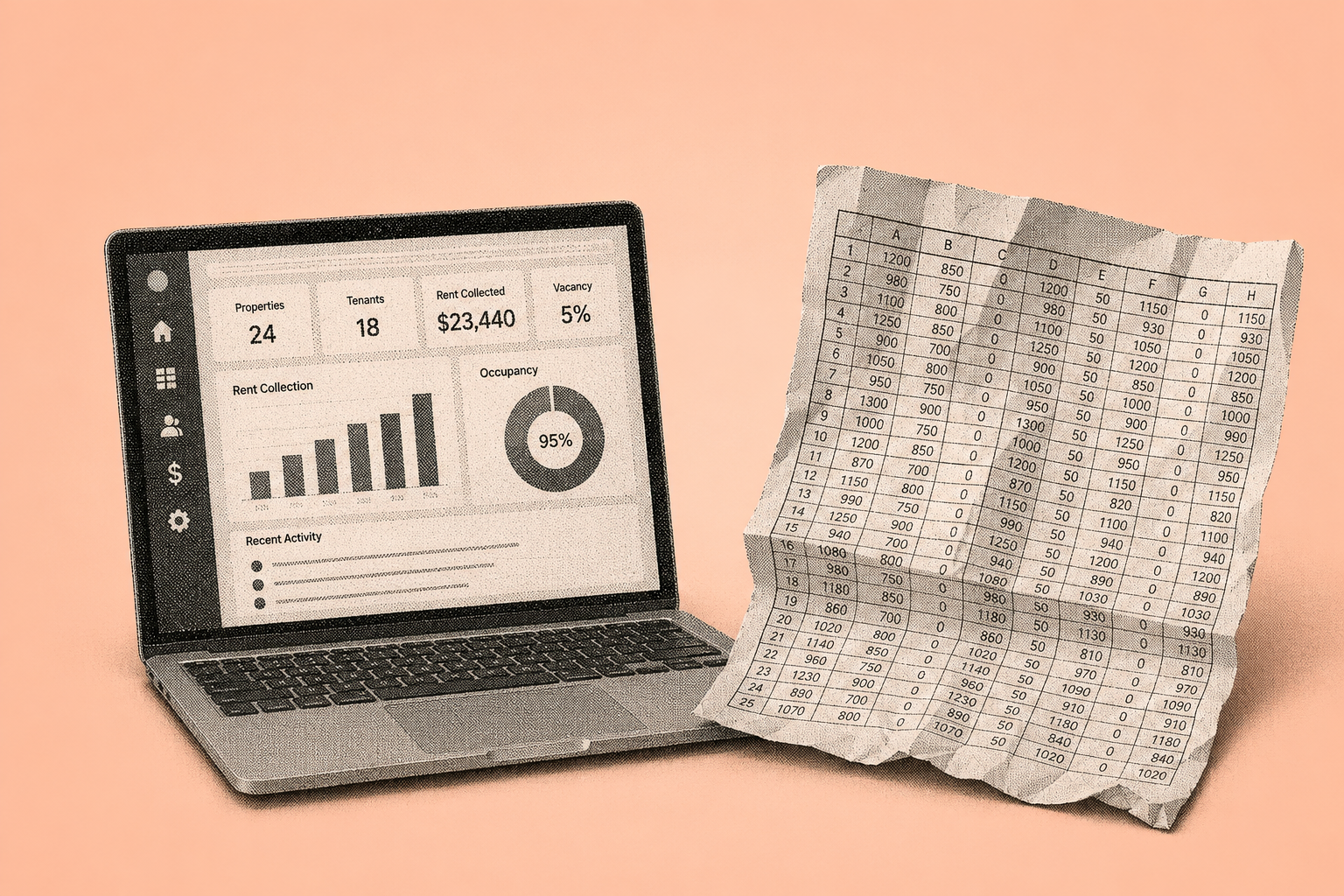
Shuk gives you those numbers without a spreadsheet rebuild. The Profit and Loss report shows income, expenses, and profit for any period, the Rent Roll shows every unit with its renter, lease terms, and rent, and Schedule E-aligned expense organization with digital receipts keeps costs sorted by property. Every report exports to Excel or PDF to share with a lender. Online rent collection with zero ACH transaction fees and autopay enrollment keeps more of each payment, and the Lease Indication Tool (LIT) provides early renewal intelligence starting six months before lease end through tenant polling and predictive lease renewal insights, so you can plan for move-outs before they become vacancies.
At as low as $2 per unit per month, with no setup fees and no contract, and with White Glove Onboarding included at no additional cost, Shuk makes tracking how financing affects every property feasible for landlords and property managers running 1 to 100 units.
Book a demo at shukrentals.com/book-a-demo to see how reports, rent collection, and the Lease Indication Tool work together so you can make financing decisions on real numbers.