

How to Manage Multiple Rental Properties: Systems That Actually Scale
The Breaking Point Most Landlords Hit (and How to Avoid It)
At 3 to 5 units, landlording feels manageable: a few digital payments, a short list of contractors, and a spreadsheet you update when you think of it. At 10 or more units, that same approach becomes a daily interruption machine: late-night maintenance texts, scattered lease PDFs, rent follow-ups you should have automated months ago, and bookkeeping that turns into a monthly scramble.
Here is the hidden problem: the work stops being tasks and becomes operations. Every new door multiplies exceptions: partial payments, recurring repairs, lease renewals, vendor invoices, and tenants who all communicate differently. The first thing that breaks is reliability: missed follow-ups, inconsistent screening steps, delayed maintenance coordination, and financial reporting that is always three weeks behind.
The difference between overwhelmed and in-control is whether your business runs on repeatable systems instead of memory. This guide lays out the exact processes and software capabilities that keep scaling, so you can manage 10 to 50 or more units without hiring a property manager.
What Scaling Actually Means for Independent Landlords
Scaling as an independent landlord is not about becoming a giant company. It is about building a stable operating stack that keeps performance consistent as volume rises: rent arrives on time, maintenance does not get lost, tenant communication stays professional, and your numbers are clean enough to make decisions (and survive tax season).
Most owner-operators hit predictable breakpoints:
10 to 15 units. Communication and maintenance scheduling begin to dominate your evenings and weekends.
15 to 25 units. Accounting cleanliness and document control become the bottleneck: receipts, invoices, owner draws, and security deposit records get messy.
25 to 50 or more units. You need delegation workflows (even if you are solo): vendors, virtual assistants, or a handyman must be able to act without you re-explaining everything every time.
That is why choosing tools is not the goal. The goal is to adopt property management systems (process plus software) that reduce decisions, enforce consistency, and create a single source of truth.
Build Your Single Source of Truth (Before Adding More Doors)
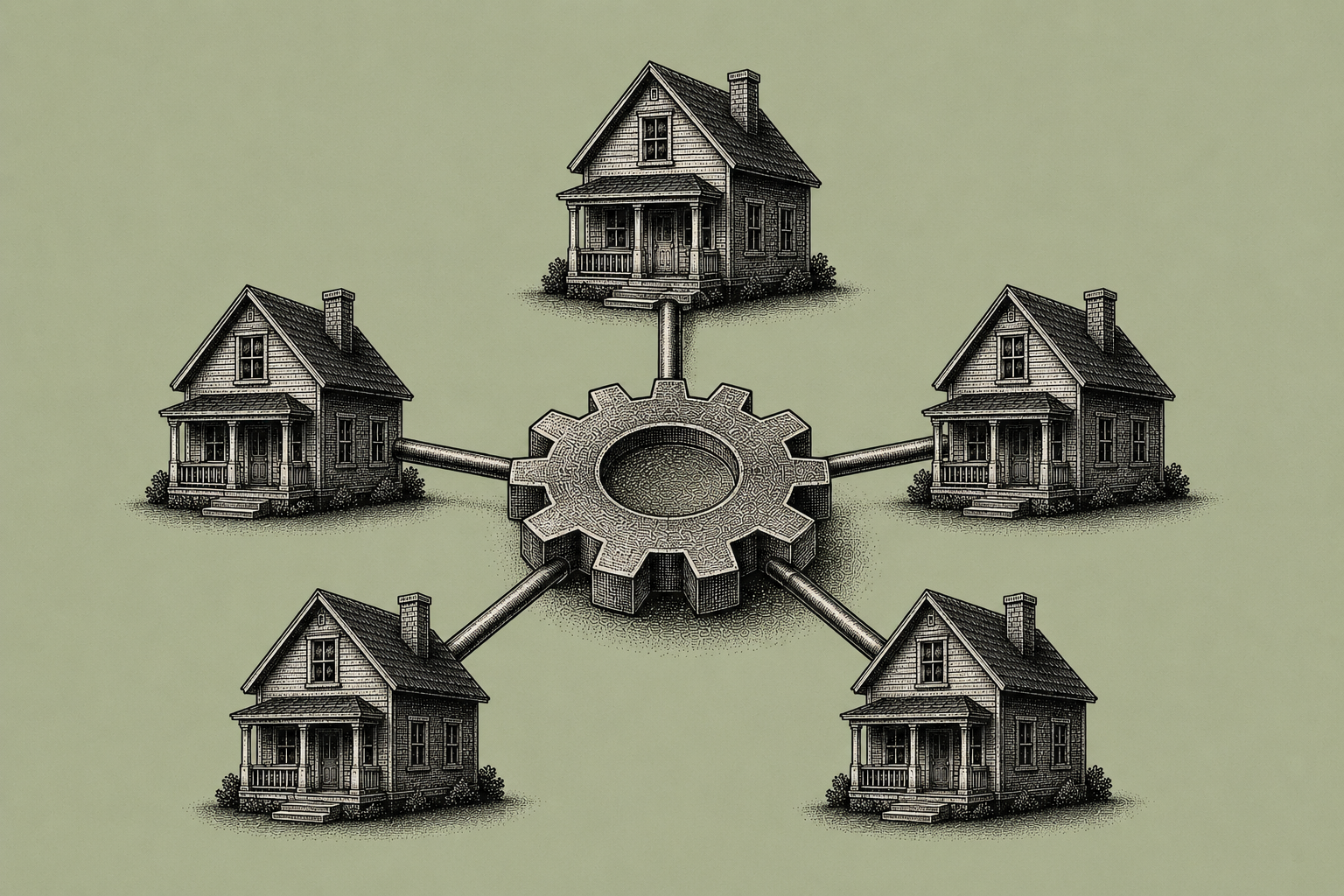
If your leases are in email threads, maintenance requests are in texts, and rent is tracked in a spreadsheet, scaling will feel like constant context switching. The first scalable move is consolidating your core records:
- Unit plus tenant profile: lease dates, rent amount, deposit, occupants, pets, appliances, and house rules acknowledgments.
- Document library: lease, addenda, move-in checklist, inspection photos, notices, vendor warranties.
- Event timeline: payments, late notices, maintenance requests, and completed work.
A practical target: you should be able to answer, in under 60 seconds, "What is the lease status, payment status, and open maintenance status for Unit 3B?"
Implementation tip: migrate only what you will actually use going forward: current leases, active tenants, and open work orders. Do not spend a weekend importing ten years of closed history unless you need it for compliance.
What Breaks First (and How to Reinforce It)
When portfolios grow past roughly 10 units, these are the first failure points:
Tenant communication splinters. Texts, calls, emails, and DMs create missed messages and inconsistent responses. Centralized messaging tied to each tenancy reduces time spent tracking conversations and creates a searchable record.
Maintenance turns into follow-up debt. The request is not the problem. You forgetting to ping the vendor, confirm access, and close the loop is the problem. A structured intake and tracking system is the fix.
Rent chasing becomes a recurring tax on your attention. Autopay and automated reminders dramatically change outcomes. Industry data consistently shows that tenants enrolled in autopay pay on time at dramatically higher rates than those who pay manually.
Bookkeeping becomes retroactive and error-prone. You can catch up later at 5 units. At 20, later never comes.
The fix is not work harder. The fix is building repeatable workflows so fewer issues depend on you remembering.
Automate Rent Collection (and Design Your Late-Rent Workflow Once)
Your rent system should do three jobs automatically: collect (online payments plus autopay), nudge (scheduled reminders before and after due date), and escalate (late fee rules plus notices plus payment plans).
Autopay is the anchor. When tenants are enrolled in autopay, the monthly rent cycle becomes a non-event instead of a week-long chase.
Here is a scalable late-rent workflow:
- Day minus 3: friendly reminder (automated)
- Day 1: confirmation plus link to pay (automated)
- Day 3: late fee applies plus formal notice drafted (auto-generated; you review)
- Day 5: call window task created plus note logged (system-generated task)
- Day 7: payment plan template offered (if applicable)
To scale, your rule is: you only intervene when the system flags an exception.
Cost context: Property management software is often priced as a per-unit subscription, while professional property management fees commonly run 8% to 12% of monthly rent (with typical standards around 10%) plus leasing, setup, and renewal add-ons that can materially increase the total. Automation is how you keep the margin without sacrificing professionalism.
Treat Maintenance Like a Ticketing System (Not a Conversation)
The maintenance system that scales has five non-negotiables:
- Intake form (tenant submits issue with photos/video)
- Triage rules (emergency vs. routine; auto-tagging by category)
- Vendor assignment plus scheduling
- Status visibility for tenants (Received, Scheduled, In progress, Completed)
- Closeout with cost, invoice attachment, and notes for future patterns
If your process is "tenant texts you, you text vendor, vendor calls you, you call tenant," you have built a human router. That will not survive 30 to 50 units.
Delegation trick that keeps you solo: give vendors controlled access to only what they need: work order details, access instructions, and completion notes, so they can act without a phone chain.
Create a Tenant Communication Hub with Response Standards
Tenants do not just want fast responses. They want clear, consistent ones. Centralized, in-app messaging tied to the lease and unit record reduces time spent tracking conversations and keeps everything searchable.
Set two simple standards:
- Response windows: emergencies within 1 hour; routine within 1 business day
- Templates: late rent, maintenance scheduled, entry notice, renewal offer, noise complaint
Templates reduce emotional labor. They also protect you if disputes arise: your tone stays consistent, and your records are searchable.
Reporting Plus Accounting: Close Your Books Monthly
Scaling requires you to know, not guess:
- Rent collected vs. scheduled
- Delinquency and aging
- Maintenance spend by property and by unit
- Vacancy loss (days vacant)
- Net cash flow by property (not just in the bank)
The scalable habit is a monthly close: reconcile rent deposits, match vendor invoices to work orders, categorize expenses consistently, and export a P&L by property. If you wait until tax season, you will pay in stress and mistakes.
Example: 47-Unit Landlord Managing Solo with Automation
A self-managing landlord in the Midwest grew from 12 to 47 units (mix of small multifamily and scattered single-family). At roughly 18 doors, they hit the classic wall: late rent follow-ups, vendor coordination, and "Where is that lease?" chaos. Instead of hiring a manager, they built a simple operating system:
Rent: 92% of tenants enrolled in autopay within 6 months (incentivized by no fee plus preferred maintenance scheduling windows). Late rent dropped to a short monthly exception list.
Maintenance: every request required a form plus photos; vendors received work orders with access notes. Anything under a preset dollar threshold was pre-approved to avoid "can I proceed?" calls.
Communication: all tenant communication routed through one hub; they used templates for 80% of messages.
Time: their weekly landlord admin compressed into two blocks (Tuesday/Thursday).
The key takeaway: they did not eliminate work. They eliminated repeat decisions.
Checklist: Your 10 to 50 Doors Scaling Playbook
Foundation (Week 1 to 2)
- Pick one hub for units/tenants/documents (single source of truth)
- Create naming conventions (Property-Unit, vendor names, document tags)
- Import active leases plus tenant roster only (skip deep history)
Rent (Week 2 to 3)
- Turn on online payments plus autopay
- Write your late-rent policy workflow (reminders, late fees, notices)
- Create 3 message templates: reminder, late notice, payment plan option
Maintenance (Week 3 to 4)
- Require maintenance intake forms plus photos
- Define triage categories: emergency / urgent / routine
- Standardize vendor dispatch: work order, access, completion note, invoice attached
- Add a spending threshold for pre-approval to reduce decision calls
Communication (Ongoing)
- Route tenant messages into one communication hub
- Set response standards plus office hours
- Template your top 10 messages (renewal, entry notice, rules, utilities)
Reporting (Monthly Close)
- Reconcile rent and bank deposits
- Review delinquency list plus follow-up tasks
- Export P&L by property, maintenance spend by category, vacancy days
- Set next month's preventative maintenance tasks
Frequently Asked Questions
How many rentals can one person manage without a property manager?
It depends on systems, unit type, and tenant quality. In practice, many owners hit operational strain around 10 to 20 units if they are running on spreadsheets and texts. With automation (online rent collection, maintenance ticketing, centralized messaging), owners commonly manage 30 to 50 units without a full-time property manager.
Is property management software worth it versus hiring a manager?
If you are hands-on and want control, software can be a high-leverage middle ground. Property management fees commonly run 8% to 12% of monthly rent, plus leasing, setup, and renewal fees that can stack up. Software is typically a predictable per-unit subscription, and the ROI comes from fewer late payments and less time lost.
Will tenants actually use autopay and portals?
Yes, if onboarding is simple and you set expectations at lease signing. Autopay is strongly associated with on-time rent performance across industry data.
What features matter most when comparing property management systems?
Prioritize: autopay plus reminders, maintenance ticketing with vendor workflows, centralized communication, and clean reporting/accounting exports. Extras do not matter if the basics do not reduce exceptions.
What to Do Next
If you are managing 10 to 50 or more doors, you do not need more hustle. You need property management systems that reduce exceptions and keep everything in one place: rent collection automation, maintenance tracking, communication history, and reporting you can trust.
Shuk is built to be that operating system. Online rent collection with zero ACH transaction fees and configurable late fees applied automatically handles the rent cycle. Maintenance request tracking lets tenants submit issues with photos, videos, documents, and notes, with per-property history and document storage. Centralized in-app messaging with email and push notifications keeps every conversation time-stamped and organized by tenancy. Payment and income reports are filterable by property, tenant, and date and exportable to PDF or Excel so your monthly close takes minutes, not hours. Schedule E-aligned expense organization with digital receipts keeps your bookkeeping clean year-round. And the Lease Indication Tool (LIT) gives you early renewal intelligence starting six months before lease end, so you know which tenants are likely to stay and which units need attention before the vacancy hits.
At as low as $2.00 per unit per month with no setup fees, zero ACH transaction fees, and White Glove Onboarding included at no additional cost, Shuk gives landlords and property managers running 1 to 100 units a connected system for rent, maintenance, messaging, and reporting.
Book a demo at shukrentals.com/book-a-demo to see how the full operating system works so you can scale like a professional manager without giving up control.