


Note: This article is for general education only and is not legal advice. Landlord-tenant law varies significantly by state and municipality, and specific retaliation rules, presumption windows, and remedies differ from one jurisdiction to the next. Consult a qualified local attorney before taking any action based on this information.
Retaliation claims are one of the most common ways a routine landlord decision, a rent increase, a non-renewal, an eviction filing, turns into a legal dispute. Most landlords who end up defending a retaliation claim did not set out to punish a renter for exercising a right. They took an action that was legitimate on its own, but the timing made it look like payback. Understanding what the law treats as retaliation, and what it does not, is one of the most practical risk-reduction skills a self-managing landlord can build.
What Landlord Retaliation Means Under the Law
In most United States jurisdictions, landlord retaliation law follows a simple structure. It prohibits a landlord from taking an adverse action against a renter because that renter exercised a legally protected right. The law is not concerned with whether the landlord's underlying reason for an action would otherwise be legal. A rent increase is ordinarily well within a landlord's discretion. An eviction for a legitimate reason is ordinarily well within a landlord's rights. What retaliation law adds is a second question: was this particular action taken, at least in part, because of something the renter did that the law protects.
Adverse actions that commonly appear in retaliation claims include:
- Filing an eviction, including a notice to quit or a non-renewal of a month-to-month tenancy.
- Raising rent, especially a rent increase that is unusual in size or timing compared to the landlord's normal practice.
- Reducing services, such as suddenly restricting parking, storage, or common-area access that the renter previously had.
- Refusing to renew a lease at the end of its term.
- Increasing scrutiny or enforcement of minor lease terms that were previously overlooked.
Protected Activities That Trigger Retaliation Protections
The activities that trigger retaliation protection are, broadly, anything the law treats as a renter's right to exercise without fear of punishment. Common examples across most states include:
- Reporting a habitability issue, code violation, or unsafe condition to a local code enforcement agency, building inspector, or health department.
- Requesting repairs from the landlord, particularly in writing.
- Joining or organizing a tenants' union or renter association.
- Exercising a legal right to withhold rent or use rent to make repairs, in the states that permit it.
- Complaining to a government agency about the landlord's conduct, including a fair housing complaint.
- Testifying or participating in a legal proceeding involving the landlord, including as a witness for another tenant.
A useful way to think about it is that retaliation law protects the renter's ability to use the legal system and the landlord-tenant relationship's built-in complaint channels, not their behavior generally. A renter who is simply a poor tenant for unrelated reasons is not engaged in protected activity, and an adverse action taken for those unrelated reasons is not retaliation.
The Presumption of Retaliation Window
Because retaliatory intent is difficult to prove directly, many states use a timing-based presumption to help renters bring a claim. Under this common pattern, if a landlord takes an adverse action against a renter within a set window after the renter engaged in protected activity, often somewhere in the range of 90 to 180 days, the law presumes the action was retaliatory. The burden then shifts to the landlord to show a legitimate, non-retaliatory reason for the action.
This presumption window is a general pattern seen across many jurisdictions, not a fixed federal rule. The exact length of the window, whether it applies to all adverse actions or only certain ones, and what a landlord must show to rebut it, all vary by state and sometimes by city. Some jurisdictions extend the presumption further for repeated adverse actions or when a landlord has a documented pattern of similar timing with other renters. Because of this variation, a landlord should always confirm the specific presumption period and its exceptions under their own state statute and local ordinance before relying on any general timeline.
The presumption is rebuttable, not automatic. A landlord can still prevail even if an action falls inside the window, provided the landlord can show the action was based on an independent, legitimate reason unrelated to the protected activity.
What Is Not Retaliation
Retaliation law does not strip a landlord of the ability to run their business. A landlord retains the right to take action against a renter for legitimate, well-documented reasons, even if the timing happens to follow protected activity. Common examples of legitimate, non-retaliatory grounds include:
- Nonpayment of rent. A landlord can pursue nonpayment remedies regardless of when a renter last made a complaint, provided the nonpayment is real and documented.
- Lease violations. Unauthorized occupants, unauthorized pets, property damage, or other documented violations of the lease terms remain valid grounds for enforcement or non-renewal.
- A planned sale of the property. If a landlord is selling the unit, ending a tenancy, or restructuring occupancy for reasons unrelated to the renter's conduct, that decision is not retaliatory.
- Owner move-in, where local law permits it, when the landlord or a qualifying family member genuinely intends to occupy the unit.
- Expiration of a fixed-term lease with no renewal obligation, in jurisdictions that do not require automatic renewal, combined with a business reason unrelated to the renter's protected activity.
The distinguishing factor in every case is whether the landlord has an independent, provable reason for the action that exists apart from the renter's protected activity, and whether that reason is documented well enough to stand on its own.
How the Timing and the Reason Interact
Most retaliation disputes come down to a straightforward evidentiary contest. The renter shows protected activity and adverse action within a suspicious window. The landlord then needs to show that the real reason for the action is unrelated to that activity, and that the reason predates or is independent of the complaint. A landlord who raised rent on a fixed annual schedule, well before the complaint was ever filed, is in a much stronger position than one who raised rent for the first time in three years two weeks after a code enforcement inspection. The strength of a landlord's position in these disputes is almost entirely a function of what was written down, and when.
Practical Steps to Avoid the Appearance of Retaliation
A landlord does not need to abandon legitimate business decisions to reduce retaliation risk. The goal is to make sure that when timing looks suspicious, the record makes the real reason obvious.
- Document the reason for every adverse action at the time it is made, not after a dispute arises. A rent increase notice, a non-renewal letter, or a lease enforcement notice should reference the specific, factual basis for the decision.
- Avoid taking an adverse action immediately after a renter's complaint or repair request unless there is an independent, provable reason that already existed before the complaint. If a nonpayment or lease violation issue was already in progress, note the date it began.
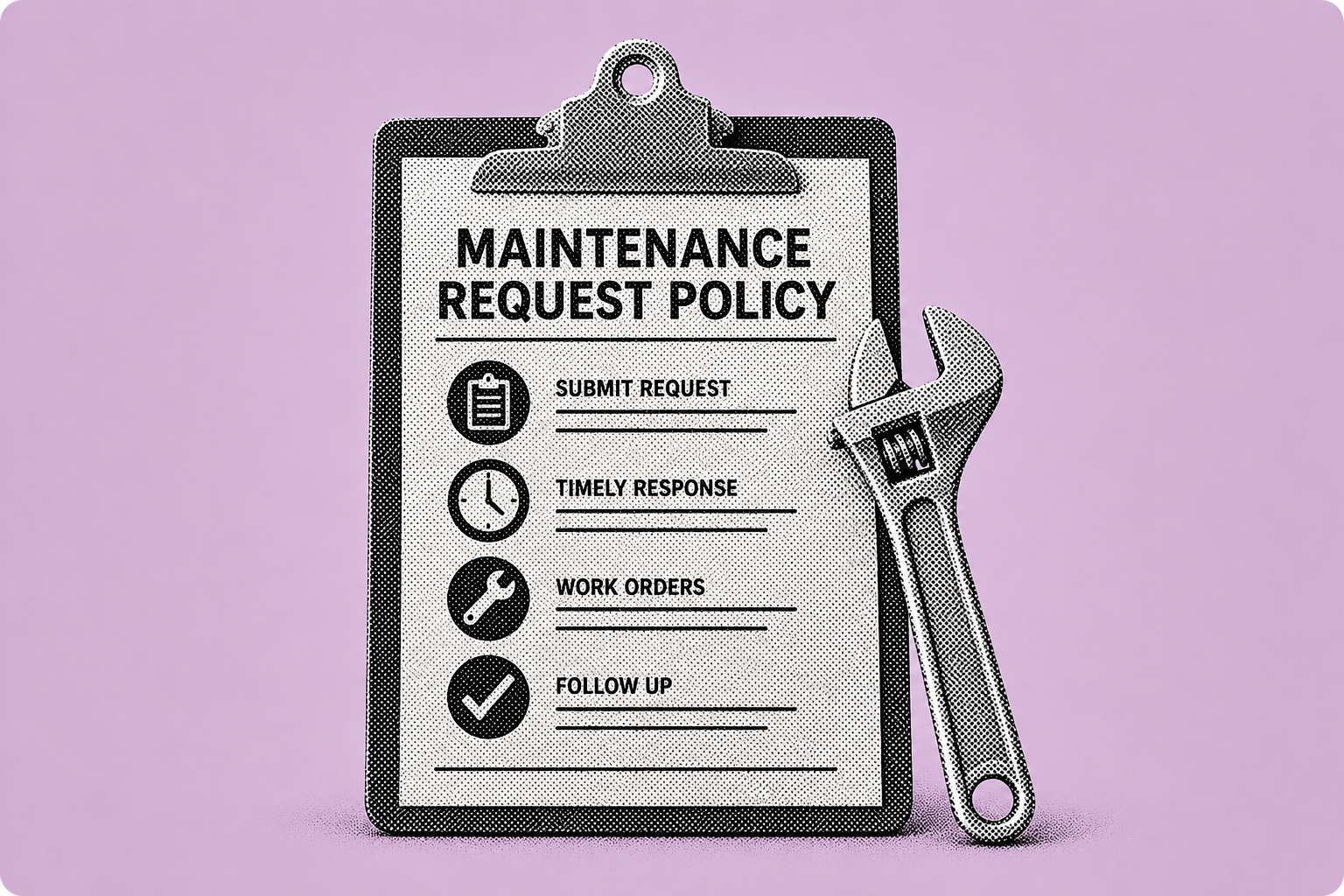
- Keep a written maintenance and communication record for every unit and every renter. A consistent history of how repair requests were handled, and how quickly, is one of the strongest tools a landlord has to show that a particular request was treated like any other, not singled out for punishment.
- Apply policies consistently across renters. If one renter faces stricter enforcement of a rule than others in similar circumstances, that inconsistency becomes evidence in a retaliation claim.
- When a rent increase, non-renewal, or enforcement action does happen to fall close in time to a complaint, be prepared to show the independent basis for it clearly and with dates.
Frequently Asked Questions
What counts as retaliation by a landlord?
Retaliation generally means an adverse action, such as eviction, a rent increase, a service reduction, or a refusal to renew, taken because a renter exercised a legally protected right, such as reporting a habitability issue or requesting repairs.
How long is the presumption of retaliation window?
Many states use a general pattern of roughly 90 to 180 days after protected activity, but the exact length, and whether it applies at all, varies by state and municipality, so it should be confirmed locally.
Can a landlord still evict a renter who recently filed a complaint?
Yes, if the eviction is based on a legitimate, independent, and well-documented reason such as nonpayment of rent or a lease violation that exists apart from the complaint.
What is the best way for a landlord to protect against a retaliation claim?
Document the factual basis for every adverse action at the time it happens, keep a consistent maintenance and communication history, and apply policies the same way across all renters.
What to Do Next
The hardest part of a retaliation dispute is rarely the law itself. It is reconstructing, months after the fact, exactly what happened, when a repair was requested, when it was addressed, what was said in each message, and why a particular decision was made on a particular date. A landlord who is managing units informally, through scattered texts, phone calls, and paper notes, often cannot produce that record when it matters most, even when the underlying decision was completely legitimate.
Shuk supports the parts of that record a self-managing landlord actually controls day to day. Centralized in-app messaging keeps every conversation with a renter in one place, with a timestamped history and email and push notifications, so there is a clear, dated record of what was said and when. Maintenance request tracking follows each request from submission through completion with a full history log, so a landlord can show exactly when a repair was reported and how it was handled, rather than relying on memory. Per-property documentation storage keeps leases, notices, and related records organized and attached to the correct unit, so the paperwork behind a decision is not scattered across email folders and desk drawers.
At as low as $2 per unit per month, with no setup fees and no contract, and with White Glove Onboarding included at no additional cost, Shuk makes consistent, timestamped recordkeeping feasible for landlords and property managers running 1 to 100 units.
Book a demo at shukrentals.com/book-a-demo to see how in-app messaging history, maintenance request tracking, and document storage work together so every action a landlord takes has a clear, dated record behind it.