
Property Management Software
A Practical Guide for Landlords and Property Managers Who Want Less Chaos (and Better Tenants)
Spreadsheets, email, and manual reminders fall apart once you're past a few units. This hub explains what property management software actually does and how to evaluate the platforms built for independent landlords.
If you manage a smaller portfolio, you may want to start with software designed specifically as property management software for small landlords.
What Is Property Management Software?
Property management software is a digital platform that helps landlords manage the full lifecycle of a rental, from tenant onboarding to rent collection, maintenance, renewals, and reporting.
Instead of relying on disconnected tools, landlords use software to:
- Collect rent online
- Track leases and renewals
- Manage maintenance requests
- Store documents and records
- Communicate with tenants consistently
For independent landlords and property managers, software acts as the operating system for rental operations.
Why Small Landlords Are Adopting Property Management Software
Across the U.S., adoption of cloud-based tools among small landlords has increased rapidly as renters expect online payments, digital communication, and faster service.
Landlords turn to property management software to:
- Reduce late payments and follow-ups
- Coordinate maintenance more efficiently
- Maintain clean, searchable records
- Apply policies consistently for compliance
The shift is driven less by “technology trends” and more by practical operational pressure.
How Property Management Software Brings Order to Rental Operations
Property management software works best when it replaces entire workflows, not just one task. The most effective platforms cover the full tenant lifecycle, and our Best Property Management Software comparison evaluates which ones do it best.
The Core Rental Workflow
A complete system typically supports:
- Tenant onboarding and screening
- Lease creation and signing
- Online rent collection and reminders
- Maintenance request tracking
- Accounting and reporting
- Lease renewals and record retention
When these steps live in one system, landlords gain clarity, speed, and consistency.
{
"@context": "https://schema.org",
"@type": "FAQPage",
"mainEntity": [
{
"@type": "Question",
"name": "What is property management software?",
"acceptedAnswer": {
"@type": "Answer",
"text": "Property management software is a digital platform that helps landlords manage rent collection, leasing, maintenance, communication, and records from one system."
}
},
{
"@type": "Question",
"name": "Is property management software useful for small landlords?",
"acceptedAnswer": {
"@type": "Answer",
"text": "Yes. Small landlords benefit from automation, better organization, and reduced administrative workload."
}
},
{
"@type": "Question",
"name": "What features does property management software include?",
"acceptedAnswer": {
"@type": "Answer",
"text": "Most platforms include online rent collection, lease tracking, maintenance management, tenant communication, and reporting tools."
}
},
{
"@type": "Question",
"name": "Does property management software help with compliance?",
"acceptedAnswer": {
"@type": "Answer",
"text": "Software supports consistent documentation and workflows, which helps landlords stay organized for compliance, though legal responsibility remains with the landlord."
}
}
]
}
Shuk helps landlords and property managers get ahead of vacancies, improve renewal visibility, and bring more predictability to every lease cycle.
Book a demo to get started with a free trial.
The following guides explore property management software from different angles—selection, features, leasing, rent collection, and practical use cases. Together, they help landlords understand how software fits into real rental operations and where it delivers the most value. Each guide focuses on a specific decision or workflow, so you can read them independently or as a complete learning path.
The Hidden Cost of Losing Track
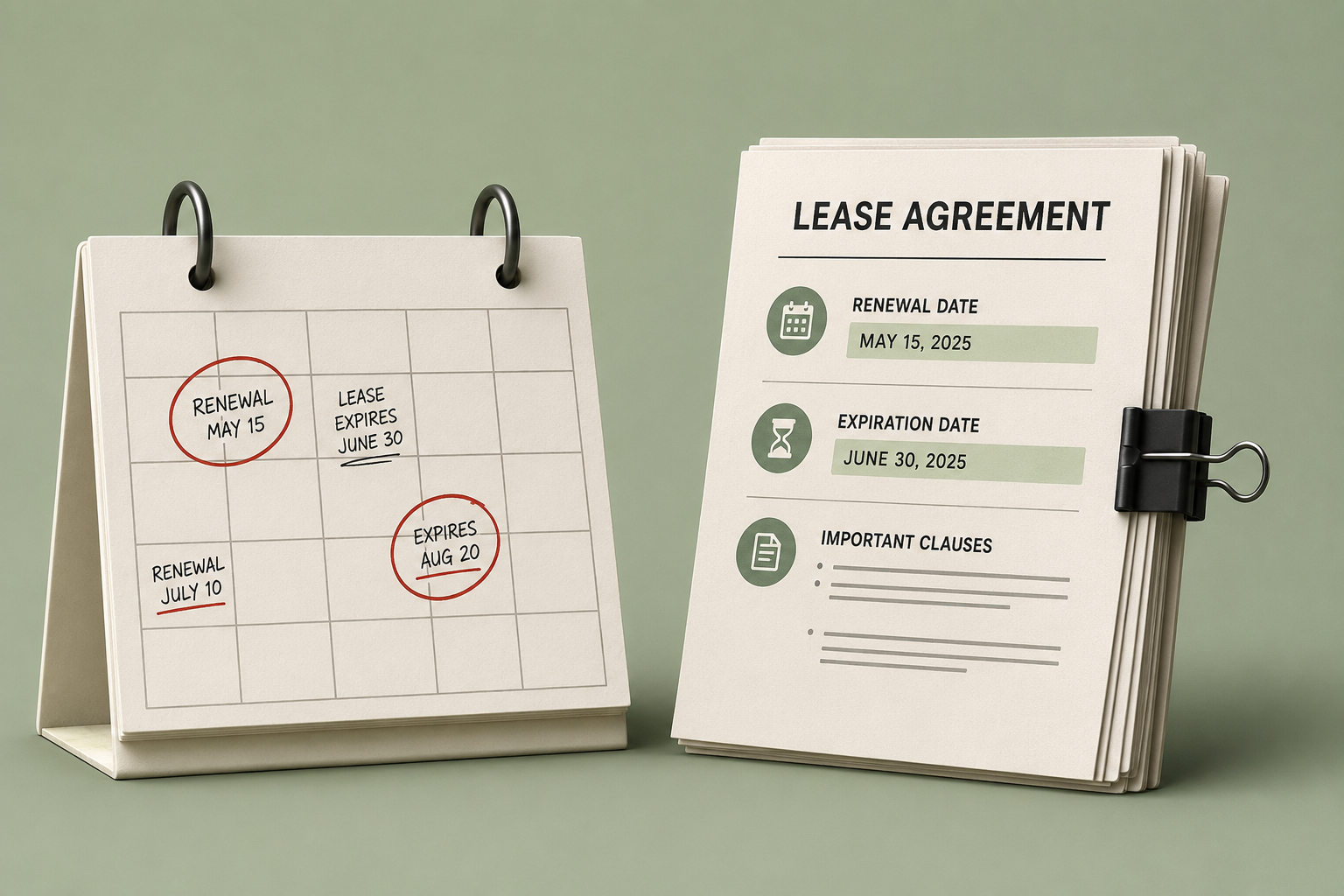
If you are managing 10 to 200 units, you already know the pattern: one spreadsheet tab per property, a folder of PDFs, a few paper leases in a drawer, and reminders living in your head. It works until it does not. A renewal date slips. A notice window closes. A clause gets missed. Suddenly you are facing an avoidable vacancy, an awkward tenant conversation, or a legal mess that starts with one simple truth: you did not have a system.
That is exactly what lease management software is built to prevent. Not by "digitizing paperwork," but by giving you a reliable workflow: one source of truth, automated timing, and documented actions.
Note: This article provides general education about lease management software, not legal advice. Notice requirements, renewal timelines, and holdover rules vary by state and municipality.
The Real Cost: Vacancy, Legal Exposure, and Tenant Friction
Start with vacancy math. In June 2026, national median rent was reported around $1,385. If your unit rents for $2,500/month, one empty month is over $80 per day in lost rent. That is before you add marketing, cleaning, repairs, or your time.
Industry estimates put average tenant turnover costs around $2,500 per unit. A missed renewal can stack up to: lost rent ($2,500 for one month vacant) plus turnover cost ($2,500) equals $5,000 for one unit. Multiply that by two preventable misses in a year and you are looking at $10,000, more than many landlords spend on tools across their whole portfolio.
Legal risk can be worse. If a lease expires and your next steps are not documented, or you mishandle notice, holdover situations can escalate. In some jurisdictions, statutes allow landlords to pursue double rent for unlawful holdover (for example, New Jersey's double rent law), and Florida statutes can allow up to 200% in certain holdover circumstances.
What Lease Management Software Actually Does
Good lease management software combines five practical functions: centralized cloud storage for leases, addenda, notices, and key communications. Automated reminders tied to lease dates (expiration, notice windows, rent changes, inspections). Renewal workflows that move a lease from "upcoming expiration" to "tenant intent captured" to "offer sent" to "signed." Digital signature support so renewals do not stall. Audit trail showing who sent what, when, and what the tenant acknowledged.
Must-Have Feature Checklist
Mobile access. Multi-property dashboard. Customizable alerts (30/60/90+ day reminders). Renewal tracking status (intent requested, intent received, offer sent, signed). E-signature integration (or built-in e-signing). Role permissions. Data export (CSV/PDF). Tenant-facing portal or messaging. Document templates (renewal letters, non-renewal notices, rent change notices).
Make sure the software makes it easy to store and search clauses, not just upload a PDF. When you are juggling parking addenda, pet terms, utilities, and special concessions, fast retrieval prevents both revenue leakage and inconsistent enforcement.
Spotlight: Shuk's Lease Indication Tool (LIT)
Most landlords lose renewals for one simple reason: you start too late. Shuk's Lease Indication Tool (LIT) provides early renewal intelligence starting six months before lease end, polling tenants about renewal intentions and feeding that directly into the renewal workflow.
Practical example. Maria manages 16 units in two small buildings. In her spreadsheet system, she used to notice expirations about 45 days out, often after her local notice window had effectively started. With LIT polling early, she learns that two tenants are "unsure" and one plans to move. That gives her time to address maintenance/parking concerns for the "unsure" tenants, prepare a renewal offer without rushing, and start marketing the moving unit sooner to reduce downtime.
Instead of reacting to vacancies, you are forecasting them and acting while you still have leverage.
From Spreadsheet to Software in 30 Days
Days 1 to 3: Build your import file. Unit address, tenant names, lease start/end, rent amount, deposit, notice period, special clauses, document links.
Days 4 to 10: Clean and tag. Standardize date formats, confirm expiration dates against signed lease PDFs, tag by property and lease type.
Days 11 to 15: Configure alerts and rules. Set alert logic around typical notice periods (30/60/90-day timelines depending on jurisdiction). Use multiple reminders: 90 days (intent), 60 days (offer), 30 days (signature deadline).
Days 16 to 20: Upload documents plus permissions. Attach signed leases and addenda, set role permissions.
Days 21 to 25: Onboard tenants. Tell tenants what will change: "You will get a renewal intent prompt around 90 days before expiration."
Days 26 to 30: Run your first renewal cycle (pilot). Pick the next 5 to 10 expirations and run them end-to-end inside the system.
Frequently Asked Questions
How much does a missed renewal actually cost?
At $2,500/month rent, one vacant month is over $80/day in lost rent. Add turnover costs (often estimated around $2,500 per unit), and a single preventable miss can cost $5,000. Two misses in a year can exceed $10,000.
Do I need lease management software if I only have a few properties?
Even with a small portfolio, missed notice windows and expired leases create the same vacancy and legal risks. The question is not portfolio size but whether your current system reliably prevents missed dates.
What is the difference between lease management software and a CRM?
A CRM tracks prospects and communication. Lease management software tracks the full lease lifecycle: signed documents, clause details, expiration dates, notice windows, renewal workflows, and audit trails. Some platforms combine both.
What to Do Next
Shuk's Lease Indication Tool (LIT) provides early renewal intelligence starting six months before lease end, so you know which leases are approaching decision points well before notice windows open. E-signature through our Adobe-powered integration handles renewals and addenda. Document storage keeps signed leases, notices, and communication records organized per unit. Centralized in-app messaging with email and push notifications keeps renewal conversations time-stamped. And White Glove Onboarding is included at no additional cost so your migration from spreadsheets does not stall.
At $5 per unit per month with no setup fees, Shuk makes lease lifecycle management feasible for landlords running 1 to 100 units.
Book a demo at shukrentals.com/book-a-demo to see how LIT, e-signature, document storage, and messaging work together so your renewals run as a system.
Spreadsheets and Venmo Work Until They Do Not
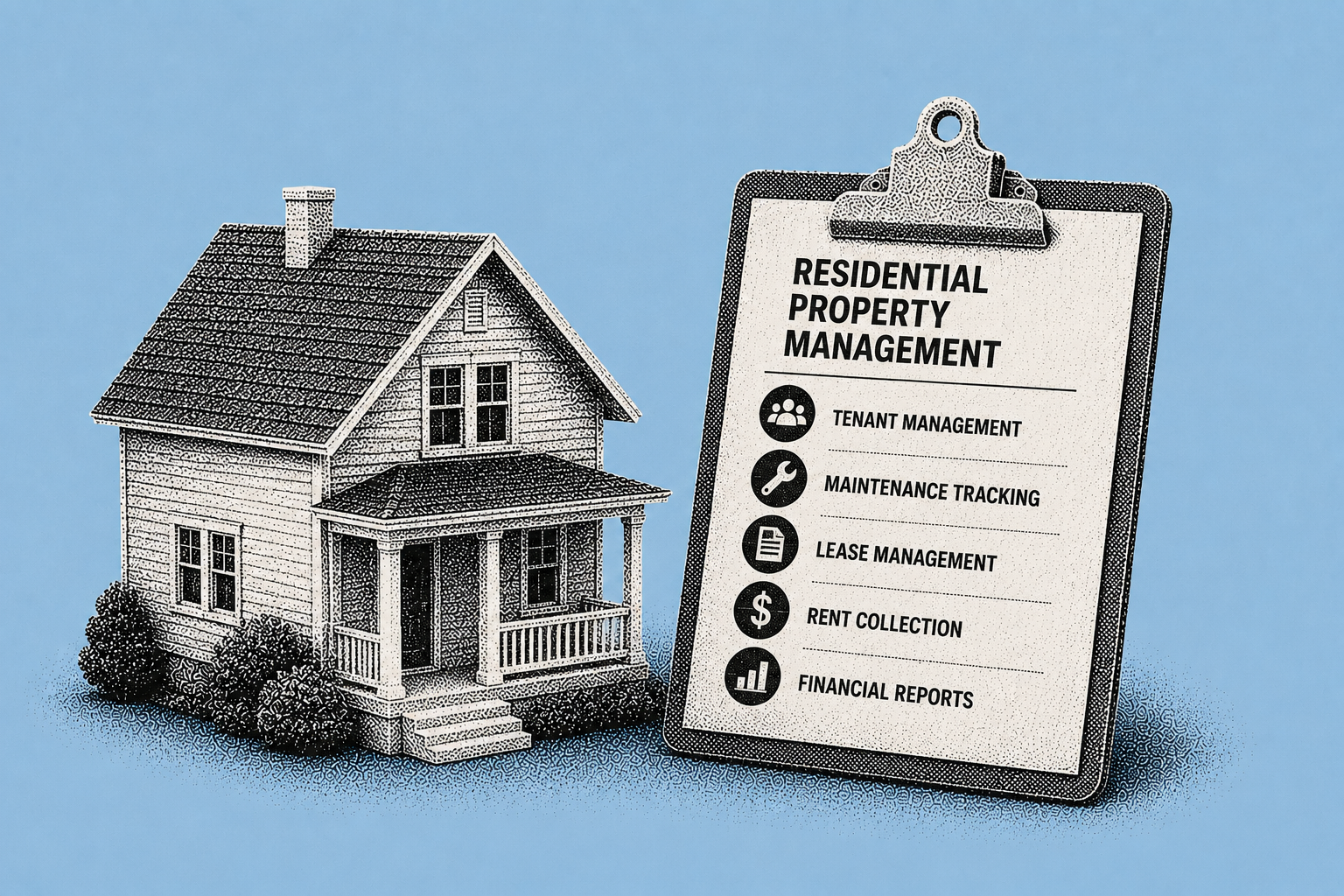
The moment you are managing late rent, repair requests, lease renewals, and tax receipts across multiple units, "good enough" systems start costing real time and money. That is why more independent landlords are looking for residential property management software that handles the basics without enterprise pricing or complexity.
Small landlords are not a niche. Nearly 46% of U.S. rental units are in properties with one-to-four units, and roughly 70% of those are owned by individual investors, often self-managing. With operating costs rising and rents under pressure, efficiency matters more than ever.
Note: This article provides general education about residential property management software options. Pricing, features, and terms change frequently. Verify current details directly with each platform.
Six Must-Have Features
1) Online rent collection (with automation). Online rent collection with autopay and automatic reminders reduces friction and helps stabilize cash flow.
2) Tenant screening that is consistent and defensible. Screening tools help standardize decision-making and reduce risk. Eviction is often cited around $3,500 per case in industry reporting, making better screening economics hard to ignore.
3) Lease management (templates, e-sign, renewals). Digital lease storage, e-signature, and renewal reminders reduce "calendar chaos."
4) Maintenance tracking. Centralizes requests, keeps a time-stamped record, and reduces repeat follow-ups. Only 16.2% of landlords report using digital systems for maintenance tracking per Avail's 2026 survey, suggesting a big opportunity.
5) Expense tracking (tax-ready records). Helps you categorize costs, measure property performance, and keep cleaner records.
6) Tenant communication (a single, searchable channel). A built-in message hub keeps communication documented and searchable.
Comparison: Buildium vs. TurboTenant vs. RentRedi vs. Shuk
Buildium. Feature-rich, often best for larger portfolios or managers who want deep accounting and workflows. Pricing starts around $55/month (Essential) up to roughly $400/month (Premium). ACH fees vary by plan.
TurboTenant. Popular with first-time landlords because a freemium tier lowers the barrier to entry. Free tier; roughly $149/year (Essentials) to roughly $199/year (Pro). Payment processing and support experiences vary.
RentRedi. Mobile-first and generally affordable. Roughly $12/month billed annually. Rent collection with convenience fees; maintenance requests via app.
Shuk Rentals. Purpose-built for landlords under 100 units. $5 per unit per month with no setup fees and zero ACH transaction fees. Differentiators: Lease Indication Tool (LIT) for early renewal intelligence, Two-Way Reviews, Year-Round Marketing, and White Glove Onboarding included at no additional cost.
Why Shuk Stands Out
Shuk's zero ACH transaction fee rent collection is a practical advantage for portfolios where every recurring fee hits your bottom line. White Glove Onboarding accelerates real adoption instead of shelfware. And Shuk is purpose-built for portfolios under 100 units, which means product decisions and support are aligned with how independent owners actually operate.
Frequently Asked Questions
Which software is best for 1 to 5 units?
Prioritize simplicity: rent collection, screening, and lease storage. A demo or trial matters because you will know fast if tenants will use it. At this size, fee transparency is critical since transaction fees on a small portfolio can exceed subscription costs.
When does Buildium make more sense than Shuk?
Buildium is often the better fit for larger portfolios (50+ units) or property managers who need deep accounting, custom workflows, and integrations. For landlords under 100 units who prioritize cost clarity and fast setup, Shuk is purpose-built for that stage.
Do I really need maintenance tracking software?
With only 16.2% of landlords using digital maintenance tracking, most are still handling repairs through texts and calls. A single documented channel reduces follow-ups, supports deposit deductions at move-out, and improves tenant satisfaction, which is strongly linked to renewals.
What to Do Next
At $5 per unit per month with no setup fees, zero ACH transaction fees, and White Glove Onboarding included at no additional cost, Shuk is built for small residential landlords who want predictable costs and fast setup.
Book a demo at shukrentals.com/book-a-demo to see how Shuk compares for your portfolio.
The Real "Landlord Tax" Is Admin
If you self-manage 1 to 20 units, you already know the real "landlord tax" is not just repairs. It is admin. Rent comes in through one system, expenses live in a folder (or your inbox), and your numbers end up in a spreadsheet and a ledger that never quite match. Every month, you re-enter the same data, hunt down missing transactions, and hope you categorized everything correctly for Schedule E.
Note: This article provides general education about integrated property management and accounting software. Error rates and time estimates are from industry reporting and academic research; your results will vary.
Why Separate Tools Create Double-Entry Headaches
When you use separate systems, spreadsheets for tracking, a QuickBooks-style tool for accounting, and a payment app for rent, you create the same problem three different ways: duplicate data entry.
The typical monthly workflow: Export rent payments from your rent collection tool. Manually match them to bank deposits. Enter the same income again into your accounting software. Enter expenses from receipts, then reconcile bank feeds, then fix mis-categorizations. Rebuild reports at tax time because the spreadsheet and ledger do not agree.
This is not just annoying. It is risky. Spreadsheet research consistently finds high error prevalence: one widely cited finding is that 94% of business spreadsheets contain critical errors, and accounting-focused analyses often report roughly 88% contain human errors such as misclassification, duplication, and formula mistakes. A 2024 Gartner survey reported that 18% of accountants make financial errors daily, and over a third report making multiple errors weekly, often tied to workload and capacity constraints.
Separate tools force you into being the "integration layer." That costs time, and it raises the chance of mis-posted rent, duplicated expenses, or messy categories when Schedule E season arrives.
What Integrated Software Actually Does
Integrated software fixes the root cause: fragmentation. When the platform is unified: rent collection automatically becomes accounting entries, expenses flow into the same ledger with consistent categories, reports are generated from live data, and reconciliation becomes a check, not a scavenger hunt.
Key Features to Demand
Automated rent collection with clear payment records. Expense categorization that stays consistent. Financial reports you will actually use (P&L by property/unit, rent roll, export-ready summaries). Owner statements (even if you are the only owner). Bank-level security and controlled access.
How Shuk Solves It
Shuk Rentals combines property management workflows with financial tracking in one place. Online rent collection with zero ACH transaction fees means rent payments create clean income records automatically. Schedule E-aligned expense organization with digital receipts keeps operating costs categorized consistently. Payment and income reports filterable by property, tenant, and date and exportable to PDF or Excel give you one set of numbers you can trust. Security deposit tracking keeps deposits organized per unit/property.
ROI: Hours Saved, Fees Avoided, Errors Reduced
Conservative monthly admin tasks with separate tools: 1.5 to 2.5 hours matching rent payments to bank deposits, 1.5 to 3 hours entering/categorizing expenses, 1 to 2 hours reconciliation. That is roughly 4 to 7.5 hours/month. If integrated software cuts that in half, you save 2 to 4 hours/month. At $30/hour, that is $60 to $120/month, or $720 to $1,440/year. Add ACH fee savings (10 units at $1.50 average fee times 12 months equals $180/year) and the ROI exceeds the subscription cost for most portfolios.
Frequently Asked Questions
I only have a few units. Do I really need integrated software?
Yes, because the pain is not unit count. It is tool sprawl. Even with 2 to 5 units, duplicating rent and expense entries across spreadsheets and accounting tools creates errors and wasted time.
What is the real advantage of $0 ACH fees?
Many landlords pay ACH as a flat fee (commonly around $1 to $2) or via percentage pricing depending on the processor. Over a year, that adds up. Shuk's zero ACH transaction fees remove that line item.
Will integrated software reduce mistakes or just move them around?
It reduces the biggest driver of errors: manual re-entry and spreadsheet formulas. Automation lowers exposure by reducing manual steps.
What to Do Next
At $5 per unit per month with no setup fees, and with White Glove Onboarding included at no additional cost, Shuk makes integrated property management and accounting feasible for landlords running 1 to 100 units.
Book a demo at shukrentals.com/book-a-demo to see how one platform replaces your spreadsheet-plus-accounting-tool stack.

Spreadsheets Feel Free Until They Cost You
Spreadsheets feel free. Excel is already on your laptop. But for independent landlords, the real cost is not the software line item. It is the hours spent chasing rent, digging through inbox threads, updating logs, and remembering deadlines. Purpose-built tools flip that equation by turning recurring work into repeatable workflows.
Note: This article provides general education comparing spreadsheets to rental management software. Time estimates and error rates cited are from industry reporting and academic research; your results will vary based on portfolio size, property condition, and tenant stability.
What Landlords Currently Do Manually
Most spreadsheet-based systems are a patchwork: tabs, calendar reminders, and message threads. The "system" usually includes rent tracking, maintenance logs spread across texts and receipts, lease renewal tracking, expense tracking for tax season, and tenant communication scattered across email/text history.
Real example. Jamal, a 12-unit landlord, keeps rent in Excel, maintenance in Notes, and tenant messages in SMS. When a tenant disputes a late fee, he spends 40 minutes reconstructing "what happened" across three apps and two months of messages, and still cannot produce a clean timeline.
Time Cost: Monthly Hours by Manual Task
Time varies by property condition and tenant stability, but industry analysis estimates maintenance alone averages about 4 hours per month per property for owners handling coordination themselves, per Hemlane. Broader small-business research shows administrative work commonly consumes around 35% of working time.
Maintenance coordination can run about 4 hours per property per month, meaning 40 hours monthly for a 10-unit landlord. That is before rent follow-ups, lease paperwork, expense entry, and tenant communication.
Hidden Risks of Spreadsheets
Spreadsheets do not just cost time. They quietly increase operational and financial risk.
Human error is common. Peer-reviewed spreadsheet research finds most real-world spreadsheets contain errors, commonly cited in the 88% to 94% range. Even lower audited error rates (around 1% to 2% of cells) compound fast as your sheet grows.
No audit trail by default. When a cell changes, it is hard to prove who changed it, when, and why.
Siloed data. Rent status in one tab, maintenance in another, receipts in a folder, tenant conversations in text. No single source of truth.
No tenant portal. Without a structured place for tenants to pay, submit requests, and view notices, you become the portal.
Missed reminders become expensive. Lease expirations, rent increases, inspections, and follow-ups are deadline-driven. One missed date can mean vacancy risk or preventable disputes.
How Rental Management Software Automates Those Workflows
A purpose-built platform replaces "memory plus manual entry" with workflow: automated rent collection and status (scheduled payments, instant status, fewer manual late-payment chases), maintenance intake and tracking (tenants submit in one channel, you track status, vendors, and costs in one timeline), lease renewal reminders (date-driven alerts and document organization), centralized communication (messages linked to the tenant and unit), and expense capture (attach receipts and categorize as you go instead of reconstructing at tax time).
Industry analysis indicates manual rent methods correlate with meaningfully more late payments compared to automated approaches, directly impacting cash flow and follow-up time. Coordinated repair workflows tend to resolve faster than scattered self-managed approaches because of tighter workflow and fewer handoffs, per Hemlane.
Cost Comparison
Spreadsheets can cost $0, but your time does not. If you value your time even modestly, the math changes quickly. Even if software costs $20 to $100/month, it only needs to save 1 to 4 hours to break even at $30/hour. For many landlords, maintenance tracking alone can exceed that threshold.
How Shuk Fits
Shuk Rentals focuses on the workflows that eat independent landlords' time. Online rent collection with zero ACH transaction fees and autopay enrollment reduce late-payment chasing. Maintenance request tracking with photos, videos, documents, and notes centralizes repair coordination. The Lease Indication Tool (LIT) provides early renewal intelligence starting six months before lease end. Schedule E-aligned expense organization with digital receipts keeps bookkeeping current. Two-Way Reviews support better tenant-landlord fit. And White Glove Onboarding is included at no additional cost so you are not spending weekends configuring the system.
At $5 per unit per month with no setup fees, Shuk makes property management feasible for landlords running 1 to 100 units.
Book a demo at shukrentals.com/book-a-demo to see how the workflow replaces your spreadsheet stack.
Frequently Asked Questions
Is rental management software worth it for just a few units?
Yes, because the pain is not unit count. It is tool sprawl. Even with 2 to 5 units, duplicating rent and expense entries across spreadsheets and accounting tools creates errors and wasted time, exactly the risk profile that spreadsheet research warns about.
Can I still work with my CPA at tax time?
That is the point. Clean categorization and consistent reports make it easier to deliver summaries your CPA can use. Payment and income reports exportable to PDF or Excel give your accountant organized data instead of a reconstruction project.
Will software reduce mistakes or just move them around?
It reduces the biggest driver of errors: manual re-entry and spreadsheet formulas. Automation lowers your exposure by reducing manual steps, not by eliminating judgment, but by removing the rekeying that introduces most errors.
Managing 1 to 100 Units Without a Full Back Office
Managing 1 to 100 units without a full back office means you are doing more than collecting rent. You are chasing late payments, answering the same questions, coordinating repairs, tracking receipts at tax time, and working to keep good tenants from leaving. Independent landlord surveys consistently point to the same bottlenecks: maintenance and screening sit at the top of the stress list.
Note: This article provides general education about landlord management software features, not product recommendations. Feature availability, pricing, and performance vary by platform.
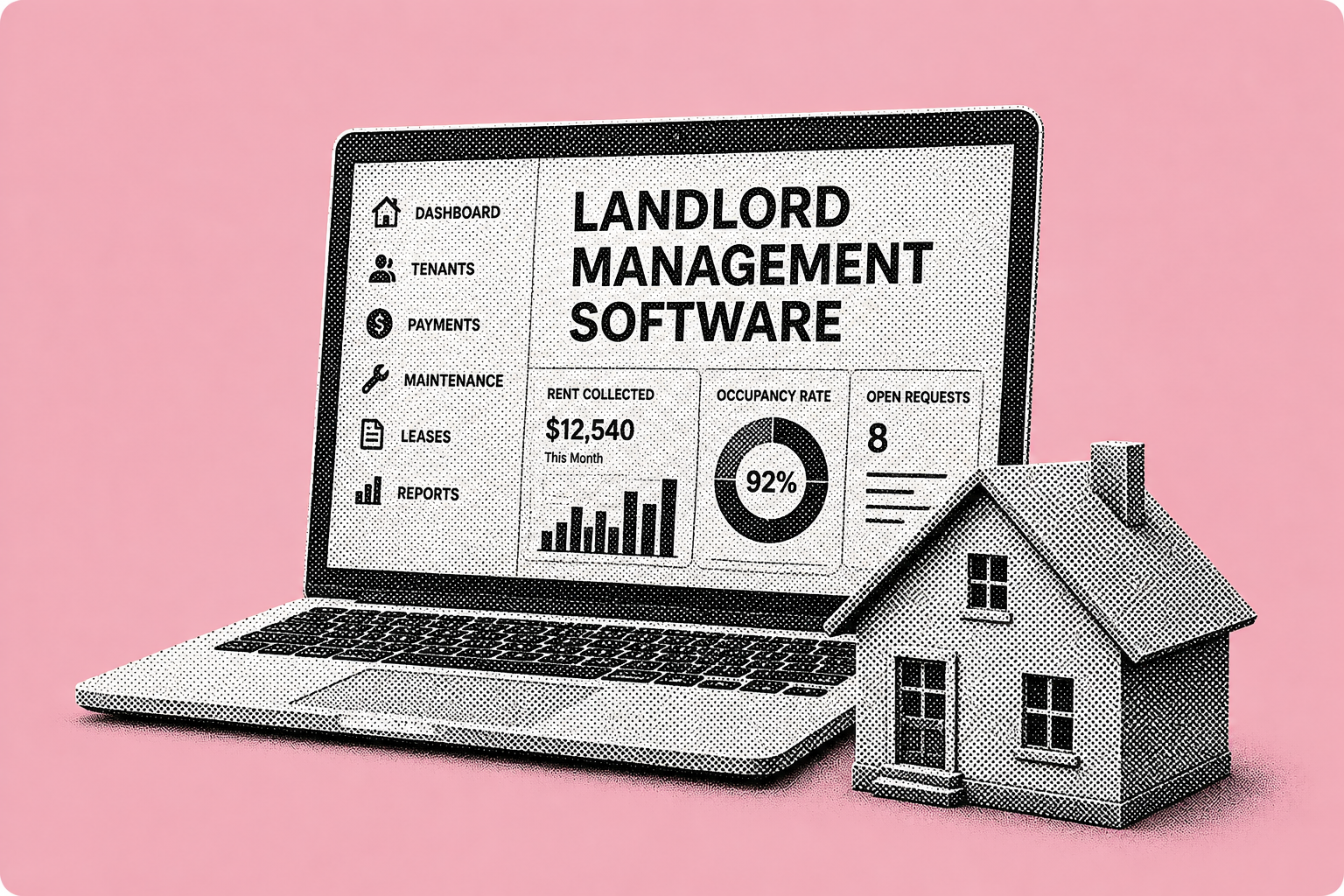
The right landlord management software does not just centralize tasks. It removes the repetitive ones. Below are seven features that consistently save the most time for independent landlords and small property managers, plus how Shuk Rentals implements each one.
1) Automated Rent Collection with Zero ACH Fees
Manual rent collection is a monthly tax on your time: reminders, check pickups, bank deposits, and "Did you get my payment?" texts. Industry analysis shows manual workflows correlate with meaningfully more late payments compared to automated collection. Surveys show strong tenant preference for paying online, and ACH is the most-used electronic method among renters.
Shuk Rentals offers online rent collection with zero ACH transaction fees, removing the biggest friction point that stops tenants from switching to online payments. Many platforms charge per ACH payment, which leads to more "I will just mail a check" behavior. With Shuk, you can push autopay enrollment without asking residents to pay a convenience fee.
2) Tenant Screening with Credit/Eviction/Criminal Reports
Screening is where small landlords lose days, not because it is hard, but because it is fragmented. You are juggling identity questions, inconsistent criteria, and separate report vendors.
Shuk Rentals provides tenant screening through our partner (RentPrep/TransUnion) for credit, criminal, and eviction reports in one flow, so you are not sending applicants to three different places or manually matching PDFs to names. Faster approvals with consistent standards, and fewer "Where do I upload this?" messages.
3) Maintenance Request Tracking
Maintenance is the number one time sink because it is communication-heavy. Industry surveys cite maintenance and turnover tied to maintenance performance as a top operational challenge for rental owners.
A proper maintenance tracker turns "texts plus calls plus photos" into a single ticket with status, notes, and documentation. Shuk Rentals' maintenance request tracking lets tenants submit issues with photos, videos, documents, and notes, organizing requests in one place per unit so you are not rebuilding the story every time a tenant follows up.
4) E-Signature Through Adobe-Powered Integration
Leasing gets hectic when you are doing everything twice: drafting, printing, scanning, chasing signatures, and re-saving documents. E-signatures compress the entire lease cycle into one repeatable workflow.
Shuk Rentals' e-signature through our Adobe-powered integration lets you send lease packets, get signatures, and store them automatically with the tenant record. No missing initials, no lost addendum, no "Can you resend the signed copy?" two months later.
5) Schedule E-Aligned Expense Organization
Most landlords do not feel the pain until tax time, or until they need a lender-ready snapshot. Receipts live in email, vendor texts, and shoe boxes. Then you spend a weekend reconstructing the year.
Shuk Rentals' Schedule E-aligned expense organization with digital receipts pairs expenses to properties. Payment and income reports filterable by property, tenant, and date and exportable to PDF or Excel reduce bookkeeping time and make monthly check-ins realistic, even if you are self-managing after work.
6) Two-Way Reviews
Bad-fit tenants cost time in a hundred small ways: late payments, preventable conflicts, and excessive maintenance noise. Landlords often operate with zero memory beyond their own notes, and tenants move on with no accountability.
Shuk Rentals includes Two-Way Reviews, letting landlords document real rental behavior while also giving tenants a way to build credibility. Fewer repeated judgment calls, fewer "I wish I had known" situations, and faster confidence when deciding between similar applicants.
7) Early Lease Renewal Intelligence (Lease Indication Tool)
Renewals become a scramble when you find out too late that a tenant is leaving. That means rushed showings, compressed make-ready timelines, and vacancy you could have prevented with a simple early check-in.
Shuk's Lease Indication Tool (LIT) provides early renewal intelligence starting six months before lease end through tenant polling and predictive lease renewal insights, creating a simple renewal forecast rather than a mental guessing game. If three leases end in September and two indicate "likely renewing" in July, you focus your energy on the one at risk before it becomes a vacancy.
What This Adds Up To
The biggest time drains are rent follow-ups, maintenance coordination, leasing paperwork, and bookkeeping catch-up. Moving rent to autopay and removing ACH friction reclaims several hours on its own. Maintenance tracking reduces coordination overhead per ticket. Digital leases, clean reporting, and proactive renewals compound the savings.
Frequently Asked Questions
Which feature saves the most time for small landlords?
For most landlords, automated rent collection saves the most time because it eliminates the monthly cycle of reminders, check pickups, bank deposits, and late-payment follow-ups. The time savings compound when paired with autopay enrollment and configurable late fees.
Do I need all seven features, or can I start with a few?
You can start with the features that address your biggest pain point, but the compounding benefit comes from using them together. Rent collection plus maintenance tracking alone can reclaim significant hours each month.
How does landlord management software differ from general business tools?
General tools are not built for property-level tracking, tenant-linked transactions, lease lifecycle management, or rental-specific expense categories. Landlord software handles these by default, reducing the workarounds that consume time in generic tools.
What to Do Next
At $5 per unit per month with no setup fees, and with White Glove Onboarding included at no additional cost, Shuk makes property management feasible for landlords running 1 to 100 units.
Book a demo at shukrentals.com/book-a-demo to see all seven features in action.

Property Management Website: Do Landlords Really Need One?
The Reality: Renters Expect Digital
If you manage rental properties, you have likely felt the pressure to go digital. Renters expect to find listings quickly, apply without printing forms, pay rent online, and submit maintenance requests without playing phone tag. Zillow's 2024 renter research confirms this shift: 86% of renters search online, 67% apply digitally, and 60% prefer online payments. This is not emerging behavior. It is the baseline experience renters expect today.
That raises a practical question: do you need a dedicated property management website to meet those expectations? Or can an all-in-one platform deliver the same renter-facing experience without the cost and upkeep of running a standalone site?
This guide walks through what a property management website typically includes, the real benefits (and limitations) for landlords managing 1 to 100 units, and when building a site makes financial sense. Then we will show how an all-in-one system can deliver the same digital renter experience without turning you into a part-time webmaster.
What a Property Management Website Actually Is
A property management website is your dedicated online presence that helps prospective renters discover vacancies and helps current tenants complete routine tasks. At its simplest, it is a digital brochure: photos, property details, and a contact form. At its most useful, it is a self-service hub that reduces admin work by moving core workflows online.
Most property management websites aim to support two journeys:
The prospect journey (marketing to inquiry to application). Typical features: professional property pages with photos, floorplans, rent, fees, and screening criteria. Online inquiry and contact forms. Online applications (sometimes with screening integration). Virtual tours, scheduling requests, and automated follow-ups.
The resident journey (move-in to pay to maintenance to renew). Common features: resident login portal, online rent payments and receipts, maintenance requests with photos and status updates, policies/notices/document storage.
A third layer, often overlooked, is visibility. Landlords build a property management website hoping it will rank on Google, build credibility, and generate leads. That can happen, but SEO takes time and usually requires ongoing content, reviews, and technical upkeep.
If your goal is less "build a brand" and more "fill vacancies and reduce back-and-forth," the key question becomes: do you need a standalone site, or do you need the functions that a good property management website provides?
Decide if You Need a Standalone Site (or an All-in-One)
1. Start with Renter Behavior: Digital Is Not Optional Anymore
The strongest case for a property management website is simply meeting renter expectations. Zillow reports that 86% of renters search online, 67% apply digitally, and 60% prefer paying online, which means "call for details" and "mail a check" can quietly shrink your applicant pool.
Map your current leasing process and mark every step that requires manual coordination: phone calls, emailing PDFs, scheduling key handoffs, collecting checks. Those friction points are where applicants drop off and vacancies stretch. The best property management website experience is less about having a homepage and more about removing friction: "Can I apply right now from my phone?" "Can I see all fees and requirements clearly?" "Can I pay rent without writing checks?"
2. Understand the Tangible Benefits
A property management website can provide real operational upside when it is built with workflows in mind.
Credibility and trust. Clean listings, consistent branding, and clear policies reduce "is this legit?" concerns. Zillow's research emphasizes renter preference for digital transparency and modern interactions.
Lead generation (when paired with visibility). A site can capture organic search traffic and direct inquiries, but it is not automatic. You need SEO basics, fast pages, and ongoing updates.
Streamlined tenant journey. Online applications shorten the time from inquiry to qualified applicant. Zillow's data showing 67% apply digitally suggests landlords who do not support digital applications may lose speed-sensitive renters.
24/7 rent payments. With 60% preferring online payments, offering a reliable online payment pathway can reduce late payments tied to logistics.
Documented maintenance workflows. A maintenance portal reduces he-said/she-said, centralizes photos and timestamps, and helps you prove responsiveness if disputes arise.
3. Do the Cost Math (and Include Ongoing Upkeep)
The biggest misconception: "I can build a property management website for $20/month." You can launch a basic site cheaply, but most landlords end up paying for the features that make the site functional: forms, listings, portals, security, and support.
DIY site builders (Squarespace/Wix). Squarespace plans run about $16 to $39/month. Wix about $17 to $39/month (annual billing). Domain renewal typically $17 to $25/year. Listing/IDX-style add-ons can add $10 to $25/month, and more robust IDX fees can be $55 to $149/month. Result: a simple property management website can become a few hundred dollars per year, before you add tools for applications, screening, payments, or portals.
WordPress (self-hosted). Hosting commonly $17.99 to $29.99/month. Security can be $149/year for premium protection. Real estate themes can be roughly $79 one-time. If you need developer help, hourly rates vary widely per Upwork guidance.
Agency-built custom sites. Typical builds range roughly $5,000 to $15,000 for simple-to-medium, and $15,000 to $30,000 when portals and deeper functionality are included. Agency hourly rates often cluster around $100 to $149/hour per Clutch.
Compare to software. Property management SaaS for small landlords often falls in a broad range, roughly $5 to $210/month, depending on tiers and unit counts.
Bottom line: if your website needs payments, maintenance, applications, and resident logins, you may end up recreating property management software piecemeal, then maintaining it.
4. Know When a Standalone Site Is Justified
A standalone property management website makes the most sense when you truly need brand control and portfolio presentation beyond basic listings:
- 20+ units with a brand strategy. If you are actively building a recognizable local brand and want organic search traffic over time.
- Multifamily communities. A dedicated site per community (amenities, floorplans, neighborhood content, tour scheduling) can support leasing velocity.
- Syndications / investor-facing needs. If you must present acquisition criteria, performance highlights, and credibility signals publicly.
- Hiring pipeline. If you want to recruit vendors, leasing staff, or grow into third-party management.
On the other hand, for many landlords managing 1 to 100 units, the main goal is not publishing content. It is reducing vacancy time and admin load. Zillow's trend data shows renters are digital-first and want speed and transparency. If your site will not be actively maintained, it can become stale (wrong pricing, old availability), which harms trust more than it helps.
5. Mini Case Studies
Case A: Sasha, 6 units (duplexes plus a fourplex). Sasha built a basic property management website on a site builder to look professional and route inquiries to email. After adding application forms and trying to connect payments, she found herself managing logins, form notifications, and tenant questions across multiple tools. She ultimately realized her goal was not a website. It was fewer vacancies and fewer late-night messages. A unified platform would have reduced tool sprawl.
Case B: Miguel, 28 units (two small multifamily buildings). Miguel wanted a brand that could expand. He invested in a custom site because he needed community pages, a polished reputation footprint, and consistent leasing content. The site helped with presentation, but he still needed software for rent collection, maintenance tracking, and renewals. His lesson: a standalone property management website can be a marketing asset, but it rarely replaces operations tools.
Case C: Tanya, 14 single-family rentals. Tanya prioritized renter convenience: digital applications, online payments, and a documented maintenance workflow. She chose an all-in-one approach instead of building a site, because she did not want plugin maintenance or security risk. Her website need was really a tenant self-service need.
The pattern: if you are doing this to look credible and reduce friction, you can often get the benefits without building and maintaining a full standalone property management website.
6. What an All-in-One Platform Replaces
If your property management website wishlist includes listings that look professional, an easy apply-and-pay flow, maintenance requests, renewals, and a modern renter experience, an all-in-one platform can deliver that without the website build.
What sets this approach apart (especially for landlords managing 1 to 100 units):
Predictive renewals. The Lease Indication Tool (LIT) gives you early renewal intelligence starting six months before lease end, so you know what is coming before lease end.
Two-Way Reviews. A structured reputation loop that supports better-fit tenants and clearer expectations.
Year-Round Marketing. Not just post when vacant, but keeping the pipeline warm so you are not starting from zero each turnover.
White Glove Onboarding. The hidden cost in any tech decision is setup time. Guided onboarding reduces the I-will-do-it-later failure mode.
Checklist: If You Do Build a Property Management Website, Do Not Skip These
Use this as a minimum viable checklist. If a vendor, freelancer, or DIY approach cannot confidently deliver these, you are likely buying a digital brochure, not an operational tool.
Must-have features (small landlord edition):
- Mobile-responsive design (most renters browse on phones; prioritize fast load and thumb-friendly forms)
- Professional listing pages: clear rent, deposit, fees, screening criteria, pet policy, and availability
- High-quality photos plus optional virtual tours
- Online applications with confirmation messages and clear next steps
- Secure payment pathway (PCI-minded provider; avoid storing card data yourself)
- Maintenance request portal with photos, timestamps, status updates, and notifications
- Tenant login for payments, documents, and maintenance history
- Contact forms that route correctly (avoid lost leads; test them monthly)
- Analytics (know which listings convert and where leads come from)
- Basic SEO tools (editable titles/meta, sitemap, indexable pages)
- Security plus updates plan (especially for WordPress: backups, patching, and vulnerability monitoring)
If you read this list and think, "That is basically property management software," you are not wrong. The more features you add, the more your property management website becomes a system you must maintain.
Frequently Asked Questions
Do I need a property management website if I already list on major rental marketplaces?
Not always. Marketplaces are where renters discover options. Zillow reports 86% search online, which often starts on large platforms. A website can help with branding and direct leads, but if your main goal is speed-to-lease, an integrated toolset that handles applications, payments, and maintenance may deliver more value than an additional site.
What is the biggest hidden cost of a property management website?
Maintenance and integration work. Hosting, security, form deliverability, plugin conflicts, updates, and tenant support add up, especially on WordPress where security tooling is often a separate line item. A property management website that breaks or looks outdated can reduce trust.
When does building a standalone site become worth it?
It is most justified when you are building a brand (think 20 or more units with growth plans), running multifamily communities that need their own leasing identity, or presenting to investors. For many landlords under 100 units, your renters' priorities (digital apply, online pay, and maintenance workflows) are often better met by an all-in-one platform.
If renters prefer online payments, can I just use a payment app?
You can, but payments alone do not solve the full resident journey. Zillow reports 60% prefer online payments, but renters also want digital applications and transparency. Stitching together payment tools, forms, and maintenance tracking can create confusion and more support requests.
What to Do Next
If your goal is to look professional online and reduce day-to-day landlord workload, you do not necessarily need to build a standalone property management website. You need the outcomes: a smooth renter journey, always-available applications, 24/7 payments, documented maintenance, and a clear renewal path.
Shuk gives you what a property management website promises, built in. Online rent collection with zero ACH transaction fees. Maintenance request tracking with photos, videos, documents, and notes. Centralized in-app messaging with email and push notifications. Tenant screening through our partner (RentPrep/TransUnion). E-signature through our Adobe-powered integration. Year-Round Marketing to keep your pipeline warm. The Lease Indication Tool (LIT) for early renewal intelligence starting six months before lease end. Two-Way Reviews for tenant accountability. And White Glove Onboarding so setup is not a weekend project.
At $5 per unit per month with no setup fees and zero ACH transaction fees, Shuk delivers the digital experience renters expect without paying thousands for a custom build or spending weekends troubleshooting plugins.
Book a demo at shukrentals.com/book-a-demo to see how it works as the simpler path to both presence and operations.
Frequently Asked Questions
Find answers to common questions about our products and services
How long does it take to set up property management software?
Will tenants actually use a portal?
How much does property management software cost for small landlords?
Is cloud-based property management software secure?
Does property management software help with compliance?
Property management software helps landlords replace fragmented, manual workflows with a structured system that supports rent collection, leasing, maintenance, communication, and reporting in one place. For small landlords, this shift reduces stress, improves cash flow visibility, and creates a more professional tenant experience. Platforms like Shuk Rentals support this approach by bringing core property management workflows together in a single, cloud-based system designed for independent landlords.