
Landlord Challenges
Operational Fixes for the Eight Problems That Cost Landlords the Most
Late rent, vacancy, maintenance, deposit disputes, compliance gaps. The eight problems below repeat at every portfolio size. This hub maps each one to a fix and the system that prevents recurrence.
Landlord Challenges: How One Connected System Solves the Most Common Problems
Landlord challenges are the operational, financial, and legal problems that independent landlords encounter when managing rental properties without staff support or standardized systems. For landlords managing 1 to 20 units, these problems compound quickly: one late payment disrupts your mortgage, one missed maintenance request becomes a habitability issue, and one inconsistent screening decision creates Fair Housing exposure. The most common landlord problems fall into eight categories: tenant screening, rent collection, vacancy, maintenance, security deposits, legal compliance, tenant communication, and financial tracking.
This hub maps each challenge and connects to seven in-depth guides that cover each dimension. Working through these resources gives self-managing landlords the structure to run their rentals with professional-level consistency.
For the broader picture of how professional service standards reduce every one of these challenges, see the standing out as a quality landlord guide.
Three Patterns Behind Most Landlord Problems
Independent landlords rarely fail because they do not care about their properties. They fail because scattered tools create inconsistency, and inconsistency is where risk accumulates.
Fragmented communication means repair requests arrive by text, rent questions come by email, and lease documents live in a folder. When a dispute arises, there is no single record to reference. What was promised, what was completed, and what was documented becomes unclear.
See the tenant communication strategies guide for the centralised communication system that prevents this.
Reactive operations mean marketing starts after a tenant gives notice, renewal conversations happen in the final weeks of a lease, and maintenance gets addressed after a problem escalates. Each of these reactive patterns costs more than the proactive alternative.
See the early lease renewal strategies guide for the proactive renewal workflow that eliminates last-minute vacancy.
Missing documentation is the root cause of most deposit disputes, Fair Housing complaints, and tax problems. Without timestamped photos, written screening decisions, and a complete payment ledger, landlords cannot defend their decisions even when those decisions were correct.
See the landlord documentation best practices guide for the complete file architecture and retention system.
The fix is not working more hours. It is standardizing the workflows that repeat every month so fewer things fall through the cracks.
Eight Landlord Challenge Areas and the Fixes That Stick
1. Tenant Screening and Fraud Prevention
Screening is where most future problems are either prevented or created. Eviction costs commonly range from $3,500 to $10,000 once legal fees, lost rent, and turnover are included. The most controllable lever is upstream: fewer risky placements means fewer downstream conflicts.
Common failure patterns include accepting income documentation without cross-referencing employer details, approving based on intuition rather than written criteria, and applying different standards to different applicants without documentation.
What works:
- Write screening criteria before marketing and apply them the same way every time
- Store screening decisions and denial reasons in one place for Fair Housing auditability
- Verify income documentation against employer contact information, not just pay stub appearance
For the complete breakdown of the 8 most costly screening mistakes and how to fix each one, see the common tenant screening mistakes guide.
2. Rent Collection, Late Payments, and Cash-Flow Stability
Late rent is not just an inconvenience. It is a monthly cash-flow event that, when handled inconsistently, also creates legal risk. Autopay adoption and automated reminders are the single highest-leverage change most small landlords can make to reduce collection friction.
Common failure patterns include collecting by check, accepting partial payments informally without documentation, and sending notices inconsistently based on mood rather than policy.
What works:
- Offer ACH and autopay at lease signing and make it the default expectation
- Send scheduled reminders before the due date, on the due date, and during the grace period
- Keep a payment ledger per tenant that tracks rent, fees, credits, and partial payments in one place
For the step-by-step workflow from first reminder through formal notice and escalation, see the late rent collection strategies guide.
3. Vacancy Risk, Marketing, and Faster Turnovers
Vacancy is both a market condition and an operational problem. National rental vacancy rates have moved upward in recent years, meaning more landlords must market harder while also meeting higher tenant expectations for responsiveness and professionalism. Either way, a repeatable leasing pipeline reduces the time between tenants.
Common failure patterns include starting marketing after a tenant gives notice rather than before, responding slowly to inquiries, and skipping standardized onboarding that sets move-in condition clearly.
What works:
- Use listing templates and prescreen questions to reduce time spent on unqualified inquiries
- Create a turnover checklist with specific dates for cleaning, repairs, photos, listing, and showings
- Track vacancy days per unit as a metric. What you measure improves.
For the complete playbook on reducing vacancy days through faster marketing, better listings, and a continuous tenant pipeline, see the how to reduce vacancy time for rental properties guide.
4. Maintenance Coordination and Cost Control
Maintenance is where landlord time disappears and where small issues become expensive emergencies. Repairs and maintenance commonly represent a significant share of rental income annually, and under-budgeting leads to deferred repairs and larger failures over time.
Common failure patterns include receiving repair requests by text with no photo documentation, using multiple contractors with no shared scope of work, and doing no preventive maintenance scheduling.
What works:
- Route all maintenance requests through one intake channel that captures photos, timestamps, and unit information
- Track time to first response and time to resolution per request
- Schedule seasonal prevention: HVAC servicing, gutter checks, smoke and CO detector testing
For a practical system covering request intake, triage, vendor coordination, and preventive scheduling, see the rental property maintenance guide.
5. Security Deposits, Inspections, and Dispute Prevention
Deposit disputes become expensive when documentation is weak, not necessarily when damage is severe. Move-out conflicts almost always come down to one side saying "it was like that when I moved in" and the other saying "it was not." Dated, labeled photos resolve this before it escalates.
Common failure patterns include skipping a formal move-in checklist, storing inspection photos in a personal phone album with no unit label or date, and providing vague itemization for deductions without invoices.
What works:
- Complete three documented inspections: move-in, optional mid-lease, and move-out
- Store photos with timestamps and a room-by-room checklist tied to the lease record
- Provide tenants with a move-out cleaning checklist 30 to 45 days before lease end
For state-by-state deposit caps, escrow requirements, itemisation deadlines, and move-out documentation workflows, see the security deposit laws by state guide.
6. Legal Compliance and Fair Housing Consistency
Most compliance problems are not intentional. They come from inconsistent processes applied differently over time. Federal and local rules touch advertising language, application decisions, deposit handling, and repair response standards. Details vary by jurisdiction, but the operational fix is the same everywhere: standardize and document.
Common failure patterns include responding to accommodation requests inconsistently, making informal side agreements by text, and deducting from deposits without condition evidence or depreciation rationale.
What works:
- Use templates for notices, lease clauses, and communications, and customize only what is legally appropriate
- Keep a complete paper trail per tenancy: ads, applications, screening outcomes, lease, inspections, repair logs, notices, and payment ledger
- Consult a local attorney for jurisdiction-specific requirements before problems arise
For the complete landlord legal compliance framework covering fair housing, screening, leases, deposits, and documentation, see the compliance and legal hub.
7. Tenant Communication and Conflict De-escalation
Most tenant issues get worse when communication is fragmented or undocumented. When a dispute occurs involving late rent, maintenance delays, or lease violations, the landlord needs a single source of truth: what was reported, what was promised, and what was completed.
Common failure patterns include making verbal commitments during showings, accepting informal texts as official requests, and allowing communication to scatter across multiple channels with no record.
What works:
- Establish a dedicated channel for non-emergency requests and define what constitutes an emergency
- Use message templates for recurring situations: late rent reminders, maintenance scheduling, and lease renewal options
- Summarize phone calls in writing afterward to create a dated record of what was agreed
For the complete framework covering communication channels, response standards, templates, and conflict handling, see the tenant communication strategies guide.
8. Financial Tracking, Taxes, and Profitability Clarity
Many small landlords operate on bank-balance management. If there is money in the account, things feel fine. But profitability depends on vacancy days, turnover costs, maintenance spend, and bad debt. Turnover alone is commonly estimated at $3,000 to $10,000 per unit once make-ready and vacancy loss are included. Without clean records, it is hard to know whether raising rent, deferring upgrades, or changing screening standards is the right move.
For the complete system covering income tracking, expense categorisation, and managing non-paying tenants, see the how to handle delinquent tenants guide.
Common failure patterns include mixing personal and rental expenses, recording maintenance costs annually rather than monthly, and misclassifying capital improvements as operating expenses.
What works:
- Track each property's income and expenses monthly, not annually
- Categorize maintenance versus capital improvements as you go
- Review three metrics quarterly: vacancy days, late-payment rate, and maintenance spend as a percentage of rent
Where the Money Leaks: What the Data Shows
Independent landlords tend to experience challenges as random fires, but the data shows predictable leak points.
Vacancy exposure is both a market and operational problem. Nationally, rental vacancy rates have risen in recent years. Even in tight markets, turnover creates downtime. The operational fix is speed and consistency: faster lead responses, standardized showings, quicker approvals, and e-signed leases.
Late payment friction is reduced materially when you remove friction and timing issues. Online payment adoption has grown significantly over the past decade, and autopay enrollment correlates with higher on-time payment rates. Landlords who default to autopay at lease signing report fewer collection conversations each month.
High-cost outcomes from eviction and turnover are exactly the losses that better screening, earlier intervention, and documented processes aim to prevent. These costs are large enough that preventing even one per year across a small portfolio justifies the time investment in building proper systems.
The practical takeaway is that "better tenants" is not the only lever. Better systems produce measurable improvements in payment reliability, maintenance response time, and dispute outcomes quickly.
{
"@context": "https://schema.org",
"@type": "FAQPage",
"mainEntity": [
{
"@type": "Question",
"name": "What are the most common problems for self-managing landlords?",
"acceptedAnswer": {
"@type": "Answer",
"text": "The most common problems cluster into four areas: cash flow disruption from late rent, vacancy and turnover costs, maintenance coordination breakdowns, and compliance and documentation gaps. These are predictable and recurring. Landlords managing without standardized systems spend more time reacting to each problem than preventing the next one. Prioritizing rent collection automation first addresses the highest-frequency issue."
}
},
{
"@type": "Question",
"name": "How can landlords reduce late rent without damaging tenant relationships?",
"acceptedAnswer": {
"@type": "Answer",
"text": "Use systems that are firm, predictable, and low-friction. Enable online payments and autopay, and send neutral automated reminders before the due date, on the due date, and during the grace period. At lease signing, position autopay as a convenience rather than a requirement. Separate the policy from the tone: consistent enforcement and friendly communication are not mutually exclusive."
}
},
{
"@type": "Question",
"name": "What is the most effective way to prevent security deposit disputes?",
"acceptedAnswer": {
"@type": "Answer",
"text": "Complete a documented move-in inspection with labeled, timestamped photos stored with the lease record and signed by the tenant. At move-out, use an itemized deductions report tied to invoices and dated comparison photos. Provide tenants with a move-out cleaning checklist 30 to 45 days before lease end. Disputes shrink when both sides know what to expect and you can prove condition with evidence rather than memory."
}
},
{
"@type": "Question",
"name": "How much should a landlord budget for maintenance and repairs?",
"acceptedAnswer": {
"@type": "Answer",
"text": "A common starting benchmark is 1% to 4% of property value annually, or roughly $3,000 to $6,000 per year on a $300,000 property. Actual spend depends on property age, tenant wear, and how proactive your maintenance scheduling is. Track maintenance spend as a percentage of rent per property each quarter. A spike in one property is a signal to investigate deferred repairs, vendor pricing, or tenant behavior before the issue compounds."
}
},
{
"@type": "Question",
"name": "Will property management software help if I only have a few units?",
"acceptedAnswer": {
"@type": "Answer",
"text": "Small portfolios often benefit more from software because there is no staff to absorb administrative work. Evaluate software by whether it standardizes your core workflows: screening, lease execution, rent collection, maintenance tracking, and documentation. If automation saves three hours per month, that is 36 hours per year recovered. The value is not in the number of units managed. It is in the consistency delivered across every tenancy."
}
}
]
}
Shuk helps landlords and property managers get ahead of vacancies, improve renewal visibility, and bring more predictability to every lease cycle.
Book a demo to get started with a free trial.
The following guides cover the most common operational, financial, and legal problems independent landlords face. Together they address tenant screening, rent collection, vacancy management, maintenance coordination, deposit disputes, compliance, communication, and financial tracking. Each guide provides practical systems a self-managing landlord can implement without hiring a property manager.

What to Do When Your Tenant Reports Bed Bugs (Or Other Pest Problems)
The text or email usually shows up late in the day: urgent, uncomfortable, and impossible to ignore. "I think we have bed bugs." If you manage a handful of rental units, that message triggers immediate stress. You are suddenly balancing your legal obligation to maintain a habitable unit, the real risk of spread to neighboring spaces, a cost curve that escalates quickly in multifamily buildings, and a tenant relationship you cannot afford to damage.
Here is what makes bed bugs different from standard maintenance: they do not behave like a broken appliance you can diagnose in five minutes. They hide, they move between units, and they turn into blame conversations fast. Many states handle pest issues under general habitability frameworks, but some jurisdictions impose highly specific requirements. New York City treats bed bugs as a Class B violation with defined eradication timelines and mandatory notice obligations. Your response in the first 24 hours determines whether this becomes a managed process or an expensive, documented failure.
Why Pest Incidents Become Legal and Financial Problems
Pest complaints sit at the intersection of habitability law, health risk, and documentation. In most states, landlords must maintain safe, sanitary, and habitable premises, and pest infestations qualify as conditions affecting health or safety. Texas requires landlords to remedy conditions affecting a tenant's physical health or safety after proper notice under Texas Property Code §92.056. Ohio's approach is broader: Ohio Revised Code 5321.04 describes landlord duties to keep premises fit and habitable, commonly interpreted to include addressing pest problems when they are not tenant-caused. New York City is the most prescriptive, with bed bug history disclosures, specific eradication timelines, and mandated notices tied to bed bug history and reporting.
Financially, bed bugs are uniquely punishing because waiting is expensive. Heat treatment commonly runs $1 to $3 per square foot, putting a 2,000 square foot home at $2,000 to $6,000 in most national estimates. Chemical treatments may appear cheaper at $100 to $500 per room, but they frequently require multiple visits because eggs can survive initial applications and resistance is common. Many professional programs require follow-ups regardless of method.
The operational layer is where pest events most often fail: unit prep, tenant compliance with laundry and bagging requirements, coordinating adjacent unit inspections, and tracking vendor instructions. Landlords lose time, tenants misunderstand prep requirements, someone refuses entry, and the infestation persists while costs and conflict both climb.
A Practical, Legally Safer Protocol: Eight Steps
Step 1. Treat the Report as Urgent on Day One
Your first move is not to prove fault or question the report. Your first move is to create a timestamped record, acknowledge receipt, and give clear next steps.
In NYC, timelines and notice rules are strict. Bed bugs are treated as a Class B violation and must be addressed within defined windows, with certain disclosure obligations related to bed bug history. In Texas, proper notice triggers obligations to remedy health and safety conditions under §92.056, and delays open the door to tenant remedies including lease termination rights. In Ohio, habitability duties and tenant remedies like rent escrow after proper notice make speed essential even without a bed-bug-specific statute.
What to do on day one: Ask for details including where bugs were seen, when they were first noticed, and whether the tenant can provide photos. Give a do-not-do list: do not move furniture into common areas, do not self-treat with foggers. Schedule a licensed inspection immediately.
Log the complaint as a maintenance request and keep every message in one thread so you can later prove when notice was received, what instructions were given, and when vendors were scheduled. A two-hour response and a 48-hour inspection window demonstrates the prompt action that matters in rent escrow disputes and compliance reviews.
Step 2. Verify With a Qualified Inspection and Document Everything
Bed bugs are frequently misidentified. Bat bugs and carpet beetles get blamed often, and bites alone are not diagnostic. You need a professional inspection, either visual or canine.
Typical inspection pricing ranges from $65 to $200 for visual inspections and $300 to $600 for canine inspections. Paying for fast confirmation is almost always cheaper than paying for uncontrolled spread to adjacent units.
Documentation essentials: Vendor license and inspection report. Photos of evidence including molts, fecal spotting, and live bugs. A list of units inspected, including adjacent units in multifamily buildings.
Use vendor coordination to request bids, attach inspection reports to the maintenance record, and keep a single source of truth you can share with tenants, your attorney, or your insurer if the situation escalates.
Step 3. Contain the Spread Across the Building, Not Just the Unit
Bed bugs travel along baseboards, electrical outlets, and shared hallways. In multifamily buildings, treating only the reporting unit is a common and expensive failure mode. Even when a tenant likely introduced the bugs, your containment strategy should focus on stopping migration and documenting that you acted to protect the property as a whole.
Practical containment moves: Inspect adjacent units above, below, and beside the affected unit when building layout suggests risk. Instruct all tenants not to move items into common areas. Coordinate treatment scheduling so neighboring units can be addressed quickly if inspection confirms spread.
Create linked work orders for each affected area: "Unit 2A inspection," "Unit 2B inspection," "Common hallway monitoring," with date-stamped outcomes and vendor notes. This prevents the classic "we treated once but it came back" ambiguity that drives both tenant complaints and repeat costs.
Step 4. Choose Treatment Based on Biology, Budget, and Tenant Compliance
Cost control starts with selecting a method that matches the situation rather than defaulting to the cheapest upfront option.
Heat treatment commonly runs $1 to $3 per square foot and can be effective at killing all life stages in a single service visit when properly executed. The requirement for thorough preparation before treatment is non-negotiable.
Chemical treatment is often $100 to $500 per room but typically requires multiple visits because eggs can survive initial applications. Multiple visits are expected and should be planned for, not treated as a sign of failure.
Integrated Pest Management emphasizes monitoring, resident cooperation, targeted treatment, and prevention. Research in multifamily and affordable housing settings has shown significant reductions in bed bug populations with structured IPM approaches.
If a tenant cannot or will not prepare thoroughly, heat treatment can fail or require expensive reruns, and chemical treatment will also fail without preparation compliance. Put prep instructions and deadlines in writing, require tenant confirmation of completion, and attach the vendor prep checklist to the maintenance record. When a treatment fails, you need to be able to distinguish a method problem from prep noncompliance, which matters significantly for cost allocation discussions.
Step 5. Determine Responsibility Without Inflaming Conflict
Responsibility is where pest incidents become personal. Many jurisdictions default toward landlord responsibility for habitability unless the landlord can demonstrate tenant negligence or that the tenant introduced the infestation. NYC enforcement tends to place eradication obligations on owners with specific compliance expectations. Ohio and Texas generally frame it as a landlord duty unless tenant-caused, but lease terms and documented facts determine the outcome.
A defensible approach: Treat and contain first to mitigate damage. Investigate cause with documentation including move-in inspection photos, prior complaints, vendor opinion on infestation severity and spread pattern, and tenant cooperation history. Pursue cost-sharing only when tied to documented noncompliance or clear evidence, not to assumptions.
Common cost-sharing models and their practical limits: having the landlord pay while the tenant cooperates is most practical for speed and relationship preservation. Billing the tenant after the fact if tenant causation is proven works only when documentation is strong. Splitting cost based on units affected can feel arbitrary unless supported directly by vendor findings.
Centralize all evidence including inspection reports, messages, photos, and invoices so the rationale behind any charge is clear and consistent. Store lease addendums and house rules related to pests so you can show expectations were communicated before the incident occurred.
Step 6. Manage Access, Prep, and Follow-Ups as a Project
Most bed bug treatment failures are coordination failures: missed access windows, incomplete laundry cycles, clutter blocking baseboard treatments, or tenants moving untreated items between rooms. Your protocol needs to treat this like a project with owners, deadlines, and documented checkpoints.
Your protocol should include: Written entry notices with specific appointment windows at least 24 hours in advance. A prep checklist with a stated deadline and a request for photo confirmation when appropriate. A follow-up inspection schedule tied to the vendor's recommended program.
Vendors frequently require repeated visits for chemical programs, and even when heat is used, follow-up monitoring is standard practice. If you cannot show that you coordinated access and prep consistently, it becomes difficult to argue the tenant is responsible for treatment failure, or to defend against claims that you failed to remedy a health and safety condition within a reasonable time.
Assign tasks including tenant prep, vendor visit, and reinspection with specific deadlines, track completion, and store time-stamped proof. This is especially important when multiple units are involved and you are coordinating multiple calendars simultaneously.
Step 7. Talk to Your Insurer and Accountant Early
Many landlords assume insurance will cover bed bugs. In practice, many policies exclude insects and vermin entirely or classify infestations as a maintenance issue. Because coverage varies significantly by policy, read your policy and ask your agent in writing before assuming any reimbursement.
On taxes, pest control for a rental is generally treated as a deductible operating expense, but good records are required. Document every invoice, date, and unit affected, and separate routine maintenance from any capital improvements clearly.
Attach vendor invoices to each work order, tag them by unit, and be prepared to export totals for your accountant, particularly when an infestation spans multiple units and multiple treatment cycles over several weeks.
Step 8. Add Prevention and Lease Language to Reduce Repeats
The best pest response plan is one you rarely need to execute. Prevention includes early detection systems, tenant education, and building-level practices that reduce the probability of a small introduction becoming a building-wide event.
IPM-style prevention emphasizes monitoring, clutter reduction, sealing cracks and crevices, and prompt response to early signs. These practices reduce the cost and scope of infestations that do occur.
Lease tools that help: A pest and bed bug addendum outlining reporting duties, cooperation requirements, and consequences for refusing prep or entry. Move-in inspection documentation with tenant acknowledgment. Clear rules about discarded furniture and mattress handling in common areas and trash rooms.
Store lease addendums in the tenant record and use standardized message templates for seasonal reminders: do not bring curbside furniture inside, and report bites or sightings immediately. A calm, consistent prevention message preserves trust and reduces the stigma tenants feel about reporting early, which is exactly when treatment is least expensive.
Bed Bug and Pest Response Checklist
Day zero to one: Intake Log the complaint with date, time, unit, symptoms, and photos if available. Send written acknowledgment with next steps and do-not-do instructions. Ask where bugs were seen, when first noticed, and whether the tenant recently acquired used furniture or traveled. Schedule licensed inspection and confirm entry permission window.
Day one to three: Verification Obtain inspection report and photo evidence. If positive, identify scope: single unit or adjacent units and common areas. Open linked work orders for adjacent inspections in multifamily buildings.
Week one to two: Treatment plan Select method based on vendor recommendation and building constraints. Provide prep checklist with deadline and require tenant confirmation. Coordinate vendor calendar and send tenant access notices in writing.
Week two to six: Follow-up Schedule follow-up visits. Document each visit outcome and tenant compliance status. Update adjacent unit status until cleared.
Ongoing: Responsibility and cost control Track all invoices by unit and date. If cost-sharing is pursued, attach supporting documentation including missed prep records, refusal of entry, and vendor notes. Save all communications in one thread for defensibility.
Frequently Asked Questions
Can I charge my tenant for bed bug treatment?
Sometimes, but starting there is risky. In most jurisdictions, pest control is treated as part of the landlord's habitability obligations unless the landlord can prove the tenant caused the infestation. Ohio's approach based on ORC 5321.04 generally places the burden on landlords unless tenant-caused. Texas requires remedies for health and safety conditions after notice under §92.056, and cost shifting depends heavily on lease terms and documented facts. NYC is the most owner-duty-forward jurisdiction, with specific compliance and disclosure rules that make delays and disputes particularly costly. The practical approach: treat first, document cause and cooperation carefully, then discuss allocation with evidence in hand.
How many treatments does it typically take to eliminate bed bugs?
It depends on the method and tenant cooperation. Heat treatment is often a single-visit solution when properly executed because it kills all life stages at lethal temperatures. Chemical treatment typically requires multiple visits because eggs may survive initial applications and follow-up visits are standard. Landlords should plan for follow-up inspection and monitoring regardless of which method is selected.
What do I do if the tenant refuses prep or will not allow entry?
Refusal is both a project risk and a legal risk. Your job is to keep documenting reasonable attempts to remedy the condition, because delays can trigger tenant remedies when the issue affects health or safety. Send written access notices, offer alternative appointment windows, and document vendor re-trip fees. In NYC, showing active eradication steps and tenant communications is essential for compliance. In Ohio and Texas, documentation of access attempts demonstrates good-faith compliance with habitability obligations.
Does the same approach apply to other pests like mice, roaches, and ants?
Yes. Rapid intake, professional verification, building-level containment, and documentation apply to all pest situations. The main difference is treatment cadence and tenant prep requirements: roaches and mice may require recurring service and entry-point control, while ants can be seasonal and localized. In all cases, treating the issue as a health and safety condition, opening a maintenance work order, and keeping tenant communication in one thread reduces conflict and repeat outbreaks.
When pests show up, your biggest vulnerability is not the infestation itself. It is the gap between what you did and what you can prove you did. That gap fuels tenant conflict, compliance failures, and expensive treatment reruns.
Book a demo to see how Shuk's maintenance logging, vendor coordination, expense tracking, and communication templates turn a chaotic pest event into a managed, documented workflow you can execute consistently every time.
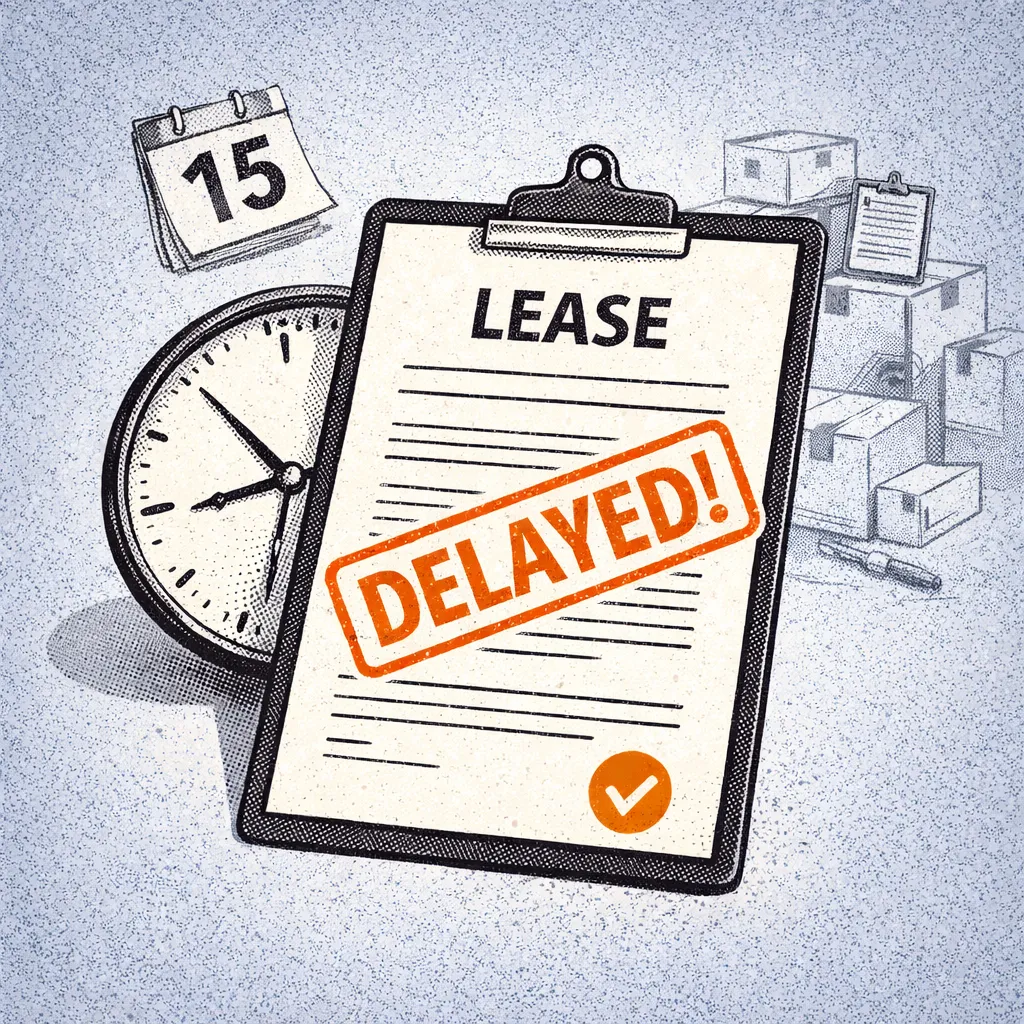
Tenant Approval Delays: What to Know About Lease Validity and Move-In Readiness
You have a signed lease. Screening is complete, the tenant said yes, and you are expecting a smooth handoff on move-in day. Then everything slows down. The tenant is waiting on HR, the guarantor needs more time, utilities have not been transferred, or the money you expected has not cleared. You are stuck in the most confusing phase of tenant onboarding: the limbo period between lease signing and move-in.
This is where small delays become expensive. Rental application processing time is typically cited as one to three business days when things go smoothly. In real life, verification bottlenecks and missed deadlines can push you into a week or several weeks of uncertainty. Meanwhile, market data shows vacancy time has been climbing, with one RealPage analysis citing 34.4 average vacant days in 2024, up from roughly 30 days in early 2020. Every extra day you hold a unit for a maybe is a day you cannot rent to a yes.
Here is what you need to know about tenant approval delays, lease signing delays, lease validity before move-in, and how to communicate, stay compliant, and protect your income without escalating conflict or creating fair-housing exposure.
What Is Really Happening During Onboarding Delays
Tenant onboarding delays are usually not caused by one big issue. They are a chain reaction: incomplete documents, third-party verification lag, confusion about deposits and holding funds, or unclear move-in prerequisites. Renters also have high expectations for responsiveness during this period. Zillow notes renters generally expect replies to inquiries within 24 hours, and if your communication cadence does not match that expectation, even an otherwise qualified tenant can become anxious, unresponsive, or likely to back out, creating what feels like a tenant problem but often starts as a process problem.
Legally, the biggest source of confusion is whether the lease is binding once signed or only once the tenant takes possession. The general legal principle is that a lease can become binding upon signing unless the lease language makes it contingent on future events such as approval of screening, receipt of funds, or a confirmed move-in condition. Courts look closely at the contract language and the parties' intent, and ambiguous language is often interpreted against the party who drafted it, which is frequently the landlord. That means your lease wording and written communications during this limbo period matter because they can determine whether you can enforce the lease, whether you must refund money, or whether you have inadvertently waived a remedy.
There is a second dimension: your duty to treat applicants consistently and avoid discriminatory off-ramps. If you cancel or delay based on a protected characteristic, you expose yourself to fair-housing claims. Even when you are doing everything right, the safest approach is to standardize your workflow, document timelines, and use consistent templates for every applicant.
Seven Steps for Handling Tenant Approval Delays
Step 1. Diagnose the Root Cause Before Assuming
Most tenant approval delays fall into a few predictable buckets: missing documents, third-party verification lag, payment or transfer timing, or unit-readiness issues. Start by naming the exact dependency that is blocking move-in and assign it an owner, whether that is the tenant, the employer, the screening vendor, you, or a contractor.
Incomplete application packet: The tenant uploaded the wrong year's tax return and no photo ID. Even if initial screening was approved, the onboarding stall is paperwork rather than indecision. This is one reason approved applications are quoted at one to three days: that estimate assumes documentation is complete at the point of submission.
Verification bottleneck: A tenant signs a lease for May 1 move-in, but her employer uses a third-party verification system that takes seven to ten days to respond. The real problem is that the lease did not define a verification deadline, leaving no basis for either party to move forward or stand down.
Payment clearance issues: A tenant initiates an ACH transfer for first month's rent and a security deposit, but it is still pending two business days later. You need a written policy defining what "received" means: initiated versus fully settled.
Create a one-page move-in dependencies list covering funds received, utilities confirmed, insurance if required, keys scheduled, and unit readiness. Use a single status tracker so you can tell the tenant exactly what is pending and what the next step is.
Step 2. Confirm Lease Validity Before Move-In
Whether your lease is enforceable during the limbo period depends on the contract language. A lease can be binding upon signing, but it can also be written to become binding only after certain conditions occur. If you want protection against last-minute cancellations, you need clarity on when the lease becomes effective, what happens if the tenant does not take possession, and what happens if you cannot deliver possession.
If your lease says it is contingent on screening approval, deposit receipt, or proof of insurance, then the tenant may not be bound until those conditions are met. Courts rely on the language and intent, and ambiguities are often interpreted against the drafter. If you wrote "lease starts May 1" alongside "subject to approval," you may have created a dispute rather than a contract.
The failure-to-deliver scenario is equally important. General landlord-tenant guidance indicates that when a landlord cannot deliver possession, tenants may be able to terminate with written notice and receive refunds of prepaid rent and deposits. If the failure is intentional or in bad faith, damages can escalate depending on jurisdiction. You must be ready to deliver the unit as promised on the agreed date.
Include a clear "Effective Date and Move-In Conditions" section in your lease defining what must happen before keys are released and what deadlines apply. If you grant an extension, confirm it in writing so you do not accidentally modify the contract timeline through informal communication.
Step 3. Set a Proactive Communication Cadence
Delays feel worse when communication is sporadic. During onboarding, you do not need to be always available, but you do need predictable updates. A simple cadence that works: on day zero when the lease is signed, send a welcome message with a move-in timeline. Every 48 hours until completion, send a short status update covering what is done, what is pending, and who owns the next action. At 72 hours before move-in, confirm funds, keys, utilities, and arrival plan.
Sample email you can reuse:
Subject: Move-In Status Update — [Property Address]
Hi [Name], here is where we are for your move-in on [Date]:
Complete: Lease signed; screening approved.
Pending: (1) Proof of utility transfer for electric service. (2) First month's rent settlement.
Next step: Please send utility confirmation by [Deadline]. If rent has not settled by [Deadline], we will need to reschedule key pickup.
Reply here if you need help with either item.
Communicate in one primary channel, whether email or portal, so your records are clean and searchable. Make every update include a deadline and a consequence such as rescheduled keys, unit held until a specific date, or escalation to termination.
Step 4. Use a Timeline-Based Onboarding Workflow
A defined workflow is a legal and operational safety net. It forces you to specify what approved, leased, and ready to move in each mean. It also reduces lease signing delays caused by missing steps that were not communicated until the final days before move-in.
A practical onboarding timeline: within 24 hours of lease signing, send the welcome email and move-in checklist. Within 48 hours, confirm deposit and first month's rent have been initiated by the tenant. Within 72 hours, confirm utilities are scheduled to start. At seven days before move-in, confirm unit readiness and schedule the key appointment. At 72 hours before move-in, verify funds have settled and plan for identity re-verification at key pickup. On move-in day, complete the condition report and release keys with both parties present or documented.
Tie key release to objective completion points: funds settled, ID confirmed, required documents uploaded. Use a consistent checklist for every tenant to avoid inconsistent treatment, which also reduces fair-housing risk by ensuring your process is demonstrably uniform.
Step 5. Apply a Fair, Ethical Backup-Tenant Strategy
When delays stretch, you may want to keep a backup applicant warm. The key is doing it in a way that does not create a double-lease or fair-housing exposure.
You can continue marketing until you have a fully executed lease with all move-in conditions met, if your local norms and laws allow. You can also use a waitlist with clear written language: "You are next if the current applicant does not complete onboarding by [Date]." A written holding policy that clearly states whether a unit is reserved, for how long, and under what conditions the reservation expires is essential.
What to avoid: signing two leases for the same start date, and making inconsistent exceptions based on anything connected to a protected characteristic. Antidiscrimination principles apply to cancellations and lease changes. Wrongful cancellation can lead to breach claims and, if tied to protected status, fair-housing liability.
Example of the right approach: You sign with a primary applicant who then misses the deposit deadline. You notify them in writing that the lease requires funds by a specific date and that failure to complete move-in conditions constitutes nonperformance. You move to the backup applicant only after that deadline passes with no cure.
Step 6. Stay Compliant on Deposits, Refunds, and Waiver Traps
The limbo period almost always involves money, and the rules governing that money are state-specific. Mistakes in this area can be costly.
Security deposit timelines and refund rules vary significantly by state. Texas guidance commonly describes a 30-day return requirement after termination or surrender, minus lawful deductions. Florida has statutory deposit handling requirements under Florida Statutes §83.49. Across jurisdictions, the recurring principle is clear: do not treat a holding deposit like a security deposit unless your documents define exactly what it is, where it is held, and under what conditions it is refundable.
A less-discussed risk is the waiver trap. Some states treat acceptance of rent after a breach as potentially waiving certain remedies. If a tenant has not provided required insurance documentation by the deadline and you accept full rent without reserving rights, you may have weakened your ability to enforce the condition later. Where this risk exists, document explicitly whether you are extending a deadline or accepting funds while reserving all other rights. Consult local counsel for your specific state's requirements.
Use separate line items and receipts for application fees, holding deposits, security deposits, and prepaid rent. Clean labeling at the outset prevents disputes that are genuinely difficult to resolve cleanly once money has changed hands under ambiguous terms.
Step 7. Decide When to Walk Away and How to Do It Cleanly
Sometimes the best vacancy strategy is ending the limbo quickly. The hard part is doing so legally and consistently.
Red-flag scenarios that justify a firm deadline: the tenant repeatedly misses document or payment deadlines without explanation, the tenant attempts to change core terms after signing without a written amendment, verification reveals material misrepresentation of income or identity, or you learn you cannot deliver possession on time due to a holdover tenant.
The right process for walking away: identify the breached condition or unmet requirement and cite the specific lease section. Give a clear cure deadline in writing. If not cured, send a written termination notice consistent with the lease and state law. Refund any refundable funds per your state's deposit rules and your written documents.
The longer you wait without deadlines, the more you normalize nonperformance and the harder the eventual conversation becomes. Consistent standards applied to every tenant are your best protection against both fair-housing claims and unnecessary vacancy days.
Lease-to-Move-In Checklist
Confirm lease status: Lease fully executed with all adult tenant and landlord signatures captured. Effective date stated clearly. Any contingencies listed including screening approval, funds, insurance, and utilities. Key-release conditions explicitly stated covering funds settled and ID verified.
Money and receipts: Ledger created with separate line items for deposit versus prepaid rent. Deposit rules reviewed for your state covering refund timing and lawful deductions. Written holding policy provided if applicable.
Proof and verification: Government ID verified at key pickup. Income and employment verification complete with source and date documented. Any guarantor documentation complete and signed.
Unit readiness and possession: Make-ready complete with photos and time stamp saved. Possession delivery confirmed with a contingency plan if the prior tenant holds over, noting that tenants may have termination and refund remedies if possession cannot be delivered as promised.
Communication cadence: Welcome email and timeline sent within 24 hours of signing. Status updates every 48 hours until all conditions are complete. 72-hour pre-move-in confirmation scheduled covering keys, utilities, and funds.
Red-flag quick check: Tenant repeatedly misses deadlines. Tenant requests major term changes after signing. Tenant becomes unresponsive after sending partial funds. You discover you cannot deliver possession on time.
Frequently Asked Questions
How long should rental application processing and approval take?
Many resources cite one to three business days as a typical range for screening decisions when applications are complete and references respond quickly. In practice, delays come from third parties including employment verification and prior landlord references, or from incomplete document uploads. Your best control is setting expectations upfront and using automated reminders so you are not chasing missing items manually.
Is a lease valid before move-in once it is signed?
Often yes. A lease may be binding upon signing unless the lease language makes it contingent on future events like receipt of funds or approval conditions. Courts look at the wording and intent, and ambiguity may be interpreted against the drafter. If you want clarity, write explicit effective date language and define move-in conditions and deadlines so neither party has room to interpret the contract differently.
What if I cannot deliver possession on the agreed move-in day?
If you fail to deliver possession, tenants may be able to terminate with written notice and receive refunds of prepaid rent and deposits. In some jurisdictions, bad-faith non-delivery triggers additional damages. Because rules vary by state and city, treat this as a high-risk situation: communicate early, document what happened, and consult local counsel if a holdover or repair issue is blocking occupancy.
Can I keep the deposit if the tenant backs out after signing?
It depends on what the money is classified as, what your lease says, and your state's rules. States impose specific deposit handling and refund timelines. To reduce disputes, label funds clearly at the time of collection, provide receipts, and put refundability terms in writing before you accept any money. Verbal agreements about deposits are almost impossible to enforce cleanly.
Tenant approval delays and lease signing delays are rarely solved by being tougher. They are solved by being clearer: clear conditions, clear timelines, clear documentation, and clear communication delivered consistently to every tenant.
Book a demo to see how Shuk's onboarding workflow, automated deadline tracking, communication templates, and standardized legal documents turn the limbo period into a controlled, repeatable path to move-in.

How to Stand Out as a Landlord and Attract Quality Tenants in a Competitive Market
Independent landlords used to win leases with a decent unit, fair pricing, and a sign in the window. In today's competitive rental market, that approach rarely works. Renters compare more listings at once, move faster through decisions, and expect a consumer-grade experience, often from owners still running rentals as a side project.
The result is that you can have a great property and still lose the best applicants to a more polished listing, faster response times, or a smoother application process. Meanwhile, larger property managers project scale and professionalism online even when the underlying unit quality is comparable to yours.
You do not need 500 units to stand out. You need a repeatable system that improves how your property looks online, makes the renting process simpler for qualified applicants, and builds trust through transparent communication and reputation. Zillow reports that 74% of renters use mobile devices in their rental search and 40% sign leases electronically, clear signals that the leasing journey is increasingly digital end to end. Zillow also found that approximately one-fifth of renters in 2023 did not take any in-person tours, underscoring how much your online presence must carry the decision before a showing ever happens.
What Quality Tenants Actually Choose
To attract quality tenants, you are not just marketing a unit. You are marketing predictability. Great renters with stable income, strong references, and low conflict tendency tend to avoid uncertainty. They choose listings and landlords that feel clear with accurate photos and transparent terms, fast with timely replies and streamlined touring, professional with organized paperwork and consistent screening, modern with digital applications and online payments, and trustworthy with visible reviews and fair communication.
Market conditions make this more important, not less. When pricing power normalizes after a period of rent growth, execution matters more: presentation, responsiveness, and resident experience become the deciding factors rather than simply having the only available unit in a tight market.
Renter expectations continue to modernize. NMHC and Grace Hill's renter preferences research highlights how strongly renters value connectivity features like high-speed internet at 86% interest, showing that basics plus modern convenience is now table stakes rather than a differentiator.
In practice, standing out as a landlord means building a simple operating model: a standout online listing, same-day responses to convert interest, consistent and fair screening, a resident experience worth staying for, reputation built through transparency, and proactive vacancy planning instead of reactive scrambling.
Eight Practical Ways to Win the Best Renters
1. Build a Scroll-Stopping Professional Rental Listing
In a competitive rental market, your listing has to do the work of a showing. Start by treating media and completeness as non-negotiable requirements rather than nice-to-haves.
Better photos drive more inquiries, with industry guidance citing listings with professional photos receiving meaningfully more interest. Zillow shows renters are heavily mobile, so your images must read clearly on a small screen. Your first photo should be the brightest, widest hero shot of the most valuable space, typically the living room or kitchen.
A landlord who replaced poor phone photos with proper photography described going from zero inquiries to ten on the same unit at the same price. Community discussions among experienced landlords repeatedly emphasize photography as a measurable differentiator that does not require renovations, just a tripod, consistent lighting, and an uncluttered space.
Use a 12-photo minimum plus one floor plan plus a 30 to 60-second walkthrough as your standard. Shuk's listing workflow creates consistent fields covering amenities, fees, lease terms, and pet policy so serious renters can pre-qualify themselves, helping you attract quality tenants while reducing time wasted on mismatched leads.
2. Add a Virtual Tour Option to Pre-Qualify Prospects
Virtual tours are not a pandemic artifact. They are a competitive advantage that lets qualified renters self-select and reduces your time spent on unqualified or unserious showings.
With roughly one-fifth of renters completing no in-person tours, your virtual experience can be the decision-maker. Virtual tours also widen your audience to include out-of-area renters relocating for work, a segment that signs leases quickly and reliably when they find the right match.
Record a simple honest walkthrough on your phone in landscape mode with slow pans and no music. Add one short verification clip showing water pressure, appliance operation, and a window view, which are the details serious renters ask about in every inquiry. When renters can move from tour to questions to application in one streamlined flow, you reduce friction while keeping the process professional.
3. Compete on Certainty, Not Just Price
If you want to attract quality tenants, make it easy for them to understand the full monthly picture and your rules before they tour. Ambiguity attracts applicants who hope it works out. Clarity attracts applicants who plan, budget, and pay reliably.
Affordability dominates renter decision-making with 94% emphasizing staying within budget. When budgets are tight, unexpected fees and unclear utilities are deal-breakers that send qualified renters to the next listing rather than asking clarifying questions.
A small landlord with a duplex can publish a simple utility matrix explaining who pays what with approximate seasonal ranges based on prior bills, and quickly earn trust from high-intent applicants. A fourplex owner can offer two pricing structures, one with internet included and one without, so remote workers can choose the option that fits their workflow.
Put your screening criteria and all-in costs in writing in the listing: rent, deposit, pet fees, parking, utilities, minimum income multiple, credit baseline, and whether co-signers are accepted. Standardized application questions and digital leases reinforce this consistency and make you look organized and fair even against larger operators.
4. Upgrade Quietly High-Impact Features Renters Actually Value
Not every upgrade pays back. Focus on improvements that reduce tenant friction and improve daily living, especially for renters under 40 who are accustomed to seamless digital experiences in every other area of life.
NMHC and Grace Hill found 86% interest in connectivity features. A landlord who adds clearly labeled modem location, cable routing, and dedicated outlets and advertises a work-from-home ready layout is not spending thousands on renovations. They are solving a specific daily friction point that remote and hybrid workers weigh heavily.
Run one renter friction audit before listing each unit. Is the lighting bright and consistent? Are outlets usable where people place desks and televisions? Do doors, locks, and windows operate smoothly? Is there a clear package delivery spot? These details cost little to address and significantly affect how a unit feels during a tour.
5. Deliver Enterprise-Level Responsiveness With a Simple Communication Standard
Large property managers often win by being faster, not nicer. Speed signals professionalism, especially when renters are applying to multiple places at once and making decisions within days.
Delays frequently cause prospects to move on, particularly in competitive markets where a qualified renter submitting applications to three properties will simply take the first reasonable approval. A simple templated reply to the top ten inquiry questions about pets, income, deposit, parking, and move-in timeline can cut back-and-forth messages and schedule qualified showings days sooner.
Set a written response standard: new inquiry within four business hours, tour request confirmation within 12 hours, and application decision update within 24 to 48 hours after all documents are received. Centralizing messages and application status in one place makes it possible to maintain this standard without spending hours each day managing communication.
6. Make Applying Frictionless With Digital Application and E-Sign
Great tenants are busy. They are also cautious: if your process feels informal, they worry about scams or disorganization. A modern, secure workflow helps you stand out and increases application completion rates among the most qualified applicants.
Forty percent of renters sign leases electronically and that share continues to grow. Paper-only processes now feel outdated to a large segment of the market, and high-intent renters who are comparing multiple options will choose the landlord whose process is faster and more professional.
Build a one-link application that includes ID and income upload, employment and contact references, consent language and screening criteria acknowledgment, and clear next steps with a timeline. Digital applications and e-sign leases make your process consistent and auditable, which signals the kind of professionalism that quality tenants associate with landlords worth renting from.
7. Build Digital Reputation With Two-Way Reviews
Reputation is not just for big buildings. Independent landlords often have an advantage when they document it. Reviews reduce uncertainty for good renters and help you differentiate from unknown listings where the renter has no way to assess the landlord before committing.
Two-way reviews also create accountability on both sides: residents who care about their rental record behave differently throughout the tenancy. After a smooth first year, a landlord who requests a review highlighting responsiveness and maintenance follow-through will find that subsequent vacancy cycles produce prospects who mention the reviews unprompted during tours.
Ask for reviews at two high-value moments: 30 to 45 days after move-in when the experience is fresh, and right after a resolved maintenance issue when satisfaction is highest. Shuk's two-way review system turns being a good landlord into visible differentiation that compounds over time.
8. Reduce Vacancy With Proactive Timing and Predictive Planning
Most vacancy losses are not caused by bad markets. They are caused by late starts. If you begin marketing after notice is received, you are already behind the best applicants who signed leases two weeks ago.
Zillow reports 61% of renters are considering moving within three years, which means you are constantly competing for attention from a mobile renter population. As rent growth normalizes, operational discipline matters more for keeping income steady than it did when any listed unit would fill quickly regardless of execution.
A landlord with 12 units who tracks lease expirations and starts outreach 90 days before end dates can offer renewal options, scope touch-up work, draft listing media, and begin building a prospect pipeline all before notice is ever given. Run this calendar consistently: at T-minus-90 days initiate the renewal conversation and pre-inspection planning, at T-minus-60 draft listing media and scope touch-ups, at T-minus-45 publish the listing and begin tour scheduling, at T-minus-30 finalize the applicant, sign the lease, and collect deposits.
Operating Checklist for Your Next Vacancy
Pre-listing seven to fourteen days before going live: Confirm target move-in date and minimum lease term. Run a friction audit covering lighting, locks, outlets, water pressure, and window function. Write screening criteria covering income multiple, credit baseline, occupancy limits, and pet policy. Clarify utility and payment responsibilities. Capture media including twelve to twenty bright photos, a thirty to sixty second walkthrough video, and optionally a virtual tour link.
Listing launch day: Create a professional listing with a clear headline, total monthly cost transparency, accurate neighborhood anchors, tour instructions, and an application link. Add your response time commitment so applicants know what to expect.
Lead handling daily: Respond within your stated standard. Send one pre-qualification message covering income requirement, move-in date, pets, smoking policy, and occupant count. Schedule tours in grouped blocks rather than one-off appointments.
Application through approval in twenty-four to seventy-two hours: Require complete application packets covering ID, income proof, and references. Use consistent criteria for every applicant. Send approval with a deadline for deposit and lease signing.
Move-in experience in the first seven days: Provide a move-in checklist and how-to guide covering trash day, parking, and portal use. Set expectations for maintenance requests and online payments. Send a first-month check-in asking whether anything needs attention.
Frequently Asked Questions
How do I attract quality tenants without lowering rent?
The fastest way to attract quality tenants without discounting is to increase certainty: better photos, clearer terms, and a smoother application path. Renters prioritize staying within budget, but that does not mean cheapest wins. It means renters want no surprises. Publish total costs, screening criteria, and a clear lease timeline. Digital applications and e-sign reduce friction for the 40% of renters who prefer signing electronically, which means your process becomes the competitive advantage rather than the price.
What is the single highest-ROI improvement for standing out as a landlord?
Start with presentation and proof: professional-quality photos and a walkthrough or virtual tour option. Since one-fifth of renters in 2023 completed no in-person tours, your listing media may be the only showing you get with a significant portion of qualified applicants. After that, prioritize connectivity readiness. You do not have to provide free internet. Make the unit clearly internet-ready and advertise it accurately.
Do online applications and digital leases actually matter to applicants?
Yes, because they signal professionalism and reduce time to yes. If your process requires printing, scanning, or in-person paperwork, you may lose high-intent applicants to a smoother competing option. Digital workflows also protect you: standardized applications, time-stamped consent, and consistent document collection reduce errors and create a defensible record.
How can I build reputation as a small landlord with limited reviews?
Start with consistency and transparency, then ask at the right moments. Deliver a clean move-in, respond quickly, and close the loop on maintenance. Request reviews thirty to forty-five days after move-in and after a maintenance resolution. Over time, two-way reviews become durable differentiation that supports every future listing by reducing uncertainty for quality applicants who are researching before they commit.
Book a demo to see how Shuk's professional listing workflow, digital applications, digital leases, tenant portal, two-way reviews, and predictive vacancy tools work together so standing out as a landlord becomes your default operating mode rather than a special project.

How to Choose a Trustworthy Property Management Company: A Vetting Framework for Landlords
Hiring a property manager should buy back your time and reduce vacancy risk. Instead, many independent landlords discover it is the most expensive outsourcing mistake they make, because the real costs are not the monthly fee. They show up as unexplained maintenance invoices, missing documentation, slow leasing, trust account confusion, and the worst discovery of all: you handed over control without getting accountability in return.
The regret pattern in landlord communities is consistent. The pitch sounds professional, the contract looks standard, and then communication disappears. Some owners report surprise markups on routine repairs, billing during vacancy, or renewal and admin fees they did not know existed until month two or three. That kind of hidden cost stack can quietly erode meaningful points off your net operating income without a single obvious failure event.
This guide gives you a repeatable seven-step framework to vet a property manager, recognize red flags before you sign, and perform a thorough contract review that protects your money, your property, and your time. It also helps you evaluate whether self-management with the right tools is the lower-risk, more transparent alternative.
What You Need to Understand Before You Start Interviewing
Property management is not just customer service. It is a regulated financial function. A manager often collects rent, holds security deposits, pays vendors, and sends owner distributions. Your risk is not only vacancy or repairs. Your risk is mishandled funds, weak documentation, and decisions being made in your name with limited visibility.
States regulate property management differently. In many states, managers must hold a real estate broker license or meet specific requirements. Nevada requires both a real estate license and a separate property management permit. Virginia generally requires a broker license for property management activities. Other states are more permissive: Idaho, Vermont, and Maine are often cited as states without a standalone property management licensing requirement in many situations. You cannot assume a company is qualified simply because it has a website and a local presence. Confirm what your state requires and verify that the company meets it before you go further in the process.
Money handling is the highest-stakes area. Many states require separate trust or escrow accounts for client funds and strictly prohibit commingling those funds with the manager's operating account. California restricts commingling with narrow exceptions and treats violations seriously. Colorado's real estate commission guidance repeatedly addresses fiduciary trust account handling and recordkeeping requirements. When owners file complaints with regulators, trust accounting failures and communication breakdowns are the most common themes, because those failures are expensive and difficult to unwind.
Fees deserve more scrutiny than most landlords give them. Industry pricing data shows typical monthly management fees in the 8% to 12% range, but the all-in cost usually includes tenant placement fees commonly ranging from 50% to 100% of one month's rent, renewal fees, maintenance markups of 10% to 20%, and administrative or coordination charges that are rarely highlighted in the initial pitch. On a $2,000 per month rental at 10% management, the base fee is $2,400 per year. Add a placement fee of one month's rent, a $300 renewal fee, and a 15% markup on $6,000 in maintenance spend, and the real annual cost is closer to $5,600. That is the reality behind what sounds like "only 10%."
Step 1. Start With the License and Legal Authority Test
Before you compare fees or marketing promises, verify whether the company is legally authorized to perform property management in your state. Licensing rules vary widely. Some states require a broker license for core management activities, while others may allow management without a specific license or only require licensing in certain circumstances.
Ask specifically: what license or licenses does the firm operate under for property management in this state, and who is the broker of record? Request license numbers and verify them through your state real estate commission, most of which have public lookup tools. A professional firm will direct you there without hesitation.
Red flags at this stage: the firm says they are licensed but will not provide the license number or the name of the responsible broker. They claim licensing does not matter anywhere, which is never fully accurate given that consumer protection standards, trust account handling requirements, and definitions of regulated real estate activity all vary by state. They push you to sign before you have time to verify credentials.
Step 2. Confirm Insurance Coverage That Matches the Risk
A trustworthy manager carries insurance that aligns with the responsibilities you are delegating. At minimum, look for general liability commonly structured around $1 million per occurrence and $2 million aggregate, professional liability or errors and omissions coverage often in the range of $250,000 to $2 million per claim, and workers' compensation if they have employees as required by state law.
Ask for a certificate of insurance showing general liability and errors and omissions coverage, and confirm the named insured matches the contracting entity. Ask whether they carry crime or fidelity coverage for employee theft, which is common in association insurance programs. Ask whether they have had errors and omissions claims in the last five years and, if so, what changed in their process.
Red flags: they describe insurance as private or decline to share certificates of insurance. They say errors and omissions coverage is unnecessary because they have never needed it, which is precisely the wrong reason to go without it. They direct you to rely solely on your landlord policy for everything that goes wrong.
Insurance does not make a bad manager good, but it prevents one mistake from becoming catastrophic.
Step 3. Audit Their Trust Account and Deposit Handling
If you only vet one operational system, vet this one. A property manager routinely touches your money: rent receipts, security deposits, vendor payments, and owner distributions. Many states require separate trust or escrow accounts for client funds and prohibit commingling. When these requirements are not followed, the resulting disputes are expensive, time-consuming, and often personally damaging to the owner despite the manager being responsible.
Ask whether they hold rents and deposits in a dedicated trust account, whether it is reconciled monthly, and who performs the reconciliation. Ask to see a sample owner statement, redacted for privacy, that shows beginning balance, receipts, disbursements, reserves, and ending balance. Ask how security deposits are tracked and returned, including the itemized deduction process and the deadlines that apply in your state.
Red flags: vague answers such as "we keep everything in our main account but track it in software." They cannot explain their reconciliation process. Owner statements show unclear categories or netting that obscures the transaction trail. Late distributions arrive without explanation.
A practical example of how this failure mode develops: an owner notices distributions arriving late and not matching rent payment dates. The manager attributes it to banking delays. The real issue is poor reconciliation and inconsistent batching. When the owner asks for ledger detail, it is missing or inconsistent. Small accounting problems of this kind have a predictable trajectory.
Step 4. Break Down the Full Fee Stack
Most owners focus on the headline management percentage. That is a mistake. Request a complete fee schedule that covers every charge you might encounter in a normal year: the monthly management fee, tenant placement fees, renewal fees, maintenance markups, administrative fees, technology fees, inspection fees, and coordination charges. Ask specifically whether they charge management fees during vacancy, because this varies by firm and is a common source of frustration when it is not addressed in advance. Ask whether they receive referral fees or rebates from vendors, and if they do, require disclosure of how that is reflected in your statements.
Red flags: "Don't worry, it's standard" is not an answer to a direct question about fee structure. A refusal to provide a complete fee schedule before you sign is a significant warning. A low monthly percentage paired with aggressive markups and multiple add-on fees is a structure designed to look cheap in the pitch and expensive in practice.
Step 5. Review the Contract Like a Risk Manager
A property manager contract review is where transparency becomes enforceable. Many landlord regrets stem from giving away authority unintentionally: the manager can approve expensive repairs, sign leases the owner never sees, or charge fees not anticipated because the contract allows them in fine print.
Look specifically for spending limits with a clear dollar threshold above which owner approval is required and with genuine emergencies defined separately. Look for explicit maintenance markup disclosure that is capped and consistent. Confirm who sets screening criteria, who signs leases, and whether you retain final approval on tenant selection. Understand how owner reserves are held, where, and how they are accounted for. Review the termination clause for notice periods, early termination fees, and exactly what happens to keys, files, deposits, and tenant ledgers when you exit the relationship.
Red flags: long lock-in terms with steep termination penalties. Contract language allowing the manager to perform repairs at their discretion with no dollar cap. Vague references to administrative fees or reasonable charges without a published schedule.
An instructive example: a landlord signs a contract with a $500 approval limit believing it provides adequate protection. But the contract defines repairs narrowly and separately permits preventive maintenance programs and turnover coordination outside the cap. At move-out, the owner receives a $2,800 bill for turn services that were never approved. The lesson is to define categories, not just dollar thresholds.
Step 6. Interview for Process, Then Verify With Proof
A trustworthy manager can explain their workflow end to end and back it up with documentation. Use the interview to test clarity, then ask for artifacts that confirm what you heard.
High-signal questions and what good answers look like: ask them to walk you through the full leasing timeline from notice to signed lease, and look for a specific marketing plan, showing process, screening methodology, and fair-housing-aware criteria. Ask what their screening process is and what is non-negotiable, and confirm whether the applicant pays the screening cost or whether it is bundled into your fees. Ask to see a redacted monthly owner statement and a redacted make-ready invoice packet so you can evaluate the level of detail you will actually receive. Ask what their average maintenance response time is and how they triage emergencies. Ask how many doors each manager handles, because a ratio that is too high is a structural communication problem.
Red flags: unwillingness to provide sample reports or invoices. Deflection on workload questions. A focus on "we handle everything" with no explanation of controls, approval workflows, or escalation procedures.
Step 7. Decide Whether Self-Management Is the Smarter Play
Sometimes the best vetting outcome is recognizing that you do not need a traditional manager. For many small owners, the real goal is not to outsource decisions. It is to outsource busywork while staying in control. That distinction matters when evaluating the property management versus self-management tradeoff.
Hiring a manager can make sense when you are remote and genuinely need on-the-ground coordination, when your portfolio is large enough that the percentage fee is offset by the operational complexity it removes, or when you want 24/7 tenant communication handled externally.
Self-management often wins when your primary frustration is not time but lack of transparency and unpredictable costs. If your current or prospective manager's fee stack is significant, if reports are unclear, or if invoices feel padded, a tool-driven approach that keeps you in control of approvals, documentation, and financial records may produce better outcomes at lower cost.
A practical way to reduce the risk of either path is to run a trial period: keep the next 60 to 90 days under your own management using a self-management platform, measure the actual time you spend, and then make the decision based on real data rather than assumptions. You will learn your true workload and identify where you genuinely need support, without signing a long-term contract or paying a placement fee.
Property Manager Vetting Scorecard
Use this before committing to any manager. Score each item 0 to 2: 0 means no or unclear, 1 means partial, and 2 means clear and verified. A manager scoring below 20 out of 30 represents elevated risk.
Licensing and compliance (0 to 6): Provides license numbers and broker of record, verified through state commission. Explains state-specific authority to manage and trust account handling requirements. Maintains clear written policies for deposits, notices, and record retention.
Insurance and risk (0 to 6): Certificate of insurance for general liability with appropriate limits. Certificate of insurance for errors and omissions or professional liability coverage. Workers' compensation and crime or fidelity coverage explained.
Money handling and reporting (0 to 8): Separate trust or escrow account with monthly reconciliation described. Sample owner statement shows full transaction-level clarity. Security deposit tracking and move-out itemization process is clear. Invoice copies available with no unexplained miscellaneous categories.
Fees and contract clarity (0 to 6): Complete fee schedule provided covering management, placement, renewal, markups, and admin charges. Maintenance markup disclosed and capped. Termination terms are fair and handoff duties are explicitly defined.
Operations and service levels (0 to 4): Manager-to-door ratio disclosed and communication expectations set. Leasing and screening process documented with fair-housing-aware criteria.
Frequently Asked Questions
What are the biggest property management red flags in the first conversation?
The highest-signal early red flags are vagueness and defensiveness. If a manager will not provide a complete fee schedule, will not share sample owner statements, or dismisses trust accounting questions as too detailed, treat that as a warning about what the working relationship will look like. Also watch for pressure tactics around urgency or limited availability. A professional firm expects due diligence and welcomes it.
Do property managers need to be licensed everywhere?
No, requirements vary by state and sometimes by the specific activities performed. Some states require a real estate broker license for property management, while others do not have a standalone requirement in many situations. The safe approach is to confirm what your specific state requires, verify the manager's credentials through the state commission's public lookup tool, and consult a local attorney if the licensing situation is unclear.
What should I focus on in a property manager contract review?
Focus on who controls money and decisions. Look specifically for spending and approval caps, clear definitions of emergencies that fall outside those caps, explicit maintenance markup disclosure, a complete fee schedule attached as an exhibit, reporting obligations, and termination terms that are fair to both parties. Also confirm how owner reserves and security deposits are held, particularly in states that have specific trust account and anti-commingling requirements.
When is self-management actually better than hiring a manager?
Self-management often wins when your primary pain is not the volume of work but the lack of transparency and unpredictable costs. If you want to approve tenants and maintenance decisions directly, if your units are stable and most months are routine, or if you want clean books and a transparent transaction trail without fighting for documentation, a tool-driven self-management approach may produce better outcomes than paying a percentage of rent plus add-on fees every month.
If you want to see what self-management looks like with professional workflows, transparent financial tracking, and documentation that stays with you, book a demo to walk through how Shuk supports landlords managing 1 to 100 units without giving up decision rights or paying an ongoing percentage of rent.

5 Signs Your Property Management Company Is Failing You (And What to Do About It)
Hiring a property manager should reduce risk and buy you time, not create new problems you cannot see until the damage is done. Yet many frustrations independent landlords tolerate, including slow replies, vague statements, and mystery maintenance bills, are actually red flags that signal deeper breakdowns: poor controls, weak systems, and compliance exposure that lands on you as the property owner regardless of who caused it.
The pattern in landlord communities is consistent. An owner realizes the property manager is not performing only after months of delayed owner payouts, unexplained repair charges, or a tenant telling them the manager never answers. When communication fails, everything behind it fails too: rent enforcement, maintenance triage, compliance deadlines, and leasing. This guide gives you a clear framework to spot the warning signs early, intervene before the damage compounds, and transition safely if termination becomes necessary.
What Professional Management Actually Looks Like
Before confronting your manager or replacing them, you need benchmarks. Not perfection, but professional standards that are measurable and defensible.
Typical residential management fees in the U.S. often land in the 8% to 12% of monthly rent range, with variation by market and service scope. Some markets use flat monthly fees with add-on charges for leasing, maintenance coordination, or renewals. Fees alone do not determine value. Transparency and performance do.
On-time payment rates for independently operated rentals have been reported around 85% to 86% in normal market conditions. Late rent happens, but a competent manager has tight processes: consistent notices, clear ledgers, documented follow-up, and predictable owner disbursements.
Common industry expectations for maintenance response are acknowledgment within 24 to 48 hours for non-emergencies and significantly faster for emergencies. If your manager regularly goes dark, the risk is not just unhappy tenants. It is property damage, liability, and higher turnover that lands on your income statement.
National vacant days have been reported around 34 days in recent data. A vacancy lasting longer is not automatically proof of incompetence, but zero applications and zero showings for months is a marketing and process failure that requires immediate audit.
Sign 1. Chronic Unresponsiveness and Communication Theater
A manager does not need to be available around the clock, but they do need to be reachable. The most common early warning sign is persistent unresponsiveness: calls not returned, emails ignored, tenants left without answers, and status updates that contain no facts.
Landlord forums document this pattern repeatedly. Owners describe management companies that collected rent but stopped returning calls, texts, and emails entirely. That is not a customer service problem. It is a control failure that affects every other function the manager is supposed to perform.
The warning signs to recognize: your tenant contacts you directly because they cannot get a response from management, which is simultaneously a tenant experience failure and an operational breakdown. You receive updates that say "we are working on it" with no vendor name, scheduled date, invoice, or photo. The manager responds quickly when you approve a bill but goes silent when you request ledgers, status reports, or lease documentation.
What to do before replacing the manager:
Put response standards in writing. Owner communications should be answered within one business day. Tenant maintenance should be acknowledged within 24 to 48 hours for non-emergencies. Move all communication into a trackable channel, whether email or a portal, so nothing gets lost in unrecorded text threads. Request a weekly operations snapshot that includes rent status by unit, open work orders, lease expirations, and vacancy marketing activity. If the manager cannot or will not meet these standards in writing, that is your answer.
Sign 2. Financial Opacity: Owner Payouts, Ledgers, and Missing Money
If you suspect your property manager is underperforming, start with the money. Most serious breakdowns surface in three places: delayed owner payouts, unclear accounting, and fees that do not match what the contract says.
Payout delays are frequently discussed as though they are an unavoidable feature of property management. Some delay is operational, involving banking, payment methods, and batching cycles. But repeated delays without a clear written policy, and without access to real-time ledgers, represent a meaningful control risk. Late fees are another common flashpoint: many property managers keep all late fees, arguing they perform extra work to collect. Whether that is acceptable depends on your contract and state law. What matters is that it is disclosed, consistent, and auditable.
The warning signs: you can only access a monthly summary rather than a transaction-level ledger. Owner disbursements drift later and later with vague explanations. Charges appear on statements labeled as maintenance, admin, or coordination with no invoice, no photos, and no proof of completion.
What to do:
Demand transaction-level records and reconcile three months of statements against the rent schedule, bank deposits, and owner payouts. Require invoices and proof of payment for all vendor bills. Clarify the late-fee policy: if the manager keeps late fees, confirm it is explicitly in the agreement and reflected on statements. If it is not, treat it as a contract compliance issue and negotiate terms or begin the termination process.
Sign 3. Maintenance Negligence or Overbilling
Maintenance is where owners lose money fastest, either through delays that create secondary damage or through spending that goes uncontrolled.
The failure chain is common even when the dollar amounts are smaller: a tenant reports a leak, the manager does not respond promptly, water damage spreads, mold risk increases, and then the owner receives the repair bill. Landlord communities document cases where management negligence during a weather event led to flooding, a six-figure damage claim, and a denied insurance claim because the failure to act was not documented. More common and less dramatic are repeat repairs on the same issue, suggesting poor vendor quality or no root-cause analysis, and unauthorized work above the approval threshold written into the management agreement.
What to do:
Set explicit maintenance rules in writing: define emergencies versus non-emergencies, require photos and vendor invoices for all work, and establish a completion note requirement. Create a vendor-control policy: the vendor should be disclosed, referral relationships if any should be transparent, and competing bids should be required above a defined threshold except in genuine emergencies. Check habitability risk as a priority: maintenance delays that affect essential services including heat, water, and safety can create legal exposure that falls on you as the owner regardless of who caused the delay.
Sign 4. Compliance and Licensing Gaps
Some property management red flags are not performance problems. They are compliance problems that expose you to penalties, lawsuits, and licensing complaints.
Two issues appear consistently in landlord communities. The first is security deposit mishandling: a previous manager who did not keep property condition records significantly complicates a deposit dispute because documentation is your defense in any state that regulates itemization, storage rules, and return deadlines. The second is licensing: third-party property management without appropriate brokerage licensing can be illegal depending on your state, and as the property owner you carry indirect exposure when your manager operates outside the law.
What to do:
Request a compliance packet before escalating to termination. Ask specifically where deposits are held and in whose name, request sample move-in and move-out inspection forms, and review your management agreement's trust account and disbursement language. Verify licensing through your state real estate commission's lookup tools. If you find a gap, consult a local attorney rather than making assumptions about the implications. Preserve records now, before any confrontation: download all statements, ledgers, invoices, photos, inspection reports, and notices so you have them regardless of what happens next.
Sign 5. Leasing Failure: Long Vacancies, Weak Marketing, and Screening That Backfires
A property manager can look acceptable on paper while quietly bleeding your returns through vacancy and bad placement. Leasing is where incentives can misalign: some managers collect leasing fees or renewal fees regardless of placement quality, while the owner absorbs vacancy loss, concessions, and eviction risk when screening fails.
Landlords report staying in long vacancies with zero applications and zero showings over periods of months. That outcome does not reflect a slow market. It reflects a listing that is wrong on price or presentation, distribution that is too narrow, or a manager who is not actively showing. Screening failures compound the problem: missed rent, legal fees, turn costs, and the time consumed by an eviction process add up to costs that dwarf whatever leasing fee the manager collected.
Renewal strength is often discussed in the 50% to 60% range as a baseline, with 60% to 70% considered strong in many contexts. If your renewals are consistently below those levels, the investigation should start with tenant experience and maintenance responsiveness, not market conditions.
What to do:
Demand a leasing dashboard during any vacancy that includes listing links and syndication confirmation, inquiry count, showing count, application count, feedback from showings, and pricing recommendations updated regularly. Audit the screening criteria your manager applies and confirm they are documented, consistently applied, and compliant with fair housing requirements. If you are renegotiating the management agreement, tie leasing fees to performance outcomes so faster placement and better retention are rewarded rather than treated as optional.
Property Manager Red Flags Checklist
Use this before confronting or replacing your manager.
Communication: Owner messages answered within one business day across the last ten requests. Tenant maintenance acknowledged within 24 to 48 hours for non-emergencies. Clear escalation path established for emergencies.
Financial transparency: Transaction-level tenant ledgers accessible on request, not just monthly summaries. Owner payout schedule written and consistent with no drifting delays. Late-fee policy disclosed and matching the contract. Invoices provided for all maintenance charges.
Maintenance controls: Written approval threshold followed with no unauthorized repairs. Before and after photos and completion notes stored for all work. Vendor list disclosed and bids required above the defined threshold.
Compliance: Security deposits tracked with clear holding and transfer documentation. Move-in and move-out condition reports existing with photos and timestamps. Manager license status verified where required by your state.
Leasing performance: Vacancy marketing metrics provided weekly during any vacancy. Screening criteria documented and consistently applied. Vacancy days explained with evidence of activity rather than market excuses.
Frequently Asked Questions
How long should I wait for a property manager to respond?
If you are routinely waiting multiple business days for basic updates, treat it as a red flag. For maintenance, common industry expectations are acknowledgment within 24 to 48 hours for non-emergencies and significantly faster for emergencies. If the manager cannot meet that standard, require it in writing as a condition of continuing the relationship, or begin evaluating alternatives.
Can I access my tenant ledger directly?
You should be able to obtain transaction-level detail covering charges, payments, fees, credits, and owner draws to reconcile your property's performance independently. If you only receive a monthly summary and cannot get ledgers on request, that is a financial transparency failure and one of the most important warning signs that the relationship has a control problem.
What happens to security deposits during a management transition?
Deposits must be tracked accurately and transferred with a clear paper trail that includes the deposit amount, where it is held, and condition documentation from move-in. Before terminating your manager, secure copies of all move-in and move-out documentation and a deposit accounting report. If condition records do not exist, any deposit dispute that follows becomes significantly harder to resolve in your favor.
Is it a dealbreaker if my property manager is not properly licensed?
Potentially yes, depending on your state. Third-party property management without appropriate brokerage licensing can be illegal in some jurisdictions, and as the property owner you carry indirect exposure. Verify through your state's real estate commission lookup tool and consult a local attorney if anything looks irregular. Do not make assumptions about the implications.
If you are seeing two or more of these signs and want to explore a self-management model with real financial transparency, direct communication, and maintenance documentation that stays with you, book a demo to see how Shuk supports owner-operators who want to run their rentals like a business.

How to Recover Funds from a Mismanaged Rental Property
Recovering funds from a mismanaged rental property is a legal process that moves through five stages: securing evidence, sending a formal demand, filing regulatory complaints, pursuing court action, and applying to state recovery programs if the manager held a real estate license. For independent landlords, the path from discovery to recovery is rarely fast, but it is structured. The landlords who recover the most are the ones who act quickly to stop additional losses, reconstruct the money trail with documented evidence, and escalate through the correct channels in the right sequence.
What Mismanaged Funds Look Like and Why It Matters for Recovery
Mismanaged rental funds typically fall into a few patterns: rent collected but never remitted to the owner, security deposits not held in a proper trust account, maintenance charges that are inflated or fictitious, and late fees or utility reimbursements that disappear from statements without explanation.
The nature of the failure matters because it shapes your recovery strategy. Sloppy bookkeeping, where a manager fails to reconcile trust accounts monthly, is a compliance violation that regulators treat seriously. Commingling, where client funds are mixed with the manager's operating money, is treated as a trust violation in most states and can trigger license revocation. Outright conversion, where the manager takes funds that belong to you or your tenants, is civil theft and in some circumstances criminal conduct.
Many states maintain recovery funds specifically for losses caused by licensed real estate professionals. California's Consumer Recovery Account provides up to $50,000 per transaction and $250,000 per licensee. Texas's Real Estate Recovery Trust Account raised its per-transaction cap to $125,000 with a $250,000 per-licensee maximum as of January 1, 2024. Florida's Real Estate Recovery Fund provides up to $50,000 per transaction and $150,000 per licensee, and paid out $3.2 million in a recent fiscal year. These programs typically require a court judgment and documented collection attempts before paying a claim, which means the civil litigation step is not optional even when a recovery fund is available.
Step 1. Stop Further Losses and Secure the Evidence
The first 48 hours after discovering a problem determine how much additional damage occurs and how much evidence survives. Act on both simultaneously.
To stop further losses, revoke the manager's access to your owner portal, bank ACH authorizations, vendor payment approvals, and any property management software accounts. If the manager controls the trust account where tenant security deposits are held, notify tenants in writing of new payment instructions, consistent with your lease terms and applicable state notice requirements. Consider consulting local counsel on the correct wording before sending tenant notices.
To secure evidence, export and back up everything you can access: the management agreement, owner statements, ledgers, rent rolls, deposit logs, vendor invoices, work orders, emails, text messages, inspection photos, and any tenant communications about rent payments or deposits. Store everything in a read-only folder organized by document type. State regulators consistently emphasize documentation when evaluating complaints, and your ability to produce a clean, organized evidence file affects both the speed and outcome of everything that follows.
In writing, formally request a full accounting from the manager. The request should ask for the general ledger, trust or escrow bank statements, cancelled checks, deposit slips, and a monthly reconciliation report. A refusal to provide this documentation is itself evidence of a compliance problem and can support a regulatory complaint and later subpoena requests in litigation.
Step 2. Reconstruct the Money Trail with a Defensible Audit
Your recovery claim needs a clear, defensible number: how much is missing, from which property, during which dates, and under what authority. Build a spreadsheet with four columns for each month in the period under review: rent due per lease, rent collected per tenant receipts or payment records, deposits held per move-in documentation, and distributions and expenses per bank statements.
Pay particular attention to security deposits. In most states, deposits are treated as trust funds that must be tracked separately from operating funds. If your manager cannot show a separate trust account or cannot provide a monthly reconciliation, that is a pattern regulators across California, Texas, and Florida have identified as among the most common trust-accounting violations.
When the amounts are significant or the transactions are complex, consider hiring a CPA or forensic bookkeeper for a fixed-scope engagement to reconstruct trust account activity and owner distributions for the relevant period. A professional accounting report is more persuasive in settlement discussions and court proceedings than a spreadsheet prepared by the property owner.
The reconciliation process should match lease rent to the rent roll, match the rent roll to bank deposits, match the deposit log to trust account statements, flag every transfer that lacks a corresponding invoice or written authorization, and calculate a conservative minimum missing figure. Courts respond well to careful math with documented assumptions.
Step 3. Send a Formal Demand Letter
A demand letter is a legal record that you asserted your rights clearly, gave the manager a defined opportunity to cure, and warned of the consequences of non-response. It should be factual, attach a short exhibit list, and be sent by a trackable delivery method with proof retained.
The letter should state the exact amount demanded or a reasonable range if the audit is still in progress, include a firm deadline of 10 to 14 days for payment, identify where payment should be sent, demand all outstanding records including trust statements, reconciliations, and invoices, and notify the manager that you will file complaints with state regulators and pursue court action including recovery fund claims if applicable.
If the manager holds a real estate license, the demand letter should reference the risk of regulatory action specifically. State real estate commissions can investigate, discipline, and revoke licenses for trust-fund mishandling, and managers who depend on their license for income often respond to a demand that makes that risk explicit.
Send the letter by certified mail and email, retain delivery confirmation for both, and keep a complete copy of the letter and all attachments.
Step 4. File Regulatory Complaints and Use Agency Leverage
Regulators cannot typically write you a check directly, but they can create significant pressure, uncover additional evidence through their investigative authority, and impose consequences that motivate settlement. Filing a regulatory complaint is not a substitute for civil litigation, but it is a parallel track that often accelerates resolution.
The primary complaint target for a licensed property manager is the state real estate commission. California's Department of Real Estate processes thousands of complaints annually and has issued significant fines and license actions tied to trust account violations. Texas's Real Estate Commission and Florida's Department of Business and Professional Regulation both have formal complaint pathways for consumers who experience losses from licensed real estate professionals.
Additional complaint targets depending on the facts include the state attorney general's consumer protection division when deception or unfair trade practices are involved, and local licensing authorities if the manager operated without required credentials.
Before filing, organize your exhibits into a coherent timeline. Focus allegations on verifiable facts with specific dates, amounts, and account references. Keep a copy of every document submitted and note any confirmation or case number assigned to the complaint.
Step 5. Pursue Recovery Funds, Bonds, and Insurance
If the manager held a state real estate license, state recovery funds provide a mechanism for reimbursement after you obtain a civil judgment and demonstrate that you attempted to collect from the manager's assets. California requires a final judgment and documented collection efforts before a claim against its Consumer Recovery Account is processed. Texas and Florida have similar procedural requirements.
Separately, review your management agreement for requirements that the manager carry a surety bond or fidelity coverage. Some agreements require these and some brokerages carry errors-and-omissions insurance, though E&O policies often exclude intentional theft. Request bond and insurance policy details in writing as part of your evidence gathering, and be aware that insurers and sureties have strict notice deadlines for submitting claims.
If the manager was unlicensed, recovery fund options may not be available, but that fact strengthens your leverage for regulatory complaints about unlicensed activity and may open consumer protection complaint pathways.
Step 6. Choose the Right Court and Prepare to Win
For losses within the applicable jurisdictional limit, small-claims court provides the fastest path to a judgment without requiring an attorney. For larger losses or cases involving commingling and conversion, civil court is necessary and is also required before applying to most state recovery funds.
Your legal theories typically include breach of contract under the management agreement, conversion for wrongful control of funds, breach of fiduciary duty where applicable, and an accounting claim to compel production of all financial records. Attach your audit spreadsheet and a numbered exhibit list to whatever you file.
File in the county where the manager lives or does business to ensure you can actually enforce any judgment you receive. Bring to the hearing or trial: the management agreement, bank records, tenant payment receipts, your audit summary, and proof that you sent a formal demand before filing.
Step 7. Collect the Judgment and Document Losses
A judgment creates a legal right to payment but does not produce automatic collection. Post-judgment collection tools vary by state and commonly include bank levies, wage garnishment, judgment liens on real property, and post-judgment discovery requiring the debtor to disclose assets. If you are pursuing a state recovery fund, documenting your collection attempts is typically a procedural requirement before the fund will pay.
If you reach a settlement, put it in writing with a clear payment schedule, a provision for automatic judgment entry if payments are missed, mutual releases that do not waive claims you have not yet discovered, and a requirement for the manager to return all records.
Consult your tax professional about the deductibility of any unrecovered amounts. Treatment depends on your entity type and the characterization of the loss. Keeping a clean paper trail through the audit, litigation, and collection process supports both the tax analysis and any recovery fund application.
Recovery Checklist
Day 0 to 2: Revoke manager access to banks and portals. Notify tenants of new payment instructions. Freeze nonessential vendor payments pending review.
Day 1 to 7: Gather management agreement, owner statements, ledgers, rent rolls, deposit registers, trust or escrow bank statements, cancelled checks, and tenant payment receipts. Write a one-page timeline of key events.
Day 3 to 10: Reconcile rent due against rent collected against bank deposits. Identify missing deposits and unauthorized transfers. Calculate a minimum missing amount with documented assumptions.
Day 7 to 14: Send formal demand letter with audit summary and exhibit list by trackable delivery method with proof retained.
Day 14 and forward: File regulatory complaint with the applicable state real estate commission. Evaluate surety bond, E&O insurance, and state recovery fund eligibility. File in small-claims or civil court. Plan collection steps immediately after judgment.
How Shuk Supports Post-Recovery Operations
After recovering from a management failure, the most important operational change is rebuilding with systems that make the same failure impossible to repeat. Shuk's rent collection platform creates a documented payment record for every transaction, with ledger entries and payment confirmations that can be exported at any time. Maintenance request tracking with cost records and expense tracking organized by property and category gives owners real-time visibility into where money is going rather than discovering discrepancies months later in an owner statement.
Centralized tenant communication logs and lease document storage mean that the evidence required to support a legal claim, including lease terms, payment history, and repair records, is already organized and accessible rather than requiring emergency reconstruction at the moment it is needed most.
Frequently Asked Questions
How long does recovering funds from a property manager typically take?
If records are organized and the manager is solvent, a strong demand letter can produce settlement within weeks. If recovery requires a regulatory investigation, a court judgment, and a state recovery fund application, the process commonly takes several months. State recovery funds such as California's Consumer Recovery Account and Texas's Real Estate Recovery Trust Account both require a final judgment and documented collection attempts before paying a claim, which extends the timeline regardless of how strong the underlying case is.
Do I need an attorney to recover funds from a property manager?
For smaller losses, many landlords handle demand letters, regulatory complaints, and small-claims filings without an attorney. For larger losses, suspected conversion, or cases involving complex trust-account activity across multiple properties, an attorney can help with subpoenas, injunctions, and recovery fund compliance procedures. Cases involving potential criminal conduct such as mail fraud should be reviewed with counsel before any filings are made.
Can I recover attorney fees and court costs from a property manager?
Sometimes. Fee recovery depends on whether your management agreement includes a fee-shifting clause and on state law for your specific claims. Courts often allow recovery of filing and service fees. Attorney fees are not automatic. State recovery funds are designed to reimburse actual losses from licensed professional misconduct up to program caps and do not typically cover attorney fees separately.
What if the property manager was not licensed?
An unlicensed manager cannot benefit from state real estate recovery funds, which are available only for losses caused by licensed professionals. However, operating as a property manager without a required license is a regulatory violation in most states, which opens unlicensed-activity complaint pathways. Civil claims for breach of contract, conversion, and fraud are still available regardless of licensing status, and the unlicensed status may strengthen your position in those proceedings.
Are unrecovered losses from a property manager tax deductible?
Losses from rental property mismanagement may be deductible as business-related losses, but the correct treatment depends on your entity type, the characterization of the loss, and how it is documented. Maintain a complete paper trail including your audit, the judgment, and all collection attempts, and work with a CPA who understands rental real estate to ensure the loss is reported correctly.
Frequently Asked Questions
Find answers to common questions about our products and services
What are the most common problems for self-managing landlords?
What is the most effective way to prevent security deposit disputes?
Will property management software help if I only have a few units?
How can landlords reduce late rent without damaging tenant relationships?
How much should a landlord budget for maintenance and repairs?
The landlord challenges covered in this hub share a common root cause: inconsistency. Without documented processes, landlords handle similar situations differently over time, creating legal exposure, tenant dissatisfaction, and revenue leakage from missed renewals or delayed maintenance. Platforms like Shuk Rentals support this approach by bringing rent collection, maintenance tracking, lease management, communication, and renewal workflows into one connected system so the next tenant issue is a tracked process, not a personal emergency.