
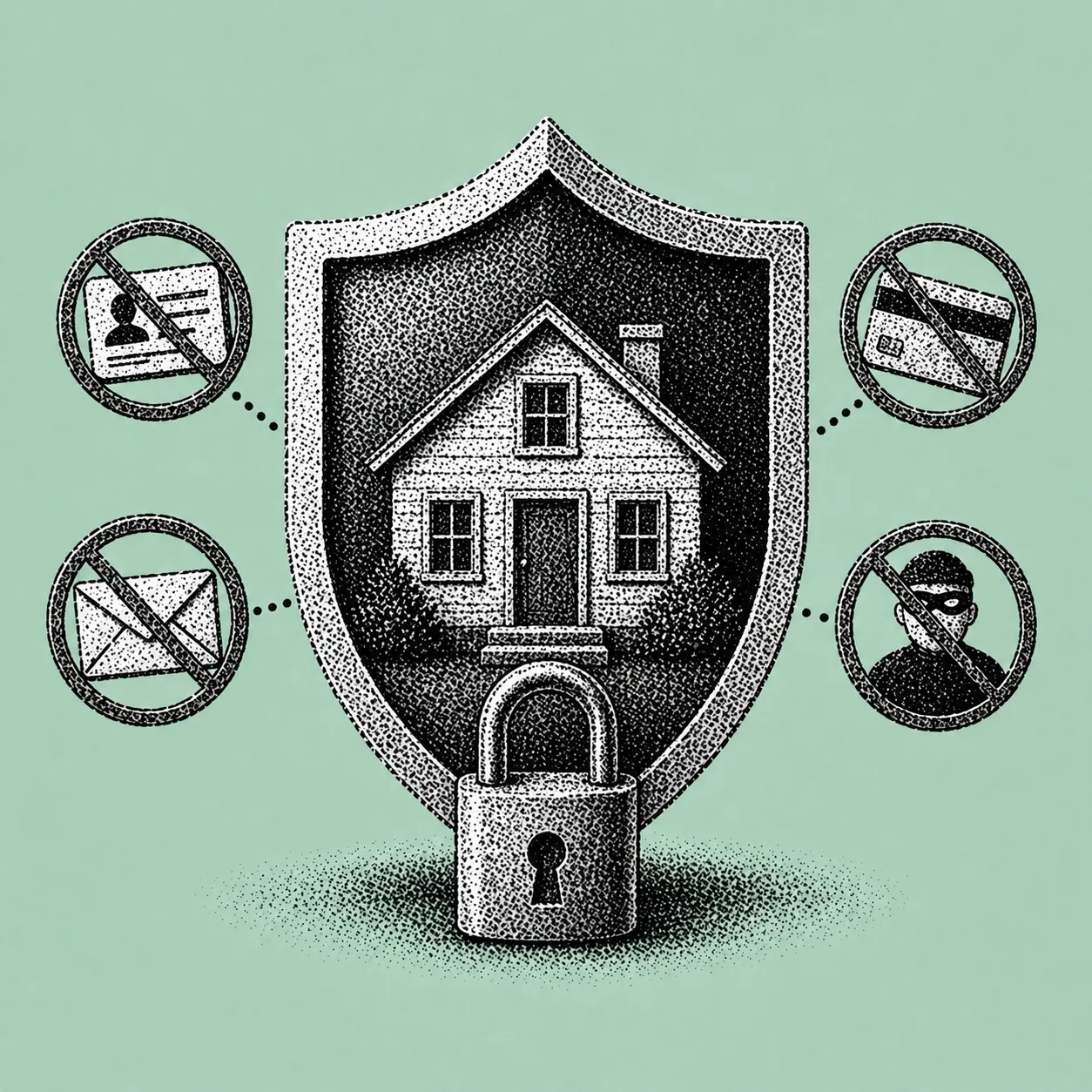

Landlord Challenges

Protecting Your Rental Property: A Step-by-Step Fraud Prevention Playbook

photo of Miles Lerner, Blog Post Author
Miles Lerner

Protecting Your Rental Property: A Step-by-Step Fraud Prevention Playbook

Rental scams are not something that happens to other landlords. They are a routine operational risk for independent owners, especially if you self-manage, advertise online, and accept digital documents and payments. The FTC reports that from 2020 to 2024, rental scams generated nearly 65,000 complaints and approximately $65 million in reported losses, and that reflects only what gets reported. Meanwhile, application fraud is surging on the landlord side: the National Multifamily Housing Council found 70.7% of housing providers experienced increased application fraud and 93.3% reported encountering fraud in some form.

Here is what that looks like in practice. A scammer steals your listing photos, reposts your home for rent, and collects deposits from would-be tenants. Or an applicant submits professional-looking pay stubs that are actually doctored PDFs, just convincing enough to get keys and a lease. The result is months of unpaid rent, eviction costs, property damage, and vacancy.

This guide gives you a practical, repeatable anti-scam system: screen smarter, handle deposits safely, tighten leases, and reduce the odds that fraud turns into a legal headache. Treat fraud prevention like maintenance: scheduled, documented, and standardized.

What Is Driving Rental Fraud and Why Independent Landlords Are Targeted

Rental fraud has grown because transactions are increasingly remote and document-driven. The FTC's Consumer Sentinel data shows fraud losses across the economy reached over $10 billion in 2023. Scammers borrow the same playbook of identity deception, urgency, and payment redirection and apply it to rentals because rentals combine two things criminals love: high demand and time pressure.

On the renter side, an Apartment List survey estimates 5.2 million U.S. renters have lost money to rental scams with estimated impacts of $43.1 billion. While that measures renter losses, it highlights a reality landlords should care about: scammers are constantly testing what works in the rental market. Where renters lose $400 in a fake deposit, landlords can lose far more through nonpayment, eviction costs, property damage, and vacancy.

On the landlord side, falsified applications are now productized. A 2024 Snappt report found 6.4% of rental applications showed signs of fraud, often involving fake PDFs and subtle font and metadata manipulation. In Houston, local reporting captured landlords claiming that over half of applicants used fake documents, an extreme example but consistent with the broader trend that document fraud is getting easier and harder to spot visually. Social media accelerates these tactics, with NMHC noting that fraud is increasingly linked to platforms including TikTok and Instagram.

Assume every part of the process can be spoofed: listing identity, applicant identity, income documents, and payment instructions. Build verification at each step before something goes wrong.

An Eight-Step Anti-Scam System for Self-Managing Landlords

Step 1. Harden Your Listing Process to Prevent Impersonation Scams

Many landlords think scams start with a bad applicant. Often they start earlier, with someone pretending to be you. A Kansas homeowner discovered her home was listed for rent without permission using hijacked photos and a fake identity. She only caught it by searching online and then reported the listing and filed a police report. That pattern repeats nationwide, especially when listing photos are high-quality and easily copied.

How to reduce the risk: Watermark or brand your photos with a small tasteful text overlay of your business name and phone number to make reposting less profitable. It will not stop theft but it increases friction. Use consistent verifiable contact information with the same phone and email domain across all listings. Scammers rely on disposable accounts. Add an anti-scam statement directly in your listing such as "We never request deposits before a showing" and "Payments only through our approved portal." The FTC explicitly warns consumers about advance payment requests and pressure tactics in rental scams, and including your policy helps honest renters self-screen suspicious contact.

Real-world patterns to watch for: A scammer reposts your listing at a lower rent "today only" to create urgency. A fake property manager claims you are out of town and pushes prospective tenants to wire money. A cloned listing uses your photos but changes the address slightly, such as swapping street for avenue.

Set a calendar reminder to search your address monthly on major platforms and social media. Early detection is often the only cure once your photos are hijacked.

Step 2. Build a Fraud-Resistant Application Intake Process

The fastest way to get tricked is to accept documents and decisions piecemeal: a texted pay stub here, an emailed ID there, and "can I pay you later?" in between. With 93.3% of housing providers encountering fraud in some form, you need a system rather than instincts.

Tactics that help immediately: Require a complete application packet before review, since incomplete packets are where scammers negotiate exceptions. Use a single secure channel for document uploads through a portal or encrypted request since email attachments are easy to alter and hard to track. Charge application fees only where legally permitted and disclose them clearly since fee rules vary by state and city.

Examples you are likely to see: "I will send the rest after approval" is how fraudsters try to get a conditional yes before verification catches up. Multiple applicants using the same employer template, since Snappt notes many frauds are based on doctored PDFs that can look identical across unrelated applicants. Rushed timing combined with refusal to complete the packet signals someone who wants keys before verification catches up.

Adopt a "no verification, no keys" rule and put it in writing: no move-in funds accepted and no lease finalized until identity, income, and screening are complete.

Step 3. Verify Identity Like You Are Preventing Identity Theft, Because You Are

Identity is the foundation of your lease enforceability. If the person signing is not who they claim to be, collections, eviction filings, and judgments all become harder. Rental scams frequently use fake IDs and stolen personal data because the threshold for detection in a typical leasing process is low.

Practical identity checks without being intrusive: Match government ID to the application covering name, date of birth, and photo. Confirm phone and email ownership with a verification code and require responses through that channel going forward. Cross-check consistency: current address, prior landlord information, employer location, and timeline should align logically.

Examples: An applicant provides an ID but refuses to show it during a live video call or in-person meeting. The ID name matches but the applicant's signature differs significantly from other forms, which is a common borrowed-identity tell. The applicant insists on communicating only through messaging apps and will not answer a direct call.

If you cannot meet in person, require a live video verification step, a short call where the applicant shows their ID next to their face. It is not foolproof but it deters low-effort identity fraud and creates documentation you can reference later.

Step 4. Verify Income and Employment Beyond Pay Stubs, Because PDFs Are Easy to Fake

Income fraud is now one of the most operationally damaging issues for landlords because the documents look professional. Snappt's 2024 data points to widespread document manipulation including fake PDFs, font edits, and other subtle changes that can evade visual review. Houston reporting describes a wave of fake pay stubs and IDs that even experienced landlords missed on first glance.

A safer income verification approach: Require multiple independent proofs covering pay stubs plus bank statements redacted for spending details plus an offer letter if the applicant is starting a new job. Verify employment through a trusted channel by calling the employer using the company's publicly listed number rather than the one on the application. Check for math and timeline consistency: gross-to-net ratios, year-to-date totals, and pay frequency should align logically.

Examples: A pay stub shows perfectly clean rounded net pay every period, which is unusual for real payroll deductions that vary. An employer email uses a free domain such as generic webmail instead of a company domain. Bank deposits do not match the pay stub dates or amounts.

Use document verification technology where feasible. If you self-manage, even a low-cost verification tool can be cheaper than one bad tenancy, and the Snappt report highlights why AI-assisted detection is increasingly necessary when fraud involves subtle PDF manipulation.

Step 5. Run Compliant Background Checks and Reference Checks and Document Your Decision

Background checks and references help you distinguish a risky tenant from a fraudulent one. NMHC reported that fraud contributes to operational impacts including evictions tied to fraudulent applications. Screening must be consistent, lawful, and documented.

Compliance guardrails in plain language: Apply the same screening criteria to every applicant and avoid criteria that could create discriminatory outcomes. Keep a written policy and follow it consistently for every application. If you deny based on screening results, document the reason and retain your records.

Examples: A prior landlord reference number goes to a friend. The person answering cannot answer basic questions about lease dates, rent amount, or property address. A criminal or eviction search shows mismatched identifiers suggesting an identity issue or data mix-up, which should trigger a pause and re-verification of identity. An applicant provides glowing references but refuses permission for a standard screening report.

Create a one-page screening rubric covering income multiple, credit range, rental history requirements, and occupancy limits. Store it with each application. Consistency is both a fraud deterrent and a legal shield.

Step 6. Handle Security Deposits and Move-In Money Like a High-Risk Payment

Security deposits are a fraud magnet because they are time-sensitive and emotionally charged. The FTC warns renters about listings that demand money before viewing or pressure them into unusual payment methods. Landlords should flip that advice into policy.

Best practices: Never accept deposits before a verified showing whether in person or through a controlled self-showing. Use traceable secure payment methods through ACH via a portal, a cashier's check verified at the issuing bank, or other trackable options. Avoid wire transfers, gift cards, and cryptocurrency for deposit transactions. Provide a receipt and deposit ledger immediately. Deposit handling is heavily state-regulated with many states requiring specific timelines for return and itemized deductions.

Examples: A "tenant" offers to overpay and asks you to refund the difference, which is classic overpayment fraud. An applicant pays with a cashier's check that later bounces after you have handed over keys. A scammer impersonates you and tells the prospective tenant to send the deposit to a different account, similar to payment redirection patterns seen in real estate cyber fraud.

Make "cleared funds before keys" non-negotiable and state it explicitly in both your lease and your move-in instructions.

Step 7. Tighten Your Lease Clauses and Property Access Rules

A strong lease will not prevent a fraudulent applicant, but it will reduce the gray areas scammers exploit and speed up enforcement when something goes wrong. Keep language clear and consistent with local landlord-tenant law.

Clauses and policies that reduce fraud exposure: Identity and occupancy provisions should specify approved occupants, guest limits, and ID requirement at lease signing. Payment terms should define acceptable payment methods, due dates, late fees where legal, and a written process for changing payment instructions. Access and key policies should specify no keys until lease is executed and funds cleared, rekeying at every turnover, and prohibition on lock changes without written consent.

Examples: An applicant requests to add roommates after move-in, which is often a way to bypass screening for additional occupants. A tenant claims they never received payment instructions and uses that to justify sending money to a different account. Unauthorized subletting occurs when a fraudster rents from you and then re-rents the unit to someone else while collecting deposits, consistent with impersonation patterns documented by the FTC.

Add a simple Payment Instruction Verification clause: any change to payment method or destination must be confirmed by phone using a known number and acknowledged in writing in the portal.

Step 8. Use Technology Tools Securely and Monitor Continuously

Technology can reduce fraud, but only if deployed thoughtfully. The FBI's Internet Crime Complaint Center has documented escalating real estate cyber fraud with reported losses reaching over $275 million in 2025, up 59% from 2024, reflecting more sophisticated tactics and payment diversion schemes. The same cyber techniques including phishing, account takeover, and spoofed emails can hit rent and deposit workflows at any portfolio size.

Tools worth considering: E-signature platforms with audit trails covering timestamp, IP address, and signer authentication. Tenant portals for payments and notices to reduce "I paid you via a random app" disputes. Document verification and ID verification services to catch altered PDFs and suspicious patterns. Enable multi-factor authentication on email and portal accounts, use strong passwords, and be wary of any "change my bank details" email.

Examples: A phishing email that looks like your portal steals your login credentials and the scammer then sends tenants new payment instructions. A tenant claims your payment account changed and confirms it with a spoofed text number. A fraudulent applicant uses AI-generated documents that pass a quick visual check but fail verification.

Turn on multi-factor authentication everywhere you collect applications, sign leases, or receive payments. It is one of the highest-impact, lowest-effort controls available.

Red Flags vs. Legitimate Signs at a Glance

Listing inquiry: Red flags include unwillingness to schedule a showing, urgency, and requests to pay immediately. Legitimate signs include accepting the standard process and asking reasonable questions about the unit.

Identity: Red flags include refusing live verification and inconsistent addresses across documents. Legitimate signs include an ID that matches the application and a timeline that holds up logically.

Income documents: Red flags include perfect-looking PDFs, mismatched bank deposits, and generic employer contact information. Legitimate signs include multiple proofs that align and an employer verifiable through a publicly listed number.

Payments: Red flags include requests for wire transfer, gift cards, or cryptocurrency, and overpayment combined with a refund request. Legitimate signs include use of a traceable method and acceptance of the cleared-funds-before-keys policy.

Lease behavior: Red flags include pressure for exceptions and requests to add occupants after move-in. Legitimate signs include signing normally and following documented policies throughout the process.

Anti-Scam Workflow Checklist

Listing and showings: Watermark photos and keep a master set. Add anti-scam language confirming no deposit before showing and payments only via approved methods. Schedule showings through one official channel you control. Set a monthly calendar reminder to search your address online to catch impersonation early.

Application intake: Require a full application packet before review. Collect documents through one secure upload method. Confirm applicant phone and email with a verification code. Log every document received with date and time.

Identity and screening: Conduct a live ID check in person or by video. Run a background check and rental history check using consistent criteria for every applicant. Make reference calls using independently sourced contact information rather than numbers provided on the application.

Income verification: Require at least two independent income proofs covering pay stubs plus bank deposit history. Verify employment through a public company number or email address. Watch for PDF manipulation patterns and consider verification tools.

Deposits, lease, and move-in: Apply the cleared-funds-before-keys policy without exception. Obtain a signed lease with an e-signature audit trail. Issue a deposit receipt and ledger entry immediately. Rekey at every turnover and document key handoff. Enable multi-factor authentication on portal, email, and payment accounts.

Frequently Asked Questions

What are the most common rental scam signs to watch for right now?

The biggest trends are impersonation and hijacked listings combined with application fraud using altered PDFs for pay stubs, bank statements, and IDs. Snappt found 6.4% of applications may be fraudulent, often using manipulated PDFs that can look clean at a glance. The FTC also flags pressure tactics and requests for upfront payments as recurring scam patterns across all rental markets.

How do I verify income without violating privacy or over-collecting data?

Collect only what you need to confirm ability to pay and apply the same requirements to every applicant. Use multiple proofs covering pay stubs plus bank deposits, verify employment via independently obtained contact information, and allow applicants to redact nonessential details such as full account numbers from bank statements.

What should I do if my property is being advertised by a scammer?

Document the fake listing through screenshots and URLs, report it to the platform immediately, and file a police report. Also notify prospective tenants who contact you that the listing is fraudulent and restate your official communication channels and payment methods.

Are portals and e-signatures actually safer than email?

Generally yes, if you use strong passwords and multi-factor authentication. Real estate cyber fraud losses have climbed sharply, showing criminals actively target digital transactions and payment redirection. Secure tools combined with MFA reduce the chance a spoofed email derails your process or redirects a payment.

Choose one upgrade you can implement this week and lock it in as policy. Adopt cleared funds before keys and publish your approved payment methods in every listing and move-in email. Add a live ID verification step before approving any application. Turn on multi-factor authentication for email, portals, and payment accounts.

Then print the checklist above and use it for every applicant without exceptions. Consistent process is the most practical scam deterrent a self-managing landlord can deploy.

Book a demo to see how Shuk's tenant pipeline tracking, centralized communications, and digital documentation tools support a fraud-resistant leasing workflow from first inquiry through lease execution.

QUICK VIEW
DIVE DEEPER
Stop Reacting to Vacancies. Start Seeing Them Coming.

Shuk helps landlords and property managers get ahead of vacancies, improve renewal visibility, and bring more predictability to every lease cycle.

Book a demo to get started with a free trial.

Stay in the Shuk Loop

Protecting Your Rental Property: A Step-by-Step Fraud Prevention Playbook

Rental scams are not something that happens to other landlords. They are a routine operational risk for independent owners, especially if you self-manage, advertise online, and accept digital documents and payments. The FTC reports that from 2020 to 2024, rental scams generated nearly 65,000 complaints and approximately $65 million in reported losses, and that reflects only what gets reported. Meanwhile, application fraud is surging on the landlord side: the National Multifamily Housing Council found 70.7% of housing providers experienced increased application fraud and 93.3% reported encountering fraud in some form.

Here is what that looks like in practice. A scammer steals your listing photos, reposts your home for rent, and collects deposits from would-be tenants. Or an applicant submits professional-looking pay stubs that are actually doctored PDFs, just convincing enough to get keys and a lease. The result is months of unpaid rent, eviction costs, property damage, and vacancy.

This guide gives you a practical, repeatable anti-scam system: screen smarter, handle deposits safely, tighten leases, and reduce the odds that fraud turns into a legal headache. Treat fraud prevention like maintenance: scheduled, documented, and standardized.

What Is Driving Rental Fraud and Why Independent Landlords Are Targeted

Rental fraud has grown because transactions are increasingly remote and document-driven. The FTC's Consumer Sentinel data shows fraud losses across the economy reached over $10 billion in 2023. Scammers borrow the same playbook of identity deception, urgency, and payment redirection and apply it to rentals because rentals combine two things criminals love: high demand and time pressure.

On the renter side, an Apartment List survey estimates 5.2 million U.S. renters have lost money to rental scams with estimated impacts of $43.1 billion. While that measures renter losses, it highlights a reality landlords should care about: scammers are constantly testing what works in the rental market. Where renters lose $400 in a fake deposit, landlords can lose far more through nonpayment, eviction costs, property damage, and vacancy.

On the landlord side, falsified applications are now productized. A 2024 Snappt report found 6.4% of rental applications showed signs of fraud, often involving fake PDFs and subtle font and metadata manipulation. In Houston, local reporting captured landlords claiming that over half of applicants used fake documents, an extreme example but consistent with the broader trend that document fraud is getting easier and harder to spot visually. Social media accelerates these tactics, with NMHC noting that fraud is increasingly linked to platforms including TikTok and Instagram.

Assume every part of the process can be spoofed: listing identity, applicant identity, income documents, and payment instructions. Build verification at each step before something goes wrong.

An Eight-Step Anti-Scam System for Self-Managing Landlords

Step 1. Harden Your Listing Process to Prevent Impersonation Scams

Many landlords think scams start with a bad applicant. Often they start earlier, with someone pretending to be you. A Kansas homeowner discovered her home was listed for rent without permission using hijacked photos and a fake identity. She only caught it by searching online and then reported the listing and filed a police report. That pattern repeats nationwide, especially when listing photos are high-quality and easily copied.

How to reduce the risk: Watermark or brand your photos with a small tasteful text overlay of your business name and phone number to make reposting less profitable. It will not stop theft but it increases friction. Use consistent verifiable contact information with the same phone and email domain across all listings. Scammers rely on disposable accounts. Add an anti-scam statement directly in your listing such as "We never request deposits before a showing" and "Payments only through our approved portal." The FTC explicitly warns consumers about advance payment requests and pressure tactics in rental scams, and including your policy helps honest renters self-screen suspicious contact.

Real-world patterns to watch for: A scammer reposts your listing at a lower rent "today only" to create urgency. A fake property manager claims you are out of town and pushes prospective tenants to wire money. A cloned listing uses your photos but changes the address slightly, such as swapping street for avenue.

Set a calendar reminder to search your address monthly on major platforms and social media. Early detection is often the only cure once your photos are hijacked.

Step 2. Build a Fraud-Resistant Application Intake Process

The fastest way to get tricked is to accept documents and decisions piecemeal: a texted pay stub here, an emailed ID there, and "can I pay you later?" in between. With 93.3% of housing providers encountering fraud in some form, you need a system rather than instincts.

Tactics that help immediately: Require a complete application packet before review, since incomplete packets are where scammers negotiate exceptions. Use a single secure channel for document uploads through a portal or encrypted request since email attachments are easy to alter and hard to track. Charge application fees only where legally permitted and disclose them clearly since fee rules vary by state and city.

Examples you are likely to see: "I will send the rest after approval" is how fraudsters try to get a conditional yes before verification catches up. Multiple applicants using the same employer template, since Snappt notes many frauds are based on doctored PDFs that can look identical across unrelated applicants. Rushed timing combined with refusal to complete the packet signals someone who wants keys before verification catches up.

Adopt a "no verification, no keys" rule and put it in writing: no move-in funds accepted and no lease finalized until identity, income, and screening are complete.

Step 3. Verify Identity Like You Are Preventing Identity Theft, Because You Are

Identity is the foundation of your lease enforceability. If the person signing is not who they claim to be, collections, eviction filings, and judgments all become harder. Rental scams frequently use fake IDs and stolen personal data because the threshold for detection in a typical leasing process is low.

Practical identity checks without being intrusive: Match government ID to the application covering name, date of birth, and photo. Confirm phone and email ownership with a verification code and require responses through that channel going forward. Cross-check consistency: current address, prior landlord information, employer location, and timeline should align logically.

Examples: An applicant provides an ID but refuses to show it during a live video call or in-person meeting. The ID name matches but the applicant's signature differs significantly from other forms, which is a common borrowed-identity tell. The applicant insists on communicating only through messaging apps and will not answer a direct call.

If you cannot meet in person, require a live video verification step, a short call where the applicant shows their ID next to their face. It is not foolproof but it deters low-effort identity fraud and creates documentation you can reference later.

Step 4. Verify Income and Employment Beyond Pay Stubs, Because PDFs Are Easy to Fake

Income fraud is now one of the most operationally damaging issues for landlords because the documents look professional. Snappt's 2024 data points to widespread document manipulation including fake PDFs, font edits, and other subtle changes that can evade visual review. Houston reporting describes a wave of fake pay stubs and IDs that even experienced landlords missed on first glance.

A safer income verification approach: Require multiple independent proofs covering pay stubs plus bank statements redacted for spending details plus an offer letter if the applicant is starting a new job. Verify employment through a trusted channel by calling the employer using the company's publicly listed number rather than the one on the application. Check for math and timeline consistency: gross-to-net ratios, year-to-date totals, and pay frequency should align logically.

Examples: A pay stub shows perfectly clean rounded net pay every period, which is unusual for real payroll deductions that vary. An employer email uses a free domain such as generic webmail instead of a company domain. Bank deposits do not match the pay stub dates or amounts.

Use document verification technology where feasible. If you self-manage, even a low-cost verification tool can be cheaper than one bad tenancy, and the Snappt report highlights why AI-assisted detection is increasingly necessary when fraud involves subtle PDF manipulation.

Step 5. Run Compliant Background Checks and Reference Checks and Document Your Decision

Background checks and references help you distinguish a risky tenant from a fraudulent one. NMHC reported that fraud contributes to operational impacts including evictions tied to fraudulent applications. Screening must be consistent, lawful, and documented.

Compliance guardrails in plain language: Apply the same screening criteria to every applicant and avoid criteria that could create discriminatory outcomes. Keep a written policy and follow it consistently for every application. If you deny based on screening results, document the reason and retain your records.

Examples: A prior landlord reference number goes to a friend. The person answering cannot answer basic questions about lease dates, rent amount, or property address. A criminal or eviction search shows mismatched identifiers suggesting an identity issue or data mix-up, which should trigger a pause and re-verification of identity. An applicant provides glowing references but refuses permission for a standard screening report.

Create a one-page screening rubric covering income multiple, credit range, rental history requirements, and occupancy limits. Store it with each application. Consistency is both a fraud deterrent and a legal shield.

Step 6. Handle Security Deposits and Move-In Money Like a High-Risk Payment

Security deposits are a fraud magnet because they are time-sensitive and emotionally charged. The FTC warns renters about listings that demand money before viewing or pressure them into unusual payment methods. Landlords should flip that advice into policy.

Best practices: Never accept deposits before a verified showing whether in person or through a controlled self-showing. Use traceable secure payment methods through ACH via a portal, a cashier's check verified at the issuing bank, or other trackable options. Avoid wire transfers, gift cards, and cryptocurrency for deposit transactions. Provide a receipt and deposit ledger immediately. Deposit handling is heavily state-regulated with many states requiring specific timelines for return and itemized deductions.

Examples: A "tenant" offers to overpay and asks you to refund the difference, which is classic overpayment fraud. An applicant pays with a cashier's check that later bounces after you have handed over keys. A scammer impersonates you and tells the prospective tenant to send the deposit to a different account, similar to payment redirection patterns seen in real estate cyber fraud.

Make "cleared funds before keys" non-negotiable and state it explicitly in both your lease and your move-in instructions.

Step 7. Tighten Your Lease Clauses and Property Access Rules

A strong lease will not prevent a fraudulent applicant, but it will reduce the gray areas scammers exploit and speed up enforcement when something goes wrong. Keep language clear and consistent with local landlord-tenant law.

Clauses and policies that reduce fraud exposure: Identity and occupancy provisions should specify approved occupants, guest limits, and ID requirement at lease signing. Payment terms should define acceptable payment methods, due dates, late fees where legal, and a written process for changing payment instructions. Access and key policies should specify no keys until lease is executed and funds cleared, rekeying at every turnover, and prohibition on lock changes without written consent.

Examples: An applicant requests to add roommates after move-in, which is often a way to bypass screening for additional occupants. A tenant claims they never received payment instructions and uses that to justify sending money to a different account. Unauthorized subletting occurs when a fraudster rents from you and then re-rents the unit to someone else while collecting deposits, consistent with impersonation patterns documented by the FTC.

Add a simple Payment Instruction Verification clause: any change to payment method or destination must be confirmed by phone using a known number and acknowledged in writing in the portal.

Step 8. Use Technology Tools Securely and Monitor Continuously

Technology can reduce fraud, but only if deployed thoughtfully. The FBI's Internet Crime Complaint Center has documented escalating real estate cyber fraud with reported losses reaching over $275 million in 2025, up 59% from 2024, reflecting more sophisticated tactics and payment diversion schemes. The same cyber techniques including phishing, account takeover, and spoofed emails can hit rent and deposit workflows at any portfolio size.

Tools worth considering: E-signature platforms with audit trails covering timestamp, IP address, and signer authentication. Tenant portals for payments and notices to reduce "I paid you via a random app" disputes. Document verification and ID verification services to catch altered PDFs and suspicious patterns. Enable multi-factor authentication on email and portal accounts, use strong passwords, and be wary of any "change my bank details" email.

Examples: A phishing email that looks like your portal steals your login credentials and the scammer then sends tenants new payment instructions. A tenant claims your payment account changed and confirms it with a spoofed text number. A fraudulent applicant uses AI-generated documents that pass a quick visual check but fail verification.

Turn on multi-factor authentication everywhere you collect applications, sign leases, or receive payments. It is one of the highest-impact, lowest-effort controls available.

Red Flags vs. Legitimate Signs at a Glance

Listing inquiry: Red flags include unwillingness to schedule a showing, urgency, and requests to pay immediately. Legitimate signs include accepting the standard process and asking reasonable questions about the unit.

Identity: Red flags include refusing live verification and inconsistent addresses across documents. Legitimate signs include an ID that matches the application and a timeline that holds up logically.

Income documents: Red flags include perfect-looking PDFs, mismatched bank deposits, and generic employer contact information. Legitimate signs include multiple proofs that align and an employer verifiable through a publicly listed number.

Payments: Red flags include requests for wire transfer, gift cards, or cryptocurrency, and overpayment combined with a refund request. Legitimate signs include use of a traceable method and acceptance of the cleared-funds-before-keys policy.

Lease behavior: Red flags include pressure for exceptions and requests to add occupants after move-in. Legitimate signs include signing normally and following documented policies throughout the process.

Anti-Scam Workflow Checklist

Listing and showings: Watermark photos and keep a master set. Add anti-scam language confirming no deposit before showing and payments only via approved methods. Schedule showings through one official channel you control. Set a monthly calendar reminder to search your address online to catch impersonation early.

Application intake: Require a full application packet before review. Collect documents through one secure upload method. Confirm applicant phone and email with a verification code. Log every document received with date and time.

Identity and screening: Conduct a live ID check in person or by video. Run a background check and rental history check using consistent criteria for every applicant. Make reference calls using independently sourced contact information rather than numbers provided on the application.

Income verification: Require at least two independent income proofs covering pay stubs plus bank deposit history. Verify employment through a public company number or email address. Watch for PDF manipulation patterns and consider verification tools.

Deposits, lease, and move-in: Apply the cleared-funds-before-keys policy without exception. Obtain a signed lease with an e-signature audit trail. Issue a deposit receipt and ledger entry immediately. Rekey at every turnover and document key handoff. Enable multi-factor authentication on portal, email, and payment accounts.

Frequently Asked Questions

What are the most common rental scam signs to watch for right now?

The biggest trends are impersonation and hijacked listings combined with application fraud using altered PDFs for pay stubs, bank statements, and IDs. Snappt found 6.4% of applications may be fraudulent, often using manipulated PDFs that can look clean at a glance. The FTC also flags pressure tactics and requests for upfront payments as recurring scam patterns across all rental markets.

How do I verify income without violating privacy or over-collecting data?

Collect only what you need to confirm ability to pay and apply the same requirements to every applicant. Use multiple proofs covering pay stubs plus bank deposits, verify employment via independently obtained contact information, and allow applicants to redact nonessential details such as full account numbers from bank statements.

What should I do if my property is being advertised by a scammer?

Document the fake listing through screenshots and URLs, report it to the platform immediately, and file a police report. Also notify prospective tenants who contact you that the listing is fraudulent and restate your official communication channels and payment methods.

Are portals and e-signatures actually safer than email?

Generally yes, if you use strong passwords and multi-factor authentication. Real estate cyber fraud losses have climbed sharply, showing criminals actively target digital transactions and payment redirection. Secure tools combined with MFA reduce the chance a spoofed email derails your process or redirects a payment.

Choose one upgrade you can implement this week and lock it in as policy. Adopt cleared funds before keys and publish your approved payment methods in every listing and move-in email. Add a live ID verification step before approving any application. Turn on multi-factor authentication for email, portals, and payment accounts.

Then print the checklist above and use it for every applicant without exceptions. Consistent process is the most practical scam deterrent a self-managing landlord can deploy.

Book a demo to see how Shuk's tenant pipeline tracking, centralized communications, and digital documentation tools support a fraud-resistant leasing workflow from first inquiry through lease execution.

{

  "@context": "https://schema.org",

  "@type": "FAQPage",

  "mainEntity": [

    {

      "@type": "Question",

      "name": "What are the most common rental scam signs to watch for right now?",

      "acceptedAnswer": {

        "@type": "Answer",

        "text": "The biggest trends are impersonation and hijacked listings combined with application fraud using altered PDFs for pay stubs, bank statements, and IDs. Research found 6.4% of applications may be fraudulent, often using manipulated PDFs that look clean at a glance. The FTC also flags pressure tactics and requests for upfront payments as recurring scam patterns across all rental markets."

      }

    },

    {

      "@type": "Question",

      "name": "How do I verify tenant income without violating privacy or over-collecting data?",

      "acceptedAnswer": {

        "@type": "Answer",

        "text": "Collect only what you need to confirm ability to pay and apply the same requirements to every applicant. Use multiple proofs covering pay stubs plus bank deposit history, verify employment via independently obtained contact information, and allow applicants to redact nonessential details such as full account numbers from bank statements."

      }

    },

    {

      "@type": "Question",

      "name": "What should I do if my property is being advertised by a scammer?",

      "acceptedAnswer": {

        "@type": "Answer",

        "text": "Document the fake listing through screenshots and URLs, report it to the platform immediately, and file a police report. Also notify prospective tenants who contact you that the listing is fraudulent and restate your official communication channels and approved payment methods."

      }

    },

    {

      "@type": "Question",

      "name": "Are portals and e-signatures actually safer than email for rental transactions?",

      "acceptedAnswer": {

        "@type": "Answer",

        "text": "Generally yes, if you use strong passwords and multi-factor authentication. Real estate cyber fraud losses have climbed sharply, showing criminals actively target digital transactions and payment redirection. Secure tools combined with multi-factor authentication reduce the chance a spoofed email derails your process or redirects a payment."

      }

    }

  ]

}

Stop Reacting to Vacancies. Start Seeing Them Coming.

Shuk helps landlords and property managers get ahead of vacancies, improve renewal visibility, and bring more predictability to every lease cycle.

Book a demo to get started with a free trial.

Stay in the Shuk Loop

View Similar Articles

View Similar Articles

All Articles
Rental Management Guides
Maintenance & Repairs: A Practical Guide to Rental Property Maintenance for Landlords

Maintenance & Repairs: A Practical Guide to Rental Property Maintenance for Landlords

Effective rental property maintenance is one of the most important responsibilities for landlords and property managers. Well-managed maintenance and repairs reduce vacancies, protect property value, and improve tenant satisfaction. Poor maintenance, on the other hand, leads to higher costs, legal risk, and negative tenant experiences.

This guide explains how landlords can manage maintenance and repairs efficiently, using clear workflows, preventive strategies, and modern tools—without overcomplicating daily operations.

This guide is part of our rental management guides for independent landlords, covering the key workflows involved in managing rental properties efficiently.

What Is Rental Property Maintenance?

Rental property maintenance refers to the ongoing process of keeping a rental unit safe, functional, and compliant with housing standards. It includes routine upkeep, preventive maintenance, emergency repairs, and tenant-reported issues.

For landlords, maintenance is not optional. It directly impacts:

  • Tenant retention

  • Property value

  • Legal compliance

  • Long-term operating costs

Maintenance and Repairs for Landlords: Core Responsibilities

Landlords are typically responsible for maintaining:

  • Plumbing, electrical, and HVAC systems

  • Structural elements (walls, roofs, flooring)

  • Safety features such as smoke detectors and locks

  • Appliances provided with the rental unit

Understanding landlord maintenance responsibilities helps avoid disputes and ensures faster resolution of repair requests.

Most maintenance issues originate from tenant requests, making communication workflows critical.

How to Manage Rental Maintenance Requests Efficiently

Handling maintenance requests manually often leads to delays and missed issues. A structured rental maintenance management process improves response time and transparency.

Best practices include:

  • Centralizing all maintenance requests in one system

  • Categorizing issues by urgency

  • Assigning clear response timelines

  • Keeping tenants informed throughout the repair process

This approach helps landlords stay organized and reduce unnecessary follow-ups.

Responsive maintenance is one of the primary ways landlords build a reputation that drives renewals — see the standing out as a quality landlord guide for the full service standards framework.

Preventive Maintenance for Rental Properties

Preventive maintenance for rental properties focuses on identifying and fixing small issues before they become costly repairs.

Examples include:

  • Seasonal HVAC inspections

  • Plumbing leak checks

  • Roof and gutter inspections

  • Appliance servicing

Preventive maintenance reduces emergency repairs and extends the life of major systems.

Timely maintenance plays a major role in tenant retention and renewal decisions.

Handling Emergency Repairs in Rental Properties

Emergency repairs involve issues that affect health, safety, or habitability—such as water leaks, power failures, or heating system breakdowns.

To manage emergencies effectively:

  • Define what qualifies as an emergency

  • Establish 24/7 response protocols

  • Pre-approve vendors for urgent repairs

  • Track response and resolution times

Clear emergency workflows reduce tenant frustration and legal exposure.

Property Repairs Management and Vendor Coordination

Reliable vendors are essential for effective property repairs management. Landlords should focus on:

  • Licensing and insurance verification

  • Response time reliability

  • Quality of completed work

  • Clear communication standards

Documenting expectations helps maintain consistency and accountability across vendors.

Using Technology for Rental Maintenance Management

Modern rental maintenance management tools help landlords:

  • Track maintenance requests

  • Prioritize urgent repairs

  • Coordinate vendors

  • Maintain repair history records

Technology simplifies maintenance operations and provides visibility across multiple properties without increasing administrative workload.

Maintenance Workflow Checklist for Landlords

Use this checklist to manage maintenance and repairs consistently:

  • Log all tenant maintenance requests

  • Categorize by urgency (routine vs emergency)

  • Assign tasks to approved vendors

  • Track repair progress and completion

  • Confirm resolution with tenants

  • Review recurring issues for preventive action

Frequently Asked Questions (FAQ)

What is rental property maintenance?

Rental property maintenance includes routine upkeep, preventive care, and repairs required to keep rental units safe, functional, and compliant with regulations.

What maintenance is a landlord responsible for?

Landlords are generally responsible for structural elements, essential systems, safety features, and appliances provided with the rental.

How should landlords handle maintenance requests?

Landlords should centralize requests, prioritize urgent issues, communicate timelines clearly, and document all repairs.

What qualifies as an emergency repair?

Emergency repairs involve issues that affect safety or habitability, such as water leaks, heating failures, or electrical hazards.

Why is preventive maintenance important for rental properties?

Preventive maintenance reduces long-term repair costs, prevents emergencies, and improves tenant satisfaction.

Conclusion

Managing maintenance and repairs becomes significantly easier when requests, priorities, and repair histories are organized in one place. Many landlords choose to use rental management platforms like Shuk Rentals to centralize maintenance requests, track repairs, coordinate vendors, and maintain clear communication with tenants—helping reduce delays and improve overall efficiency without increasing administrative workload.

Property Acquisition Hub
The 2% Rule for Rental Property: A Practical Screening Workflow for Self-Managing Landlords

The 2% Rule for Rental Property: A Practical Screening Workflow for Self-Managing Landlords

The fastest way to lose money on a rental property is to overpay and hope the rent will make it work. Many independent landlords buy a property because it feels like a deal, only to discover that the mortgage, insurance, taxes, repairs, and vacancy eat up the rent. At that point, you are not building wealth. You are subsidizing a tenant.

That is where the 2% rule comes in: a blunt, back-of-the-napkin screening metric designed to help small investors quickly filter out overpriced deals before spending hours on detailed analysis. In plain terms, it asks one question: does the monthly rent look high enough relative to the all-in purchase price to have a real chance at cash flow? A property passes if its monthly rent is at least 2% of the purchase price or total acquisition cost.

Here is an example. If a home costs $150,000, the 2% rule looks for $3,000 per month in rent. That is intentionally strict, and that is the point. In 2026, it is also harder to hit in many markets, which makes it even more useful as an early reality check before you fall in love with a listing.

What the 2% Rule Is and What It Is Not

The 2% rule is a quick screening heuristic: target monthly rent equal to approximately 2% of purchase price to suggest strong cash-flow potential. It became popular because landlords needed a fast way to compare dozens of listings without building a full spreadsheet for every one. The logic is simple: if rent is high relative to price, there is more room to cover operating costs, vacancy, financing, and still have money left over.

Here is what the rule does not do. It does not estimate your actual profit. It does not account for taxes, insurance, HOA fees, capital expenditures, tenant quality, or financing terms. Even prominent investing educators describe it as a quick guide and caution against relying on it alone. Many sources also note its practicality has declined in recent markets as prices rose faster than rents, pushing many good deals closer to 1% or less in high-cost metros.

If you self-manage or run a small portfolio, time is your most limited resource. The 2% rule helps you avoid overpaying when a property is clearly rent-constrained, compare neighborhoods quickly across different cities, and set a negotiating anchor. If rent comps support $1,200 per month, you can back into a 2% price ceiling of approximately $60,000 before rehab and closing costs.

In Cleveland, rents around $1,108 to $1,180 for a two-bedroom are documented in HUD Fair Market Rent data, while sale prices can be far lower than coastal cities, making high rent-to-price ratios more achievable. In San Francisco, the median sale price near $1.5 million makes 2%, which would require $30,000 per month, unrealistic for typical residential rentals. That gap is exactly what the rule is designed to reveal quickly.

Step-by-Step: How to Apply the 2% Rule Without Fooling Yourself

Step 1. Define the Numbers You Are Actually Using

The biggest mistake landlords make is applying the 2% rule to the list price and ignoring the real all-in cost. For practical screening, use:

All-in acquisition cost equals purchase price plus immediate rehab plus closing costs plus initial reserves.

Here is why this matters. Two $150,000 listings can produce very different results if one needs $25,000 in repairs.

Example A, simple calculation: Price $100,000, rent estimate $1,900 per month. Rent divided by price equals $1,900 divided by $100,000, which equals 1.9%. Close but not 2%.

Example B, all-in reality: Price $100,000 plus $15,000 rehab plus $5,000 closing equals $120,000 all-in. Rent divided by all-in cost equals $1,900 divided by $120,000, which equals 1.58%. No longer close.

Step 2. Calculate the Rule in Ten Seconds

Method one, the rent test: Monthly rent divided by all-in price must be greater than or equal to 0.02.

Method two, the price ceiling: Maximum all-in price equals monthly rent divided by 0.02, which is the same as monthly rent multiplied by 50.

That times-50 shortcut is useful during showings or calls with agents.

Example C, price ceiling in action: If rent comps support $1,400 per month, the 2% maximum all-in price equals $1,400 multiplied by 50, which equals $70,000. If the seller wants $95,000, you instantly know it fails the 2% screen unless there is a clear path to meaningfully higher rent.

Step 3. Build a Rent Estimate You Can Defend

Because the 2% rule depends entirely on the rent input, that number must be conservative. Use currently leased comparable properties when possible rather than active listings. Adjust for bed and bath count, parking, in-unit laundry, pets, and condition. Cross-check against public rent benchmarks such as HUD Fair Market Rent schedules for your area.

Example D, benchmark check: If you are underwriting a Cleveland two-bedroom at $1,450 per month but FMR benchmarks sit closer to $1,108 to $1,180, your 2% pass may be built on an overly aggressive rent assumption. The rule is only as reliable as the rent input supporting it.

Step 4. Run Three Outcome Scenarios

Scenario one, a pass with a Cleveland-style yield profile:

Cleveland has documented affordability and rent levels that can support stronger rent-to-price ratios than many high-cost metros.

All-in price: $80,000. Estimated rent: $1,200 per month. The 2% threshold rent needed is $80,000 multiplied by 0.02, which equals $1,600 per month. Actual ratio: $1,200 divided by $80,000 equals 1.5%.

This fails a strict 2% rule, yet many investors still pursue deals like this when expenses and financing are favorable. In today's market, a fail does not automatically mean bad. It means do not assume cash flow. Many sources emphasize pairing this rule with deeper analysis rather than using it as a final answer.

To improve this deal toward 2% without gambling: could you legally add value through an additional bedroom or finished space, reduce insurance and tax exposure, or negotiate a lower price? If not, treat it as a 1% to 1.5% style deal and underwrite accordingly.

Scenario two, borderline in Phoenix:

Phoenix had a median sale price around $461,000 in early 2024 data, with multifamily cap rate estimates around 5.6% in cited reports, suggesting tighter cash-flow conditions than lower-cost regions.

Purchase price: $350,000. Monthly rent estimate: $3,000. Ratio: $3,000 divided by $350,000 equals 0.86%. The 2% target rent for this price would be $7,000 per month.

This clearly fails 2%, but it is still a useful screen. It tells you Phoenix acquisitions may require a different strategy: a larger down payment, a different property type, mid-term rentals where legal, an appreciation focus, or a heavier value-add approach. In submarkets where 1% or less is the norm, pivot to a cap rate and cash-on-cash underwriting model rather than trying to force a 2% outcome.

Scenario three, a hard fail in San Francisco:

San Francisco's median sale price near $1.5 million makes the 2% rule a near-impossibility for conventional rentals.

Purchase price: $1,500,000. The 2% target rent would be $30,000 per month. Even at $7,500 per month in rent, the ratio would be 0.5%.

This is where the 2% rule shines as a screening tool. It prevents you from pretending a high-cost market purchase will cash flow like a Midwest rental. In these markets, you may still invest, but you should do so with eyes open around appreciation, tax strategy, and unique property types. Underwrite based on realistic rent-to-price dynamics rather than working backward from a target ratio that the market cannot support.

Step 5. Understand the Hidden Assumptions and Pair It With Companion Rules

Many 2% rule explanations implicitly rely on the idea that operating expenses plus vacancy may consume approximately 50% of rent. That is why investors pair the 2% rule as a rent-to-price screen with the 50% rule as an expense sanity check, then add a profitability metric such as cap rate or gross rent multiplier for comparisons.

The GRM connection is worth understanding. If monthly rent is 2% of price, annual rent is 24% of price, so the GRM equals approximately 4.17. A GRM that low is rare in most modern metro markets, which explains why true 2% deals are harder to find today and why investors who apply this rule strictly are effectively filtering for a shrinking segment of available inventory.

The bottom line strategy: use the 2% rule to discard obvious mismatches, then graduate the survivors into a full underwriting that includes expenses, vacancy, and financing.

The 2% Rule Rental Screen Checklist

Step 1, calculate all-in cost: Purchase price plus estimated closing costs plus immediate rehab and turn costs equals your all-in acquisition cost.

Step 2, estimate market rent conservatively: Check leased comparable properties, not just active listings. Cross-check active listing rents. Verify against a public benchmark such as HUD Fair Market Rent where relevant. Use the lower end of your range as your underwritten monthly rent.

Step 3, compute the ratio: Rent divided by all-in cost. The pass threshold is 2.0% or greater.

Step 4, classify the outcome: At or above 2.0% means a strong cash-flow candidate requiring expense verification. Between 1.0% and 1.99% means borderline, requiring excellent expense control and favorable financing. Below 1.0% means likely appreciation-driven, and you must be honest about the investment strategy before proceeding.

Step 5, add two reality checks before going further: Apply the 50% expense assumption as a rough filter to see whether cash flow is plausible after expenses. Compare using gross rent multiplier or cap rate for a more complete picture.

Two quick examples using the template: If rent is $1,180 and all-in cost is $120,000, the ratio is 0.98%, which is borderline or a fail depending on your threshold. If rent is $1,400 and all-in cost is $70,000, the ratio is exactly 2.0%, which passes and warrants full due diligence.

Frequently Asked Questions

Is the 2% rule realistic in high-cost markets?

Usually not. In very high-priced markets, home values are so large relative to rents that the 2% target becomes mathematically unrealistic. San Francisco's roughly $1.5 million median sale price implies approximately $30,000 per month in rent to hit 2%, which is not achievable for typical residential rentals. Many investing sources note the rule's practicality has declined as prices outpaced rents in most major metros. In these markets, use the rule to confirm the cash-flow math does not work rather than to find deals that pass.

How is the 2% rule different from the 1% rule?

They are the same concept with different strictness levels. The 1% rule is a looser screen and the 2% rule is a tougher cash-flow-first filter. As market conditions shifted and prices outpaced rent growth in many cities, many investors moved toward expecting closer to 1% or less in expensive regions. Experts consistently caution against using any percentage rule as a standalone decision tool rather than a first-pass filter.

Can I rely on gross rent alone when applying this rule?

No. Gross rent ignores operating costs, vacancy, and capital expenditures, which are exactly the limitations that make the rule useful only as a first-pass screen. Use it to eliminate obvious mismatches, then shift to expense-aware metrics like cap rate and to comparative tools like GRM once a property clears the initial filter.

What should I pair with the 2% rule for better decisions?

Pair it with a rough expense rule of thumb, commonly approximately 50% of rent, to test whether cash flow is plausible after expenses but before mortgage. Add cap rate for a more complete return picture and GRM for quick comparisons across listings. Together, these reduce the risk of approving a deal that looks good on rent but fails on real-world operating costs.

If you are self-managing rentals, the win is not memorizing one rule. It is building a repeatable screening workflow you will actually use when you are tired, busy, and tempted to overbid. Make the 2% rule your first filter, then document the survivors with a consistent process covering rent comps, all-in costs, vacancy and expense assumptions, and a cap rate and GRM cross-check.

Book a demo to see how Shuk's analytics and performance tracking tools support a consistent acquisition and operating workflow so every deal you evaluate is measured against the same standards.

Rent Collection Hub
ACH Rent Payments vs. Cards, Checks, Cash, and Apps: A Practical Guide for Small Landlords

ACH Rent Payments vs. Cards, Checks, Cash, and Apps: A Practical Guide for Small Landlords

If you manage rental properties independently or run a small property management business, rent collection sits at an uncomfortable intersection: it is mission-critical, repetitive, and surprisingly risky. One late payment can trigger a chain reaction of a missed mortgage autopay, delayed vendor work, awkward tenant conversations, and time spent reconciling who paid what.

Many rental businesses still rely on methods that make the process harder than it needs to be. Paper checks arrive late or not at all. Cash cannot be tracked cleanly. Card payments feel convenient but quietly drain margins through processing fees. P2P app payments land with the wrong memo or occasionally to the wrong person entirely.

ACH bank-to-bank transfers have become the backbone of recurring payments in the U.S. economy. The ACH Network processed 31.5 billion payments in 2023 and 35.2 billion in 2025, reflecting broad adoption and a mature payment rail trusted at national scale. Same Day ACH alone reached 1.4 billion payments valued at $3.9 trillion in 2025. For rent, that maturity matters: you want a method that is predictable, trackable, and built for recurring drafts.

But ACH can mean very different experiences depending on how you implement it. Some banks charge per-item fees alongside monthly service fees. Meanwhile, card payments can cost approximately 2.5% to 3.5% per transaction at typical convenience fee models in rent collection, and they come with dispute windows often up to 120 days that can claw back funds long after you thought rent was settled.

This guide compares ACH rent payments with credit and debit cards, paper checks, money orders, cash, and P2P apps through the lens that matters for small and mid-sized landlords: cost, funding speed, reliability, fraud and dispute risk, tenant convenience, and automation potential.

Price your current workflow, not just your fees, and include time spent chasing payments and reconciling deposits. Treat reversibility as a risk factor since dispute windows differ dramatically between ACH consumer debits and card chargebacks. Default to a method that supports recurring automation and clean bookkeeping, especially when you manage more than a handful of units.

How Each Rent Payment Method Really Performs

Landlords typically land on one of six rent collection methods: ACH bank transfers, credit and debit cards, paper checks, money orders, cash, or P2P apps. Each has a headline benefit. ACH is cheap, cards are convenient, checks are familiar, cash is immediate, P2P is fast, and money orders feel guaranteed. The real decision is about trade-offs you will live with every month.

ACH is built for recurring transfers. ACH is designed for account-to-account transfers including recurring debits. Standard ACH commonly settles in one to three business days while Same Day ACH can settle by end of day when submission cutoffs are met. Bank ACH origination pricing varies: per-item costs at some institutions run approximately $0.10 to $0.20 for credit items and $0.15 to $0.30 for debit items, with Same Day ACH running approximately $0.75 to $1.25. Some banks package ACH tools into monthly bundles or checking account tiers. Third-party processors may charge flat fees, percentage fees, or monthly fees in addition to per-item costs.

Cards are convenient but expensive. Credit and debit cards are a tenant favorite because they feel instant, but they are usually the most expensive option for the landlord's system. Many rent payment providers charge approximately 2.95% to 3.5% plus a fixed fee per card transaction. Card disputes can also reach far back, with Visa and Mastercard chargeback windows commonly up to 120 days for many dispute types. Even if you win a dispute, you spend time responding, gathering documents, and managing cash-flow uncertainty during the window.

Checks, money orders, cash, and P2P apps are familiar but friction-heavy. Checks and money orders remain common because they require no software and feel familiar to both parties. But they add operational friction through handling, depositing, reconciling, and the risk of loss or delay. Cash is immediate but creates the highest operational risk around safety, documentation, and auditability. P2P apps can be convenient but often lack landlord-grade controls around consistent memos, receipting, and clean export into accounting systems.

A baseline comparison across methods:

ACH standard: typical landlord cost of approximately $0.10 to $0.30 per item at some banks with variation by platform, funding speed of one to three business days, returns exist with consumer unauthorized window tied to Regulation E, and high automation potential through recurring drafts.

Same Day ACH: cost often $0.75 to $1.25 per item at some banks, funding by end of day when cutoffs are met, similar return concepts as standard ACH, and high automation potential.

Credit and debit cards: cost often 2.95% to 3.5% plus a fixed fee, typically fast to receive but provider-dependent, chargebacks can occur up to approximately 120 days, medium to high automation potential.

Paper checks: bank deposit fees and significant time cost, same day after deposit but tenant delivery is slow, bounced checks and loss and theft risk, low automation potential.

Money orders: tenant pays the purchase fee, same day after deposit, lower bounce risk than checks but still subject to loss and counterfeit risk, low automation potential.

Cash: no transaction fee but high operational risk from theft and disputes and a weak audit trail, low automation potential.

P2P apps: often free or low cost, often fast, account and memo errors with varying policy limits, medium automation potential.

If you are under 20 units, the biggest cost is usually time and errors rather than transaction fees. If you allow cards, set clear written rules on who pays fees and how disputes are handled where legally permitted. If you accept offline methods, require a consistent reference format of unit number plus tenant name plus month to reduce misposting.

Five Steps to Choose and Implement the Best Method for Your Portfolio

Step 1. Calculate the True All-In Cost per Door

A practical rent collection decision starts with math. For landlords under 100 units, the most common cost trap is judging methods only by direct fees while ignoring the operational tax: trips to the bank, manual reminders, deposit delays, reconciliation time, and dispute handling.

ACH costs vary by implementation. Some banks publish per-item pricing for ACH credit and debit items with Same Day ACH running higher per transaction. Other banks package ACH functionality into monthly service fees or business checking tiers. Third-party processors may charge a flat fee, a percentage, and a monthly subscription simultaneously, which can reintroduce the cost structure you were trying to avoid.

Card costs function as a margin killer at scale. Many rent payment providers use a tenant-paid convenience fee model around 2.95% to 3.5% plus a fixed amount per transaction. Even when tenants pay those fees, landlords often face indirect costs through more payment exceptions, higher dispute incidence, and tenant frustration in states where surcharging is restricted or prohibited.

Worked example, 12-unit landlord switching from checks to automated ACH: Assume twelve units at $1,500 average rent, previously collected by check requiring two bank deposit trips per month and roughly two hours per month total handling time. After switching to automated ACH drafts, handling time drops to approximately twenty minutes per month for review and exceptions. If you value admin time at $30 per hour, that is approximately $600 per year in recovered time. If your ACH method charges $0.20 per debit item, that is twelve payments times $0.20 times twelve months equals $28.80 per year in transaction fees plus any applicable bank monthly fees. On a platform with no ACH fee built for landlords, even the per-item component disappears.

Build a one-page cost model with three columns: direct fees, time cost, and risk cost covering average late fees lost, disputes, and returned items. Decide based on the total rather than any single line.

Compare percentage-based pricing against per-item pricing using your average rent since percentage fees scale up with every rent increase. Separate tenant-paid fees from landlord impact since even when tenants pay card fees, your dispute and support burden rises. If your bank requires a monthly ACH module, confirm whether your business checking tier can waive it based on balances.

Step 2. Match the Payment Rail to Your Due-Date Reality

Speed is not just how fast the tenant clicks pay. It is when funds become available for your obligations including mortgage, insurance, utilities, and vendors.

Standard ACH generally settles in one to three business days. Same Day ACH can settle by end of day but submission deadlines and bank processing schedules matter significantly. In rent collection, this means you cannot wait until the first at 11:59 p.m. and expect spendable funds on the second. The operational win comes from moving the trigger earlier and making it recurring rather than waiting for tenant-initiated action each month.

Cash-flow scenario: A small landlord with eighteen units might have a mortgage draft on the fifth. With checks, a cluster of "I'll drop it off this weekend" comments pushes deposits to the sixth or seventh. With ACH, recurring drafts scheduled on the first or even the last business day of the prior month allow standard settlement time while keeping the tenant experience simple.

Same Day ACH is not necessary as a default for rent but is a helpful lever for last-minute move-in payments, curing a pay-or-quit deadline, or handling a tenant who missed the standard draft and needs to correct quickly. Treat it as a premium exception option rather than a universal default to control per-item costs.

Card payments can feel instant at the point of sale, but funding timing depends on the provider's batch and payout schedule. The larger issue is reversibility: a chargeback can occur long after funding, affecting cash flow months later. For rent, fast today but reversible for four months can be worse than settles in two days and stays settled.

Set your rent due date and your draft date deliberately. Many landlords keep the due date as the first but schedule an ACH draft on the 28th through the 30th with tenant opt-in, or early on the first, then treat late fees and reminders as exception handling rather than the main system.

If you must pay bills by the fifth, do not depend on tenant-initiated actions on the first. Use recurring ACH pulls where authorized. Keep Same Day ACH available for exceptions rather than every tenant to control costs. Build a funds-available calendar that maps ACH processing days and weekends to your key payment obligations.

Step 3. Choose the Risk Profile You Can Operate

Every payment method has failure modes. The right choice is the one whose failures you can detect quickly and resolve efficiently.

The ACH Network processed 35.2 billion payments in 2025 and Nacha enforces network quality metrics including an unauthorized debit return rate threshold of 0.5% and a total return rate threshold of 15%. For landlords, that translates into a key operational point: implement ACH in a way that keeps return rates low through clear authorizations, accurate bank data capture, and prompt handling of notices of change.

Consumer-initiated unauthorized debit claims are governed by Regulation E error resolution concepts, commonly described as a 60-day window from statement transmission for consumers to report unauthorized electronic fund transfers. Even if rent clears, you need an audit trail: signed authorization or equivalent e-sign consent, documented lease terms, and proof of tenant identity.

Card networks commonly allow chargebacks up to 120 days for many dispute categories. That window is long relative to rent cycles and can complicate eviction timelines, owner distributions, and bookkeeping close periods. It also invites friendly fraud disputes more often in card-not-present environments.

Offline methods carry different fraud profiles. Checks face bounced NSF risk, stop payments, and altered check fraud plus loss or theft in the mail. Cash creates theft risk and payment disputes with documentation entirely on you. Money orders generally carry less bounce risk than checks but are still subject to loss and counterfeit risk. P2P apps create misdirected payment risk from inconsistent identifiers.

Regardless of method, standardize your evidence. For ACH, store authorization language, timestamps, and account verification steps. For checks, photocopy and scan and issue receipts. For cash, always issue serialized receipts and record immediately. Keep ACH return rates low by using consistent authorization flows and verifying bank details at onboarding. If you accept cards, build a dispute-response folder template with lease, ledger, communications, and move-in condition report so you can respond within network timelines.

Step 4. Turn Rent Into a System, Not a Monthly Fire Drill

Small landlords usually do not fail at rent collection because they do not care. They fail because the process is manual and brittle. Automation is where ACH tends to outperform every other method for recurring rent.

Recurring ACH means the tenant does not have to remember to pay and you do not have to chase. It also supports cleaner cash application: when payments arrive with consistent identifiers, you spend less time matching deposits to tenants and more time managing your actual portfolio.

ACH supports addenda records covering structured remittance information attached to a payment. While not every landlord will use addenda directly, platforms built on ACH can use similar concepts to ensure every payment is tagged to a unit, lease, and month. That is the difference between money arrived and ledger is correct.

If you manage thirty to eighty units, month-end close becomes a real operational challenge. Manual methods create multiple deposit sources from some checks, some cash, and some apps, ambiguous memos, and partial payments that do not map cleanly to ledger lines. ACH-based rent collection with a small-landlord-focused platform can automatically post payments, mark late accounts, and export reports for bookkeeping.

Autopay scenario: A tenant paid on the third for months due to payday timing and incurred late fees twice a year. With an automated ACH draft scheduled for the morning after payday with tenant consent, rent is pulled reliably each month. The tenant avoids late fees and the landlord avoids follow-ups and awkward enforcement. Less friction, fewer disputes, better outcome for both parties.

Make automation the default and exceptions the minority. Offer ACH autopay as the primary option but keep one backup method such as tenant-initiated ACH push for edge cases. Set up recurring ACH pulls aligned to lease start and pay cycles rather than defaulting to tenant-remembers-on-the-first. Use standardized payment labels of unit plus month plus tenant and require them across any non-ACH methods you accept.

Step 5. Make It Easy to Pay and Hard to Pay Late

Tenant convenience is not a nice-to-have. It is a collections strategy. The easier you make it to pay, the fewer exceptions you manage.

Standard ACH settlement in one to three business days is acceptable for most tenants when you design the schedule properly. Same Day ACH helps in emergencies but most tenants just want reliability and a confirmation receipt. Tenants who prefer to set autopay and forget it create the smoothest operating experience for everyone.

Tenants may ask for cards to earn rewards or float cash. The cost is significant: at 2.95% on an $1,800 rent payment, that is $53.10 per month or over $637 per year. Some tenants will pay it. Others will resent it and delay payment. Card surcharging rules also vary by state and are evolving, so confirm local compliance before relying on surcharging as your cost-offset strategy.

A subset of tenants still prefers offline payments and you can accommodate them without letting it dominate your operations. Allow checks for a limited time such as the first sixty days and then encourage ACH. Accept money orders for tenants without bank accounts. Minimize cash acceptance and if you must accept it, require appointments and issue receipts.

P2P apps are familiar to tenants but inconsistent memos and varying transfer policies undermine ledger accuracy. If you accept P2P, treat it as a temporary bridge and require strict memo formats from day one.

Present tenant choices as a tiered menu: free and recommended ACH autopay at the top, backup methods below that, and high-cost convenience options like cards last with clear fee disclosure. Reduce forgetting by making ACH autopay the default enrollment step during lease signing rather than an optional feature introduced after move-in.

ACH Rent Collection Readiness Checklist

Use this checklist to evaluate readiness and execute a smooth transition to ACH-based rent collection.

Cost and policy: You know your current monthly rent collection cost covering fees plus admin time. You have compared per-item ACH pricing against any monthly modules or bundles at your bank. You have a written policy for accepted payment methods, due dates, late fees, and returned-payment fees.

Banking and cash flow: You have mapped your funds-available calendar to ACH settlement of one to three business days. You have identified whether you need Same Day ACH for exceptions and understand it costs more per item. You have confirmed your operating account can receive ACH deposits and that you reconcile deposits weekly.

Authorization and compliance: You have a clear tenant authorization flow for ACH debits covering signed or e-signed consent. You store authorization records and payment confirmations for at least the lease term plus a reasonable dispute buffer. You understand how to handle unauthorized claims and common ACH return scenarios.

Operations and automation: You can set up recurring rent drafts aligned to lease terms. You have a process for exceptions covering failed payments, partial payments, move-in prorations, and move-out charges. You have standardized payment identifiers of unit plus tenant plus month for clean bookkeeping.

Tenant onboarding: You have created a tenant message explaining why ACH, settlement timelines, how autopay works, and how receipts are delivered. You offer at least one backup payment method for edge cases. You have set a transition date and a grace period for onboarding.

Decision checkpoint: If your current method is cards, you have calculated the tenant fee impact at approximately 2.95% to 3.5% plus fixed fees. If your current method is checks or cash, you have estimated time savings from eliminating deposit runs and manual reconciliation.

Frequently Asked Questions

How long do ACH rent payments take to hit my account?

Standard ACH typically settles in one to three business days. Same Day ACH can settle by end of day if submitted before network and bank cutoff times. In practice, the most reliable approach is not to depend on the tenant paying on the due date. Use recurring drafts scheduled earlier with clear disclosure to the tenant about when the pull will occur.

Can a tenant reverse an ACH rent payment after it clears?

ACH returns do happen. For consumer accounts, unauthorized electronic fund transfer claims follow Regulation E error resolution concepts and are commonly described as a 60-day window from statement transmission. That is why proper authorization records and consistent documentation matter from the start. If you keep authorizations clean and tenant onboarding clear, ACH operates very stably compared to card-based alternatives.

Are credit card payments safer because they are guaranteed?

Cards can be convenient but they are not final in the way landlords often assume. Cardholders can file chargebacks and network time limits are commonly up to 120 days for many dispute types. That is a long window relative to rent cycles. If you accept cards, you need a strong documentation process and cash-flow planning that accounts for potential reversals months after payment appeared to clear.

What about daily limits or caps on ACH?

Limits vary by bank, account type, and whether you are using bank ACH origination tools or a third-party processor. Some banks bundle ACH services into specific business products or impose monthly fees for the capability. Confirm per-transaction and daily limits before moving all tenants over, and keep Same Day ACH or an alternative method available for rare exceptions that exceed standard limits.

If you manage fewer than 100 units, your best rent collection system is the one that protects your margin, reduces exceptions, and runs without constant attention. Across cost, reliability, and automation potential, ACH is usually the most landlord-friendly payment rail. It is built for recurring transfers, scales cleanly as your portfolio grows, and avoids the percentage-based drag that comes with card payments. It is also a proven national network with 35.2 billion payments processed in 2025.

The key is implementation. A basic ACH setup at a bank can still leave you with per-item costs, monthly service modules, and manual reconciliation. Third-party processors can reintroduce fees through percentages or subscriptions. That is why many small landlords are moving to purpose-built rent collection automation where ACH is optimized: no ACH fees, recurring autopay drafts, clear payment labels, and workflows designed to reduce support tickets and bookkeeping cleanup.

Book a demo to see how Shuk's fee-free ACH rent collection, automated reminders, and real-time payment tracking work together so rent arrives on schedule and your NOI stays intact.

} } }) })